
Continental PremiumContact 7 vs Pirelli P Zero PZ4
The data show the Continental repeatedly finishing near the top overall (4/21, 2/10, 8/52, 3/21, 5/48), while the PZ4 ranges mid-pack to upper-mid (14/21, 5/10, 20/52, 11/21, 3/48). Expect the PZ4 to feel a touch keener on turn-in and lateral grip in certain dry and wet circle metrics, but the PremiumContact 7 consistently brakes shorter in the dry, is markedly stronger in wet braking and aquaplaning, and offers far better wear and value.

Test Results
Independent comparison tyre tests are the best source of data to get tyre information from, and the good news is there have been five tests which compare both tyres directly!
| Tyre | Test Wins | Performance |
|---|---|---|
| Continental PremiumContact 7 | four | |
| Pirelli P Zero PZ4 | one |
While it might look like the Continental PremiumContact 7 is better than the Pirelli P Zero PZ4 purely based on the higher number of test wins, tyres are very complicated objects which means where one tyre is better than the other can be more important in real world use.
Let's look at how the two tyres compare across multiple tyre test categories.
Key Strengths
- Outstanding wet braking and aquaplaning safety margins
- Significantly longer tread life and lower cost per 1000 km
- Low rolling resistance with high comfort and stability
- Consistently high overall test rankings and balanced performance
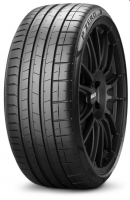
- Sharp steering and engaging dry handling feel
- Strong lateral grip, particularly in wet circle tests
- Short braking in select tests and sporty road feedback
- Brand/OE tuning options that can enhance specific vehicle dynamics

Dry Braking
Looking at data from five tyre tests, the Continental PremiumContact 7 was better during three dry braking tests. On average the Continental PremiumContact 7 stopped the vehicle in 0.53% less distance than the Pirelli P Zero PZ4.
Best In Dry Braking: Continental PremiumContact 7
See how the Dry Braking winner was calculated >>
Dry Handling [s]
Looking at data from one tyre tests, the Continental PremiumContact 7 was better during one dry handling [s] tests. On average the Continental PremiumContact 7 was 0.29% faster around a lap than the Pirelli P Zero PZ4.
Best In Dry Handling [s]: Continental PremiumContact 7
See how the Dry Handling winner was calculated >>
Dry Handling [Km/H]
Looking at data from two tyre tests, the Pirelli P Zero PZ4 was better during two dry handling [km/h] tests. On average the Pirelli P Zero PZ4 was 0.58% faster around a lap than the Continental PremiumContact 7.
Best In Dry Handling [Km/H]: Pirelli P Zero PZ4
See how the Dry Handling winner was calculated >>
Wet Braking
Looking at data from five tyre tests, the Continental PremiumContact 7 was better during three wet braking tests. On average the Continental PremiumContact 7 stopped the vehicle in 6.62% less distance than the Pirelli P Zero PZ4.
Best In Wet Braking: Continental PremiumContact 7
See how the Wet Braking winner was calculated >>
Wet Handling [s]
Looking at data from one tyre tests, the Continental PremiumContact 7 and Pirelli P Zero PZ4 performed equally well in wet handling [s] tests.
Best In Wet Handling [s]: Both tyres performed equally well
See how the Wet Handling winner was calculated >>
Wet Handling [Km/H]
Looking at data from two tyre tests, the Pirelli P Zero PZ4 was better during one wet handling [km/h] tests. On average the Pirelli P Zero PZ4 was 0.2% faster around a wet lap than the Continental PremiumContact 7.
Best In Wet Handling [Km/H]: Pirelli P Zero PZ4
See how the Wet Handling winner was calculated >>
Wet Circle
Looking at data from two tyre tests, the Pirelli P Zero PZ4 was better during two wet circle tests. On average the Pirelli P Zero PZ4 was 1.36% faster around a wet circle than the Continental PremiumContact 7.
Best In Wet Circle: Pirelli P Zero PZ4
See how the Wet Circle winner was calculated >>
Straight Aqua
Looking at data from three tyre tests, the Continental PremiumContact 7 was better during two straight aqua tests. On average the Continental PremiumContact 7 floated at a 0.38% higher speed than the Pirelli P Zero PZ4.
Best In Straight Aqua: Continental PremiumContact 7
See how the Straight Aqua winner was calculated >>
Curved Aquaplaning
Looking at data from two tyre tests, the Continental PremiumContact 7 was better during one curved aquaplaning tests. On average the Continental PremiumContact 7 slipped out at a 4.76% higher speed than the Pirelli P Zero PZ4.
Best In Curved Aquaplaning: Continental PremiumContact 7
See how the Curved Aquaplaning winner was calculated >>
Subj. Comfort
Looking at data from two tyre tests, the Continental PremiumContact 7 was better during one subj. comfort tests. On average the Continental PremiumContact 7 scored 26.67% more points than the Pirelli P Zero PZ4.
Best In Subj. Comfort: Continental PremiumContact 7
See how the Subj. Comfort winner was calculated >>
Noise
Looking at data from three tyre tests, the Pirelli P Zero PZ4 was better during two noise tests. On average the Pirelli P Zero PZ4 measured 0.14% quieter than the Continental PremiumContact 7.
Best In Noise: Pirelli P Zero PZ4
See how the Noise winner was calculated >>
Wear
Looking at data from three tyre tests, the Continental PremiumContact 7 was better during three wear tests. On average the Continental PremiumContact 7 is predicted to cover 33.44% miles before reaching 1.6mm than the Pirelli P Zero PZ4.
Best In Wear: Continental PremiumContact 7
See how the Wear winner was calculated >>
Value
Looking at data from three tyre tests, the Continental PremiumContact 7 was better during three value tests. On average the Continental PremiumContact 7 proved to have a 36.27% better value based on price/1000km than the Pirelli P Zero PZ4.
Best In Value: Continental PremiumContact 7
See how the Value winner was calculated >>
Price
Looking at data from one tyre tests, the Continental PremiumContact 7 was better during one price tests. On average the Continental PremiumContact 7 cost 2.34% less than the Pirelli P Zero PZ4.
Best In Price: Continental PremiumContact 7
See how the Price winner was calculated >>
Rolling Resistance
Looking at data from three tyre tests, the Continental PremiumContact 7 was better during three rolling resistance tests. On average the Continental PremiumContact 7 had a 4.07% lower rolling resistance than the Pirelli P Zero PZ4.
Best In Rolling Resistance: Continental PremiumContact 7
See how the Rolling Resistance winner was calculated >>
Abrasion
Looking at data from one tyre tests, the Continental PremiumContact 7 was better during one abrasion tests. On average the Continental PremiumContact 7 wore 26.67% less per 1000km driven than the Pirelli P Zero PZ4.
Best In Abrasion: Continental PremiumContact 7
See how the Abrasion winner was calculated >>
Real World Driver Reviews
Continental PremiumContact 7 Driver Reviews
Drivers generally rate the Continental PremiumContact 7 very highly for strong dry and especially wet grip, confident braking, and stable, planted handling that makes the car feel secure at speed. The most consistent drawbacks are higher-than-expected road noise (particularly on rough asphalt) and a softer sidewall feel that can reduce steering precision for some drivers. A meaningful minority also report faster wear than expected or a noticeable performance drop (especially in the wet) once tread depth gets lower, suggesting it prioritizes grip over ultimate longevity.
Based on 54 reviews with an average rating of 82%
Pirelli P Zero PZ4 Driver Reviews
Drivers generally describe the Pirelli P Zero PZ4 as a strong ultra-high-performance summer tyre with excellent dry grip, sharp steering response, and confident braking, with many also praising its stability and refined noise/comfort when new. Wet grip is often reported as good in mild conditions, but a sizeable minority say confidence drops on cold, damp UK-style roads and especially as tread wears down. The most consistent complaint is fast tread wear/short life, and many also call out weak aquaplaning resistance in standing water.
Based on 89 reviews with an average rating of 74%
Replace very very good Yokohama V105 one year old.
To try them out.
First-class comfort (top) + rolling silence
A little above the Yoko on the dry,
In the rain, they are incredible ! Well above all that I have tried :
Dunlop RT, PS3, Yoko V105, Hankook V12 K110.
No idea about wear again ... The +:
- Braking (this is a big highlight)
- Motricity
- Handling
They are equipped with protections of the rims although the option is not specified (in France).
The sides are stiffer than the PS3 for... Continue reading this review using the link below
Conclusion
Pirelli's P Zero PZ4 remains engaging for enthusiasts, with sharp steering, competitive dry handling, and strong lateral grip (notably on wet circle). However, its shorter lifespan and higher cost-per-1000 km weaken its value proposition. If you prioritize wet safety, longevity, and everyday refinement, choose the Continental. If you want a sportier feel and are willing to trade wear and economy, the PZ4 can still satisfy-especially in OE-tuned applications.
Key Differences
- Wet braking: Continental repeatedly shorter (e.g., 44.2 m vs 50.5 m; 28.3 m vs 32.3 m).
- Aquaplaning: Continental stronger in straight and curved tests in most results.
- Dry handling feel: Pirelli edges some handling/lateral tests; Continental close and more rounded.
- Comfort: Continental notably higher subjective comfort (e.g., 10 vs 6 points).
- Wear and value: Continental vastly better mileage and lower cost/1000 km; Pirelli wears faster and costs more.
- Efficiency: Continental lower rolling resistance across tests.
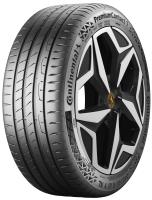
Overall Winner: Continental PremiumContact 7
Based on the tyre test data and user reviews we have in our database, the Continental PremiumContact 7 has demonstrated better overall performance in this comparison. However, as you can see from the spider diagram above, each tyre has its own strengths which should be considered in your final tyre buying choice.Similar Comparisons
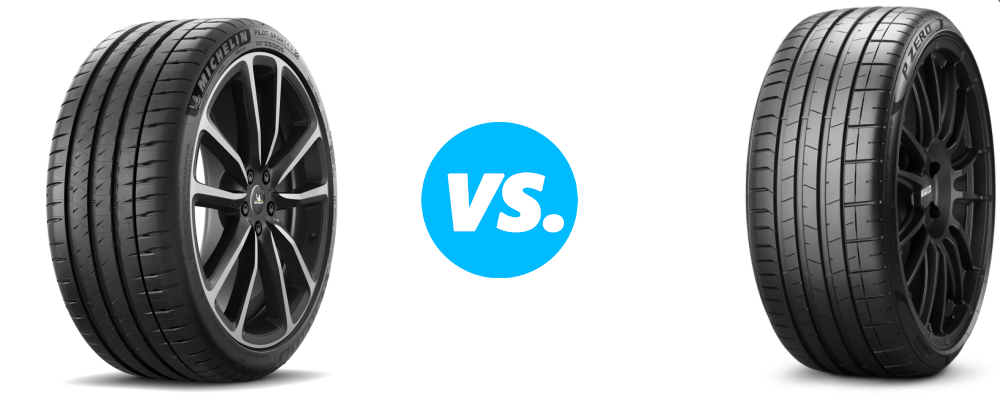
Looking for more tyre comparisons? Here are other direct comparisons involving these tyres:




Footnote
This page has been developed using tyre industry testing best practices. This means we are only comparing tests which have had both tyres in the same test.
Why is this important? Tyre testing is heavily affected by things like surface grip levels and surface temperature, which means you can only compare values from the same day. During a tyre test external condition changes are calculated into the overall results, but it is not possible to calculate this between tyre tests performed on different days or at different locations.
As a result you will see other tests on Tyre Reviews which feature both the %s and %s, but as they weren't conducted on the same day, the results are not comparable.
Lots of other websites do this sort of tyre comparison, Tyre Reviews doesn't.
Discussion
- No comments yet — be the first.