
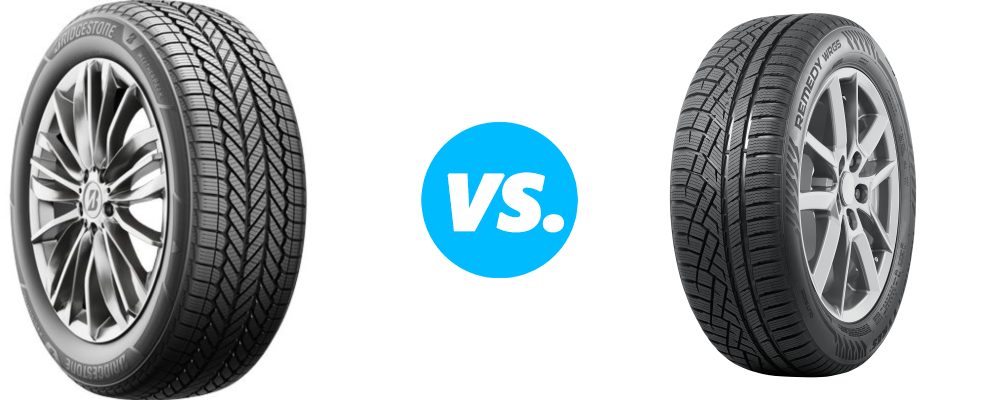
Bridgestone WeatherPeak vs Pirelli Cinturato WeatherActive
Across two recent comparative tests, the Pirelli consistently ran shorter dry and wet stops and turned quicker laps, while the Bridgestone repeatedly pulled ahead once the surface turned white, topping snow categories. If you prioritize warm-weather control and confidence in rain, the Pirelli's edge is clear; if snow composure is non-negotiable, the Bridgestone makes a strong case.
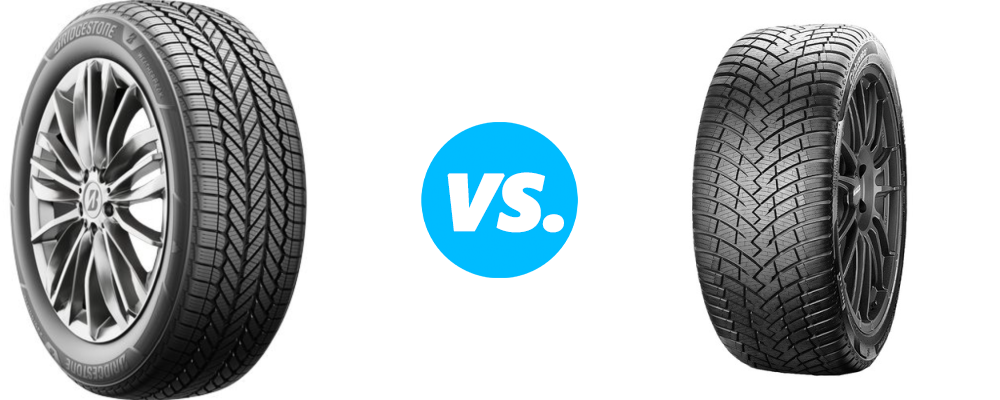
Test Results
Independent comparison tyre tests are the best source of data to get tyre information from, and the good news is there have been two tests which compare both tyres directly!
| Tyre | Test Wins | Performance |
|---|---|---|
| Pirelli Cinturato WeatherActive | two |
While it might look like the Pirelli Cinturato WeatherActive is better than the Bridgestone WeatherPeak purely based on the higher number of test wins, tyres are very complicated objects which means where one tyre is better than the other can be more important in real world use.
Let's look at how the two tyres compare across multiple tyre test categories.
Key Strengths
- Class-leading snow capability (shorter snow braking, quicker snow handling)
- Very quiet, comfortable ride for daily use
- Confident straight-line winter braking vs. peers
- Good value proposition in snow-heavy regions
- Consistently shorter dry and wet braking distances
- Responsive, natural steering and balanced handling
- Strong wet performance including handling and lateral grip
- Best-in-test ice braking and overall test wins at a lower price

Dry Braking
Looking at data from two tyre tests, the Pirelli Cinturato WeatherActive was better during two dry braking tests. On average the Pirelli Cinturato WeatherActive stopped the vehicle in 7.6% less distance than the Bridgestone WeatherPeak.
Best In Dry Braking: Pirelli Cinturato WeatherActive
See how the Dry Braking winner was calculated >>
Dry Handling [s]
Looking at data from one tyre tests, the Pirelli Cinturato WeatherActive was better during one dry handling [s] tests. On average the Pirelli Cinturato WeatherActive was 1.94% faster around a lap than the Bridgestone WeatherPeak.
Best In Dry Handling [s]: Pirelli Cinturato WeatherActive
See how the Dry Handling winner was calculated >>
Subj. Dry Handling
Looking at data from one tyre tests, the Pirelli Cinturato WeatherActive was better during one subj. dry handling tests. On average the Pirelli Cinturato WeatherActive scored 13.15% more points than the Bridgestone WeatherPeak.
Best In Subj. Dry Handling: Pirelli Cinturato WeatherActive
See how the Subj. Dry Handling winner was calculated >>
Wet Braking
Looking at data from two tyre tests, the Pirelli Cinturato WeatherActive was better during two wet braking tests. On average the Pirelli Cinturato WeatherActive stopped the vehicle in 9.91% less distance than the Bridgestone WeatherPeak.
Best In Wet Braking: Pirelli Cinturato WeatherActive
See how the Wet Braking winner was calculated >>
Wet Handling [s]
Looking at data from two tyre tests, the Pirelli Cinturato WeatherActive was better during two wet handling [s] tests. On average the Pirelli Cinturato WeatherActive was 2.76% faster around a wet lap than the Bridgestone WeatherPeak.
Best In Wet Handling [s]: Pirelli Cinturato WeatherActive
See how the Wet Handling winner was calculated >>
Subj. Wet Handling
Looking at data from one tyre tests, the Pirelli Cinturato WeatherActive was better during one subj. wet handling tests. On average the Pirelli Cinturato WeatherActive scored 13.93% more points than the Bridgestone WeatherPeak.
Best In Subj. Wet Handling: Pirelli Cinturato WeatherActive
See how the Subj. Wet Handling winner was calculated >>
Wet Circle
Looking at data from one tyre tests, the Pirelli Cinturato WeatherActive was better during one wet circle tests. On average the Pirelli Cinturato WeatherActive had 1.41% higher lateral wet grip than the Bridgestone WeatherPeak.
Best In Wet Circle: Pirelli Cinturato WeatherActive
See how the Wet Circle winner was calculated >>
Snow Braking
Looking at data from two tyre tests, the Bridgestone WeatherPeak was better during two snow braking tests. On average the Bridgestone WeatherPeak stopped the vehicle in 11.09% less distance than the Pirelli Cinturato WeatherActive.
Best In Snow Braking: Bridgestone WeatherPeak
See how the Snow Braking winner was calculated >>
Snow Traction
Looking at data from two tyre tests, the Bridgestone WeatherPeak was better during one snow traction tests. On average the Bridgestone WeatherPeak accelerated 1.61% faster than the Pirelli Cinturato WeatherActive.
Best In Snow Traction: Bridgestone WeatherPeak
See how the Snow Traction winner was calculated >>
Snow Handling [s]
Looking at data from two tyre tests, the Bridgestone WeatherPeak was better during two snow handling [s] tests. On average the Bridgestone WeatherPeak was 8.08% faster around a lap than the Pirelli Cinturato WeatherActive.
Best In Snow Handling [s]: Bridgestone WeatherPeak
See how the Snow Handling winner was calculated >>
Snow Circle
Looking at data from one tyre tests, the Bridgestone WeatherPeak was better during one snow circle tests. On average the Bridgestone WeatherPeak provided 10.34% more lateral grip than the Pirelli Cinturato WeatherActive.
Best In Snow Circle: Bridgestone WeatherPeak
See how the Snow Circle winner was calculated >>
Ice Braking
Looking at data from one tyre tests, the Pirelli Cinturato WeatherActive was better during one ice braking tests. On average the Pirelli Cinturato WeatherActive stopped the vehicle 15.09% shorter than the Bridgestone WeatherPeak.
Best In Ice Braking: Pirelli Cinturato WeatherActive
See how the Ice Braking winner was calculated >>
Real World Driver Reviews
Tyre Reviews also collects real world driver reviews for the Bridgestone WeatherPeak and Pirelli Cinturato WeatherActive.
In total the Bridgestone WeatherPeak has been reviewed 15 times and drivers have given the tyre 67% overall.
The Pirelli Cinturato WeatherActive has been reviewed 5 times and drivers have given the tyre 89% overall.
This means in real world driving, people prefer the Pirelli Cinturato WeatherActive.
Conclusion
Bridgestone's WeatherPeak is the snow specialist. It repeatedly delivered shorter snow braking, stronger traction, and faster snow handling, while also being notably quiet and cushioned. The tradeoff is tangible: longer dry/wet braking distances and less stable limit behavior. If your winters are frequent and severe, the Bridgestone's snow confidence outweighs its warm-weather compromises; otherwise, the Pirelli's year-round balance and value win. Practical takeaway: pick WeatherPeak for snow-dominant climates, WeatherActive for most drivers most of the time.
Key Differences
- Warm-weather performance: Pirelli stops ~9-15% shorter in dry/wet across tests; Bridgestone lags in traction and stability
- Snow dominance: Bridgestone wins snow braking/handling/traction; Pirelli trails on cornering grip in snow
- Ice braking: Pirelli leads (notably best in TireRack test); Bridgestone trails on ice
- Steering/precision: Pirelli is more direct and predictable; Bridgestone feels sedate and can wander/tramline
- Ride/noise: Both comfortable, but Bridgestone measures exceptionally quiet; Pirelli remains refined and composed
- Value/outcome: Pirelli won both tests and is slightly cheaper in cited sizes, offering stronger all-round value
Overall Winner: Pirelli Cinturato WeatherActive
Based on the tyre test data and user reviews we have in our database, the Pirelli Cinturato WeatherActive has demonstrated better overall performance in this comparison. However, as you can see from the spider diagram above, each tyre has its own strengths which should be considered in your final tyre buying choice.Similar Comparisons
Looking for more tyre comparisons? Here are other direct comparisons involving these tyres:

Pirelli Cinturato WeatherActive Top Comparisons

Footnote
This page has been developed using tyre industry testing best practices. This means we are only comparing tests which have had both tyres in the same test.
Why is this important? Tyre testing is heavily affected by things like surface grip levels and surface temperature, which means you can only compare values from the same day. During a tyre test external condition changes are calculated into the overall results, but it is not possible to calculate this between tyre tests performed on different days or at different locations.
As a result you will see other tests on Tyre Reviews which feature both the %s and %s, but as they weren't conducted on the same day, the results are not comparable.
Lots of other websites do this sort of tyre comparison, Tyre Reviews doesn't.
Discussion
- No comments yet — be the first.