Car and Driver recently put five all-weather tyres to test to find the best option for drivers who want to run one set of rubber year-round. Using a BMW 330i xDrive for dry and wet testing at Tire Rack's South Bend facility and a Genesis G70 for snow evaluations at Michigan's Keweenaw Research Center, the magazine teamed up with expert drivers to collect objective performance data and subjective impressions across multiple driving scenarios.
To provide context for the all-weather results, Car and Driver included two specialized benchmark tyres in the evaluation: the Continental ExtremeContact Sport 02 summer tyre and the Nokian Hakkapeliitta R5 winter tyre. These showed what dedicated seasonal rubber can do when not compromising for year-round use. The Continental summer tyre demonstrated its wet-weather prowess with remarkably consistent stopping distances between dry and wet surfaces, while the Nokian Hakkapeliitta R5 winter tyre dominated in snow with substantially better acceleration and braking than any all-weather contender. These reference tyres help illustrate the performance trade-offs when choosing a single set of tyres versus seasonal swapping, giving buyers a clearer picture of what they gain – and give up – when opting for the convenience of all-weather rubber.
One quirk of the result had the CrossClimate 2 has the slowest around the snow handling lap, but was one of the best in the other snow tests. I think that might be a typo on the magazines part.
Some of the data is below, and be sure to head over to the C&D website for the full results.
Dry
Dry Braking
Dry Braking
Spread: 9.60 M (28.8%)|Avg: 38.88 M
Dry braking in meters (60 - 0 mph) (Lower is better)
Continental ExtremeContact Sport 0 Ref
33.30 M
Michelin CrossClimate 2 AW
37.20 M
Pirelli Cinturato WeatherActive
38.90 M
Nokian Remedy WRG5
40.00 M
Goodyear Assurance WeatherReady
41.00 M
Bridgestone WeatherPeak
42.90 M
Dry Handling
Dry Handling
Spread: 1.60 s (5.4%)|Avg: 30.45 s
Dry handling time in seconds (Lower is better)
Continental ExtremeContact Sport 0 Ref
29.40 s
Pirelli Cinturato WeatherActive
30.40 s
Michelin CrossClimate 2 AW
30.50 s
Goodyear Assurance WeatherReady
30.70 s
Nokian Remedy WRG5
30.70 s
Bridgestone WeatherPeak
31.00 s
Wet
Wet Braking
Wet Braking
Spread: 13.40 M (34%)|Avg: 46.93 M
Wet braking in meters (60 - 0 mph) (Lower is better)
Continental ExtremeContact Sport 0 Ref
39.40 M
Michelin CrossClimate 2 AW
45.30 M
Pirelli Cinturato WeatherActive
47.20 M
Goodyear Assurance WeatherReady
47.80 M
Bridgestone WeatherPeak
49.10 M
Nokian Remedy WRG5
52.80 M
Wet Handling
Wet Handling
Spread: 4.30 s (13.9%)|Avg: 33.45 s
Wet handling time in seconds (Lower is better)
Continental ExtremeContact Sport 0 Ref
31.00 s
Michelin CrossClimate 2 AW
33.30 s
Pirelli Cinturato WeatherActive
33.40 s
Goodyear Assurance WeatherReady
33.50 s
Bridgestone WeatherPeak
34.20 s
Nokian Remedy WRG5
35.30 s
Wet Circle
Wet Circle
Spread: 0.20 m/s (23.8%)|Avg: 0.72 m/s
Lateral wet grip in m/s squared (Higher is better)
Continental ExtremeContact Sport 0 Ref
0.84 m/s
Goodyear Assurance WeatherReady
0.72 m/s
Michelin CrossClimate 2 AW
0.72 m/s
Pirelli Cinturato WeatherActive
0.71 m/s
Bridgestone WeatherPeak
0.70 m/s
Nokian Remedy WRG5
0.64 m/s
Snow
Snow Braking
Snow Braking
Spread: 3.90 M (15.7%)|Avg: 27.52 M
Snow braking in meters (30 - 0 mph) (Lower is better)
Nokian Hakkapeliitta R5 Ref
24.80 M
Bridgestone WeatherPeak
27.00 M
Michelin CrossClimate 2 AW
27.70 M
Nokian Remedy WRG5
28.30 M
Pirelli Cinturato WeatherActive
28.60 M
Goodyear Assurance WeatherReady
28.70 M
Snow Traction
Snow Traction
Spread: 1.60 s (24.6%)|Avg: 7.70 s
Snow acceleration time (0 - 30 mph) (Lower is better)
Nokian Hakkapeliitta R5 Ref
6.50 s
Bridgestone WeatherPeak
7.50 s
Goodyear Assurance WeatherReady
8.00 s
Michelin CrossClimate 2 AW
8.00 s
Pirelli Cinturato WeatherActive
8.10 s
Nokian Remedy WRG5
8.10 s
Snow Handling
Snow Handling
Spread: 17.50 s (21.8%)|Avg: 91.12 s
Snow handling time in seconds (Lower is better)
Nokian Hakkapeliitta R5 Ref
80.40 s
Bridgestone WeatherPeak
86.60 s
Goodyear Assurance WeatherReady
92.50 s
Pirelli Cinturato WeatherActive
94.40 s
Nokian Remedy WRG5
94.90 s
Michelin CrossClimate 2 AW
97.90 s
Snow Circle
Snow Circle
Spread: 0.07 ms/2 (21.2%)|Avg: 0.29 ms/2
Lateral snow grip in m/s squared (Higher is better)
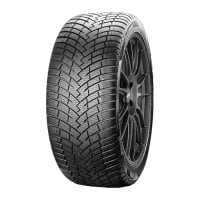
The Cinturato WeatherActive emerged as the overall winner despite being the most affordable option at $219. It delivered exceptional dry performance with the most responsive and direct steering feel, making it incredibly easy to manage around the autocross track. The Pirelli also performed impressively in wet conditions (finishing a close second), offered a comfortable ride quality absorbing road imperfections well, and maintained respectable snow performance. Its V-formation directional tread pattern similar to Michelin's design likely contributed to its balanced year-round performance, proving you don't need to sacrifice everyday driving comfort when choosing an all-weather tyre.
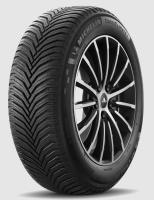
Despite being five years old, the $232 Michelin CrossClimate2 demonstrated excellent all-around capability with its distinctive tread pattern. It dominated wet testing, finishing first in every objective category with superior responsiveness to steering, braking, and acceleration inputs. In snow, it excelled particularly in braking with impressive longitudinal grip. However, the CrossClimate2 showed resolute understeer in dry conditions, making it difficult to rotate through courses. Additionally, testers noted a firm ride quality that felt jumpy over anything larger than small imperfections and higher noise levels on smooth surfaces, which likely contributed to its second-place finish despite its wet-weather dominance.
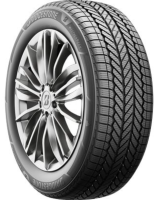
The $224 Bridgestone WeatherPeak was the clear snow performance champion, delivering the quickest acceleration, fastest snow-covered autocross time, and shortest stopping distance in winter conditions. It also earned top marks for comfort, with the quietest cabin noise measurement of 65 decibels at highway speeds. However, its snow-focused design compromised dry and wet performance significantly - it tied for the slowest time around the dry autocross, had braking distances more than a car length longer than the best performers, and finished second-to-last in wet testing. The squishy tread that contributed to comfort also caused an annoying tendency to wander and tramline on highways.
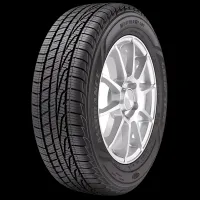
As the successor to the tyre that invented the all-season category in 1977, the $221 Goodyear Assurance WeatherReady delivered solid dry performance and above-average wet results, but struggled significantly in snow. Keeping the Goodyear-equipped vehicle pointed straight on snow was described as "nothing short of exhausting," requiring constant countersteering to avoid unrecoverable slides. It finished last in snow braking (arguably the most important winter metric for crash avoidance), though it did manage the second-quickest time around the snowcross loop. The tyre is due to be replaced by the WeatherReady 2, which wasn't available for testing but may address these winter performance deficits.
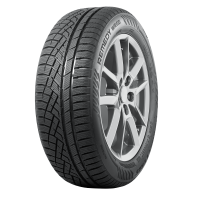
Despite finishing last overall, the newest tyre in the test, the $220 Nokian Remedy WRG5, offered two significant advantages: the best warranty (60,000 miles with no age limit) and strong performance in both dry conditions and snow. In winter testing, it worked as hard as the top-scoring tyres to fight understeer and achieved the highest peak speed (63 mph) around the snowcross track. However, its wet performance was dismal - stopping distances were nearly 25 feet longer than the best performer, and it induced dangerous oversteer on the wet autocross and slalom. This poor wet-weather behavior overshadowed its strengths and ultimately cost it in the final rankings.
Hello, Could you compare Continental ExtremeContact Sport 02 and SportContact 7? What are the differences regarding performance and market position? Thank you.
It's pretty niche but I would like to do it one day. Basically SC7 will have better wet grip and lower rolling resistance and the ECS02 will last longer.




Hello,
Could you compare Continental ExtremeContact Sport 02 and SportContact 7?
What are the differences regarding performance and market position?
Thank you.
It's pretty niche but I would like to do it one day. Basically SC7 will have better wet grip and lower rolling resistance and the ECS02 will last longer.