

If you’ve been watching our recent coverage from Europe, you'll know that the Michelin CrossClimate 3 and CrossClimate 3 Sport launched in Europe in July 2025, bringing improvements to what was already one of the segment benchmarks. Naturally, my inbox has been flooded with one question: "When can I buy the CrossClimate 3 and 3 Sport in the USA and Canada?"
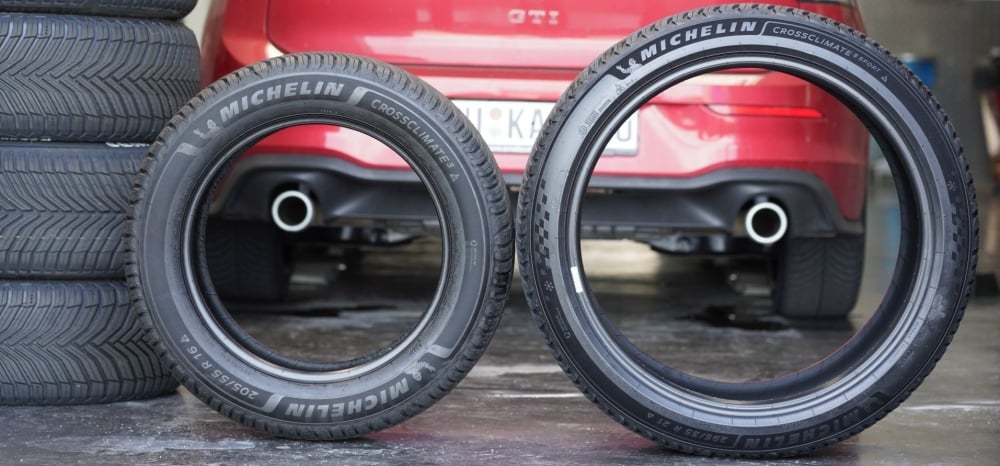
We now have an official answer, and it might not be what you were hoping for.
According to a new clarification on Michelin's North American site, the CrossClimate 3 will not be coming to North America for "several years."
Here is the breakdown of what’s happening, why Michelin is splitting their strategy, and what it means for your next tyre purchase.
The Official Statement
Michelin has added a specific note to their US product page addressing the delay. It reads:
"The Michelin CrossClimate 3 tyre launched in Europe in July 2025... While the CrossClimate 3 tyre has been available in Europe since July 2025, North America will continue with the Michelin CrossClimate 2 tyre for the next several years."
They go on to cite "different priorities for tyre performances based on driving style, vehicle types, geography, and climate" as the primary reason. But what does that actually mean in engineering terms?

Decoding "Tailored Construction": Why We aren't Getting the CC3
It is easy to assume that tyres are global products, but the "All Season" (or All Weather) market in North America is fundamentally different from the All Season market in Europe.
1. The Mileage War In North America, drivers demand high mileage warranties. Americans expect their tyres to last 60,000 to 70,000 miles. To achieve this, the North American CrossClimate 2 uses a specific tread compound and often a deeper starting tread depth (typically around 8mm+).
In Europe, priorities are different. Drivers (and EU regulations) prioritize wet braking performance and rolling resistance (fuel economy) over raw longevity. The new European CrossClimate 3 focuses heavily on these attributes to meet strict EU environmental labels. If Michelin brought the European CC3 spec directly to the US, it would likely fail to meet the treadwear warranties US consumers expect.
2. "Sport" vs. "Touring" The launch of the CrossClimate 3 Sport in Europe is designed for high-performance vehicles that need winter certification (3PMSF). In North America, this segment is smaller; enthusiasts here are more likely to swap between dedicated Pilot Sport 4S summer tyres or ultra high performance all season tyres such as the Michelin Pilot Sport All Season 4, straight to the Michelin X-Ice Snow tyres. The "All Weather" segment in the US is still dominated by SUVs and crossovers like the RAV4 and CR-V, where the current CrossClimate 2 is already one of the best in the segment.
Should You Wait?
 No.
No.
If you need tyres now, do not hold out for a "North American CrossClimate 3."
Michelin’s statement explicitly says the CrossClimate 2 AW (Michelin print AW on the sidewall of the American version for "All Weather", it does not appear on the EU version) will remain their flagship here for years. And truthfully, it is still the tyre to beat. In our internal testing and real-world comparisons against the new Goodyear Assurance WeatherReady 2, the CrossClimate 2 still holds the advantage in dry braking, snow traction and rolling resistance.
It's very likely the "CrossClimate 3" name will eventually arrive in North America, but when it does, it will likely be a different tyre internally than what Europe has today -redesigned specifically to hit that 60k+ mile warranty Americans expect.
TLDR: Europe gets the latest wet-braking tech; North America needs the mileage. For now, the CrossClimate 2 remains the one of the best "set it and forget it" options for US and Canadian roads.

I had hoped the Cross Climate 3 sport would be a good choice, but we cannot get them.
I will need a set of tire this fall for my wife's car and will likely get the same thing although I have not seen testing on the Goodyear WeatherReady 2.
It like Michelin, but the proof is in the actual track testing.
I also bought the Contiental DWS06 over the Michelin Pilot Sport All Season 4 for the other 8 months of the year, as the aging design is falling behind on track testing.
I have been waiting CC3 to upgrade and now I finally know why it's nowhere to be found here in America.
well that sucks, I was expecting the very improved Dry wet performance CC3 Sport, so now even when it come to US, probably wont be as gd as the current test data which shows the EU CC3...