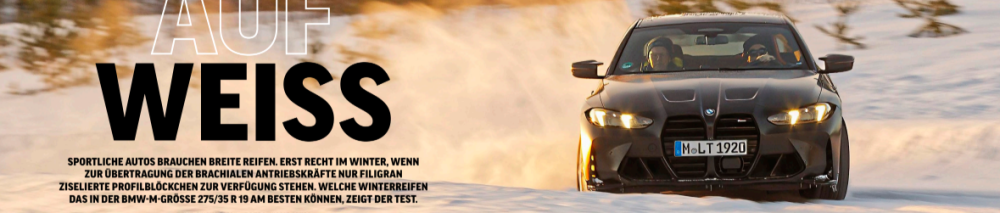
German publication Sportauto has published its winter tyre test for 2025, evaluating six winter tyres in the 275/35 R19 size designed for high-performance BMW M vehicles. The test also included one all-season tyre, the Vredestein Quatrac Pro+, which was assessed outside the main competition as a reference point. Testing was conducted in Finland using a BMW M4, a rear-wheel-drive vehicle producing over 600 Nm of torque, which places exceptional demands on tyre grip.
The Clear Winner
Michelin's Pilot Alpin 5 delivered a dominant performance, achieving the highest score of 9.2 and the only "outstanding" rating in the test. The tyre topped the snow braking, snow lateral grip, snow traction, and dry braking categories while remaining competitive in wet conditions. This consistency across all surfaces made it the standout choice, though it commands the highest price at €416 per tyre.
Continental's Unusual Weakness
Perhaps the most surprising result came from Continental's WinterContact 8 S. The German manufacturer typically produces class-leading wet weather tyres, but this model finished last in wet handling, lateral aquaplaning resistance, and near the bottom in wet braking. The explanation lies in the tyre's origins: it is derived from original equipment specifications with an emphasis on low rolling resistance rather than outright grip. Those seeking Continental's typical wet-weather excellence should look to the WinterContact TS 870P instead.
Test Publication:
275/35 R19
6 tyres
5 categories
Images courtesy of Sport Auto
Test Publication:
Images courtesy of Sport Auto
Test Size:
275/35 R19
Tyres Tested:
6 tyres
The All-Season Question
The inclusion of the Vredestein Quatrac Pro+ all-season tyre addressed a question Sportauto says now exceeds "which winter tyre is best" in reader enquiries: whether winter tyres are necessary at all.
The results were instructive. On snow, the all-season tyre finished last in every category, and testers concluded its grip level was simply inadequate for the M4's torque output. However, on wet surfaces it matched or exceeded several winter tyres, finishing second in wet braking and joint first in wet handling times. On dry roads, it equalled the Michelin's handling pace and delivered the second-shortest braking distance.
The testers' conclusion was clear: for drivers in regions with minimal snowfall, an all-season tyre like the Quatrac Pro+ may actually provide safer, more sporting performance than a winter tyre. But for any driver who regularly encounters snow-covered roads, dedicated winter rubber remains essential, particularly on powerful rear-wheel-drive vehicles where electronic stability systems significantly limit available power when traction is compromised.
Dry
Dry Braking
- Michelin Pilot Alpin 5
- Vredestein Quatrac Pro Plus Ref
- Goodyear UltraGrip Performance 3
- Continental WinterContact 8 S
- Hankook Winter i cept evo3
- Bridgestone Blizzak 6
- Vredestein Wintrac Pro plus
Dry Handling
- Goodyear UltraGrip Performance 3
- Michelin Pilot Alpin 5
- Vredestein Quatrac Pro Plus Ref
- Continental WinterContact 8 S
- Hankook Winter i cept evo3
- Bridgestone Blizzak 6
- Vredestein Wintrac Pro plus
Wet
Wet Braking
- Bridgestone Blizzak 6
- Vredestein Quatrac Pro Plus Ref
- Michelin Pilot Alpin 5
- Hankook Winter i cept evo3
- Goodyear UltraGrip Performance 3
- Continental WinterContact 8 S
- Vredestein Wintrac Pro plus
Wet Handling
- Vredestein Quatrac Pro Plus Ref
- Hankook Winter i cept evo3
- Goodyear UltraGrip Performance 3
- Bridgestone Blizzak 6
- Vredestein Wintrac Pro plus
- Michelin Pilot Alpin 5
- Continental WinterContact 8 S
Snow
Snow Braking
- Michelin Pilot Alpin 5
- Hankook Winter i cept evo3
- Continental WinterContact 8 S
- Vredestein Wintrac Pro plus
- Bridgestone Blizzak 6
- Goodyear UltraGrip Performance 3
- Vredestein Quatrac Pro Plus Ref
Snow Traction
- Vredestein Quatrac Pro Plus Ref
- Continental WinterContact 8 S
- Goodyear UltraGrip Performance 3
- Vredestein Wintrac Pro plus
- Hankook Winter i cept evo3
- Bridgestone Blizzak 6
- Michelin Pilot Alpin 5
Snow Handling
- Bridgestone Blizzak 6
- Hankook Winter i cept evo3
- Michelin Pilot Alpin 5
- Goodyear UltraGrip Performance 3
- Continental WinterContact 8 S
- Vredestein Wintrac Pro plus
- Vredestein Quatrac Pro Plus Ref
Comfort
Noise
- Michelin Pilot Alpin 5
- Goodyear UltraGrip Performance 3
- Vredestein Quatrac Pro Plus Ref
- Continental WinterContact 8 S
- Bridgestone Blizzak 6
- Vredestein Wintrac Pro plus
- Hankook Winter i cept evo3
Value
Rolling Resistance
Results
The Michelin Pilot Alpin 5 emerges as the test winner, proving itself to be a highly reliable, grip-strong tyre with broad safety reserves on snow. Testers found it delivered precisely what a rear-wheel-drive car needs in winter: grip and more grip. On wet surfaces, the tyre exhibits very safe handling characteristics, though with pronounced understeer. The dry performance impressed with agile steering response and strong cornering stability, complemented by low noise levels and excellent fuel efficiency. The only minor criticisms were a somewhat nervous rear axle during evasive maneuvers and quick lane changes on asphalt, along with marginal damping weaknesses when driving over joints and edges. Despite commanding the highest price in the test, the Michelin justified its premium with outstanding all-round snow performance combined with minimal wet-weather deficits.
| Test |
# |
Result |
Best |
Diff |
% |
| Dry Braking |
1st |
41.1 M |
|
|
100% |
| Dry Handling |
2nd |
121.5 Km/H |
121.6 Km/H |
-0.1 Km/H |
99.92% |
| Test |
# |
Result |
Best |
Diff |
% |
| Wet Braking |
2nd |
32.2 M |
31.7 M |
+0.5 M |
98.45% |
| Wet Handling |
5th |
74.3 Km/H |
75.9 Km/H |
-1.6 Km/H |
97.89% |
| Wet Circle |
5th |
8.25 m/s |
8.37 m/s |
-0.12 m/s |
98.57% |
| Straight Aqua |
2nd |
92 Km/H |
93.9 Km/H |
-1.9 Km/H |
97.98% |
| Curved Aquaplaning |
3rd |
1.75 m/sec2 |
1.83 m/sec2 |
-0.08 m/sec2 |
95.63% |
| Test |
# |
Result |
Best |
Diff |
% |
| Snow Braking |
1st |
26.2 M |
|
|
100% |
| Snow Traction |
6th |
6.61 N |
7.37 N |
-0.76 N |
89.69% |
| Snow Handling |
3rd |
75.5 Km/H |
76 Km/H |
-0.5 Km/H |
99.34% |
| Snow Slalom |
1st |
4.03 m/sec2 |
|
|
100% |
| Test |
# |
Result |
Best |
Diff |
% |
| Noise |
1st |
71.8 dB |
|
|
100% |
| Test |
# |
Result |
Best |
Diff |
% |
| Rolling Resistance |
2nd |
7.9 kg / t |
7.8 kg / t |
+0.1 kg / t |
98.73% |
The brand-new Bridgestone Blizzak 6 demonstrates very balanced driving dynamics on snow, making it particularly adept at handling Germany's feared cold wet conditions. Testers praised its very short braking distances and safe, tendency-to-understeer handling on both wet and dry roads. The tyre also proved very secure during evasive maneuvers. However, it showed longer braking distances and somewhat reduced cornering stability with pronounced understeer, particularly in dry curves. The Bridgestone stands out as the strongest performer on wet surfaces among the winter tyres tested, offering drivers confidence when rain meets cold temperatures.
| Test |
# |
Result |
Best |
Diff |
% |
| Dry Braking |
5th |
43.5 M |
41.1 M |
+2.4 M |
94.48% |
| Dry Handling |
5th |
120.2 Km/H |
121.6 Km/H |
-1.4 Km/H |
98.85% |
| Test |
# |
Result |
Best |
Diff |
% |
| Wet Braking |
1st |
31.7 M |
|
|
100% |
| Wet Handling |
3rd |
75.4 Km/H |
75.9 Km/H |
-0.5 Km/H |
99.34% |
| Wet Circle |
3rd |
8.27 m/s |
8.37 m/s |
-0.1 m/s |
98.81% |
| Straight Aqua |
6th |
86.5 Km/H |
93.9 Km/H |
-7.4 Km/H |
92.12% |
| Curved Aquaplaning |
5th |
1.44 m/sec2 |
1.83 m/sec2 |
-0.39 m/sec2 |
78.69% |
| Test |
# |
Result |
Best |
Diff |
% |
| Snow Braking |
5th |
26.7 M |
26.2 M |
+0.5 M |
98.13% |
| Snow Traction |
4th |
7 N |
7.37 N |
-0.37 N |
94.98% |
| Snow Handling |
1st |
76 Km/H |
|
|
100% |
| Snow Slalom |
4th |
3.85 m/sec2 |
4.03 m/sec2 |
-0.18 m/sec2 |
95.53% |
| Test |
# |
Result |
Best |
Diff |
% |
| Noise |
4th |
74.8 dB |
71.8 dB |
+3 dB |
95.99% |
| Test |
# |
Result |
Best |
Diff |
% |
| Rolling Resistance |
2nd |
7.9 kg / t |
7.8 kg / t |
+0.1 kg / t |
98.73% |
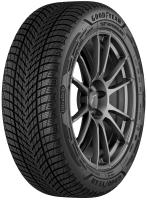
The Goodyear UltraGrip Performance 3 delivers a driving-focused experience, performing particularly well on wet and dry asphalt. Despite somewhat weaker deceleration and lateral grip, testers found it offered safely understeering, easy-to-control handling on snow. The tyre provides very good cornering grip and proves demanding yet dynamic to drive on both wet and dry surfaces. Some criticisms included slightly longer braking distances but easy handling on snow, very neutral yet rather load-change sensitive behavior in wet and dry corners, and limited self-damping. Overall, it represents a solid choice for drivers who prioritize asphalt performance while still needing winter capability.
| Test |
# |
Result |
Best |
Diff |
% |
| Dry Braking |
2nd |
41.8 M |
41.1 M |
+0.7 M |
98.33% |
| Dry Handling |
1st |
121.6 Km/H |
|
|
100% |
| Test |
# |
Result |
Best |
Diff |
% |
| Wet Braking |
4th |
32.3 M |
31.7 M |
+0.6 M |
98.14% |
| Wet Handling |
2nd |
75.6 Km/H |
75.9 Km/H |
-0.3 Km/H |
99.6% |
| Wet Circle |
1st |
8.37 m/s |
|
|
100% |
| Straight Aqua |
4th |
90.4 Km/H |
93.9 Km/H |
-3.5 Km/H |
96.27% |
| Curved Aquaplaning |
4th |
1.64 m/sec2 |
1.83 m/sec2 |
-0.19 m/sec2 |
89.62% |
| Test |
# |
Result |
Best |
Diff |
% |
| Snow Braking |
6th |
26.8 M |
26.2 M |
+0.6 M |
97.76% |
| Snow Traction |
2nd |
7.31 N |
7.37 N |
-0.06 N |
99.19% |
| Snow Handling |
3rd |
75.5 Km/H |
76 Km/H |
-0.5 Km/H |
99.34% |
| Snow Slalom |
4th |
3.85 m/sec2 |
4.03 m/sec2 |
-0.18 m/sec2 |
95.53% |
| Test |
# |
Result |
Best |
Diff |
% |
| Noise |
1st |
71.8 dB |
|
|
100% |
| Test |
# |
Result |
Best |
Diff |
% |
| Rolling Resistance |
4th |
8.3 kg / t |
7.8 kg / t |
+0.5 kg / t |
93.98% |
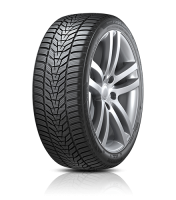
The Hankook i cept evo 3 feels almost tailor-made for the powerful BMW M4 test car when driven on snow, offering excellent balance, good cornering grip, and generous reserves. Testers noted that despite slight lateral grip weaknesses, it maintains safely understeering behavior on wet roads. The positive attributes include strong snow performance with well-matched characteristics for high-powered rear-wheel-drive vehicles. However, limitations appeared in wet cornering grip, sluggish turn-in response, limited reserves, and somewhat longer braking distances on dry asphalt. Comfort weaknesses and rolling noise were also noted as drawbacks, making it less refined than some competitors in everyday driving situations.
| Test |
# |
Result |
Best |
Diff |
% |
| Dry Braking |
4th |
43.4 M |
41.1 M |
+2.3 M |
94.7% |
| Dry Handling |
4th |
120.8 Km/H |
121.6 Km/H |
-0.8 Km/H |
99.34% |
| Test |
# |
Result |
Best |
Diff |
% |
| Wet Braking |
2nd |
32.2 M |
31.7 M |
+0.5 M |
98.45% |
| Wet Handling |
1st |
75.9 Km/H |
|
|
100% |
| Wet Circle |
6th |
8.12 m/s |
8.37 m/s |
-0.25 m/s |
97.01% |
| Straight Aqua |
3rd |
91.3 Km/H |
93.9 Km/H |
-2.6 Km/H |
97.23% |
| Curved Aquaplaning |
2nd |
1.77 m/sec2 |
1.83 m/sec2 |
-0.06 m/sec2 |
96.72% |
| Test |
# |
Result |
Best |
Diff |
% |
| Snow Braking |
2nd |
26.4 M |
26.2 M |
+0.2 M |
99.24% |
| Snow Traction |
4th |
7 N |
7.37 N |
-0.37 N |
94.98% |
| Snow Handling |
2nd |
75.7 Km/H |
76 Km/H |
-0.3 Km/H |
99.61% |
| Snow Slalom |
2nd |
3.95 m/sec2 |
4.03 m/sec2 |
-0.08 m/sec2 |
98.01% |
| Test |
# |
Result |
Best |
Diff |
% |
| Noise |
6th |
77.4 dB |
71.8 dB |
+5.6 dB |
92.76% |
| Test |
# |
Result |
Best |
Diff |
% |
| Rolling Resistance |
5th |
8.4 kg / t |
7.8 kg / t |
+0.6 kg / t |
92.86% |
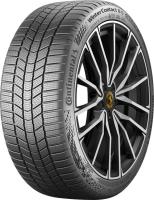
The Continental WinterContact 8 S, derived from original equipment tyres, offers precise, easily calculable, and safely neutral-to-understeering handling characteristics across all tested surfaces. Testers appreciated its good rolling comfort and very low rolling resistance, making it an efficient choice. However, this tyre deviates from Continental's typically strong wet-weather reputation. Being optimized primarily for original equipment manufacturer requirements with emphasis on low rolling resistance, the WinterContact 8 S falls behind in wet braking, shows somewhat elevated aquaplaning risk, and delivers comparatively weak wet grip. Those expecting Continental's premium wet-weather product should look to the WinterContact TS 870P instead.
| Test |
# |
Result |
Best |
Diff |
% |
| Dry Braking |
3rd |
42.8 M |
41.1 M |
+1.7 M |
96.03% |
| Dry Handling |
3rd |
121 Km/H |
121.6 Km/H |
-0.6 Km/H |
99.51% |
| Test |
# |
Result |
Best |
Diff |
% |
| Wet Braking |
5th |
32.9 M |
31.7 M |
+1.2 M |
96.35% |
| Wet Handling |
6th |
73 Km/H |
75.9 Km/H |
-2.9 Km/H |
96.18% |
| Wet Circle |
2nd |
8.3 m/s |
8.37 m/s |
-0.07 m/s |
99.16% |
| Straight Aqua |
5th |
86.8 Km/H |
93.9 Km/H |
-7.1 Km/H |
92.44% |
| Curved Aquaplaning |
6th |
1.37 m/sec2 |
1.83 m/sec2 |
-0.46 m/sec2 |
74.86% |
| Test |
# |
Result |
Best |
Diff |
% |
| Snow Braking |
3rd |
26.5 M |
26.2 M |
+0.3 M |
98.87% |
| Snow Traction |
1st |
7.37 N |
|
|
100% |
| Snow Handling |
5th |
74.4 Km/H |
76 Km/H |
-1.6 Km/H |
97.89% |
| Snow Slalom |
3rd |
3.9 m/sec2 |
4.03 m/sec2 |
-0.13 m/sec2 |
96.77% |
| Test |
# |
Result |
Best |
Diff |
% |
| Noise |
3rd |
73.9 dB |
71.8 dB |
+2.1 dB |
97.16% |
| Test |
# |
Result |
Best |
Diff |
% |
| Rolling Resistance |
1st |
7.8 kg / t |
|
|
100% |
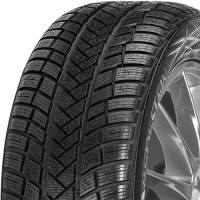
The recently revised Vredestein Wintrac Pro+ represents a significant performance improvement, offering good capability at a fair price point. Testers found it delivered good traction and decent braking on snow, along with balanced, neutral-to-understeering wet handling and very good aquaplaning prevention. The downsides include weak cornering grip on snow despite good longitudinal dynamics, long wet braking distances, and typical winter-tyre limitations in driving stability at high cornering speeds and during evasive maneuvers. It also recorded the highest rolling resistance in the test. For budget-conscious buyers who don't frequently encounter heavy snow, it offers reasonable value despite its limitations.
| Test |
# |
Result |
Best |
Diff |
% |
| Dry Braking |
6th |
43.6 M |
41.1 M |
+2.5 M |
94.27% |
| Dry Handling |
6th |
119.7 Km/H |
121.6 Km/H |
-1.9 Km/H |
98.44% |
| Test |
# |
Result |
Best |
Diff |
% |
| Wet Braking |
6th |
33.6 M |
31.7 M |
+1.9 M |
94.35% |
| Wet Handling |
4th |
75.3 Km/H |
75.9 Km/H |
-0.6 Km/H |
99.21% |
| Wet Circle |
3rd |
8.27 m/s |
8.37 m/s |
-0.1 m/s |
98.81% |
| Straight Aqua |
1st |
93.9 Km/H |
|
|
100% |
| Curved Aquaplaning |
1st |
1.83 m/sec2 |
|
|
100% |
| Test |
# |
Result |
Best |
Diff |
% |
| Snow Braking |
4th |
26.6 M |
26.2 M |
+0.4 M |
98.5% |
| Snow Traction |
2nd |
7.31 N |
7.37 N |
-0.06 N |
99.19% |
| Snow Handling |
6th |
74.1 Km/H |
76 Km/H |
-1.9 Km/H |
97.5% |
| Snow Slalom |
6th |
3.77 m/sec2 |
4.03 m/sec2 |
-0.26 m/sec2 |
93.55% |
| Test |
# |
Result |
Best |
Diff |
% |
| Noise |
5th |
75.5 dB |
71.8 dB |
+3.7 dB |
95.1% |
| Test |
# |
Result |
Best |
Diff |
% |
| Rolling Resistance |
6th |
9.8 kg / t |
7.8 kg / t |
+2 kg / t |
79.59% |

Discussion