
Auto Zeitung has conducted a comprehensive winter tyre test in size 245/45 R19, evaluating ten current winter tyres across snow, wet, and dry conditions, with additional laboratory analysis for durability and environmental impact. The test field includes five premium tyres (Bridgestone Blizzak 6 Enliten, Continental WinterContact TS 870P, Goodyear UltraGrip Performance 3, Michelin Pilot Alpin 5, and Pirelli P Zero Winter 2), two mid range segment tyres (Vredestein Wintrac Pro+ and Yokohama BluEarth Winter V906), and three budget options from Chinese manufacturers (Linglong Sport Master Winter, Maxxis Premitra Snow WP6, and Triangle EffeXWinter TW421). Testing was conducted at Goodyear's facilities for winter conditions and Continental's proving grounds for wet and dry tests, with laboratory durability analysis performed at both Pirelli and Continental facilities. The test vehicle was a BMW 520d Touring.
Test setup & methodology
The test setting, the conditions recorded and how the results contribute to the score.
Recorded test conditions
Recorded test conditions
- Dry Braking
- 100 → 0 km/h
- Snow Braking
- 50 → 0 km/h
Test Results and Key Findings
The Goodyear UltraGrip Performance 3 secured the test victory with 414 points out of 450, demonstrating the most consistent performance across all conditions. The testers noted its ability to deliver very good to excellent results in every single discipline without significant weaknesses - a rare achievement in winter tyre testing. Second place went to the Michelin Pilot Alpin 5 with 397 points, which earned the environmental recommendation due to its outstanding projected mileage of 46,750 km and lowest wear rate in the test. The Pirelli P Zero Winter 2 claimed third with 393 points, distinguished by the shortest wet braking distance in the entire test and its construction from at least 55% recycled or bio-based materials.

The Bridgestone Blizzak 6 Enliten finished fourth with 390 points and received the fuel efficiency recommendation, achieving the best rolling resistance result at just 7.6 kg/t thanks to its Enliten technology. The Continental WinterContact TS 870P rounded out the top five with 376 points, delivering the best aquaplaning protection in longitudinal testing at 91.0 km/h. These five premium tyres all received "sehr empfehlenswert" (highly recommended) ratings from Auto Zeitung.
Premium vs Budget Analysis
The test clearly demonstrates that winter tyre performance cannot be separated from price considerations. The premium tyres from Bridgestone, Continental, Goodyear, Michelin, and Pirelli all delivered consistent, balanced performance across all conditions with only minor weaknesses in specific areas. Their prices ranged from 975 to 1090 euros per set.
In stark contrast, the three Chinese budget tyres (Linglong at 385 euros, Triangle at 350 euros, and Maxxis at 585 euros) all showed significant deficiencies. The Linglong Sport Master Winter, despite being manufactured in Serbia specifically for European customers, recorded the longest snow braking distance at 27.6 meters and generated the highest exterior noise at 76.2 dB(A). Its high wear rate of 0.215 mm per 1000 km and rolling resistance of 9.6 kg/t resulted in the worst environmental profile in the test.
The testers calculated cost per kilometer driven based on purchase price and laboratory-measured wear rates. While the Triangle offers the lowest absolute cost per kilometer at 3.18 euros per 1000 km, this calculation doesn't account for its safety compromises, particularly the instability during load changes and poor projected mileage of just 27,500 km. In contrast, the Michelin - despite being the most expensive tyre at 1090 euros per set - delivered a cost per kilometer of 5.83 euros while providing the longest projected life and best overall environmental characteristics.
Environmental and Efficiency Considerations
Auto Zeitung conducted extensive laboratory testing to measure wear rates, rolling resistance, and noise emissions - factors increasingly important to environmentally conscious consumers. The Michelin Pilot Alpin 5 emerged as the clear environmental champion with the lowest wear rate (0.124 mm per 1000 km), longest projected mileage (46,750 km), low rolling resistance (7.9 kg/t), and moderate noise (71.2 dB(A)).
The Bridgestone Blizzak 6 Enliten demonstrated that efficiency technology works, achieving the absolute best rolling resistance at 7.6 kg/t - significantly better than any competitor. However, its projected mileage of 39,750 km fell short of the Michelin's longevity, preventing it from claiming the overall environmental crown.
The budget tyres performed poorly in environmental metrics. The Triangle, Linglong, and Maxxis all showed wear rates between 0.205 and 0.223 mm per 1000 km - up to 80% higher than the Michelin. Their projected mileages ranged from just 27,500 to 30,500 km, meaning they would need replacing almost twice as often as the premium alternatives. The Linglong's combination of highest rolling resistance (9.6 kg/t) and loudest operation (76.2 dB(A)) represents the worst environmental impact in this test.
Dry
The Michelin Pilot Alpin 5 achieves the shortest dry braking distance at 42.4 meters, with the budget Triangle surprisingly claiming second place just 0.4 meters behind, while the Maxxis trails the field by 3.8 meters
Dry Braking
Dry braking in meters (100 - 0 km/h)
Lower is better ↓| Position / Tyre | Result | Gap to best | Residual speed |
|---|---|---|---|
| 42.4 m | Best | 0 km/h | |
| 42.8 m | +0.40 m | 13 km/h | |
| 43.3 m | +0.90 m | 19 km/h | |
| 43.4 m | +1.00 m | 20 km/h | |
| 43.6 m | +1.20 m | 22 km/h | |
| 43.6 m | +1.20 m | 22 km/h | |
| 44.6 m | +2.20 m | 29 km/h | |
| 44.8 m | +2.40 m | 30 km/h | |
| 45.2 m | +2.80 m | 32 km/h | |
| 46.2 m | +3.80 m | 37 km/h |
The difference between best and worst was 9% (3.8 m ≈ 0.8 Car Lengths). From 130 km/h, the Maxxis Premitra Snow WP6 would still be travelling at 37 km/h when the Michelin Pilot Alpin 5 had stopped.
Residual speed is calculated from the measured braking distances, assuming constant deceleration; it is not a separate measurement.
The Linglong records the fastest lap time despite its budget positioning, completing the 2.4 km circuit in 75.2 seconds, while the testers note this speed came at the cost of stability with a nervous rear axle requiring constant driver attention, and the Triangle falls 2.1 seconds behind in last place.
Dry Handling
Dry handling time in seconds
Lower is better ↓| Position / Tyre | Result | Gap to best |
|---|---|---|
| 75.2 s | Best | |
| 75.6 s | +0.40 s | |
| 75.8 s | +0.60 s | |
| 75.9 s | +0.70 s | |
| 75.9 s | +0.70 s | |
| 76.3 s | +1.10 s | |
| 76.3 s | +1.10 s | |
| 76.6 s | +1.40 s | |
| 76.7 s | +1.50 s | |
| 77.3 s | +2.10 s |
All the tyres in the Dry Handling test finished less than 3% apart.
Wet
The Pirelli P Zero Winter 2 establishes dominance in wet conditions with the shortest stopping distance of 48.6 meters from 100 km/h, while the Maxxis requires a dangerous 8.2 meters more to stop - meaning where the Pirelli-equipped BMW has already halted, the Maxxis would still be traveling at nearly 40 km/h.
Wet Braking
Wet braking in meters
Lower is better ↓| Position / Tyre | Result | Gap to best |
|---|---|---|
| 48.6 m | Best | |
| 49.3 m | +0.70 m | |
| 50.6 m | +2.00 m | |
| 51.3 m | +2.70 m | |
| 51.4 m | +2.80 m | |
| 52.4 m | +3.80 m | |
| 52.7 m | +4.10 m | |
| 53.3 m | +4.70 m | |
| 53.4 m | +4.80 m | |
| 56.8 m | +8.20 m |
The difference between best and worst was 16.9% (8.2 m ≈ 1.8 Car Lengths).
The Pirelli continues its wet weather superiority with the fastest lap time of 84.9 seconds on the 1.8 km circuit, demonstrating the consistency of its wet performance, while the struggling Maxxis again finishes last at 91.5 seconds - 6.6 seconds slower and confirming its fundamental weakness in wet conditions.
Wet Handling
Wet handling time in seconds
Lower is better ↓| Position / Tyre | Result | Gap to best |
|---|---|---|
| 84.9 s | Best | |
| 85.3 s | +0.40 s | |
| 86.3 s | +1.40 s | |
| 86.4 s | +1.50 s | |
| 86.5 s | +1.60 s | |
| 87.2 s | +2.30 s | |
| 88.1 s | +3.20 s | |
| 88.4 s | +3.50 s | |
| 89.1 s | +4.20 s | |
| 91.5 s | +6.60 s |
The difference between best and worst was 7.8% (6.6 s).
Lateral grip measured on the 58-meter diameter wet circle shows the Pirelli maintaining its wet performance advantage with the quickest time of 12.26 seconds, while the Maxxis once again trails at 13.16 seconds, a gap of 0.9 seconds that reinforces the tyre's inadequate wet weather capabilities.
Wet Circle
Wet Circle Lap Time in seconds
Lower is better ↓| Position / Tyre | Result | Gap to best |
|---|---|---|
| 12.26 s | Best | |
| 12.35 s | +0.09 s | |
| 12.43 s | +0.17 s | |
| 12.52 s | +0.26 s | |
| 12.63 s | +0.37 s | |
| 12.67 s | +0.41 s | |
| 12.67 s | +0.41 s | |
| 12.68 s | +0.42 s | |
| 12.72 s | +0.46 s | |
| 13.16 s | +0.90 s |
The difference between best and worst was 7.3% (0.9 s).
The Continental WinterContact TS 870P leads aquaplaning resistance at 91.0 km/h, providing the best protection against straight-line hydroplaning, while the Yokohama offers the least resistance at 85.4 km/h - a significant 5.6 km/h difference that could mean the difference between control and losing grip in heavy rain.
Straight Aqua
Float Speed in Km/H
Higher is better ↑| Position / Tyre | Result | Gap to best |
|---|---|---|
| 91 km/h | Best | |
| 90.3 km/h | -0.70 km/h | |
| 88.2 km/h | -2.80 km/h | |
| 88.2 km/h | -2.80 km/h | |
| 88.1 km/h | -2.90 km/h | |
| 88 km/h | -3.00 km/h | |
| 87.9 km/h | -3.10 km/h | |
| 86.7 km/h | -4.30 km/h | |
| 86.4 km/h | -4.60 km/h | |
| 85.4 km/h | -5.60 km/h |
The difference between best and worst was 6.2% (5.6 Km/H).
Snow
The Michelin achieves the shortest snow braking distance at 25.9 meters from 50 km/h, closely followed by the Bridgestone at 25.7 meters, while the budget Linglong requires 1.7 meters more distance to stop - a concerning margin when winter conditions deteriorate.
Snow Braking
Snow braking in meters (50 - 0 km/h)
Lower is better ↓| Position / Tyre | Result | Gap to best | Residual speed |
|---|---|---|---|
| 25.7 m | Best | 0 km/h | |
| 25.9 m | +0.20 m | 11 km/h | |
| 26 m | +0.30 m | 14 km/h | |
| 26.1 m | +0.40 m | 16 km/h | |
| 26.3 m | +0.60 m | 20 km/h | |
| 26.3 m | +0.60 m | 20 km/h | |
| 26.4 m | +0.70 m | 21 km/h | |
| 26.4 m | +0.70 m | 21 km/h | |
| 27.1 m | +1.40 m | 30 km/h | |
| 27.6 m | +1.90 m | 34 km/h |
The difference between best and worst was 7.4% (1.9 m ≈ 0.4 Car Lengths). From 130 km/h, the Linglong Sport Master Winter would still be travelling at 34 km/h when the Bridgestone Blizzak 6 had stopped.
Residual speed is calculated from the measured braking distances, assuming constant deceleration; it is not a separate measurement.
The Michelin generates the highest traction force at 3575 Newtons during repeated acceleration tests, enabling confident forward motion in deep snow, while the Yokohama musters only 3030 Newtons - a deficit of 545 Newtons that translates to noticeably reduced ability to climb snowy gradients or accelerate away from standstill.
Snow Traction
Pulling Force in Newtons
Higher is better ↑| Position / Tyre | Result | Gap to best |
|---|---|---|
| 3575 N | Best | |
| 3480 N | -95.00 N | |
| 3440 N | -135.00 N | |
| 3420 N | -155.00 N | |
| 3355 N | -220.00 N | |
| 3255 N | -320.00 N | |
| 3210 N | -365.00 N | |
| 3110 N | -465.00 N | |
| 3090 N | -485.00 N | |
| 3030 N | -545.00 N |
The difference between best and worst was 15.2% (545 N).
The Michelin records the fastest snow lap at 68.0 seconds on the 1.1 km circuit, with the Bridgestone just 0.1 seconds behind, demonstrating the premium tyres' winter capabilities, while the Triangle struggles to 73.7 seconds - 5.7 seconds slower and exposing significant performance compromises.
Snow Handling
Snow handling time in seconds
Lower is better ↓| Position / Tyre | Result | Gap to best |
|---|---|---|
| 68 s | Best | |
| 68.1 s | +0.10 s | |
| 68.3 s | +0.30 s | |
| 70.7 s | +2.70 s | |
| 70.8 s | +2.80 s | |
| 71.1 s | +3.10 s | |
| 71.2 s | +3.20 s | |
| 71.6 s | +3.60 s | |
| 72.4 s | +4.40 s | |
| 73.7 s | +5.70 s |
The difference between best and worst was 8.4% (5.7 s).
Comfort
Subjective comfort ratings show most tyres scoring 7 or 8 out of 10 points with relatively little separation between premium and mid-range options, though the Maxxis falls to just 6 out of 10, reflecting its harsher ride quality that compounds its performance deficiencies in other areas.
Subj. Comfort
Subjective Comfort Score
Higher is better ↑| Position / Tyre | Result | Gap to best |
|---|---|---|
| 8 Points | Best | |
| 8 Points | Best | |
| 8 Points | Best | |
| 8 Points | Best | |
| 8 Points | Best | |
| 8 Points | Best | |
| 8 Points | Best | |
| 7 Points | -1.00 Points | |
| 7 Points | -1.00 Points | |
| 6 Points | -2.00 Points |
The difference between best and worst was 25% (2 Points).
The Triangle produces the quietest exterior noise at 70.3 dB(A) when passing at 80 km/h, one of its few positive results, while the Linglong generates 76.2 dB(A) - a 5.9 dB(A) increase that represents a near-doubling of perceived noise intensity and contributes to environmental noise pollution.
Noise
External noise in dB
Lower is better ↓| Position / Tyre | Result | Gap to best |
|---|---|---|
| 70.3 dB | Best | |
| 70.5 dB | +0.20 dB | |
| 71.1 dB | +0.80 dB | |
| 71.2 dB | +0.90 dB | |
| 71.8 dB | +1.50 dB | |
| 72 dB | +1.70 dB | |
| 72.4 dB | +2.10 dB | |
| 72.7 dB | +2.40 dB | |
| 73.3 dB | +3.00 dB | |
| 76.2 dB | +5.90 dB |
The difference between best and worst was 8.4% (5.9 dB).

Value
The Michelin's superior wear resistance translates to a projected lifespan of 46,750 km before reaching legal minimum tread depth, while the Triangle is expected to last only 27,500 km - meaning drivers would need to purchase 1.7 sets of Triangle tyres to match the distance covered by a single set of Michelins, fundamentally altering the value equation.
Wear
Predicted tread life in KM
Higher is better ↑| Position / Tyre | Result | Gap to best |
|---|---|---|
| 46,750 KM | Best | |
| 43,750 KM | -3,000 KM | |
| 40,750 KM | -6,000 KM | |
| 40,000 KM | -6,750 KM | |
| 39,750 KM | -7,000 KM | |
| 31,250 KM | -15,500 KM | |
| 31,000 KM | -15,750 KM | |
| 30,500 KM | -16,250 KM | |
| 28,500 KM | -18,250 KM | |
| 27,500 KM | -19,250 KM |
The difference between best and worst was 41.2% (19,250 KM).
When purchase price is divided by projected mileage, the Triangle offers the lowest cost per 1000 km at 3.18 euros, but this calculation doesn't account for its safety compromises, while the Michelin at 5.83 euros per 1000 km proves that premium pricing can deliver competitive running costs when combined with exceptional durability and the highest levels of performance and safety.
Value
Euros/1000km based on cost/wear
Lower is better ↓| Position / Tyre | Result | Gap to best | cost per 1,000 km |
|---|---|---|---|
| 12.72 Price/1000 | Best | €17.36 | |
| 13.52 Price/1000 | +0.80 Price/1000 | €22.91 | |
| 19.2 Price/1000 | +6.48 Price/1000 | €23.56 | |
| 22.52 Price/1000 | +9.80 Price/1000 | €27.94 | |
| 23.08 Price/1000 | +10.36 Price/1000 | €31.23 | |
| 23.32 Price/1000 | +10.60 Price/1000 | €25.85 | |
| 24.52 Price/1000 | +11.80 Price/1000 | €26.29 | |
| 25.28 Price/1000 | +12.56 Price/1000 | €29.77 | |
| 27.12 Price/1000 | +14.40 Price/1000 | €30.96 | |
| 28 Price/1000 | +15.28 Price/1000 | €34.06 |
The difference between best and worst was 120.1% (15.28 Price/1000). Over 40,000 km the cheapest tyre to own (Triangle Effexwinter) works out €668 cheaper than the most expensive (Vredestein Wintrac Pro+).
How this is calculated
Assumes a typical car using 8 l/100km (with rolling resistance causing 20% of fuel use), fuel at €1.65 per litre and €70 fitting per set of four. Purchase prices are from the time of the 2025 test; financing costs are excluded.
The Bridgestone's Enliten technology delivers the lowest rolling resistance at just 7.6 kg/t, maximizing fuel efficiency and earning the economy recommendation, while the Linglong's 9.6 kg/t represents 26% higher resistance - translating directly to increased fuel consumption and CO2 emissions over the tyre's lifetime.
Rolling Resistance
Rolling resistance in kg t
Lower is better ↓| Position / Tyre | Result | Gap to best | Extra fuel / year |
|---|---|---|---|
| 7.6 kg/t | Best | £0 | |
| 7.9 kg/t | +0.30 kg/t | £17 | |
| 8.2 kg/t | +0.60 kg/t | £35 | |
| 8.2 kg/t | +0.60 kg/t | £35 | |
| 8.2 kg/t | +0.60 kg/t | £35 | |
| 8.4 kg/t | +0.80 kg/t | £46 | |
| 8.7 kg/t | +1.10 kg/t | £64 | |
| 8.7 kg/t | +1.10 kg/t | £64 | |
| 9.3 kg/t | +1.70 kg/t | £99 | |
| 9.6 kg/t | +2.00 kg/t | £116 |
The difference between best and worst was 26.3% (2 kg / t). Over 19,000 km a year at £1.45/L, the Linglong Sport Master Winter uses about 80 L (£116) more fuel than the Bridgestone Blizzak 6.
Adjust the assumptions
Calculated estimates, not additional measurements. Use the controls to explore the assumptions.
Laboratory testing reveals the Michelin wears at just 0.124 mm per 1000 km, the lowest rate in the test, while the Triangle sheds rubber at 0.223 mm per 1000 km - an 80% higher wear rate that means the budget tyre will need replacing almost twice as often, negating much of its initial cost advantage.
Abrasion
Millimetre of tread lost per 1000km driven
Lower is better ↓| Position / Tyre | Result | Gap to best |
|---|---|---|
| 0.12 mm/1000km | Best | |
| 0.14 mm/1000km | +0.02 mm/1000km | |
| 0.15 mm/1000km | +0.03 mm/1000km | |
| 0.15 mm/1000km | +0.03 mm/1000km | |
| 0.15 mm/1000km | +0.03 mm/1000km | |
| 0.19 mm/1000km | +0.07 mm/1000km | |
| 0.2 mm/1000km | +0.08 mm/1000km | |
| 0.21 mm/1000km | +0.09 mm/1000km | |
| 0.22 mm/1000km | +0.10 mm/1000km | |
| 0.22 mm/1000km | +0.10 mm/1000km |
The difference between best and worst was 83.3% (0.1 mm/1000km).
Results
Goodyear UltraGrip Performance 3
245/45 R19 102V XL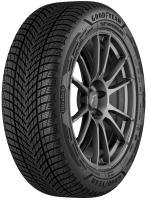
Category scores (% of best)
All discipline results (19)
Discipline positions compare the ranked tyres in this test, not the whole market. These are individual measurements, not weighted overall scores.
| Test | Position in discipline | Result | Gap to best |
|---|---|---|---|
| Dry BrakingLower is better | 5th / 10 | 43.6 m | +1.20 m |
| Dry HandlingLower is better | 3rd / 10 | 75.8 s | +0.60 s |
| Subj. Dry HandlingHigher is better | 1st / 10 | 30 Points | Best in this discipline |
| Wet BrakingLower is better | 2nd / 10 | 49.3 m | +0.70 m |
| Wet HandlingLower is better | 2nd / 10 | 85.3 s | +0.40 s |
| Subj. Wet HandlingHigher is better | 2nd / 10 | 42 Points | -3.00 Points |
| Wet CircleLower is better | 2nd / 10 | 12.35 s | +0.09 s |
| Straight AquaHigher is better | 5th / 10 | 88.1 km/h | -2.90 km/h |
| Snow BrakingLower is better | 3rd / 10 | 26 m | +0.30 m |
| Snow TractionHigher is better | 2nd / 10 | 3480 N | -95.00 N |
| Snow HandlingLower is better | 3rd / 10 | 68.3 s | +0.30 s |
| Subj. Snow HandlingHigher is better | 4th / 10 | 23 Points | -6.00 Points |
| Snow CircleHigher is better | 1st / 10 | 3.88 ms/2 | Best in this discipline |
| Subj. ComfortHigher is better | 8th / 10 | 7 Points | -1.00 Points |
| NoiseLower is better | 3rd / 10 | 71.1 dB | +0.80 dB |
| WearHigher is better | 2nd / 10 | 43750 KM | -3,000.00 KM |
| ValueLower is better | 4th / 10 | 22.52 Price/1000 | +9.80 Price/1000 |
| Rolling ResistanceLower is better | 7th / 10 | 8.7 kg/t | +1.10 kg/t |
| AbrasionLower is better | 2nd / 10 | 0.14 mm/1000km | +0.02 mm/1000km |
- EU Label
- C/C/70
- 3PMSF
- Yes
- Weight
- 11.4 kgs
- Tread
- 7.9 mm
- Price
- 985.00
Michelin Pilot Alpin 5
245/45 R19 102V XL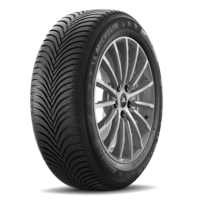
Category scores (% of best)
All discipline results (19)
Discipline positions compare the ranked tyres in this test, not the whole market. These are individual measurements, not weighted overall scores.
| Test | Position in discipline | Result | Gap to best |
|---|---|---|---|
| Dry BrakingLower is better | 1st / 10 | 42.4 m | Best in this discipline |
| Dry HandlingLower is better | 4th / 10 | 75.9 s | +0.70 s |
| Subj. Dry HandlingHigher is better | 7th / 10 | 20 Points | -10.00 Points |
| Wet BrakingLower is better | 3rd / 10 | 50.6 m | +2.00 m |
| Wet HandlingLower is better | 4th / 10 | 86.4 s | +1.50 s |
| Subj. Wet HandlingHigher is better | 6th / 10 | 33 Points | -12.00 Points |
| Wet CircleLower is better | 4th / 10 | 12.52 s | +0.26 s |
| Straight AquaHigher is better | 3rd / 10 | 88.2 km/h | -2.80 km/h |
| Snow BrakingLower is better | 2nd / 10 | 25.9 m | +0.20 m |
| Snow TractionHigher is better | 1st / 10 | 3575 N | Best in this discipline |
| Snow HandlingLower is better | 1st / 10 | 68 s | Best in this discipline |
| Subj. Snow HandlingHigher is better | 3rd / 10 | 25 Points | -4.00 Points |
| Snow CircleHigher is better | 3rd / 10 | 3.76 ms/2 | -0.12 ms/2 |
| Subj. ComfortHigher is better | 1st / 10 | 8 Points | Best in this discipline |
| NoiseLower is better | 4th / 10 | 71.2 dB | +0.90 dB |
| WearHigher is better | 1st / 10 | 46750 KM | Best in this discipline |
| ValueLower is better | 6th / 10 | 23.32 Price/1000 | +10.60 Price/1000 |
| Rolling ResistanceLower is better | 2nd / 10 | 7.9 kg/t | +0.30 kg/t |
| AbrasionLower is better | 1st / 10 | 0.124 mm/1000km | Best in this discipline |
- EU Label
- C/B/72
- 3PMSF
- Yes
- Weight
- 11.4 kgs
- Tread
- 7.45 mm
- Price
- 1090.00
Pirelli P Zero Winter 2
245/45 R19 102V XL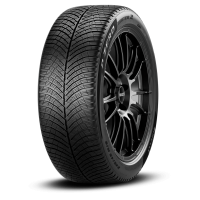
Category scores (% of best)
All discipline results (19)
Discipline positions compare the ranked tyres in this test, not the whole market. These are individual measurements, not weighted overall scores.
| Test | Position in discipline | Result | Gap to best |
|---|---|---|---|
| Dry BrakingLower is better | 5th / 10 | 43.6 m | +1.20 m |
| Dry HandlingLower is better | 2nd / 10 | 75.6 s | +0.40 s |
| Subj. Dry HandlingHigher is better | 3rd / 10 | 26 Points | -4.00 Points |
| Wet BrakingLower is better | 1st / 10 | 48.6 m | Best in this discipline |
| Wet HandlingLower is better | 1st / 10 | 84.9 s | Best in this discipline |
| Subj. Wet HandlingHigher is better | 1st / 10 | 45 Points | Best in this discipline |
| Wet CircleLower is better | 1st / 10 | 12.26 s | Best in this discipline |
| Straight AquaHigher is better | 9th / 10 | 86.4 km/h | -4.60 km/h |
| Snow BrakingLower is better | 4th / 10 | 26.1 m | +0.40 m |
| Snow TractionHigher is better | 3rd / 10 | 3440 N | -135.00 N |
| Snow HandlingLower is better | 5th / 10 | 70.8 s | +2.80 s |
| Subj. Snow HandlingHigher is better | 5th / 10 | 21 Points | -8.00 Points |
| Snow CircleHigher is better | 5th / 10 | 3.59 ms/2 | -0.29 ms/2 |
| Subj. ComfortHigher is better | 1st / 10 | 8 Points | Best in this discipline |
| NoiseLower is better | 2nd / 10 | 70.5 dB | +0.20 dB |
| WearHigher is better | 4th / 10 | 40000 KM | -6,750.00 KM |
| ValueLower is better | 9th / 10 | 27.12 Price/1000 | +14.40 Price/1000 |
| Rolling ResistanceLower is better | 3rd / 10 | 8.2 kg/t | +0.60 kg/t |
| AbrasionLower is better | 5th / 10 | 0.154 mm/1000km | +0.03 mm/1000km |
- EU Label
- C/A/70
- 3PMSF
- Yes
- Weight
- 11.6 kgs
- Tread
- 7.5 mm
- Price
- 1085.00
Bridgestone Blizzak 6
245/45 R19 102W XL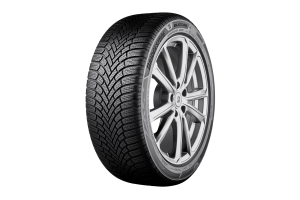
Category scores (% of best)
All discipline results (19)
Discipline positions compare the ranked tyres in this test, not the whole market. These are individual measurements, not weighted overall scores.
| Test | Position in discipline | Result | Gap to best |
|---|---|---|---|
| Dry BrakingLower is better | 9th / 10 | 45.2 m | +2.80 m |
| Dry HandlingLower is better | 6th / 10 | 76.3 s | +1.10 s |
| Subj. Dry HandlingHigher is better | 5th / 10 | 23 Points | -7.00 Points |
| Wet BrakingLower is better | 4th / 10 | 51.3 m | +2.70 m |
| Wet HandlingLower is better | 7th / 10 | 88.1 s | +3.20 s |
| Subj. Wet HandlingHigher is better | 5th / 10 | 34 Points | -11.00 Points |
| Wet CircleLower is better | 6th / 10 | 12.67 s | +0.41 s |
| Straight AquaHigher is better | 2nd / 10 | 90.3 km/h | -0.70 km/h |
| Snow BrakingLower is better | 1st / 10 | 25.7 m | Best in this discipline |
| Snow TractionHigher is better | 4th / 10 | 3420 N | -155.00 N |
| Snow HandlingLower is better | 2nd / 10 | 68.1 s | +0.10 s |
| Subj. Snow HandlingHigher is better | 1st / 10 | 29 Points | Best in this discipline |
| Snow CircleHigher is better | 2nd / 10 | 3.86 ms/2 | -0.02 ms/2 |
| Subj. ComfortHigher is better | 1st / 10 | 8 Points | Best in this discipline |
| NoiseLower is better | 8th / 10 | 72.7 dB | +2.40 dB |
| WearHigher is better | 5th / 10 | 39750 KM | -7,000.00 KM |
| ValueLower is better | 7th / 10 | 24.52 Price/1000 | +11.80 Price/1000 |
| Rolling ResistanceLower is better | 1st / 10 | 7.6 kg/t | Best in this discipline |
| AbrasionLower is better | 3rd / 10 | 0.147 mm/1000km | +0.02 mm/1000km |
- EU Label
- C/B/72
- 3PMSF
- Yes
- Weight
- 11.0 kgs
- Tread
- 7.6 mm
- Price
- 975.00
Continental WinterContact TS 870 P
245/45 R19 102V XL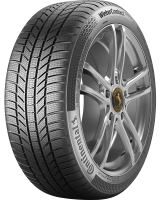
Category scores (% of best)
All discipline results (19)
Discipline positions compare the ranked tyres in this test, not the whole market. These are individual measurements, not weighted overall scores.
| Test | Position in discipline | Result | Gap to best |
|---|---|---|---|
| Dry BrakingLower is better | 8th / 10 | 44.8 m | +2.40 m |
| Dry HandlingLower is better | 4th / 10 | 75.9 s | +0.70 s |
| Subj. Dry HandlingHigher is better | 2nd / 10 | 28 Points | -2.00 Points |
| Wet BrakingLower is better | 6th / 10 | 52.4 m | +3.80 m |
| Wet HandlingLower is better | 3rd / 10 | 86.3 s | +1.40 s |
| Subj. Wet HandlingHigher is better | 3rd / 10 | 38 Points | -7.00 Points |
| Wet CircleLower is better | 3rd / 10 | 12.43 s | +0.17 s |
| Straight AquaHigher is better | 1st / 10 | 91 km/h | Best in this discipline |
| Snow BrakingLower is better | 7th / 10 | 26.4 m | +0.70 m |
| Snow TractionHigher is better | 7th / 10 | 3210 N | -365.00 N |
| Snow HandlingLower is better | 4th / 10 | 70.7 s | +2.70 s |
| Subj. Snow HandlingHigher is better | 2nd / 10 | 27 Points | -2.00 Points |
| Snow CircleHigher is better | 4th / 10 | 3.69 ms/2 | -0.19 ms/2 |
| Subj. ComfortHigher is better | 8th / 10 | 7 Points | -1.00 Points |
| NoiseLower is better | 5th / 10 | 71.8 dB | +1.50 dB |
| WearHigher is better | 3rd / 10 | 40750 KM | -6,000.00 KM |
| ValueLower is better | 8th / 10 | 25.28 Price/1000 | +12.56 Price/1000 |
| Rolling ResistanceLower is better | 6th / 10 | 8.4 kg/t | +0.80 kg/t |
| AbrasionLower is better | 3rd / 10 | 0.147 mm/1000km | +0.02 mm/1000km |
- EU Label
- C/B/71
- 3PMSF
- Yes
- Weight
- 11.4 kgs
- Tread
- 8.4 mm
- Price
- 1030.00
Vredestein Wintrac Pro+
245/45 R19 102W XL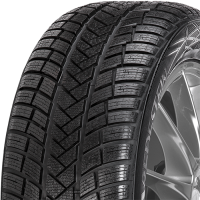
Category scores (% of best)
All discipline results (19)
Discipline positions compare the ranked tyres in this test, not the whole market. These are individual measurements, not weighted overall scores.
| Test | Position in discipline | Result | Gap to best |
|---|---|---|---|
| Dry BrakingLower is better | 7th / 10 | 44.6 m | +2.20 m |
| Dry HandlingLower is better | 9th / 10 | 76.7 s | +1.50 s |
| Subj. Dry HandlingHigher is better | 9th / 10 | 15 Points | -15.00 Points |
| Wet BrakingLower is better | 8th / 10 | 53.3 m | +4.70 m |
| Wet HandlingLower is better | 5th / 10 | 86.5 s | +1.60 s |
| Subj. Wet HandlingHigher is better | 4th / 10 | 35 Points | -10.00 Points |
| Wet CircleLower is better | 5th / 10 | 12.63 s | +0.37 s |
| Straight AquaHigher is better | 3rd / 10 | 88.2 km/h | -2.80 km/h |
| Snow BrakingLower is better | 5th / 10 | 26.3 m | +0.60 m |
| Snow TractionHigher is better | 8th / 10 | 3110 N | -465.00 N |
| Snow HandlingLower is better | 6th / 10 | 71.1 s | +3.10 s |
| Subj. Snow HandlingHigher is better | 6th / 10 | 19 Points | -10.00 Points |
| Snow CircleHigher is better | 8th / 10 | 3.43 ms/2 | -0.45 ms/2 |
| Subj. ComfortHigher is better | 1st / 10 | 8 Points | Best in this discipline |
| NoiseLower is better | 7th / 10 | 72.4 dB | +2.10 dB |
| WearHigher is better | 6th / 10 | 31250 KM | -15,500.00 KM |
| ValueLower is better | 10th / 10 | 28 Price/1000 | +15.28 Price/1000 |
| Rolling ResistanceLower is better | 7th / 10 | 8.7 kg/t | +1.10 kg/t |
| AbrasionLower is better | 7th / 10 | 0.201 mm/1000km | +0.08 mm/1000km |
- EU Label
- C/C/72
- 3PMSF
- Yes
- Weight
- 12.9 kgs
- Tread
- 8.45 mm
- Price
- 875.00
Triangle Effexwinter
245/45 R19 102V XLCategory scores (% of best)
All discipline results (19)
Discipline positions compare the ranked tyres in this test, not the whole market. These are individual measurements, not weighted overall scores.
| Test | Position in discipline | Result | Gap to best |
|---|---|---|---|
| Dry BrakingLower is better | 2nd / 10 | 42.8 m | +0.40 m |
| Dry HandlingLower is better | 10th / 10 | 77.3 s | +2.10 s |
| Subj. Dry HandlingHigher is better | 10th / 10 | 13 Points | -17.00 Points |
| Wet BrakingLower is better | 7th / 10 | 52.7 m | +4.10 m |
| Wet HandlingLower is better | 8th / 10 | 88.4 s | +3.50 s |
| Subj. Wet HandlingHigher is better | 8th / 10 | 30 Points | -15.00 Points |
| Wet CircleLower is better | 9th / 10 | 12.72 s | +0.46 s |
| Straight AquaHigher is better | 8th / 10 | 86.7 km/h | -4.30 km/h |
| Snow BrakingLower is better | 5th / 10 | 26.3 m | +0.60 m |
| Snow TractionHigher is better | 6th / 10 | 3255 N | -320.00 N |
| Snow HandlingLower is better | 10th / 10 | 73.7 s | +5.70 s |
| Subj. Snow HandlingHigher is better | 10th / 10 | 12 Points | -17.00 Points |
| Snow CircleHigher is better | 9th / 10 | 3.39 ms/2 | -0.49 ms/2 |
| Subj. ComfortHigher is better | 1st / 10 | 8 Points | Best in this discipline |
| NoiseLower is better | 1st / 10 | 70.3 dB | Best in this discipline |
| WearHigher is better | 10th / 10 | 27500 KM | -19,250.00 KM |
| ValueLower is better | 1st / 10 | 12.72 Price/1000 | Best in this discipline |
| Rolling ResistanceLower is better | 3rd / 10 | 8.2 kg/t | +0.60 kg/t |
| AbrasionLower is better | 10th / 10 | 0.223 mm/1000km | +0.10 mm/1000km |
- EU Label
- C/B/72
- 3PMSF
- Yes
- Weight
- 12.5 kgs
- Tread
- 7.75 mm
- Price
- 350.00
Yokohama BluEarth*Winter V906
245/45 R19 102V XL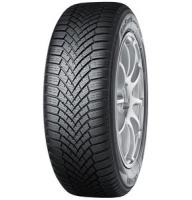
Category scores (% of best)
All discipline results (19)
Discipline positions compare the ranked tyres in this test, not the whole market. These are individual measurements, not weighted overall scores.
| Test | Position in discipline | Result | Gap to best |
|---|---|---|---|
| Dry BrakingLower is better | 3rd / 10 | 43.3 m | +0.90 m |
| Dry HandlingLower is better | 6th / 10 | 76.3 s | +1.10 s |
| Subj. Dry HandlingHigher is better | 6th / 10 | 22 Points | -8.00 Points |
| Wet BrakingLower is better | 5th / 10 | 51.4 m | +2.80 m |
| Wet HandlingLower is better | 6th / 10 | 87.2 s | +2.30 s |
| Subj. Wet HandlingHigher is better | 7th / 10 | 31 Points | -14.00 Points |
| Wet CircleLower is better | 8th / 10 | 12.68 s | +0.42 s |
| Straight AquaHigher is better | 10th / 10 | 85.4 km/h | -5.60 km/h |
| Snow BrakingLower is better | 9th / 10 | 27.1 m | +1.40 m |
| Snow TractionHigher is better | 10th / 10 | 3030 N | -545.00 N |
| Snow HandlingLower is better | 9th / 10 | 72.4 s | +4.40 s |
| Subj. Snow HandlingHigher is better | 9th / 10 | 13 Points | -16.00 Points |
| Snow CircleHigher is better | 10th / 10 | 3.19 ms/2 | -0.69 ms/2 |
| Subj. ComfortHigher is better | 1st / 10 | 8 Points | Best in this discipline |
| NoiseLower is better | 9th / 10 | 73.3 dB | +3.00 dB |
| WearHigher is better | 7th / 10 | 31000 KM | -15,750.00 KM |
| ValueLower is better | 5th / 10 | 23.08 Price/1000 | +10.36 Price/1000 |
| Rolling ResistanceLower is better | 9th / 10 | 9.3 kg/t | +1.70 kg/t |
| AbrasionLower is better | 6th / 10 | 0.185 mm/1000km | +0.06 mm/1000km |
- EU Label
- D/B/72
- 3PMSF
- Yes
- Weight
- 13.2 kgs
- Tread
- 8.0 mm
- Price
- 715.00
Linglong Sport Master Winter
245/45 R19 102V XL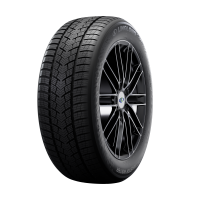
Category scores (% of best)
All discipline results (19)
Discipline positions compare the ranked tyres in this test, not the whole market. These are individual measurements, not weighted overall scores.
| Test | Position in discipline | Result | Gap to best |
|---|---|---|---|
| Dry BrakingLower is better | 4th / 10 | 43.4 m | +1.00 m |
| Dry HandlingLower is better | 1st / 10 | 75.2 s | Best in this discipline |
| Subj. Dry HandlingHigher is better | 4th / 10 | 25 Points | -5.00 Points |
| Wet BrakingLower is better | 9th / 10 | 53.4 m | +4.80 m |
| Wet HandlingLower is better | 9th / 10 | 89.1 s | +4.20 s |
| Subj. Wet HandlingHigher is better | 9th / 10 | 25 Points | -20.00 Points |
| Wet CircleLower is better | 6th / 10 | 12.67 s | +0.41 s |
| Straight AquaHigher is better | 7th / 10 | 87.9 km/h | -3.10 km/h |
| Snow BrakingLower is better | 10th / 10 | 27.6 m | +1.90 m |
| Snow TractionHigher is better | 9th / 10 | 3090 N | -485.00 N |
| Snow HandlingLower is better | 8th / 10 | 71.6 s | +3.60 s |
| Subj. Snow HandlingHigher is better | 8th / 10 | 15 Points | -14.00 Points |
| Snow CircleHigher is better | 7th / 10 | 3.46 ms/2 | -0.42 ms/2 |
| Subj. ComfortHigher is better | 1st / 10 | 8 Points | Best in this discipline |
| NoiseLower is better | 10th / 10 | 76.2 dB | +5.90 dB |
| WearHigher is better | 9th / 10 | 28500 KM | -18,250.00 KM |
| ValueLower is better | 2nd / 10 | 13.52 Price/1000 | +0.80 Price/1000 |
| Rolling ResistanceLower is better | 10th / 10 | 9.6 kg/t | +2.00 kg/t |
| AbrasionLower is better | 9th / 10 | 0.215 mm/1000km | +0.09 mm/1000km |
- EU Label
- D/A/72
- 3PMSF
- Yes
- Weight
- 12.7 kgs
- Tread
- 7.6 mm
- Price
- 385.00
Maxxis Premitra Snow WP6
245/45 R19 102W XL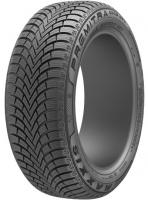
Category scores (% of best)
All discipline results (19)
Discipline positions compare the ranked tyres in this test, not the whole market. These are individual measurements, not weighted overall scores.
| Test | Position in discipline | Result | Gap to best |
|---|---|---|---|
| Dry BrakingLower is better | 10th / 10 | 46.2 m | +3.80 m |
| Dry HandlingLower is better | 8th / 10 | 76.6 s | +1.40 s |
| Subj. Dry HandlingHigher is better | 8th / 10 | 18 Points | -12.00 Points |
| Wet BrakingLower is better | 10th / 10 | 56.8 m | +8.20 m |
| Wet HandlingLower is better | 10th / 10 | 91.5 s | +6.60 s |
| Subj. Wet HandlingHigher is better | 10th / 10 | 19 Points | -26.00 Points |
| Wet CircleLower is better | 10th / 10 | 13.16 s | +0.90 s |
| Straight AquaHigher is better | 6th / 10 | 88 km/h | -3.00 km/h |
| Snow BrakingLower is better | 7th / 10 | 26.4 m | +0.70 m |
| Snow TractionHigher is better | 5th / 10 | 3355 N | -220.00 N |
| Snow HandlingLower is better | 7th / 10 | 71.2 s | +3.20 s |
| Subj. Snow HandlingHigher is better | 7th / 10 | 18 Points | -11.00 Points |
| Snow CircleHigher is better | 6th / 10 | 3.47 ms/2 | -0.41 ms/2 |
| Subj. ComfortHigher is better | 10th / 10 | 6 Points | -2.00 Points |
| NoiseLower is better | 6th / 10 | 72 dB | +1.70 dB |
| WearHigher is better | 8th / 10 | 30500 KM | -16,250.00 KM |
| ValueLower is better | 3rd / 10 | 19.2 Price/1000 | +6.48 Price/1000 |
| Rolling ResistanceLower is better | 3rd / 10 | 8.2 kg/t | +0.60 kg/t |
| AbrasionLower is better | 8th / 10 | 0.205 mm/1000km | +0.08 mm/1000km |
- EU Label
- C/B/69
- 3PMSF
- Yes
- Weight
- 12.2 kgs
- Tread
- 8.3 mm
- Price
- 585.00
Discussion