

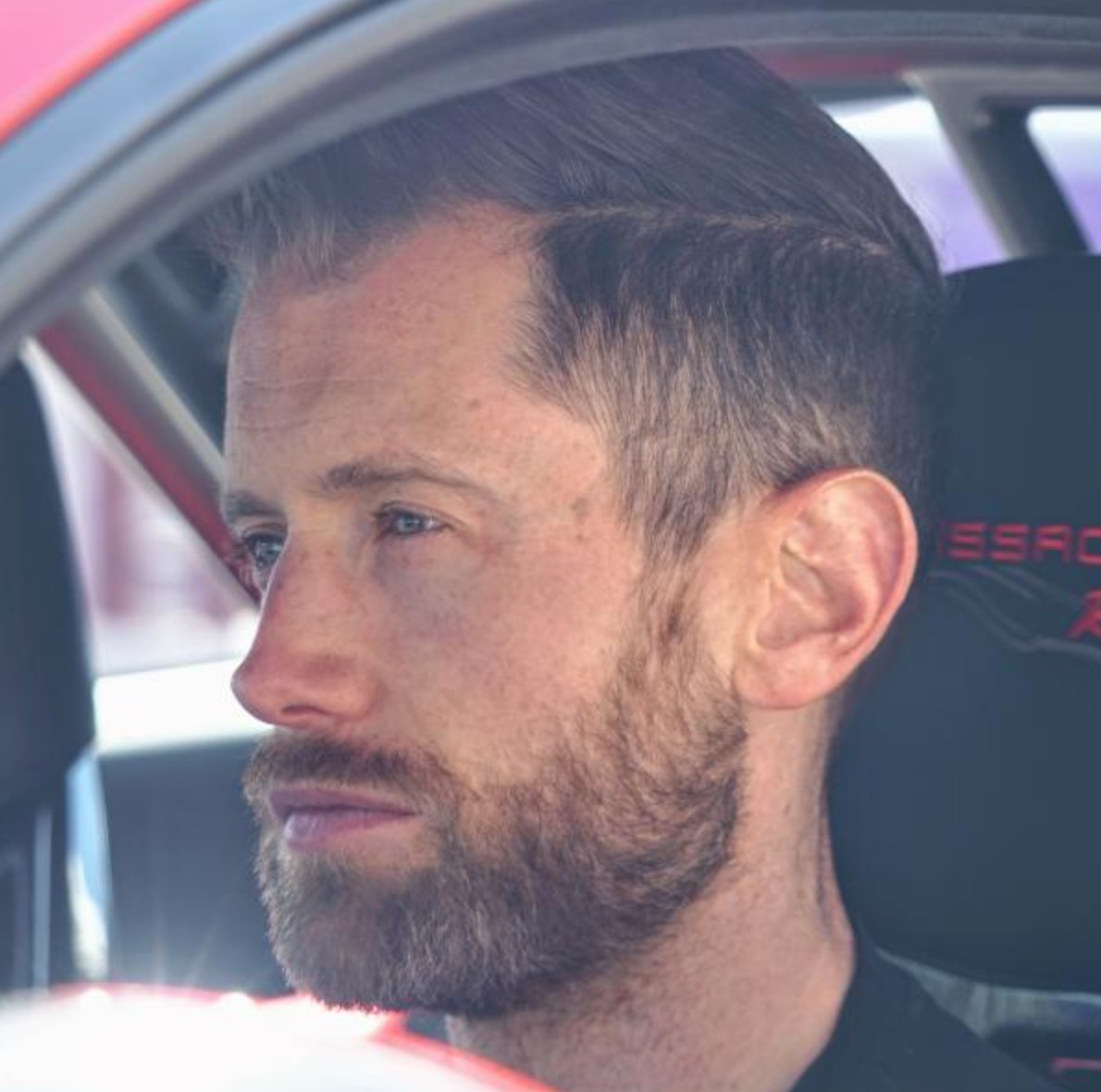

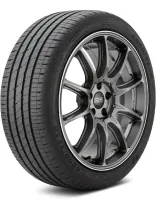
In this test we find out how the new Falken Azenis FK460 AS and Falken WildPeak Trail compare to the Tesla Model Y OE fitment Goodyear Eagle F1 Asymmetric 5 M+S.
Test setup & methodology
The test setting, the conditions recorded and how the results contribute to the score.
Show full testing methodology
Score Weighting
Weights express the scoring priorities, not how much each discipline actually changed the finishing order. The size of the performance gaps matters too. Category weights contribute to the overall score. Within each category, discipline weights divide that category’s share. Published finishing positions also need to be read alongside the editorial verdict.
| Test | Within category | Share of overall score |
|---|---|---|
| Dry · 27% | ||
| Dry Braking | 50% | 13.5% |
| Dry Handling | 50% | 13.5% |
| Wet · 37% | ||
| Wet Braking | 50% | 18.5% |
| Wet Handling | 50% | 18.5% |
| Snow · 26% | ||
| Snow Braking | 35% | 9.1% |
| Snow Traction | 30% | 7.8% |
| Snow Handling | 35% | 9.1% |
| Comfort · 5% | ||
| Subj. Comfort | 50% | 2.5% |
| Subj. Noise | 50% | 2.5% |
| Value · 5% | ||
| Rolling Resistance | 100% | 5% |
Our standard methods
The conditions above are recorded for this test. The descriptions below explain our standard procedures; measurement windows and run counts can vary by test.
Dry Braking
For dry braking, I drive the test vehicle at an entry speed of 110 km/h and apply full braking effort to a standstill with ABS active on clean, dry asphalt. I typically use an 100–5 km/h measurement window. My standard programme is five runs per tyre set where possible, although the sequence can extend to as many as fifteen runs if conditions and tyre category justify it. I analyse the full set of runs and discard statistical outliers before averaging. Reference tyres are run repeatedly throughout the session to correct for changing conditions.
Dry Handling
For dry handling, I drive at the limit of adhesion around a dedicated handling circuit with ESC disabled where possible so I can assess the tyre's natural balance, transient response, and limit behaviour without electronic intervention masking the result. I usually complete between two and five timed laps per tyre set, depending on the circuit, tyre type, and consistency of conditions. I exclude laps affected by clear driver error or obvious environmental inconsistency. Control runs are carried out frequently throughout the session, and I often use multiple sets of control tyres so that wear on the references does not become a meaningful variable. For more track-focused products, I also do endurance testing, which is a set number of laps at race pace to determine tire wear patterns and heat resistance over longer driving.
Wet Braking
For wet braking, I drive the test vehicle at an entry speed of 88 km/h and apply full braking effort to a standstill with ABS active on an asphalt surface with a controlled water film. I typically use an 80–5 km/h measurement window to isolate tyre performance from variability in the initial brake application. My standard programme is eight runs per tyre set where possible, although the sequence can extend to as many as fifteen runs if conditions and tyre category justify it. I analyse the full set of runs and discard statistical outliers before averaging. To correct for changing conditions, I run reference tyres repeatedly throughout the session — in wet testing, typically every three candidate test sets.
Wet Handling
For wet handling, I drive at the limit of adhesion around a dedicated handling circuit. I generally use specialist wet circuits with kerb-watering systems designed to maintain a consistent surface condition. ESC is disabled where possible so I can assess the tyre's natural balance, transient response, and limit behaviour without electronic intervention masking the result. I usually complete between two and five timed laps per tyre set, depending on the circuit, tyre type, and consistency of conditions. I exclude laps affected by clear driver error or obvious environmental inconsistency. Control runs are carried out frequently throughout the session, and I often use multiple sets of control tyres so that wear on the references does not become a meaningful variable.
Snow Braking
For snow braking, I drive the test vehicle at an entry speed of 50 km/h and apply full braking effort to a standstill with ABS active on a groomed, compacted snow surface, measuring 45-5 km/h. I generally use a wide VDA (vehicle dynamic area) and progressively move across the surface between runs so that no tyre ever brakes on the same piece of snow twice. My standard programme is twelve runs per tyre set, although the sequence can extend further if the data justify it. I analyse the full set of runs and discard statistical outliers before averaging. The surface is regularly groomed throughout the session. To correct for changing snow surface conditions, I run reference tyres repeatedly — typically every two candidate test sets.
Snow Traction
For snow traction, I accelerate the vehicle from rest on a groomed snow surface with traction control active and measure speed and time using GPS telemetry. I typically use a 5–35 km/h measurement window to reduce the influence of launch transients and powertrain irregularities. I use a wide VDA (vehicle dynamic area) and progressively move across the surface between runs so that no tyre ever accelerates on the same piece of snow twice. The surface is regularly groomed throughout the session. I complete multiple runs per tyre set and average the valid results. Reference tyres are run typically every two candidate test sets to correct for changing snow surface conditions.
Snow Handling
For snow handling, I drive at the limit of adhesion around a dedicated snow handling circuit with ESC disabled where possible. The circuit is groomed and prepared after every run while tyres are being changed, so each set runs on a consistently prepared surface. I usually complete between two and five timed laps per tyre set, excluding laps affected by clear driver error or obvious environmental inconsistency. Because snow surfaces degrade more rapidly than asphalt, control runs are carried out more frequently — typically every two candidate test sets.
Subj. Comfort
To assess comfort, I drive on a wide range of road surfaces (often dedicated comfort tracks at test facilities) at speeds from 50 to 120 km/h, including smooth motorway, coarse surfaces, expansion joints, broken pavement, and sharp-edged obstacles. I evaluate primary ride quality, secondary ride quality, impact harshness, seat-transmitted vibration, and the tyre's ability to absorb sharp inputs. Ratings are assigned on a 1–10 scale relative to the reference tyre.
Subj. Noise
For subjective noise assessment, I drive at constant speeds across multiple surface types with the windows closed, ventilation off, and audio system off. I assess overall noise level, tonal quality, cavity boom, pattern noise, broadband roar, and sensitivity to both speed and road texture. Each tyre is rated on a 1–10 scale and supported by written observations on noise character and annoyance.
Rolling Resistance
Rolling resistance is measured under controlled laboratory conditions in accordance with ISO 28580 and UNECE Regulation 117 Annex 6. The tyre is mounted on a test wheel and loaded against a large-diameter steel drum. After thermal stabilisation at the prescribed test speed, rolling resistance force is measured at the spindle and corrected according to the relevant procedure. The result is expressed as rolling resistance coefficient, typically in kg/tonne.
Why is this interesting? Firstly, it's always nice to test the newest tyres on the market, but more importantly it should help answer the question as to whether moving away from the OE tyre your vehicle came fitted with is always a good option.
The OE fitted Goodyear Eagle F1 Asymmetric 5 M+S has been developed with Tesla, and as such it is focused on low energy use, low noise levels and good comfort. This is pretty much now the standard set of rules car manufacturers want from an OE tyre, whether they're developing an electric vehicle or regular internal combustion powered vehicle!
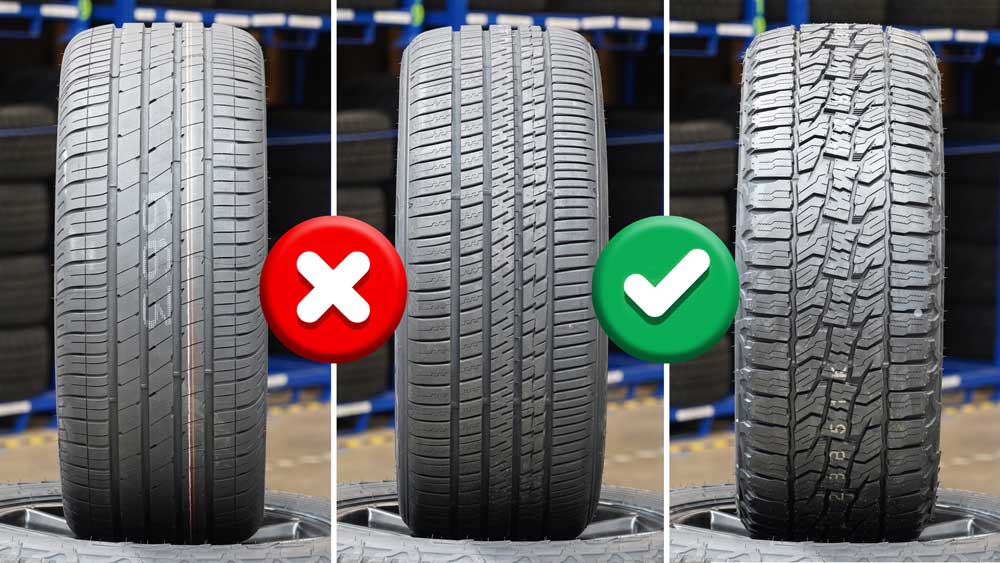
As this version of the Asymmetric 5 is specifically listed as M+S, it's been categorised as an ultra high performance all season tyre, which is a perfect match for the new Falken Azenis FK460 AS. At face value, as both these tyres sit in the same category, the main differences are that the Goodyear is fitted with acoustic foam and the Falken is not, and the Falken is warranted to 50,000 miles, where the Goodyear has no tread life warranty.
Finally, to give the test even more depth, what if you want to fit a mild all terrain tyre on a smaller wheel size so you can do light off-roading with piece of mind? It's a lot of things to test, but I'm also including the Falken WildPeak Trail in 18" (the other tyres are 20") as it will be a super interesting test to see how compromised the Model Y becomes with such a drastic change of wheel size and intent. The Wildpeak Trail is an mid all terrain tyre which is offered with at 65,000 mile treadwear warranty.
Wet
As always, I started the test in the wet, and as the OE tyre should be the perfect fit for this Model Y, I ran it first. Tesla and Goodyear done a really great job with this tyre.
I know from murmurings from the industry that Tesla not only focus on noise, comfort and range, but that they also love a tyre to steer hyper quickly, I'm not sure if it's to do with the desire to feel digital, but the Model Y with the Goodyear tyre almost feels like a sports car it turns so quickly.
As you would expect, while the tyre turned very quickly, it did break into understeer first which was manageable and pleasant.
So with this tyre so tuned, what chance does the aftermarket all season tyre have. Well, it turns out, quite a lot! I'm not going to claim that in terms of subjective handling it was better, but it pretty much equaled it, which I did not expect.
The steering was still crisp, the balance was still understeer and safe, though the FK460AS didn't quite give you the at limit feedback the Goodyear did, it did feel better on the brakes, and better midcorner in terms of outright grip. Really really impressive.
The difference in lap time was just over 1% in favour of the Falken. Given the fact that the Tesla tyre is optimised for energy use, this is actually really impressive for the Goodyear, however the wet braking data shows a different story, with the Goodyear stopping nearly 10% later than the Falken. Would the average driver notice anything between the two tyres, I really don't think so, other than braking if they really needed it.
How's your car going to be in the wet if you want to go offroading? Well, a little worse. Given the wheel size drop and the fact it's an AT tire, we are comparing a lot of variables at once which isn't ideal. The turn-in is slower, which will be down to both the wheel size and the tyre type, there was less peak grip when turning and braking, which will be down to the fact it's a mild AT tire, and everything just happened a little more slowly.
Wet Handling
Wet handling time in seconds
Lower is better ↓| Tyre | Result | Gap to best |
|---|---|---|
| 47.41 s | Best | |
| 48.15 s | +0.74 s | |
| 50.25 s | +2.84 s |
The difference between best and worst was 6% (2.84 s).
Wet Braking
Wet braking in meters
Lower is better ↓| Tyre | Result | Gap to best |
|---|---|---|
| 43.8 m | Best | |
| 47.2 m | +3.40 m | |
| 52.6 m | +8.80 m |
The difference between best and worst was 20.1% (8.8 m ≈ 2 Car Lengths).
Dry
The performance of the tyres was very similar in the dry. The OE Goodyear did stretch it legs subjectively a little more. It was just a bit sharper than the FK460 AS, and a lot sharper than the all terrain, which certainly wasn't at home during the handling lap. The Goodyear also took back the lead in lap time and braking, but by a much smaller margin than in the wet.
Perhaps the Tesla chassis and steering combination hides certain negative aspects of the tyres, but I'm genuinely impressed with just how good the Goodyear is on this, also impressed with how close the FK460 is given its higher starting tread depth.
Dry Braking
Dry braking in meters
Lower is better ↓| Tyre | Result | Gap to best |
|---|---|---|
| 35.5 m | Best | |
| 37.1 m | +1.60 m | |
| 41 m | +5.50 m |
The difference between best and worst was 15.5% (5.5 m ≈ 1.2 Car Lengths).
Dry Handling
Dry handling time in seconds
Lower is better ↓| Tyre | Result | Gap to best |
|---|---|---|
| 42.73 s | Best | |
| 42.79 s | +0.06 s | |
| 44.35 s | +1.62 s |
The difference between best and worst was 3.8% (1.62 s).

Snow
Snow, now this is where it gets even more interesting! To be as transparent as I possibly can be, due to timing, this snow data came from Falken as part of an internal evaluation. I do however trust the data.
If you've looked at how the tyres tread pattern looks, It will come as zero surprise the Goodyear was the worst in snow performance, 20% behind the all season in snow braking. What might be surprising to you is that the all terrain, the Wildpeak AT Trail was another 25% ahead of the all season! The AT Trail is "severe snow rated", which means it carries the 3 peak mountain snowflake symbol and it really shows with a huge difference in safety.
The story was similar in traction and handling, though not as pronounced as braking, with the Wildpeak AT Trail maintaining it's significant advantage over the FK460, which in turn had a sizeable advantage over the OE Goodyear.
Snow Braking
Snow braking in meters
Lower is better ↓| Tyre | Result | Gap to best |
|---|---|---|
| 13.1 m | Best | |
| 15.9 m | +2.80 m | |
| 19.1 m | +6.00 m |
The difference between best and worst was 45.8% (6 m ≈ 1.3 Car Lengths).
Snow Traction
Snow acceleration time
Lower is better ↓| Tyre | Result | Gap to best |
|---|---|---|
| 21.6 s | Best | |
| 23.1 s | +1.50 s | |
| 26.5 s | +4.90 s |
The difference between best and worst was 22.7% (4.9 s).
Snow Handling
Snow handling time in seconds
Lower is better ↓| Tyre | Result | Gap to best |
|---|---|---|
| 82.5 s | Best | |
| 85.8 s | +3.30 s | |
| 87.6 s | +5.10 s |
The difference between best and worst was 6.2% (5.1 s).
Comfort
The all terrain proved to be the most comfortable, which if everything was equal would be a very unusual result, but it is on a 2" smaller wheel so it has way more sidewall meaning it could absorb the impacts with ease. But, it was also the noisiest - it wasn't loud, but on smooth road there was tread pattern noise there wasn't with the other two.
That said, if noise is a big deal for you, the acoustic foam does work. The OE tire was slightly quieter than the aftermarket, and generally more comfortable on all surfaces and impacts, but again not by as much as I thought it was going to be. I keep coming back to would the average person notice? I think on the noise, maybe, on the comfort, probably not.
Subj. Comfort
Subjective Comfort Score
Higher is better ↑| Tyre | Result | Gap to best |
|---|---|---|
| 100 Points | Best | |
| 97 Points | -3.00 Points | |
| 95 Points | -5.00 Points |
The difference between best and worst was 5% (5 Points).
Subj. Noise
Subjective in car noise levels
Higher is better ↑| Tyre | Result | Gap to best |
|---|---|---|
| 100 Points | Best | |
| 96 Points | -4.00 Points | |
| 95 Points | -5.00 Points |
The difference between best and worst was 5% (5 Points).
Value
It should be no surprise that the OE Goodyear had the lowest energy use / rolling resistance, this is something manufacturers optimise heavily now to give better range numbers or a high MPG. On an electric vehicle the tyre accounts for around one quarter of energy use, and on a traditional IC vehicle, one fifth of all energy used.
Rolling Resistance
Rolling resistance in kg t
Lower is better ↓| Tyre | Result | Gap to best | Extra fuel / year |
|---|---|---|---|
| 7.35 kg/t | Best | £0 | |
| 8.3 kg/t | +0.95 kg/t | £57 | |
| 9.38 kg/t | +2.03 kg/t | £122 |
The difference between best and worst was 27.6% (2.03 kg / t). Over 19,000 km a year at £1.45/L, the Falken Azenis FK460 AS uses about 84 L (£122) more fuel than the Goodyear Eagle F1 Asymmetric 5 M+S.
Adjust the assumptions
Calculated estimates, not additional measurements. Use the controls to explore the assumptions.
Results
So, what to make of all the data? As you can see from the spider chart below, The Goodyear OE tyre has a clear advantage in areas which are good for car selling statistics - noise, rolling resistance, and subjective comfort if we ignore the 18" all terrain. The Goodyear also has an advantage in dry braking, but this is likely a result of the lower starting tread depth which is a huge advantage for dry performance.
The Azenis FK460 AS aftermarket ultra high performance all season certainly loses out in energy use, potentially losing out on 7% of range to the OE tyre, but the gap in noise and comfort isn't huge. For the other performances of the tyre, those which can be classified as driving safety in the wet and snow, the aftermarket tyre vastly out performs the stock option. This is a worthy trade for a lot of people, and if I'd tested hydroplaning, that advantage would have been further extended.
Lastly, the Wildpeak AT Trail all terrain tyre moved the balance of grip towards snow, and if we'd tested the off-road ability of the tyres, it's safe to assume it would have a huge advantage here.
All three set of tyres have their own sets of merits. Some people will be highly focused on energy use making the OE tyre the only option, but others will want a higher level of safety in the wet and snow than provided.
Three excellent products giving the customer choice.
Falken Wildpeak AT Trail
255/40 R20 109V
All discipline results (10)
Discipline positions compare the ranked tyres in this test, not the whole market. These are individual measurements, not weighted overall scores.
| Test | Result |
|---|---|
| Dry BrakingLower is better | 41 m |
| Dry HandlingLower is better | 44.35 s |
| Wet BrakingLower is better | 52.6 m |
| Wet HandlingLower is better | 50.25 s |
| Snow BrakingLower is better | 13.1 m |
| Snow TractionLower is better | 21.6 s |
| Snow HandlingLower is better | 82.5 s |
| Subj. ComfortHigher is better | 100 Points |
| Subj. NoiseHigher is better | 95 Points |
| Rolling ResistanceLower is better | 8.3 kg/t |
- 3PMSF
- Yes
- Weight
- 16.57 kgs
- Tread
- 8.6 mm
Goodyear Eagle F1 Asymmetric 5 M+S
255/40 R20 101W XL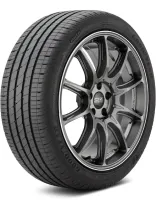
All discipline results (10)
Discipline positions compare the ranked tyres in this test, not the whole market. These are individual measurements, not weighted overall scores.
| Test | Result |
|---|---|
| Dry BrakingLower is better | 35.5 m |
| Dry HandlingLower is better | 42.73 s |
| Wet BrakingLower is better | 47.2 m |
| Wet HandlingLower is better | 48.15 s |
| Snow BrakingLower is better | 19.1 m |
| Snow TractionLower is better | 26.5 s |
| Snow HandlingLower is better | 87.6 s |
| Subj. ComfortHigher is better | 97 Points |
| Subj. NoiseHigher is better | 100 Points |
| Rolling ResistanceLower is better | 7.35 kg/t |
- Weight
- 11.95 kgs
- Tread
- 6.6 mm
Falken Azenis FK460 AS
255/40 R20 101Y XL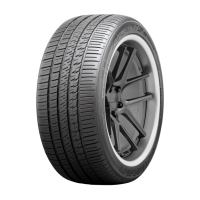
All discipline results (10)
Discipline positions compare the ranked tyres in this test, not the whole market. These are individual measurements, not weighted overall scores.
| Test | Result |
|---|---|
| Dry BrakingLower is better | 37.1 m |
| Dry HandlingLower is better | 42.79 s |
| Wet BrakingLower is better | 43.8 m |
| Wet HandlingLower is better | 47.41 s |
| Snow BrakingLower is better | 15.9 m |
| Snow TractionLower is better | 23.1 s |
| Snow HandlingLower is better | 85.8 s |
| Subj. ComfortHigher is better | 95 Points |
| Subj. NoiseHigher is better | 96 Points |
| Rolling ResistanceLower is better | 9.38 kg/t |
- Weight
- 13.79 kgs
- Tread
- 7.7 mm

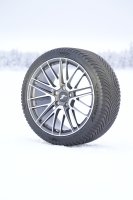
I am kinda suprise that Falken FK460 AS has higher Rolling Resistance than an All Terrain offering.
There's certainly an element of 18 vs 20 inch wheel size. I don't have the data for like for like sizes, but I wouldn't expect it to be the same as this.