



TÜV SÜD and DEKRA have tested the Michelin Primacy 5 against premium touring rivals in size 205/55 R16 on a Volkswagen Golf. The TÜV SÜD report covers wet braking, dry braking and rolling resistance against the Bridgestone Turanza 6, Continental PremiumContact 7, Goodyear EfficientGrip Performance 2, Hankook Ventus Prime 4 and Pirelli Cinturato P7 C2, and DEKRA measured tread wear on all of them except the Pirelli.
The Continental was the strongest braker on both wet and dry roads. The Primacy 5 was close behind it in the wet, fractionally behind the Pirelli, and mid-field in the dry. It had the lowest rolling resistance and the lowest wear rate, and the Hankook was the weakest braker. Neither TÜV SÜD nor DEKRA ranks the tyres, so the finishing order shown here is our own, worked out from our standard weighting as explained below.
Test setup & methodology
The test setting, the conditions recorded and how the results contribute to the score.
Recorded test conditions
Recorded test conditions
- Dry Braking
- 100 → 0 km/h
- Wet Braking
- 80 → 20 km/h
Michelin supplied the Primacy 5 and TÜV SÜD bought the rivals on the open market (TÜV SÜD report 713332054-PCY-02, July 2024). The DEKRA wear test states it was commissioned by Michelin (report CPA MARK24B, Oct 2024). Neither report gives an overall score or ranking, so the finishing order on this page is our own. We scored each result against the best in the test and combined them using our standard summer weighting: wet braking 50.5%, dry braking 33.5%, rolling resistance 6.9%, projected mileage 6.9% and rate of wear 2.2%. Those weights are our choice, not TÜV SÜD's or DEKRA's. We count tyres within 0.4 points of each other as tied, so the PremiumContact 7 and Primacy 5, a quarter of a point apart, share first place. TÜV SÜD also tested the Pirelli Cinturato P7 C2, but DEKRA did not include it in the wear test, so we have left it out of the charts and the finishing order to keep every chart complete. Its TÜV SÜD results are given in the text below. For the full method, see the original TÜV SÜD and DEKRA reports.
Wet
From 80 km/h to 20 km/h, the PremiumContact 7 stopped shortest, with the Primacy 5 next. The Pirelli, not shown in the chart, stopped in 24.2m, fractionally ahead of the Primacy 5. The Ventus Prime 4 was the longest to stop, about 3.5m behind the Michelin.
Wet Braking
Wet braking in meters (80 - 20 km/h)
Lower is better ↓| Position / Tyre | Result | Gap to best | Residual speed |
|---|---|---|---|
| 23.6 m | Best | 0 km/h | |
| 24.3 m | +0.70 m | 22 km/h | |
| 25.3 m | +1.70 m | 34 km/h | |
| 25.7 m | +2.10 m | 37 km/h | |
| 27.8 m | +4.20 m | 51 km/h |
The difference between best and worst was 17.8% (4.2 m ≈ 0.9 Car Lengths). From 130 km/h, the Hankook Ventus Prime 4 would still be travelling at 51 km/h when the Continental PremiumContact 7 had stopped.
Residual speed is calculated from the measured braking distances, assuming constant deceleration; it is not a separate measurement.
Dry
In the dry the PremiumContact 7 was clearly best, the Goodyear second and the Primacy 5 third, with the Hankook again last. The Pirelli stopped in 35.2m, which would have placed it second.
Dry Braking
Dry braking in meters (100 - 0 km/h)
Lower is better ↓| Position / Tyre | Result | Gap to best | Residual speed |
|---|---|---|---|
| 34.4 m | Best | 0 km/h | |
| 35.6 m | +1.20 m | 24 km/h | |
| 36 m | +1.60 m | 27 km/h | |
| 36.2 m | +1.80 m | 29 km/h | |
| 37.2 m | +2.80 m | 36 km/h |
The difference between best and worst was 8.1% (2.8 m ≈ 0.6 Car Lengths). From 130 km/h, the Hankook Ventus Prime 4 would still be travelling at 36 km/h when the Continental PremiumContact 7 had stopped.
Residual speed is calculated from the measured braking distances, assuming constant deceleration; it is not a separate measurement.

Value
The Primacy 5 had the lowest rolling resistance coefficient, with the Goodyear and Bridgestone close behind and the PremiumContact 7 the highest in the chart. The Pirelli measured 8.81 kg/t, higher than any tyre shown.
Rolling Resistance
Rolling resistance in kg t
Lower is better ↓| Position / Tyre | Result | Gap to best | Extra fuel / year |
|---|---|---|---|
| 7.5 kg/t | Best | £0 | |
| 7.58 kg/t | +0.08 kg/t | £5 | |
| 7.67 kg/t | +0.17 kg/t | £10 | |
| 7.76 kg/t | +0.26 kg/t | £15 | |
| 8.32 kg/t | +0.82 kg/t | £48 |
The difference between best and worst was 10.9% (0.82 kg / t). Over 19,000 km a year at £1.45/L, the Continental PremiumContact 7 uses about 33 L (£48) more fuel than the Michelin Primacy 5.
Adjust the assumptions
Calculated estimates, not additional measurements. Use the controls to explore the assumptions.
DEKRA drove the five tyres for 11568 km near Narbonne in May and June 2024 on a Golf 2.0 TDI and measured the rate of rubber loss, in milligrams per kilometre per tonne. The Primacy 5 lost rubber at the lowest rate, followed by the Hankook and Goodyear, with the Bridgestone and Continental the highest. DEKRA's projected life, which uses Michelin's evaluation method and the front tyres only, ranks them differently: the Goodyear about 3116 km short of the Primacy 5, the Continental 6132 km, the Hankook 8036 km and the Bridgestone 9922 km. DEKRA's report names the Goodyear as the EfficientGrip 2, which we have taken to be the EfficientGrip Performance 2 that TÜV SÜD tested.
Abrasion
Weight of Tyre Wear Particles Lost (mg/km/t)
Lower is better ↓| Position / Tyre | Result | Gap to best |
|---|---|---|
| 65 mg/km/t | Best | |
| 75.1 mg/km/t | +10.10 mg/km/t | |
| 76.8 mg/km/t | +11.80 mg/km/t | |
| 94.9 mg/km/t | +29.90 mg/km/t | |
| 95.1 mg/km/t | +30.10 mg/km/t |
The difference between best and worst was 46.3% (30.1 mg/km/t).
Wear
Predicted tread life in KM
Higher is better ↑| Position / Tyre | Result | Gap to best |
|---|---|---|
| 32,300 KM | Best | |
| 29,200 KM | -3,100 KM | |
| 26,200 KM | -6,100 KM | |
| 24,300 KM | -8,000 KM | |
| 22,400 KM | -9,900 KM |
The difference between best and worst was 30.7% (9,900 KM).
Projected mileage calculated by Tyre Reviews, not printed by DEKRA. DEKRA gives each rival's projected life only as a percentage of the reference tyre's and a gap in kilometres, so we worked the reference tyre's figure out from those percentages (about 32,350 km, accurate to within about 20 km) and took each gap from it. Rounded to the nearest 100 km.
Results
The Primacy 5 did not lead on grip here. The PremiumContact 7 braked best on both surfaces, and the Pirelli edged the Primacy 5 in the wet. The Michelin's strengths were efficiency and wear: the lowest rolling resistance and the slowest rate of wear in the test, with competitive braking alongside. On our weighting, where braking carries most of the weight, the PremiumContact 7 and Primacy 5 share first place: the Continental's braking balanced against the Michelin's efficiency and wear.
Michelin Primacy 5
205/55 R16 91V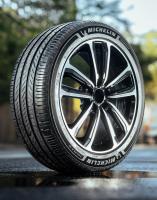
Category scores (% of best)
All discipline results (5)
Discipline positions compare the ranked tyres in this test, not the whole market. These are individual measurements, not weighted overall scores.
| Test | Position in discipline | Result | Gap to best |
|---|---|---|---|
| Dry BrakingLower is better | 3rd / 5 | 36 m | +1.60 m |
| Wet BrakingLower is better | 2nd / 5 | 24.3 m | +0.70 m |
| WearHigher is better | 1st / 5 | 32300 KM | Best in this discipline |
| Rolling ResistanceLower is better | 1st / 5 | 7.5 kg/t | Best in this discipline |
| AbrasionLower is better | 1st / 5 | 65 mg/km/t | Best in this discipline |
Continental PremiumContact 7
205/55 R16 91V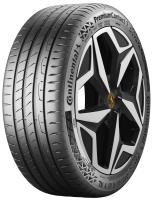
Category scores (% of best)
All discipline results (5)
Discipline positions compare the ranked tyres in this test, not the whole market. These are individual measurements, not weighted overall scores.
| Test | Position in discipline | Result | Gap to best |
|---|---|---|---|
| Dry BrakingLower is better | 1st / 5 | 34.4 m | Best in this discipline |
| Wet BrakingLower is better | 1st / 5 | 23.6 m | Best in this discipline |
| WearHigher is better | 3rd / 5 | 26200 KM | -6,100.00 KM |
| Rolling ResistanceLower is better | 5th / 5 | 8.32 kg/t | +0.82 kg/t |
| AbrasionLower is better | 5th / 5 | 95.1 mg/km/t | +30.10 mg/km/t |
Goodyear EfficientGrip Performance 2
205/55 R16 91V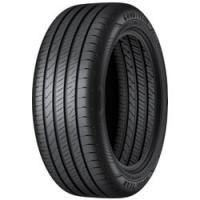
Category scores (% of best)
All discipline results (5)
Discipline positions compare the ranked tyres in this test, not the whole market. These are individual measurements, not weighted overall scores.
| Test | Position in discipline | Result | Gap to best |
|---|---|---|---|
| Dry BrakingLower is better | 2nd / 5 | 35.6 m | +1.20 m |
| Wet BrakingLower is better | 4th / 5 | 25.7 m | +2.10 m |
| WearHigher is better | 2nd / 5 | 29200 KM | -3,100.00 KM |
| Rolling ResistanceLower is better | 2nd / 5 | 7.58 kg/t | +0.08 kg/t |
| AbrasionLower is better | 3rd / 5 | 76.8 mg/km/t | +11.80 mg/km/t |
Bridgestone Turanza 6
205/55 R16 91V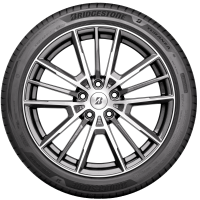
Category scores (% of best)
All discipline results (5)
Discipline positions compare the ranked tyres in this test, not the whole market. These are individual measurements, not weighted overall scores.
| Test | Position in discipline | Result | Gap to best |
|---|---|---|---|
| Dry BrakingLower is better | 4th / 5 | 36.2 m | +1.80 m |
| Wet BrakingLower is better | 3rd / 5 | 25.3 m | +1.70 m |
| WearHigher is better | 5th / 5 | 22400 KM | -9,900.00 KM |
| Rolling ResistanceLower is better | 3rd / 5 | 7.67 kg/t | +0.17 kg/t |
| AbrasionLower is better | 4th / 5 | 94.9 mg/km/t | +29.90 mg/km/t |
Hankook Ventus Prime 4
205/55 R16 91V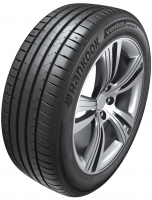
Category scores (% of best)
All discipline results (5)
Discipline positions compare the ranked tyres in this test, not the whole market. These are individual measurements, not weighted overall scores.
| Test | Position in discipline | Result | Gap to best |
|---|---|---|---|
| Dry BrakingLower is better | 5th / 5 | 37.2 m | +2.80 m |
| Wet BrakingLower is better | 5th / 5 | 27.8 m | +4.20 m |
| WearHigher is better | 4th / 5 | 24300 KM | -8,000.00 KM |
| Rolling ResistanceLower is better | 4th / 5 | 7.76 kg/t | +0.26 kg/t |
| AbrasionLower is better | 2nd / 5 | 75.1 mg/km/t | +10.10 mg/km/t |
Discussion