

Continental Premium Contact 6 vs Michelin e.Primacy
In the 3 independent tests that ran both tyres, the Continental Premium Contact 6 finished ahead 3 times and the e.Primacy not once. The Premium Contact 6 was stronger in dry and wet, the e.Primacy in comfort and value.
Performance profile
7 measurements from the 3 shared tests, each tyre shown as its share of the better figure in every test.
Where each is furthest ahead
Premium Contact 6
e.Primacy
Point at or tap any spoke for both tyres' figures.
In each test the better of the two figures counts as 100% and the other as its share of it, so a 36 m stop against 34.2 m is 95%; each spoke averages the shared tests that recorded it. The scale stops at 90%: a point further in sits on the hub's edge, hollow. 11 measurements recorded in only one shared test are left off; every measurement is in the table further down.
Where each scores higher
Premium Contact 6
e.Primacy
Point at or tap any spoke for both tyres' figures.
Category scores are percentiles among tyres of the same season and class: 90 means this tyre out-performs 90% of them, measured across every test we hold, not only the ones it appeared in.
Where owners rate each higher
Premium Contact 6
e.Primacy
Point at or tap any spoke for both tyres' figures.
Owners rate the Premium Contact 6 81% from 139 reviews and the e.Primacy 67% from 38. Each spoke is one question owners answer out of 10; reviews are vetted by hand before publication.

Every measurement, side by side
Averages of the figures both tyres posted in the same tests. The gap is the average of each test's own gap, so figures from different cars and years are never mixed. Wins count the tests in which each tyre did better.
| Measurement | Premium Contact 6 | Gap | e.Primacy | Wins |
|---|---|---|---|---|
| Dry Premium Contact 6 ahead | ||||
| Dry Braking m | 34.73 | 2.8% | 35.73 | 3-0 |
| Dry Handling (s) | 107.1 | 1.2% | 108.4 | 1-0 |
| Dry Handling (km/h) | 90 | 0.6% | 89.5 | 1-0 |
| Wet Premium Contact 6 ahead | ||||
| Wet Braking m | 29.63 | 12% | 34.63 | 2-1 |
| Wet Braking - Concrete m | 35.2 | 19.6% | 43.8 | 1-0 |
| Wet Handling (s) | 68.1 | 5.9% | 72.4 | 1-0 |
| Wet Handling (km/h) | 50 | 0.4% | 49.8 | 1-0 |
| Wet Circle (m/s) | 8.58 | 1.4% | 8.46 | 1-0 |
| Wet Circle (s) | 20.5 | 6.8% | 22 | 1-0 |
| Straight Aqua km/h | 81.1 | 6.1% | 76.6 | 2-0 |
| Curved Aquaplaning m/sec2 | 26.1 | 8.9% | 24.83 | 3-0 |
| Comfort e.Primacy ahead | ||||
| Noise dB | 71.75 | 0.9 dB | 70.85 | 0-2 |
| Tyre Weight kg | 8.9 | 10.1% | 8 | 0-1 |
| Value e.Primacy ahead | ||||
| Wear km | 49,700 | 43.9% | 71,500 | 0-1 |
| Rolling Resistance kg / t | 7.93 | 26.8% | 5.77 | 0-2 |
| Fuel Consumption l/100km | 5.53 | 3.8% | 5.32 | 0-2 |
| Energy Consumption kWh/100km | 15 | 10.7% | 13.4 | 0-1 |
| Abrasion mg/km/t | 69.5 | 49.9% | 34.8 | 0-1 |
Braking distances and lap times are better when lower; speeds, wear and grip figures when higher. A test's figures are its own: sizes, cars, surfaces and temperatures differ from one to the next, which is why the averages here are only ever of tests the two tyres shared.
Head to head in 3 tests, 2022 to 2023
Each row is one published test in which both tyres ran on the same car, in the same size, on the same day. The line is the whole field, winner on the left.
| Test | Premium Contact 6 | Field | e.Primacy |
|---|---|---|---|
| 2023 The Best Electric Vehicle Tyres VS UHP Tyres | P2 of 10 | P3 of 10 | |
| 2023 ADAC Summer Tyre Test | P2 of 50 | P38 of 50 | |
| 2022 ViBilagare Eco vs Normal Tyre Test | P1 of 10 | P9 of 10 |
Premium Contact 6 vs e.Primacy: your questions
Is the Continental Premium Contact 6 or the Michelin e.Primacy the better tyre?
In the 3 independent tests that ran both tyres, the Continental Premium Contact 6 finished ahead 3 times and the e.Primacy not once. On the Tyre Reviews Score, which weighs every test and review we hold, the Premium Contact 6 scores 9.1 and the e.Primacy 8.2 out of 10.
Which is better in the wet, the Premium Contact 6 or the e.Primacy?
The Premium Contact 6 led 12 of the 14 wet measurements the shared tests recorded. On average it stopped 12% shorter in the wet across 3 tests.
Which is better in the dry?
The Premium Contact 6 led 5 of the 5 dry measurements the shared tests recorded. On average it stopped 2.8% shorter in the dry across 3 tests.
Which lasts longer and costs less to run?
The e.Primacy had 26.8% lower rolling resistance (2 tests) and used 3.8% less fuel (2 tests). Owners rate wear 7.5/10 for the Premium Contact 6 and 8.2/10 for the e.Primacy.
Which is quieter and more comfortable?
The e.Primacy was 0.9 dB quieter (2 tests). Owners rate comfort 7.8/10 for the Premium Contact 6 and 8.1/10 for the e.Primacy.
What do owners say?
Owners rate the Premium Contact 6 81% from 139 reviews and the e.Primacy 67% from 38. 73% of Premium Contact 6 owners would buy it again, against 35% for the e.Primacy.
Which is more expensive?
In the 3 tests that listed prices, the e.Primacy was the dearer tyre in 3 of them, by 21.1% on average. Prices are the test's own at the time, in its own market.
Are they available in the same sizes?
The Premium Contact 6 is made in 110 sizes (15 to 22 inch) and the e.Primacy in 64 (14 to 20 inch). 42 sizes are available in both. On the EU label the Premium Contact 6 is graded A for wet grip and C for rolling resistance in most sizes; the e.Primacy B and A.
More comparisons with these tyres
 vs
 Continental UltraContact NXT vs Michelin e.Primacy
2-0 in 2 shared tests
 vs
 Continental Premium Contact 6 vs Michelin Pilot Sport 4
5-15 in 21 shared tests
 vs
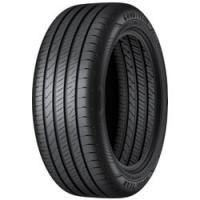
Goodyear EfficientGrip Performance 2 vs Michelin e.Primacy
3-1 in 4 shared tests
 vs
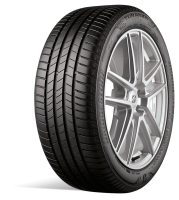
Bridgestone Turanza T005 vs Continental Premium Contact 6
5-26 in 31 shared tests
vs
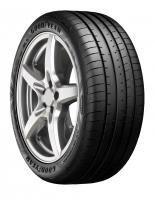 Continental Premium Contact 6 vs Goodyear Eagle F1 Asymmetric 5
6-9 in 17 shared tests
vs
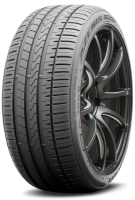 Continental Premium Contact 6 vs Falken Azenis FK510
15-7 in 23 shared tests
Every Continental vs Michelin test → All comparisons → Compare three or more tyres →
Run either of these?
Your review is the part of this page no test can supply: how the tyre wore, how it aged, what it was like in the rain in year three. It takes about five minutes.
Where this data comes from
Finishing positions and measurements are transcribed from each published test. A test only counts here when both tyres ran in it, so every figure was recorded on the same car, size and day as the one it is compared to.
About the TR Score
The Tyre Reviews Score rates each tyre out of 10 from every independent test result and vetted owner review we hold, so two tyres can be compared even before a test has run them together.
Who does the testing
Every test published as a Tyre Reviews test is run by Jonathan Benson, who has been testing tyres independently since 2007.