
This page explains how Tyre Reviews conducts independent tyre tests, including the equipment used, the procedures followed for each test category, and how results are validated. For background on Tyre Reviews itself, see About Tyre Reviews.
Who Conducts the Tests
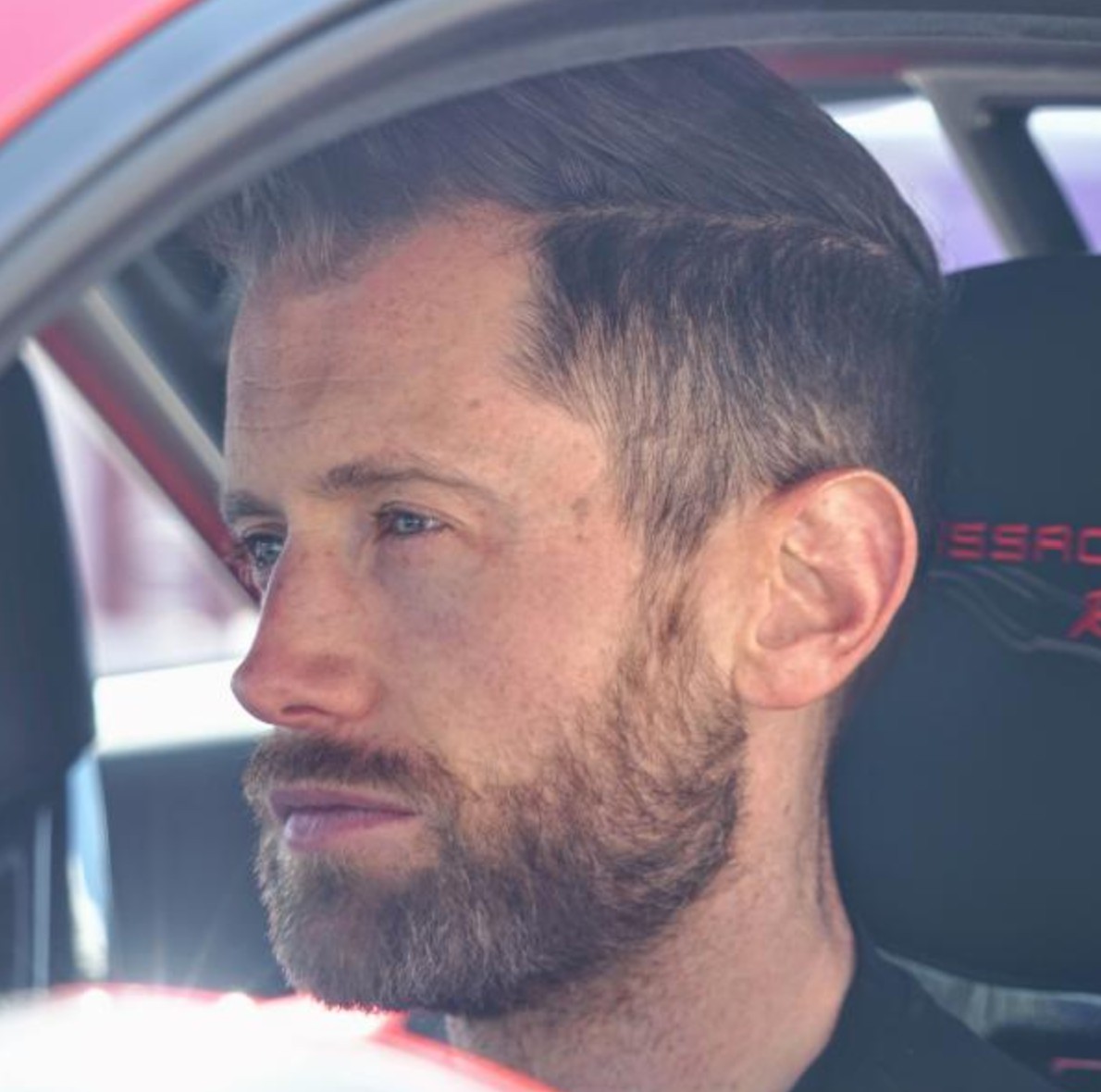
Founder & Independent Tyre Tester
All test marked as Tyre Reviews tests are conducted by Jonathan Benson, who has been independently testing tyres since 2007. With over 19 years of experience and hundreds of tyres tested under controlled conditions, Jonathan has developed a testing methodology that is recognised by the industry itself - many of the world's largest tyre manufacturers officially cite Tyre Reviews results on their corporate websites, placing this work alongside established publications such as Auto Bild, ADAC, and evo.
To maintain consistency and guard against drift in subjective scoring over time, Jonathan carries out annual co-driving sessions with heads of tyre testing from premium manufacturers.
Core Testing Principles
How a Tyre Test Works
Tyre testing is incredibly complicated and requires specialist equipment and locations. At TyreReviews.com, I use a combination of objective instrumented testing and structured subjective assessment to evaluate tyre performance across a wide range of disciplines. My aim is always to generate data that is as accurate as possible. and repeatable across tests.
Tyre pressure control is one of the most important factors in tyre testing. I set tyre pressures immediately before the wheels are fitted and the vehicle goes out on track, so each run begins from the intended baseline. For track-focused tyres and other tests where heat build-up materially affects behaviour, I also reset pressures after warm-up to ensure the tyre is being assessed in the correct operating window.
I log ambient, surface, and water or snow temperatures throughout every session, because even small temperature shifts can materially change grip levels and invalidate comparisons if unaccounted for. Before any measured runs begin, both the tyres and the vehicle are brought up to a stabilised operating temperature - tyre compound viscoelastic properties, brake system efficiency, and damper fluid viscosity are all temperature-dependent, and testing from a cold state would introduce systematic bias that undermines comparability between sets.
Conditions evolve during a test, so to calculate these changes back to base I run reference tyres multiple times throughout of each test to correct for changes in surface grip, temperature, moisture level, and other environmental factors. In many programmes I use multiple sets of reference tyres, which means control tyre wear itself is not a meaningful source of error.
Every test programme is built around this reference-correction framework. The result is that each tyre's performance is not measured in isolation, but always relative to a known, stable baseline - making the data directly comparable between tyres tested at different points during the same session.
Testing Equipment
Accurate, repeatable measurement requires professional-grade instrumentation. The following equipment is used across Tyre Reviews test programmes:
Racelogic VBOX GPS Data Loggers
The industry-standard tool for braking distance measurement, lap timing, and speed data. VBOX equipment provides centimetre-level accuracy via differential GPS correction, and is the same system used by tyre manufacturers in their own internal testing.
Tri-Axial Accelerometer
Measures lateral and longitudinal g-forces during handling and braking tests, providing an objective record of the forces acting on the vehicle that complements GPS-based measurement.
Calibrated Microphones
Used for external pass-by noise measurement in accordance with UNECE Regulation 117 and ISO 13325, and for internal cabin NVH assessment during subjective noise evaluation.
Wheel Speed Sensors
Monitor individual wheel speeds to detect aquaplaning onset by measuring the slip ratio between wheels on the wetted and dry sides of the vehicle.
Precision Scales
Used for tyre weight, abrasion and wear testing, measuring tyre mass before and after a defined driving cycle to quantify material loss with high accuracy.
Digital Thermometers
Surface, ambient, and water temperature monitoring throughout every session. Temperature is logged continuously because even small changes can materially affect grip and invalidate comparisons.
Tyre Break-In and Surface Conditioning
Before testing begins, tyres are almost always subjected to a break-in drive to add realistic surface micro-roughness to the tyre which is not there at new state. This is particularly important for wet and snow testing, where the tyre's ability to generate grip at a micro-texture level is materially affected by whether the outermost rubber surface has been properly conditioned. A tyre tested straight from the mould can behave quite differently from one that has completed even a modest scrub-in distance.
For track-focused tyres, I also carry out a heat cycle before formal assessment, bringing the tyre up to its working temperature range and allowing it to cool, so the compound has undergone its initial thermal conditioning before any measured laps are recorded. In rare cases where a full break-in is not possible, this is noted against the result.
Subjective Assessment Calibration
Objective data is only part of the picture. Many important aspects of tyre performance - comfort, steering feel, noise character, handling balance - require structured subjective assessment by an experienced driver.
To maintain consistency and guard against drift in my subjective scoring over time, I carry out annual co-driving sessions with heads of tyre testing from premium manufacturers. These sessions provide a direct cross-reference against engineers who evaluate tyres professionally at the highest level, and they allow me to recalibrate my own perceptions, language, and scoring against an independent benchmark. This ongoing process ensures that a score I award today is comparable with one given several years ago, and that my subjective assessments remain aligned with the standards used within the industry itself.
Test Categories: How Each Discipline Is Measured
Each test programme is composed of multiple individual disciplines. The exact combination depends on the tyre type being tested - a summer tyre test includes dry and wet disciplines, while a winter tyre test adds snow and ice. Below is a detailed explanation of how each category is measured.
Wet Braking
For wet braking, I drive the test vehicle at an entry speed of 88 km/h and apply full braking effort to a standstill with ABS active on an asphalt surface with a controlled water film. I measure braking performance using Racelogic VBOX equipment only, excluding the brake pressure build-up phase from the measured window. I typically use an 80-5 km/h measurement window to isolate tyre performance from variability in the initial brake application. My standard programme is eight runs per tyre set, although the sequence can extend to as many as fifteen runs if conditions and tyre category justify it. I analyse the full set of runs and discard statistical outliers before averaging. To correct for changing conditions, I run reference tyres repeatedly throughout the session - in wet testing, typically every three candidate test sets.
Dry Braking
For dry braking, I drive the test vehicle at an entry speed of 110 km/h and apply full braking effort to a standstill with ABS active on clean, dry asphalt. I measure braking performance using Racelogic VBOX equipment only, excluding the brake pressure build-up phase from the measured window. I typically use an 100-5 km/h measurement window. My standard programme is five runs per tyre set where possible, although the sequence can extend to as many as ten runs if conditions and tyre category justify it. I analyse the full set of runs and discard statistical outliers before averaging. Reference tyres are run repeatedly throughout the session to correct for changing conditions.
Wet Handling
For wet handling, I drive at the limit of adhesion around a dedicated handling circuit. I generally use specialist wet circuits with kerb-watering systems designed to maintain a consistent surface condition, rather than conventional sprinkler-based wetting. ESC is disabled where possible so I can assess the tyre's natural balance, transient response, and limit behaviour without electronic intervention masking the result. I usually complete between two and five timed laps per tyre set, depending on the circuit, tyre type, and consistency of conditions. I exclude laps affected by clear driver error, traffic, yellow flags, or obvious environmental inconsistency. Control runs are carried out frequently throughout the session, and I often use multiple sets of control tyres so that wear on the references does not become a meaningful variable.
Dry Handling
For dry handling, I drive at the limit of adhesion around a dedicated handling circuit with ESC disabled where possible so I can assess the tyre's natural balance, transient response, and limit behaviour without electronic intervention masking the result. I usually complete between two and five timed laps per tyre set, depending on the circuit, tyre type, and consistency of conditions. I exclude laps affected by clear driver error, traffic, yellow flags, or obvious environmental inconsistency. Control runs are carried out frequently throughout the session, and I often use multiple sets of control tyres so that wear on the references does not become a meaningful variable. For performance tyres in the dry I pay particular attention to how heat build-up affects the tyre's grip and subjective handling. For certain track-focused products I engage in track endurance testing, which means many more laps at race pace to discern how the tyre performs over longer stints.
Straight-Line Aquaplaning
To measure straight-line aquaplaning resistance, I drive one side of the vehicle through a water trough of controlled depth, typically around 7 mm, while the opposite side remains on dry pavement. I enter at a fixed speed and then accelerate progressively measuring the differing wheel speeds. I define aquaplaning onset as the point at which the wheel travelling through the water exceeds a specified slip threshold relative to the dry-side reference wheel. I usually perform four runs per tyre set and average the valid results.
Curved Aquaplaning
Curved aquaplaning is assessed by driving the test vehicle through a flooded corner at progressively increasing speeds and measuring the speed at which the rear of the vehicle loses lateral grip. This tests the tyre's ability to resist aquaplaning under lateral load, which is a different and arguably more safety-critical scenario than straight-line aquaplaning. I use GPS telemetry to log the critical speed, and reference tyres are run at intervals to correct for changing water depth and surface conditions.
Rolling Resistance
Rolling resistance is measured under controlled laboratory conditions in accordance with ISO 28580 and UNECE Regulation 117 Annex 6. The tyre is mounted on a test wheel and loaded against a large-diameter steel drum. After thermal stabilisation at the prescribed test speed, rolling resistance force is measured at the spindle and corrected according to the relevant procedure. The result is expressed as rolling resistance coefficient, typically in kg/tonne.
External Noise
I measure external pass-by noise in accordance with UNECE Regulation 117 and ISO 13325 using the coast-by method on a compliant test surface. Calibrated microphones are positioned beside the test lane, and the vehicle coasts through the measurement zone under controlled conditions. I record the maximum A-weighted sound pressure level in dB(A), complete multiple runs over the relevant speed range, and normalise the result to the reference speed required by the procedure.
Comfort
To assess comfort, I drive on a wide range of road surfaces at speeds from 50 to 120 km/h, including smooth motorway, coarse surfaces, expansion joints, broken pavement, and sharp-edged obstacles. I evaluate primary ride quality, secondary ride quality, impact harshness, seat-transmitted vibration, and the tyre's ability to absorb sharp inputs. Ratings are assigned on a 1-10 scale relative to the reference tyre.
Subjective Noise
For subjective noise assessment, I drive at constant speeds across multiple surface types with the windows closed, ventilation off, and audio system off, often performing coast down in neutral on certain surfaces to really assess the tone of the noise. I assess overall noise level, tonal quality, cavity boom, pattern noise, broadband roar, and sensitivity to both speed and road texture. Each tyre is rated on a 1-10 scale and supported by written observations on noise character and annoyance.
Snow Braking
For snow braking, I drive the test vehicle at an entry speed of 50 km/h and apply full braking effort to a standstill with ABS active on a groomed, compacted snow surface. I use a wide VDA (vehicle dynamic area) and progressively move across the surface between runs so that no tyre ever brakes on the same piece of snow twice. My standard programme is ten runs per tyre set where possible, although the sequence can extend further if required. I analyse the full set of runs and discard statistical outliers before averaging. The surface is regularly groomed throughout the session. To correct for changing snow surface conditions, I run reference tyres repeatedly - typically every two candidate test sets.
Snow Handling
For snow handling, I drive at the limit of adhesion around a dedicated snow handling circuit with ESC disabled where possible. The circuit is groomed and prepared after every run while tyres are being changed, so each set runs on a consistently prepared surface. I usually complete between two and five timed laps per tyre set, excluding laps affected by clear driver error or obvious environmental inconsistency. Because snow surfaces degrade more rapidly than asphalt, control runs are carried out more frequently, typically every two candidate test sets.
Snow Traction
For snow traction, I measure either acceleration time using GPS telemetry or peak pulling force during a controlled acceleration from standstill on a groomed snow surface with traction control active. The measurement method depends on the test programme and facility. I use a wide VDA (vehicle dynamic area) and progressively move across the surface between runs so that no tyre ever accelerates on the same piece of snow twice. The surface is regularly groomed throughout the session. Because snow surfaces degrade more rapidly, I place particular emphasis on repeat runs, careful reference tracking, and averaged results. Reference tyres are run typically every two candidate test sets to correct for changing conditions.
Ice Braking
For ice braking, I drive the test vehicle at an entry speed of 35 km/h and apply full braking effort to a standstill with ABS active on a prepared ice surface, measuring 30-5 km/h. I use an ice VDA (vehicle dynamic area) and progressively move across the surface between runs so that no tyre ever brakes on the same piece of ice twice. Surface temperature is continuously monitored as ice friction properties vary substantially with temperature. My standard programme is twelve runs per tyre set where possible. I analyse the full set of runs and discard statistical outliers before averaging. Reference tyres are run typically every two candidate test sets to correct for changing surface conditions.
Ice Handling
For ice handling, I drive at the limit of adhesion around a dedicated ice handling circuit with ESC disabled where possible. I usually complete between two and five timed laps per tyre set, excluding laps affected by clear driver error or obvious environmental inconsistency. Surface temperature is continuously monitored. Control runs are carried out frequently to account for changing ice surface conditions.
Ice Traction
For ice traction, I accelerate the vehicle from rest on a prepared ice surface with traction control active and measure speed and time using GPS telemetry. I typically use a 5-35 km/h measurement window to reduce the influence of launch transients. I use a wide VDA (vehicle dynamic area) and progressively move across the surface between runs so that no tyre ever accelerates on the same piece of ice twice. Surface temperature is continuously monitored. I complete multiple runs per tyre set and average the valid results, with reference tyres run typically every two candidate test sets.
Wear
I do not conduct tread wear testing myself; where wear is included in a programme, it is carried out by a contracted specialist test provider using either an on-road convoy method or an accelerated machine-based method. In convoy wear testing, multiple vehicles run a defined public-road route over an extended distance, with tread depth measured at intervals and tyres rotated methodically to reduce positional and vehicle-specific effects. In accelerated machine wear testing, the tyre is run on a specialised roadwheel or rough-surfaced drum system designed to simulate real-world wear under controlled load, speed, alignment, and force inputs. I then use the contracted provider's measured wear rate relative to the reference tyre to estimate projected tread life.
Abrasion
Abrasion is assessed as tyre mass loss over a defined driving distance or test cycle. Tyre mass is measured before and after the test using precision scales, and the result is expressed in the relevant unit for the programme. Where relevant, the methodology follows the latest applicable industry or regulatory development procedures.
Standards and Compliance
Where applicable, Tyre Reviews testing follows or references established international standards to ensure results are comparable with those produced by tyre manufacturers and regulatory bodies.
ISO 28580
The international standard for measuring tyre rolling resistance under controlled laboratory conditions. Defines the drum method, load, speed, and correction procedures used to produce the rolling resistance coefficient.
UNECE Regulation 117
The United Nations regulation covering tyre rolling resistance (Annex 6) and external rolling noise (Annex 3). This is the regulatory basis for EU tyre label values and type approval testing.
ISO 13325
The international standard for measuring tyre external rolling noise using the coast-by method on a compliant test surface with calibrated microphone positioning.
Independence and Transparency
The credibility of our testing depends on editorial independence. For a full explanation of how we maintain independence, including anonymous tyre purchasing, separation of advertising and editorial, and our no-pay-for-play policy, see How We Maintain Independence on the About Tyre Reviews page.
