
Tyre Types
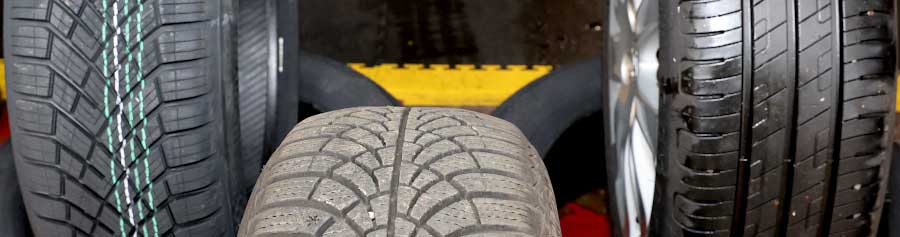
Here in the UK summer tyres are the sort the vast majority of the public use year-round, although they perform less well at colder temperatures and extremely poorly in snow. Winter tyres are designed for the colder months and have good snow capabilities while still retaining wet and dry performance, although often at the cost of some dry braking. All season tyres are somewhere in between, attempting to be usable in all conditions while being left on year-round. Most modern all season tyres have the “snowflake on mountain” certification on them, just as full winter tyres do.
Background
After the heavy and prolonged snow of the winter of 2009/2010 (even in the south of the UK), I fitted cold weather / winter-capable tyres the following year. As well as considering some winter-rated all season tyres I'd also considered some dry-biased full winters. In the end I went for a (Central European) snow-biased winter tyre. I would be rewarded, since the 2010/2011 winter would be similarly snowy.
I've continued to fit winter tyres for the past 14 years, documenting the experiences with my first two sets on Tyre Reviews. However, when I removed my third set in the spring of 2024 I really did question fitting a new and fourth set this autumn.
This wasn't because I “no longer believed” in winter tyres, nor was it the run of mostly mild winters we've had since those back to back cold ones some 15 years ago. No, the reason was a change in my circumstances. I was at this point doing considerably less mileage and mainly during the middle part of the day. Prices at my local tyre place for swapping over tyres had doubled since I first began running winters, plus rather than wearing out my tyres they were starting to age out first. I also had to be realistic about the age of my car and whether it would last through further multiple (summer+winter) sets. Finally, the third car in our family was now running winter-capable tyres for the very first time in the form of the Michelin CrossClimate 2, so at a pinch I thought I'd be able to have use of another car if required. My plan at the beginning of 2024 was therefore to run summer tyres all year round going forwards.
Things changed for me again at the start of autumn, when I ended up doing several early morning runs for a family member to the hospital and the vets (for unrelated reasons, I hasten to add!). Suddenly I was considering winter tyres again, given that such short notice, emergency outings could mean the third car in the family might not be available to me.
A final twist came slightly later in the autumn when I ended up doing some VERY early morning runs. I was driving through wet, slippery recently flooded country lanes at 3 degrees C as mist rolled off the grass verges and fields, with the final destination being up a moderately steep private track that was lined with rubble. I was also now doing evening rush hour driving and on that same day I was returning at 17 degrees C with the following evening being 18 degrees. 17-18 degrees is when I find winter tyres have noticeable and unacceptable (for me) severely delayed steering and braking. I now found myself wanting all season tyres.
All Season Tyres
Goodyear claim to have pioneered the concept of all season tyres and their “Vector” series had historically been the benchmark. However, the tyre market was completely disrupted in March 2015 with the launch of Michelin's “CrossClimate.” Michelin stressed that these were to be considered summer tyres with winter capabilities - most all season tyres up until then were much closer to winter tyres in terms of performance and design trade-offs. The CrossClimate instead was similar to summer tyres in the dry and wet while still providing grip in the cold and wintry conditions, making them far more suitable for year-round use and also for milder climates such as the UK where you only see occasional snow.
Continental had up until this point remained out of the all season tyre market, but in 2017 they released their “AllSeasonContact” product. In their press release Conti referred to it as “a tyre suitable for drivers who cover lower mileage and drive in and around urban areas in moderate weather conditions,” stating that, “for all other drivers, in the interests of maximum road safety Continental continues to recommend fitting tyres that have been specially developed for the relevant season.” In 2023 Conti released the successor model, the AllSeasonContact 2.
Winter Tyres
Historically the general advice was that if you wanted to have winter-capable tyres but (for whatever reason) you could only fit one set of tyres for year-round use, then you should fit winter tyres. This was because the safety and performance benefits of running winter tyres in winter outweigh the performance disadvantages of running winter tyres in summer. (Or to put it another way: you compromise yourself more by running summer tyres in winter.)
The Continental WinterContact TS series of Central European winter tyres have for many years been incredibly rounded in performance across dry, wet and snowy conditions, so much so that Jon gave the TS 860 as an “alternative” in his Tyre Reviews “best all season tyres” 2018 round up, commenting that it had been “more all season than some all season tyres” when included as a reference winter tyre.
In previous articles I have myself repeated that if you could only fit one set of tyres then you should fit winter tyres, but my view on that has since shifted. Modern all season tyres have improved so much that they now warrant their naming, although you should consider the different dry/wet/snow trade-offs that each manufacturer makes as to what tyre is suitable for your climate and driving.
My Choices
Come late September 2024 I'd narrowed my candidates down to the current Continental WinterContact TS 870 (already being used as a winter tyre on the second car in the family) and the new (and only just available this year in my tyre size) Continental AllSeasonContact 2 as my first choices for a winter and all season tyre respectively. Both were incredibly well rounded tyres for their category.
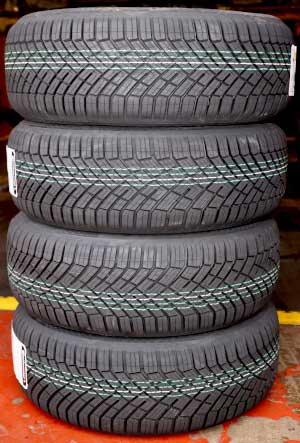
Unfortunately I was finding it hard to locate stock at mainstream UK retailers, so I reached out to Jon to see if Conti could supply me with a review set of either. Continental were themselves out of stock and it would take (exactly!) a month from my initial approach for Conti to source and arrange delivery of the AllSeasonContact 2 to my local tyre fitters. During the intervening time I found stock of first the ASC2 and then a while later the TS870, so I would have had fall back options if Continental hadn't been able to pull through.
What would I have fitted had I bought tyres myself? Most likely the TS870. Fitting separate summer and winter tyres is so deeply ingrained in me, plus my personal belief - at least up until now - has been that if you're going to compromise your dry and wet running for some winter capabilities then you may as well go all the way and fit full winter tyres. So, while the ASC2 are being supplied and fitted for me courtesy of Continental, they are not going to get an easy ride.
The biggest question mark for me, however, is how a more rounded (as opposed to dry biased) all season tyre will work in the heat of the summer. In my first year of running winter tyres I'd known about the “7 degree rule” for fitting winter tyres, but I hadn't been sure of the opposite - i.e. when best to remove them. That year I found that it was above 10 degrees C when I began to notice poorer performance, and have since used the cut-off point of temperatures being consistently at and above 13 degrees to be when I change back to summers. Interestingly, in 2020 I'd run our winter tyres into early June and at a maximum of 26 degrees due to a global, viral outbreak some of you might remember. I don't recall now what winter tyres were like at such hot temperatures (my mind seems to have tried to forget that period of time), other than to say that I'd previously found 17-18 degrees unacceptable, so it must have been the same or even worse!
Fitting
Historically the earliest I've fitted winter tyres has been 31st October, with my average across the previous 14 years being 21st November. I was contacted by my local tyre place on 25th October to say that the AllSeasonContact 2s had arrived, although I was busy then and for the next couple of days, so I arranged for fitting to be done on the 28th October. This year based on the most recent weather forecast I'd ear-marked mid-November as the ideal switch-over point for fitting winter tyres. Putting the ASC2 on slightly earlier therefore gave me a few weeks in warmer and mixed conditions to see how an (all-round) all season tyre fared when I'd otherwise still be running summers, as well as when I then approached and passed the switch-over point when I'd normally be running winters.
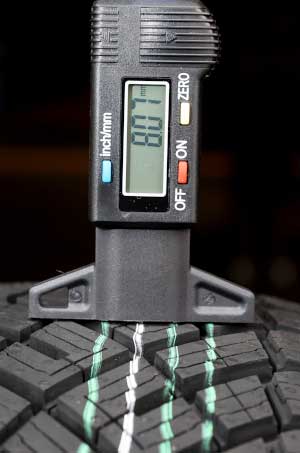
Tread depth of the Continental AllSeasonContact 2 at new was around 8mm. According to the date code my set were 10 weeks old and were made in Slovakia.
First Impressions
In my short drive home from the garage I found that the comfort and quietness of the AllSeasonContact 2 was more towards that of a winter tyre. Braking was slightly longer than a summer tyre - although less than I was expecting. It had been drizzling all morning so the roads were damp and greasy. I found traction to be better than a summer tyre in these conditions.
Once home I allowed the tyres to cool down for a couple of hours before adjusting the pressures to those recommended for my car. I then went out on a loop I've used repeatedly over the years that includes different speed limits (between 30 and 70 mph) and road types. Here I found that the ASC2 had somewhat of a split personality.
At urban speeds (as I'd already experienced on my initial drive home), the AllSeasonContact 2 were more like a comfort oriented tyre, quiet and feeling soft over any slight bumps. But above 30 mph they felt harsher over larger bumps and pot-holes, behaving much more like sportier tyres I've driven in the past - crashing over irregularities while maintaining momentum. Braking from these higher speeds now took longer, more like a winter tyre (and what I had originally been expecting from an all-round all season tyre). Steering was highly responsive and grip was still good at higher speeds on damp, greasy and leave-strewn autumnal roads.
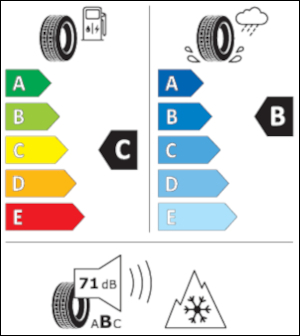
Fuel economy of the AllSeasonContact 2 was ironically more difficult to judge, despite having numbers for it. Frustratingly, I encountered FOUR sets of temporary traffic lights around my fixed loop, making comparisons against previous tyres meaningless. I now regretted not squeezing in a run on my summer tyres prior to removing them as I could at least have then had an apples-to-apples comparison.
A third run was done on the day that was, like my initial one back from fitting, urban based, but now partly in the evening rush hour. These two urban runs averaged out at 36.4 MPG for the ASC2. This directly compared to 36.3 MPG for my most recent summer tyres and 34.6 MPG for my last winter tyres. I expect this is more engine/traffic congestion constrained rather than tyre related, but it's good to know that the AllSeasonContact 2 is at least in the ballpark. My summer tyres are rated “A” on the EU Label whereas the ASC2 are “C” in my size. My old winters were rated “E” whereas the current model of them, as well as the TS 870, are rated “D.” Over the course of the year then I may - at least on longer runs - be losing out over the summer months while gaining in the colder ones. The latter point could be an additional justification for running all-season tyres in place of winter tyres in the UK.
Initial AllSeasonContact 2 versus CrossClimate 2 experiences
The following day I ended up using the Michelin CrossClimate 2 shod car for a shopping run in order to also fill it up with petrol for the owner. Roads were bone dry now, so comparisons from the previous day were not exact. However, I continued to notice the ever so slightly longer dry braking of the CC2 in comparison to summer tyres, but otherwise the CC2 behaved consistently and - if I'm honest - quite boringly. The CC2 “just felt like tyres,” aside for the slightly longer dry braking. As a reminder, Michelin engineered the original CrossClimate to be a “summer tyre with winter capabilities.” The current CrossClimate 2 has shifted the design somewhat, retaining the dry weather properties but with a massive improvement in snow performance - at the cost of a weaker wet performance.
In comparison, the Continental AllSeasonContact 2 from technical testing appears to have been designed to work in a balanced way across all conditions. Perhaps the extremely clever engineering of the ASC2 was what I'd picked up regarding the split personality I'd encountered, being quiet and soft at urban speeds and over small bumps, while sportier and harsher over bigger bumps and pot holes and at higher speeds.
The next day was dry again and another short urban run was done on the AllSeasonContact 2. This cemented my impression of them - close to a summer tyre, but a bit more towards a winter tyre than the CrossClimate 2, with the ASC2 taking ever so slightly longer to brake and steer.
Further running as temperatures varied
I continued to note my experiences over the course of the next two weeks. The Continental AllSeasonContact 2 gripped well in all conditions, including around winding multi-story car park ramps. It also picked up speed faster than my recent tyres, further adding to its slightly sporty side.
As temperatures dropped to 10-11 degrees the ASC2 began to feel more like a winter tyre, while at 12 degrees more like a summer. I've always been sceptical of tyre manufacturers' claims about “adaptive compounds”, but I now began to give that some credence. From my original “split personality” analysis I was now tending more towards a “multi-faceted nature.”
As temperatures dropped down to 9 degrees I found that the longer braking was still catching me out - repeatedly so. The biggest strength I'd identified of the AllSeasonContact 2 - that it behaved differently in varying circumstances - was becoming a frustration to me. While making progress along the road the ASC2 would lull me into thinking it was a summer tyre, only to catch me out and behave more like a winter tyre when encountering a sweeping curve or when starting to brake. At this point I really was starting to have doubts about the AllSeasonContact 2, particularly for year-round use.
Winter tyres go on to the remaining car
The weather wouldn't get cold enough until the middle of November for the now sole remaining summer tyre shod car in the family to switch over to its winter tyres - currently the Continental WinterContact TS 870. I have to admit a pang of regret that I wasn't running full winters myself. I think this was mainly from all these years of running winter tyres and knowing just how well-rounded the TS870 are, but also I think a little from my (at the time) frustration with the ASC2.
The AllSeasonContact 2, however, would start to come in to their own as the temperatures continued to drop. At 8 degrees C at night on a wet road they began to feel even more like a winter tyre. At 7 degrees in heavier rain the following evening they did so even more - and krissshed (that's a technical term) undisturbed through a deep puddle of water at the side of road.
Snow!

On Tuesday 19th November 2024 I woke to big fluffy flakes of falling snow. Unfortunately, due to mid-November ground temperatures and morning school/rush-hour traffic, any settled snow soon melted, leaving wet roads. However, it was still only 2 degrees air temp when I went out towards midday and 4-5 degrees on my way back. But, it was on this journey that something miraculous happened - the AllSeasonContact 2 suddenly "clicked" for me and they felt and behaved how I expected them to in these conditions - like winter tyres. I now realised how to think of them - AS winter tyres, but less compromised in warmer weather, leaving them somewhere between winters and summers. I did worry if the ASC2 would start to catch me out again once temperatures increased, but thankfully when the weather warmed I still “got” them. Wunderbar!
Initial Conclusion and Further Updates
From technical tests the Continental AllSeasonContact 2 appeared to be a well-rounded All Season tyre and my initial experiences with them have confirmed that. They are comfortable and quiet, sportier at higher speeds and during acceleration, adapt to changing temperatures, seem to be in the ballpark of my other tyres in terms of fuel economy, and perform like winter tyres in near zero temperatures and in the wet while being less compromised than a winter tyre in the warm and dry.
I plan to update my experiences here on Tyre Reviews as I continue to move through the seasons and encounter different weather and driving conditions.
The two open questions for me are how they handle deep, lasting snow (if I get any) - technical testing appears to suggest absolutely fine - and, most importantly, how they feel to me in the warmer conditions of spring and summer. The answers to those points will dictate how I run the AllSeasonContact 2 in subsequent seasons. ASC2 year round? Refit my previous summer tyres for the warmer months and use the AllSeasonContact 2 in the colder months? Or revert to running dedicated summer and winter tyres? I look forward to finding out.
David
Update 19th Feb 2025
Winter Update

Snow briefly fell again a couple of times in early January 2025. Unfortunately I'd pulled my back during the holidays (sadly not by partying, but by sneezing...), so I wasn't in a fit enough state to unnecessarily clear my car and personally feel what the Continental AllSeasonContact 2 were like in the white stuff. However, from technical testing I knew that the ASC2 were rated highly in such conditions, so had any of us in the family absolutely needed to go out then I would have had peace of mind that all three of our cars were on winter-capable tyres.
I did, however, travel late afternoon on the 9th January 2025. Even at this time of day my car windows needed de-icing before going out. The air temperature hit zero degrees as I reached home early evening, which meant the ground temperature had been below zero. Driving in such conditions on the AllSeasonContact 2 felt like driving in the damp on summer tyres. The family member running the Continental WinterContact TS 870 winter tyre actually went out after I returned and I was extremely grateful that they were suitably equipped for the freezing conditions. This would turn out to be the coldest January night in 15 years for the UK as a whole. Even by lunchtime the following day the temperature had returned to just zero degrees and my windows, which had iced up overnight, hadn't even thawed. The following two nights would be colder still, at least where I was, and I would have to repeat the window de-icing process - sometimes multiple times a day.
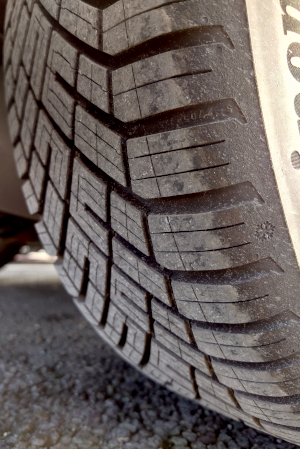 I was glad, therefore, that I'd not followed my original plan of running summer tyres year-round. Over these last few days I had found myself frustrated at other cars seemingly crawling along on clear roads. This reminded me of my very first year on winter tyres when I'd been caught out by other traffic going slowly. I again realised other drivers were either just being cautious or else they could feel the lack of grip from their (almost certainly) summer tyres. I meanwhile actually found myself in the reverse situation of when I first put on the AllSeasonContact 2. Back then (which now seemed an age ago!) I was lacking in confidence with the ASC2 in the warmer conditions, particularly on braking. Now I was driving the the AllSeasonContact 2 without thought - the grip actually seemed to be improving as the temperature dropped.
My lasting impression during this period of running the AllSeasonContact 2, however, had nothing to do with their excellent cold weather capabilities, but rather their comfort - they were such a calm and relaxing tyre to be on. Soft and quiet, they made our potholed roads less stressful to drive, and even coped with running over an errant wine bottle that had found its way on to our drive and that I hadn't spotted in the dark. I think the high tread depth and pattern design had helped there, compared to the circumferentially grooved and asymmetric nature of most modern summer tyres.
Indeed in many ways the ASC2 reminded me of another Continental tyre I'd run back in the day - the ContiPremiumContact 2. I'd come to those from running a Max Performance summer tyre and a VERY (almost comedically) delayed-response winter tyre. The latter had, however, opened my mind to trying a Touring tyre after my performance summers. To begin with the CPC2 had completely confused my brain - they had simultaneously blended the extreme comfort and low rolling resistance of my then winter tyres with the sporty feeling of my summers. And now in the present day I was feeling exactly the same thing again with the AllSeasonContact 2.
My next update will be in spring, once temperatures have warmed up. By then the WinterContact TS 870 will also have come off the second car in the family, so I'll have a chance to look back and reflect on what it's been like running an All Season tyre over the period of time when I'd normally be running a full Winter.
Spring update 24th April 2025
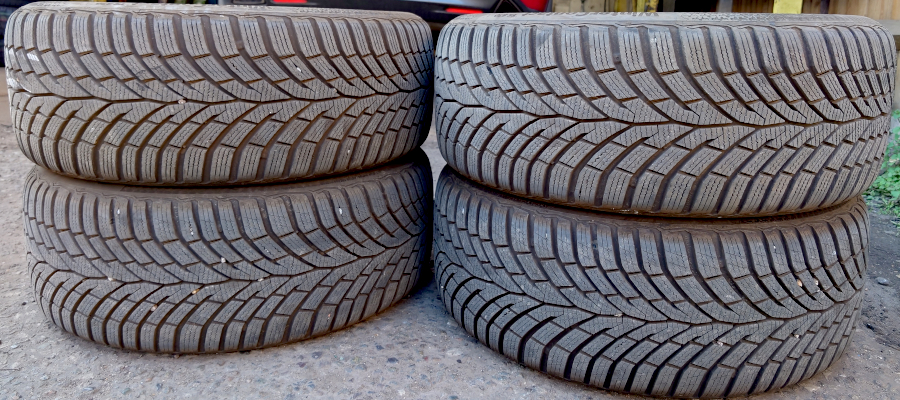
The Continental WinterContact TS 870 (pictured above, just to confuse you!) came off the second car in the family on 19th March 2025. This was after the last frosty morning and before temperatures heated up to 20 degrees the following day. I would have preferred the family member to have kept running winter tyres through to early April, since colder lows were forecast again then. However, when previously reminding the owner to brake a bit earlier during warmer spells in the mid-teens, I was rebuked with the response that they were already braking more at 10 degrees! This was incredibly interesting to me, since all the winter tyres I've driven on my own car have been OK up to 10 degrees. Perhaps the TS870 were more winter biased than I realised and I may very well have experienced the same had I run them as originally intended.
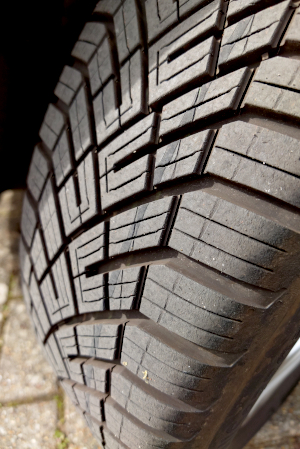
The "winter running window" for us was therefore the 15th November to 19th March for the 2024-2025 season. This compares to my 14 year average of 21st November to 31st March (the latter excluding the anomalous delayed removal in 2020). I measured the tread of my Continental AllSeasonContact 2 to see how much they had worn over this period. The ASC2 had started off around 8mm and after mainly urban, stop-start and rush hour running were now down to 7.5mm. My average MPG for local runs during this time was 34.4, which compared to 34.1 on my last winter tyre.
So, now to the burning question: was fitting the Continental AllSeasonContact 2 in place of the WinterContact TS 870 full winter tyre the right thing for me to have done? And the answer, as a 14 year advocate of winter tyres, is... yes! Previously doubtful of All Season tyres, I can now safely say that modern models cope extremely well in all situations. Would a full winter tyre have been better had we had heavy snow? Undoubtedly. But would a full winter tyre have felt more compromised in the warm and dry? Absolutely, as the testimony of the family member running the TS870 even at 10 degrees confirmed.
That was looking back and particularly focusing on the colder months. What about in early spring and as I look forward towards the summer? Taking advantage of the warmer weather, I headed out on my fixed run of varying speed limits (between 30 and 70 mph) with the temperature up to 20 degrees. Thankfully this time the roads were clearer and I recorded a more representative 49.2 MPG for the loop. This compares to an average of 49.7 MPG for longer journeys across all my previous tyres.
Steering at these higher temperatures was a bit more delayed and my car felt slightly wallowy around roundabouts and on tight curves. Braking was also fractionally longer, although I'd already mentally adjusted to this. However, you must remember that 17-18 degrees is when I find full (Central European) winter tyres to be almost completely unacceptable, so for the AllSeasonContact 2 to only start to exhibit some winter tyre like handling at 20 degrees is high praise. This certainly makes me feel more confident about continuing to run the ASC2 over the summer.
And my next update will indeed be at some point during the summer. Will I make it through to the end? Or will I feel the need to swap back to my summer tyres in the hotter months? Join me here on Tyre Reviews to find out.
Summer Update
Updated on 26th September 2025

The biggest news as we headed into warmer weather was not actually how the Continental AllSeasonContact 2 coped, but the fact that the second car in the family also switched to all season tyres. A tear (Jon seemed to think tread separation) was found on one of the old summer tyres that had only just been put back on. The owner had been champing at the bit wanting all season tyres after the third car in the family had its Cross Climate 2s fitted - and doubly so once I'd got my ASC2. Here was the opportunity.
So, what did we have fitted? The Pirelli Cinturato All Season SF3. They had tested extremely well, coming third to the Continental AllSeasonContact 2 in Jon's 2024 All Season Tyre test and winning his 2024/2025 test. The SF3's extremely high scores in the dry and Jon's comments that it was "the most summer feeling all season tyre" were major factors in fitting them as a year-round tyre. However, what really sealed the deal was getting a significant discount on the combined purchase and fitting price. In fact, we almost made back the charge incurred fitting the old summer tyres, which was a small consolation for that short-lived expense.
Initial comments from the family member about the Pirelli SF3 - noise somewhere between a winter and summer tyre, sporty, and does need more braking especially in the warm. That pretty much matched the initial impressions I had of the AllSeasonContact 2 so we're looking at two very similar tyres, at least in the dry.
The pertinent point now though was that as a family we've gone from one vehicle only ever having run summer tyres and the other two having religiously swapped between summers and winters, to all three cars running all season tyres - and with the intention to do so year round. The Michelin Cross Climate 2 have done so for the last 18 months. Will the Continental AllSeasonContact 2 (and Pirelli Cinturato All Season SF3) make it through the summer? Read on to find out...
Warmer Running
Late April in to early May saw a mini heatwave in the UK. On 28th April temperatures reached 23-24 degrees C while I was out. Behaviour of the AllSeasonContact 2 was little changed from at 20 degrees - and bizarrely if anything maybe even felt better! On 30th April I drove at 25-26 degrees, matching the highest I'd ever driven full winter tyres at. Here the ASC2 were only taking fractionally longer to brake and steer. The 1st May 2025 saw the hottest start to the month on record and it reached 27 degrees C while I was out that day - the highest for me on winter-capable tyres.
Comparison with the CrossClimate 2 and Pirelli SF3
I had the opportunity to drive the CrossClimate 2 shod car the following week. What really struck me was the harsh ride in comparison to the extremely comfortable AllSeasonContact 2. We were literally shaken side to side over a short rumble strip stretch of road. I'd driven it like I normally do and the following day back in my own car on the ASC2 I barely felt the bumps at all. The difference was astonishing and even more so given that the CC2 shod car actually has a softer ride than my own. I also felt that the AllSeasonContact 2 had a sportier and quicker steering response at these cooler temperatures (12 degrees C on the day I drove the CC2 and 15 for the ASC2), further cementing my impression of the Cross Climate as "quite boring."
Towards the end of May I was a passenger in the Pirelli SF3 shod car. The ride seemed a little harsher than the AllSeasonContact 2, but otherwise the experience was eerily similar - right down to the driver getting caught out when needing to brake more than expected.
Heatwaves and New Highs
 July and August saw multiple heatwaves hit the UK. In the middle of both months I'd drive at a new record for me with winter-capable tyres of 32 degrees C. Braking again caught me out - another mental re-calibration was required, although once I adjusted everything was fine again. There seem to be some very clear boundaries with the AllSeasonContact 2 - around 9 degrees, 19-20 degrees and now at 30+ degrees C. Steering was also slightly slower, but in observing that and how I reacted to it a smile came to my face. With my very first winter tyres back in 2010 I'd not get a reaction after steering input so would add some more, only to then find myself steering too much once the tyres reacted. With the ASC2 I was adding further input and then IMMEDIATELY getting a response - and the exact amount wanted too. This again took me back to the Max Performance summer tyre I originally had fitted to my car, where a sharp input to steering would result in the desired outcome.
MPG during this summer period ranged from 37.0 (already above any of my winter ones) to 42.5. The average of all the local running readings was 39.3, which compared to 34.4 during the "winter tyre" window. I actually hit a high of 43.1 at one point between heatwaves and during the summer holidays, only to then be thwarted by a long delay due to roadworks and an increase in traffic as rain (and families) returned towards the end of August. My average for local running across all my tyres is currently 41.03 MPG, although until recently I'd driven mostly during the middle of the day. Figures in the forties with the AllSeasonContact 2 during August are therefore reassuring as they are more comparable to previous conditions.
Looking Back (again), and Forwards
I'd now driven the Continental AllSeasonContact 2 from a low of -1 degrees C to a high of 32 degrees. Looking back through the earlier sections of this long term review I realised how much of a companion the ASC2 had become. We'd worked together through the different situations encountered, adjusting to the conditions and to each other. And all the while the AllSeasonContact 2 had remained calm and composed, but responding when I needed them too - the perfect partner.
How did the Pirelli Cinturato All Season SF3 fare? Quite early on the family member stated that they'd prefer to be on a summer tyre in the summer. What was interesting was that they had experienced a full (Central European) Winter tyre, a Max Performance Summer tyre and then a modern All Season tyre (the SF3) all within two weeks. I think the strategy for them is going to be to run a summer tyre during most of the year and use the SF3 as a "winter" tyre. Interestingly, this echoes Jon's conclusion for the UK after he tested different tyre types at varying temperatures in Test World's indoor facilities in 2019.
The Michelin CrossClimate 2 are coming up to the second anniversary of their fitting on the third car in the family and have fulfilled their intended use as a year-round tyre.
And the Continental AllSeasonContact 2? I am very definitely going to continue running them throughout the year. They have exceeded all my expectations so far, matching Jon's initial Test Winning review of them in 2024 where he concluded, "ideally I'd like to see it better in dry braking, but in all the other tests it was just great. Outstanding product from Continental."
I plan to do one final update late October/early November to conclude a year of running the ASC2. Other than encountering any heavy rain, the main points will be to finalise the MPG over the "summer tyre" window and to check the wear rate both for the same and also overall.
Autumn Update and One Year Wrap Up
Updated on 18th November 2025

September saw temperatures swing between 6 and 28 degrees C. I did indeed encounter heavy rain and even some flooding, as well as torrential rain and standing water at motorway and dual carriageway speeds - all of which the Continental All Season Contact 2 dispatched nonchalantly. In the middle of October despite it being 12 degrees there was a bitingly cold wind and I found myself - along with the time of year - thinking about winter tyres, only to remember I was already on winter capable ones! This was because the ASC2 had unobtrusively handled absolutely everything thrown at them in terms of weather and road conditions, with just that one slight bugbear of dry braking. And I think that's why the latter had perhaps unfairly stood out so much for me - the All Season Contact 2 are just so well-rounded that it genuinely surprised me when their performance wasn't absolutely top notch.
Finally drove the Pirelli Cinturato All Season SF3!
I had the extremely rare opportunity to drive the Pirelli SF3-shod car during the second half of October. The main difference between the ASC2 and SF3 is that while the Continentals CAN be sporty IF you want them to be (and quiet and relaxing if you don't), the Pirellis feel sporty ALL the time (and the Michelin CC2 dull and boring all the time!). The SF3 also felt harsher and noiser, especially on rough road.
Final Fuel Economy
I continued my string of "summer tyre window" MPG readings, with the average for local running finishing at 40.1. The average of all the local readings I took throughout the entire twelve month period (so including "winter" ones) came to 39.24 MPG. Both these figures are very close to the 40 MPG I've historically estimated my car gets for local running (its official figure for "urban" is 38.7), so once again the ASC2 have matched or exceeded expectations. Longer runs averaged out at 45.58 MPG. This is somewhat down on the rough 50 MPG guide I use for my car (its official "combined" figure is 48.7 and "extra urban" 55.4). However, in the past the majority of my long runs have literally been across country, whereas over the last year most of any non-local running I've done has been no more than 30 miles each way with motorway sections sandwiched between congested local roads. I DID do a slightly longer 70-mile round trip in the middle of the day and managed a high of 52.4 MPG for that. This was much more in line with the average of the most efficient (summer) tyre I've ever run, which achieved 52.86 MPG across all of its long runs. So once again, the capability is there in the All Season Contact 2, it's just that I've not always been able to extract it.
Final Tread Wear

The All Season Contact 2 started at 8mm. Final measurements came to 6.5mm on the driver's front, 6.58mm for the passenger front, 7.08mm for the offside rear and 7.3mm for the nearside rear.
1 to 1.5mm might seem a lot of wear in just one year, but as a reminder I've been mainly doing stop-start, short, rush-hour running. Also, my previous favourite tyre that I've ever run lost 2mm at the front and 1mm at the rear during just the two-thirds of the first year that I ran them as summer tyres, so the wear on the ASC2 is by no means worrying. Indeed, while the Pirelli SF3 has won more recent All Season tyre tests on Tyre Reviews, Jon has been unable to include wear in those. His very first test of the All Season Contact 2 included wear and the Pirelli lost out in that original head to head because of that.
One Year Wrap Up
Did you notice that I just said "previous" favourite tyre? That's because the Continental All Season Contact 2 are now hands down the best all-round tyre that I've ever run. Now I would say that wouldn't I, given that they were supplied and fitted courtesy of Continental?! Not so! I've called out its slightly longer dry braking, although this is really a characteristic of All Season tyres in general compared to Summer tyres. And it's the ASC2's exceptional strengths in all other areas that make this very slight weakness stand out so much.
To repeat what I said in my Initial Conclusion: the Continental All Season Contact 2 are comfortable and quiet, sportier at higher speeds and during acceleration, adapt to changing temperatures, seem to be in the ballpark of my other tyres in terms of fuel economy, and perform like winter tyres in near zero temperatures and in the wet while being less compromised than a winter tyre in the warm and dry.
As I write this my car is approaching its 20th birthday. It's possible then that the ASC2 may outlive my car - hence my reservations about investing in further sets of both Winter and Summer tyres. But for as long as my car does keep going, if I need to replace any of its tyres for wear or damage reasons I'll be buying more All Season Contact 2 myself. And that's the highest praise I can give them.
To repeat Jon's own conclusion: "Outstanding product from Continental."
David
Wich one to choose CC3 Sport or ASC2 for a Tesla Juniper AWD in Nothern Europe?
Which one would you recommend? CC2 or ASC2?
At temperatures below -1°C on dry roads, I understand that CC2 is better.
My CC1 is now 7 years old, and I would like to replace it, but I can't decide.
I've had no problems with the CC1 in hot weather, on wet highways, or on Austrian serpentine roads in the rain at 2 degrees Celsius.
However, it's true that I can feel every bump in the road with them (of course, in Hungary, where the roads are unacceptably bad).
ASC2 for the wet grip
Is it normal that the surface looks worn even though it's new?
I find it very strange, a little ridiculous. https://www.tyrereviews.com/images/article/2024-asc2-snow.jpg
David writing here.
I think the "wear" you're actually seeing is snow on the shoulder blocks.
If you compare to the later winter and spring update pictures you'll see those ones look clean.
meant to write "wear you're seeing is actually snow"
and I'd add ASC2 for the comfort
David, thank you for the review. I'm not sure I understood the review. "The most summer feeling all-season tyres" (Pirelli) will only be in use during winter, while tyres with less summer feeling (Michelin and Conti) will be in use both in summer and winter!? Something doesn't make sense to me! ?
David writing here.
I'll try and clarify!
Having unintentionally run winter (c-e), summer and all-season tyres back to back and then the SF3 through the summer, the owner wasn't happy with the longer dry braking of an all-season tyre in warmer/hot weather. They also hadn't been happy with the now evidently quite winter-biased TS870 even at 10 degrees. So the solution is to go back to a summer tyre for most of the year but replace the TS870 with the SF3, giving a closer-to-summer-tyre experience in the winter (and some autumn and spring) while still maintaining mobility and safety in the colder months.
The "most summer feeling" quote re the SF3 was Jon's in his more performance-oriented review.
I'd say the CC2 feels more like a summer tyre when plodding around town, plus it's completely consistent. And that's fine (perfect even) for the user.
The ASC2 have a multi-faceted personality but with that longer dry braking. This is on my car and I can cope with/adjust to it.
Ultimately the tyres are being chosen for three different drivers with three different driving styles in three different usage scenarios in three different wheel sizes from the available models at the time of purchase.
I think with a lot of judgement and a little bit of luck we've all arrived at the correct tyres for each of us, with just that tweak to the currently SF3-shod car of moving to a combo of summer and all-season tyres. The owner had really wanted to try all seasons and they did but they then weren't happy with them as a warm/hot weather tyre. Hence the plan to move to a summer+a-s combo.
Thank you for the review. Am also very curious how the tires behave on hot summer. Where I live, there are about 3 months with 28-33deg during the day. How would those tires cope with such conditions is my only concern.
David writing here.
You'll hopefully by now have read my summer update.
The CC2 just plod along and have been doing so year-round for two years now.
The ASC2 do require earlier/more braking as temperatures increase, but it's something I adjusted to.
The owner of the SF3 disliked all-season tyres in warm/hot weather, although their previous summer tyres have been Max Performance ones and prior to the TS870 their winter tyres have been the "performance" variants, so they may have different expectations of what they want from a tyre. I've only driven the SF3 once and that was in cooler weather. Likely I would have been fine with them at higher temps and/or adjusted to them as I did with the ASC2.
While I've driven the ASC2 at the temps you encounter, it hasn't perhaps been for as long and constant a period as you drive. Hopefully this long term review will have given you some insight though.
David, it looks like you 'survived' the hot July with Conti ASC2 tires!?
Yes! No news was good news - summer (and autumn/final) updates have since been published.
Hi Jonathan, great report. I'm very eager to hear about your experience with the Conti ASC2 in warm, summer weather.
Nice review.
I found my vector4s gen 3 behave very very differently after 10,000miles. I always thought wearing period is more like 3-4000 miles. May be because i drive a low powered car (2 series 7 seater) and nearly always drive in eco mode and not pushing the tyres too much. But after 15000 miles (now imsecond winter), i can safely say mpg essentially jumped from low-40s to high 40s (sometimes touch 54mpg) on my commute to work (20miles of A3 and abit of village b roads.). I keep a close eye on pressure/and trend depth so i dont think it is that. Also i dont use AC nearly all year round, so i dont think it’s that either.
A tyres mpg always improves as it wears, however that's a really big jump, outside of spec for just the tyre. Glad they improved though :)
I fitted Conti ASC2s to my Skoda Karoq at the end of August this year as KwikFit had some very good offers and the Bridgestone Duelers fitted in the factory were wearing badly after 20,000 miles on the edges of the tread.
I noted that Conti recommend they are run in for the first thousand miles, and certainly noticed an increased grip as the moulding lubricant wore off and the rubber scrubbed in.
The Duelers are notorious on the Karoq's 19 inch wheels for being noisy and harsh, despite my model having the 45 profile rather than the 40s fitted to other Karoqs. Now, after 2,000+ miles I find the Contis much more comfortable albeit with slightly less aggressive steering.
Glad you like them, they're a great tyre :)
Thanks John, nice read!
It will be interesting to see how these tyres will perform in summer.
Personally I live in Italy, all season tyres must be well capable of running with 40 degrees on the tarmac as well as minus 5.
So far i've preferred Vredestein and their asimmetrical design in my situation, but CC1 and 2 sold in big numbers around here.
David writing here.
Your post was some time ago so hopefully you've seen my subsequent updates, including from the summer.
I've encountered minus 1 to plus 32 degrees in my first year with the ASC2. Braking and steering do become increasingly delayed as temperatures increase.
CC seem to be the "default" all-season tyre - Michelin seem to have captured the mind share - but other brands are available (as they say).
If you're happy with the Vredestein then great.
Thanks David! Very much appreciate it! That feeling I believe it is common on many All Season tyres, I felt it very much with Good Year few year ago fitted on a Jeep Renegade. Currently I’m driving a Mazda CX5 which came out of the factory with old Pirelli All Season (not SF3) which are nothing special, but will last long probably ?.
In the past years when it was time to change tyres, for my driving around 80k km, I’ve always changed car ? so I didn’t have the opportunity to choose them! CC2 remain on my top list nonetheless. Safe drive ??
Thanks John, nice read!
It will be interesting to see how these tyres will perform in summer.
Personally I live in Italy, all season tyres must be well capable of running with 40 degrees on the tarmac as well as minus 5.
So far i've preferred Vredestein and their asimmetrical design in my situation, but CC1 and 2 sold in big numbers around here.