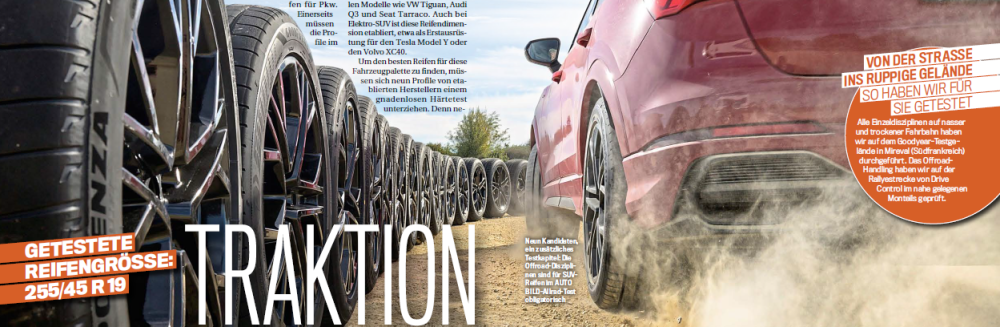
Auto Bild Allrad tested nine summer tyres in size 255/45 R 19, a popular fitment for AWD SUVs such as the VW Tiguan, Audi Q3, Seat Tarraco, Tesla Model Y, and Volvo XC40. Wet and dry tests were carried out at the Goodyear test facility in Mireval, southern France, while off-road handling was assessed on the rally course at Drive Control in nearby Monteils. In addition to the standard wet and dry tests, the tyres were evaluated in off-road handling on gravel and traction tests on grass, gravel, and sand - which is an interesting choice given the high performance and summer nature of these products!
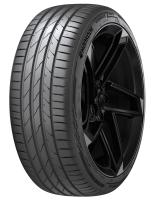
The Hankook Ventus evo, a brand-new product, took the overall win with the strongest wet performance in the field and dominant off-road traction on grass and gravel. Bridgestone's Potenza Sport Evo and the Vredestein Ultrac Pro tied for second, with the Bridgestone standing out for its dynamic handling on both dry tarmac and gravel, and the Vredestein offering the lowest rolling resistance and noise levels at a fair price. At the other end of the table, the Giti GitiSport S2+ finished last with notably weak wet performance - its wet braking distance was nearly ten meters longer than the Hankook's - earning only a "satisfactory" rating.
The off-road results are worth examining separately, because the tests behave quite differently from each other. The gravel handling course produced almost no useful separation - the spread from first to last is just 1.4 km/h across all nine tyres.
The traction tests tell a more interesting story. The Hankook is a clear outlier on grass, pulling roughly 30% more force than the next-best tyre, and it leads on gravel traction by a smaller but still notable margin. However, it drops to seventh on sand - and this pattern repeats across the field. Sand traction rankings are largely inverted compared to grass and gravel: the Falken leads on sand but finishes last on gravel traction, while the Hankook dominates grass and gravel but is weak on sand.
For most buyers in this SUV segment, the wet and dry results will be far more relevant - the off-road traction tests produce some genuine differences, but the gravel handling test adds little to the overall picture. I'm sure it was a lot of fun to test though.
Dry
The Falken posted the shortest dry braking distance, narrowly ahead of the Hankook and Goodyear. The Toyo and Giti had the longest stopping distances, though the overall spread across all nine tyres is relatively tight.
Dry Braking
Spread: 2.10 M (6.5%)|Avg: 33.59 M
Dry braking in meters (100 - 0 km/h) (Lower is better)
Falken Azenis FK520
32.50 M
Hankook Ventus Evo
32.80 M
Goodyear Eagle F1 Asymmetric 6
32.90 M
Bridgestone Potenza Sport Evo
33.10 M
Vredestein Ultrac Pro
33.40 M
Michelin Pilot Sport 4 SUV
34.10 M
Kumho Ecsta Sport PS72
34.40 M
Giti GitiSport S2 plus
34.50 M
Toyo Proxes Sport 2
34.60 M
The Bridgestone was clearly the fastest tyre on the dry handling course, pulling ahead of the Toyo in second by a comfortable margin. The Falken was slowest, which the testers attributed to delayed steering response and weak side guidance - a notable contrast to its braking strength.
Dry Handling
Spread: 4.20 Km/H (3.9%)|Avg: 104.17 Km/H
Dry Handling Average Speed (Higher is better)
Bridgestone Potenza Sport Evo
106.60 Km/H
Toyo Proxes Sport 2
104.90 Km/H
Kumho Ecsta Sport PS72
104.60 Km/H
Hankook Ventus Evo
104.40 Km/H
Michelin Pilot Sport 4 SUV
104.00 Km/H
Goodyear Eagle F1 Asymmetric 6
103.90 Km/H
Giti GitiSport S2 plus
103.60 Km/H
Vredestein Ultrac Pro
103.10 Km/H
Falken Azenis FK520
102.40 Km/H
Wet
The Hankook set the benchmark in wet braking, and the Giti was a distant last - the gap between them is nearly ten meters, which is a large spread for a single tyre size. The Falken and Vredestein were close behind the Hankook.
Wet Braking
Spread: 9.90 M (19.7%)|Avg: 53.56 M
Wet braking in meters (100 - 0 km/h) (Lower is better)
Hankook Ventus Evo
50.20 M
Falken Azenis FK520
51.30 M
Vredestein Ultrac Pro
51.90 M
Bridgestone Potenza Sport Evo
52.30 M
Michelin Pilot Sport 4 SUV
53.00 M
Goodyear Eagle F1 Asymmetric 6
53.40 M
Kumho Ecsta Sport PS72
54.40 M
Toyo Proxes Sport 2
55.40 M
Giti GitiSport S2 plus
60.10 M
The Hankook also led wet handling, just ahead of the Bridgestone. The Giti again finished last, and the testers noted it starts sliding early in wet conditions. These two tests together highlight how far the Giti falls behind the leaders on a wet road.
Wet Handling
Spread: 5.30 Km/H (5.9%)|Avg: 86.98 Km/H
Wet Handling Average Speed (Higher is better)
Hankook Ventus Evo
89.10 Km/H
Bridgestone Potenza Sport Evo
88.90 Km/H
Goodyear Eagle F1 Asymmetric 6
87.80 Km/H
Vredestein Ultrac Pro
87.00 Km/H
Michelin Pilot Sport 4 SUV
86.80 Km/H
Toyo Proxes Sport 2
86.50 Km/H
Kumho Ecsta Sport PS72
86.50 Km/H
Falken Azenis FK520
86.40 Km/H
Giti GitiSport S2 plus
83.80 Km/H
The Bridgestone posted the fastest wet circle time, with the Hankook close behind. The Giti was slowest, consistent with its weak results across all the wet tests.
Wet Circle
Spread: 1.30 s (6.5%)|Avg: 20.56 s
Wet Circle Lap Time in seconds (Lower is better)
Bridgestone Potenza Sport Evo
19.90 s
Hankook Ventus Evo
20.10 s
Michelin Pilot Sport 4 SUV
20.40 s
Goodyear Eagle F1 Asymmetric 6
20.40 s
Falken Azenis FK520
20.70 s
Toyo Proxes Sport 2
20.70 s
Vredestein Ultrac Pro
20.80 s
Kumho Ecsta Sport PS72
20.80 s
Giti GitiSport S2 plus
21.20 s
The Michelin had the highest aquaplaning float speed by a clear margin, making it the strongest performer in straight-line aquaplaning. The Goodyear was last - an unusual result for a tyre that performed well in the other wet tests.
Straight Aqua
Spread: 6.10 Km/H (6.7%)|Avg: 87.62 Km/H
Float Speed in Km/H (Higher is better)
Michelin Pilot Sport 4 SUV
90.90 Km/H
Toyo Proxes Sport 2
89.90 Km/H
Vredestein Ultrac Pro
89.30 Km/H
Hankook Ventus Evo
88.70 Km/H
Bridgestone Potenza Sport Evo
87.20 Km/H
Kumho Ecsta Sport PS72
87.10 Km/H
Falken Azenis FK520
85.40 Km/H
Giti GitiSport S2 plus
85.30 Km/H
Goodyear Eagle F1 Asymmetric 6
84.80 Km/H
In curved aquaplaning, the Toyo recorded the highest lateral grip, just ahead of the Hankook and Michelin. The Falken was weakest here, which adds to its mixed wet performance - strong in braking but limited in aquaplaning resistance.
Curved Aquaplaning
Spread: 0.38 m/sec2 (14.8%)|Avg: 2.42 m/sec2
Remaining lateral acceleration (Higher is better)
Toyo Proxes Sport 2
2.56 m/sec2
Hankook Ventus Evo
2.54 m/sec2
Michelin Pilot Sport 4 SUV
2.53 m/sec2
Vredestein Ultrac Pro
2.50 m/sec2
Kumho Ecsta Sport PS72
2.40 m/sec2
Bridgestone Potenza Sport Evo
2.40 m/sec2
Goodyear Eagle F1 Asymmetric 6
2.36 m/sec2
Giti GitiSport S2 plus
2.34 m/sec2
Falken Azenis FK520
2.18 m/sec2
Off road
The gravel handling course produced very little separation - just 1.4 km/h between the fastest and slowest tyres. At this level the differences are essentially negligible, and the ranking shouldn't carry much weight in a buying decision.
Gravel Handling
Spread: 1.40 Km/H (2.2%)|Avg: 63.47 Km/H
Gravel Handling Average Speed (Higher is better)
Bridgestone Potenza Sport Evo
64.20 Km/H
Goodyear Eagle F1 Asymmetric 6
63.90 Km/H
Kumho Ecsta Sport PS72
63.80 Km/H
Vredestein Ultrac Pro
63.60 Km/H
Michelin Pilot Sport 4 SUV
63.40 Km/H
Hankook Ventus Evo
63.30 Km/H
Falken Azenis FK520
63.20 Km/H
Giti GitiSport S2 plus
63.00 Km/H
Toyo Proxes Sport 2
62.80 Km/H
Gravel traction showed more meaningful differences. The Hankook led by a notable margin, followed by the Michelin and Kumho. The Falken was weakest on this surface.
Gravel Traction
Spread: 1507.00 N (13.2%)|Avg: 10539.22 N
Pulling Force in Newtons (Higher is better)
Hankook Ventus Evo
11442.00 N
Michelin Pilot Sport 4 SUV
10861.00 N
Kumho Ecsta Sport PS72
10810.00 N
Goodyear Eagle F1 Asymmetric 6
10610.00 N
Giti GitiSport S2 plus
10606.00 N
Toyo Proxes Sport 2
10387.00 N
Bridgestone Potenza Sport Evo
10199.00 N
Vredestein Ultrac Pro
10003.00 N
Falken Azenis FK520
9935.00 N
Sand traction rankings are largely inverted compared to gravel - the Falken led here by a clear margin despite finishing last in gravel traction, while the Hankook dropped to seventh. This suggests the two surfaces reward fundamentally different tyre characteristics.
Sand Traction
Spread: 2422.00 N (22.6%)|Avg: 9479.89 N
Pulling Force in Newtons (Higher is better)
Falken Azenis FK520
10718.00 N
Goodyear Eagle F1 Asymmetric 6
10317.00 N
Vredestein Ultrac Pro
10147.00 N
Kumho Ecsta Sport PS72
10019.00 N
Michelin Pilot Sport 4 SUV
9937.00 N
Bridgestone Potenza Sport Evo
8897.00 N
Hankook Ventus Evo
8501.00 N
Toyo Proxes Sport 2
8487.00 N
Giti GitiSport S2 plus
8296.00 N
The Hankook was dominant on grass, pulling roughly 30% more force than the second-best tyre, the Bridgestone. The remaining seven tyres were clustered closely together, making the Hankook a significant outlier on this surface.
Grass Traction
Spread: 1215.00 N (32.6%)|Avg: 2779.78 N
Pulling Force in Newtons (Higher is better)
Hankook Ventus Evo
3729.00 N
Bridgestone Potenza Sport Evo
2879.00 N
Goodyear Eagle F1 Asymmetric 6
2864.00 N
Michelin Pilot Sport 4 SUV
2658.00 N
Falken Azenis FK520
2658.00 N
Kumho Ecsta Sport PS72
2584.00 N
Giti GitiSport S2 plus
2584.00 N
Vredestein Ultrac Pro
2548.00 N
Toyo Proxes Sport 2
2514.00 N
Comfort
The Vredestein was the quietest tyre at both test speeds, and the testers specifically called it out as the best in the field for noise. The Kumho was the loudest at 80 km/h. The spread is moderate - noticeable in back-to-back testing but unlikely to be dramatic in everyday driving.
Noise
Spread: 5.90 dB (8.8%)|Avg: 70.86 dB
External noise in dB (Lower is better)
Goodyear Eagle F1 Asymmetric 6
67.00 dB
Vredestein Ultrac Pro
69.10 dB
Hankook Ventus Evo
70.60 dB
Toyo Proxes Sport 2
71.00 dB
Falken Azenis FK520
71.30 dB
Michelin Pilot Sport 4 SUV
71.70 dB
Giti GitiSport S2 plus
71.70 dB
Bridgestone Potenza Sport Evo
72.40 dB
Kumho Ecsta Sport PS72
72.90 dB
Value
The Vredestein recorded the lowest rolling resistance, well ahead of the Goodyear in second. The Bridgestone was the least efficient, which combined with its high purchase price makes it the most expensive tyre to run overall despite its strong performance results.
Rolling Resistance
Spread: 1.65 kg / t (23.8%)|Avg: 7.76 kg / t
Rolling resistance in kg t (Lower is better)
Vredestein Ultrac Pro
6.92 kg / t
Goodyear Eagle F1 Asymmetric 6
7.24 kg / t
Falken Azenis FK520
7.35 kg / t
Kumho Ecsta Sport PS72
7.62 kg / t
Giti GitiSport S2 plus
7.68 kg / t
Michelin Pilot Sport 4 SUV
8.07 kg / t
Hankook Ventus Evo
8.15 kg / t
Toyo Proxes Sport 2
8.25 kg / t
Bridgestone Potenza Sport Evo
8.57 kg / t
19,000 km
£1.45/L
8.0 L/100km
--
Annual Difference
--
Lifetime Savings
--
Extra Fuel/Energy
--
Extra CO2
Estimates based on typical driving conditions. Rolling resistance accounts for approximately 20% of IC vehicle fuel consumption and 25% of EV energy consumption. Actual savings vary based on driving style, vehicle weight, road conditions, and tyre age. For comparative purposes only. Lifetime savings based on a 40,000km / 25,000 mile tread life.
Results
The Hankook Ventus evo takes the overall win on the strength of its wet and off-road performance, with the Bridgestone and Vredestein sharing second place - the Bridgestone for outright handling and the Vredestein for efficiency and balance.
The Hankook Ventus evo is a brand-new tyre that takes the test win with the best wet performance in the field. It secured top positions in both wet handling and wet braking, and in the off-road traction tests it pulled away from the competition on grass and gravel by a significant margin. Dry handling and dry braking are both near the front of the group. The article identifies its main weakness as limited traction on sand. The testers highlight a good price-to-performance ratio.
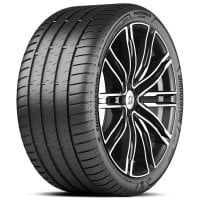
The Bridgestone Potenza Sport Evo shares second place and is described in the article as showing the most dynamic driving behavior of all candidates on the gravel course, where it posted the fastest time. It also recorded the fastest dry handling lap with direct steering response and agile behavior across all surfaces. In the wet, it sits just behind the Hankook in handling and delivers good lateral grip with safe side guidance. The testers note two drawbacks: it is the most expensive tyre in the test, and it recorded the highest rolling resistance.
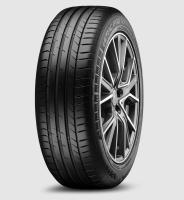
The Vredestein Ultrac Pro also shares second place and is described by the testers as an all-rounder with balanced and safe handling characteristics. It recorded the lowest rolling resistance in the test and is identified in the article as the quietest tyre, with the lowest pass-by noise at both test speeds. Wet braking and handling results sit in the upper part of the field, and sand traction is third-best. The article notes its main shortcoming as limited traction on gravel. The testers consider the price fair.
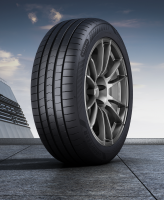
The Goodyear Eagle F1 Asymmetric 6 finishes fourth and is described in the article as a gravel specialist with high safety margins across all test surfaces. It posted one of the shortest dry braking distances and low rolling resistance. In the wet handling test, the testers noted good dynamics and safe side guidance. On sand it delivered the second-highest traction. The article identifies its weakness as somewhat lower performance in straight-line aquaplaning, where it recorded the lowest float speed of all nine tyres.
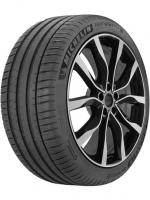
The Michelin Pilot Sport 4 SUV finishes fifth and is described as a wet-weather specialist with the largest aquaplaning reserves in the test, posting the highest straight-line float speed by a clear margin. Gravel traction is strong, second only to the Hankook, and the testers note a comfortable ride quality. Unlike all other candidates which carry a 104 Y rating, the Michelin is rated 100 V - meaning a lower load capacity and a maximum speed rating of 240 km/h. Dry and wet handling results are mid-pack.
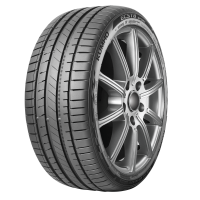
The Kumho Ecsta Sport PS72 finishes in a shared sixth place and is noted for a strong showing in the off-road tests combined with dynamic dry handling, posting the third-fastest time on the dry course. It is the cheapest tyre in the test. Gravel traction and gravel handling speed are both in the top three. The testers identify wet performance as its weakness, with results in wet handling and wet braking sitting in the lower half of the rankings.
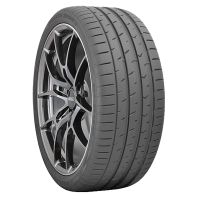
The Toyo Proxes Sport 2 shares sixth place and is credited with good aquaplaning reserves - it posted the second-highest straight-line float speed and the highest lateral aquaplaning grip. On dry tarmac it recorded the second-fastest handling time, and the testers note good comfort levels. The article points to weaknesses in gravel handling, where the Toyo posted the slowest time, and in sand traction. Wet braking is also near the bottom of the field.
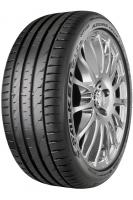
The Falken Azenis FK520 finishes eighth and is referred to in the article as the braking specialist of the test. It posted the shortest dry braking distance of all candidates and was also strong in wet braking. Sand traction was the best in the field, and rolling resistance is low. However, the testers describe delayed steering response and weak side guidance in dry handling, which dropped it to last place on the dry handling course. Gravel traction is also the weakest in the test.
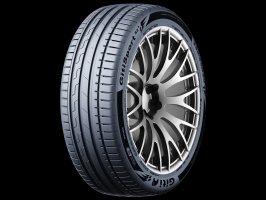
The Giti GitiSport S2+ finishes last in ninth place. The article describes it as a dry-road-focused tyre with decent traction on grass and gravel. However, the testers note that it starts sliding early in wet conditions, and its aquaplaning reserves are limited. This is reflected in its wet braking distance, which is nearly ten meters longer than the test winner, and the slowest wet handling speed. Sand traction is the lowest in the field.




Discussion