The first winter tyre test of 2017 has been published! The German publication Auto Motor und Sport [AMS] have tested ten ultra high performance winter tyres in 225/40 R18. This extremely popular 18" tyre sizes is fitted to performance saloons such as the Audi A4, Skoda Octavia VRS, and the 232 bhp BMW 430i Grand Coupe used for this testing.
While AMS chose not to test on ice, they did a very thorough job covering dry, wet and snow running, while also evaluating subjective comfort, external noise and rolling resistance. The use of a heavier, powerful saloon car makes this test more applicable to the standard "executive commuter car" found in the UK.
The highlights of the test and overall results can be found below, and as always, please feel free to leave any questions or comments at the bottom of the page. The results are once again incredibly close, especially between the top five tyres.
Dry
In the dry, the Nokian dominated, winning both the braking and handling tests. The test winning Continental managed top three in each test, while the Kumho scored a strong second place in dry braking, but could only manage ninth place in dry handling.
- Nokian WR A4
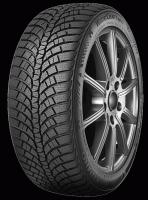
- Kumho WinterCraft WP71
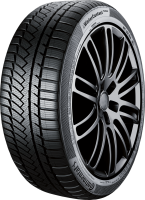
- Continental WinterContact TS 850 P
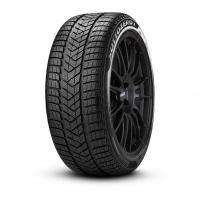
- Pirelli Winter Sottozero 3
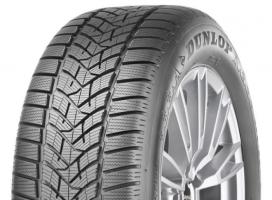
- Dunlop Winter Sport 5
- Michelin Pilot Alpin 4
- Semperit Speed Grip 3
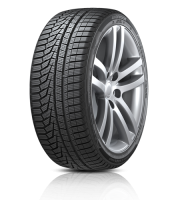
- Hankook Winter i cept evo2
- Cooper Weather Master SA2 Plus
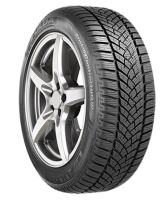
- Fulda Kristall Control HP2
- Nokian WR A4
- Continental WinterContact TS 850 P
- Hankook Winter i cept evo2
- Dunlop Winter Sport 5
- Semperit Speed Grip 3
- Michelin Pilot Alpin 4
- Pirelli Winter Sottozero 3
- Fulda Kristall Control HP2
- Kumho WinterCraft WP71
- Cooper Weather Master SA2 Plus
Wet
If you follow tyre testing, it will come as no surprise that the Continental dominated the wet grip testing, winning both the braking and handling tests, with the second placed overall Dunlop tyre following up the Continental in both tests. In the high water aquaplaning tests the Continental struggled a little more, only managing seventh overall, and where the Fulda tyre struggled in the wet grip testing, it won the aquaplaning tests, highlighting the opposing design qualities of wet grip and wet aquaplaning performance. Nokian had a weak showing in the wet.
- Continental WinterContact TS 850 P
- Dunlop Winter Sport 5
- Michelin Pilot Alpin 4
- Kumho WinterCraft WP71
- Pirelli Winter Sottozero 3
- Semperit Speed Grip 3
- Cooper Weather Master SA2 Plus
- Fulda Kristall Control HP2
- Nokian WR A4
- Hankook Winter i cept evo2
- Continental WinterContact TS 850 P
- Dunlop Winter Sport 5
- Pirelli Winter Sottozero 3
- Michelin Pilot Alpin 4
- Cooper Weather Master SA2 Plus
- Semperit Speed Grip 3
- Kumho WinterCraft WP71
- Hankook Winter i cept evo2
- Fulda Kristall Control HP2
- Nokian WR A4
- Fulda Kristall Control HP2
- Pirelli Winter Sottozero 3
- Cooper Weather Master SA2 Plus
- Dunlop Winter Sport 5
- Hankook Winter i cept evo2
- Michelin Pilot Alpin 4
- Continental WinterContact TS 850 P
- Kumho WinterCraft WP71
- Semperit Speed Grip 3
- Nokian WR A4
Snow
Where the Dunlop couldn't quite match the Continental in the dry, it led the pack in the snow tests, with the Continental just ahead of the mid pack in fourth and fifth.
- Dunlop Winter Sport 5
- Fulda Kristall Control HP2
- Semperit Speed Grip 3
- Continental WinterContact TS 850 P
- Kumho WinterCraft WP71
- Michelin Pilot Alpin 4
- Hankook Winter i cept evo2
- Pirelli Winter Sottozero 3
- Cooper Weather Master SA2 Plus
- Nokian WR A4
- Dunlop Winter Sport 5
- Fulda Kristall Control HP2
- Semperit Speed Grip 3
- Michelin Pilot Alpin 4
- Continental WinterContact TS 850 P
- Pirelli Winter Sottozero 3
- Hankook Winter i cept evo2
- Kumho WinterCraft WP71
- Nokian WR A4
- Cooper Weather Master SA2 Plus
Other
The new Semperit was the quietest tyre on test, and the Nokian had the lowest rolling resistance.
- Semperit Speed Grip 3
- Michelin Pilot Alpin 4
- Nokian WR A4
- Kumho WinterCraft WP71
- Fulda Kristall Control HP2
- Dunlop Winter Sport 5
- Cooper Weather Master SA2 Plus
- Pirelli Winter Sottozero 3
- Hankook Winter i cept evo2
- Continental WinterContact TS 850 P
- Nokian WR A4
- Continental WinterContact TS 850 P
- Semperit Speed Grip 3
- Dunlop Winter Sport 5
- Hankook Winter i cept evo2
- Fulda Kristall Control HP2
- Michelin Pilot Alpin 4
- Pirelli Winter Sottozero 3
- Cooper Weather Master SA2 Plus
- Kumho WinterCraft WP71
Results
Good performance in the snow, high level of safety on wet surfaces, predictable behavior and good handling on dry surfaces
Relatively weak resistance to aquaplaning
Highly Recommended
Short braking distance in the snow, good performance on dry and wet surfaces
Relatively long braking distances in the dry, low lateral stability in snow (snow circle test not listed)
Recommended
High tractive effort and short braking distance in the snow, good lateral stability on wet surfaces, acceptable results on dry surfaces
Relatively low lateral stability at high loads on dry surfaces
Recommended
Reliable grip on snow, balanced behavior on wet surfaces, very well balanced on dry surfaces
Relatively long braking distances on wet surfaces, weak resistance to transverse aquaplaning
Recommended
Excellent grip on dry surfaces, very low rolling resistance
Low lateral stability and understeer on snow. Weak grip, unstable behavior and a long braking distance on wet surfaces
Recommended with restrictions
Accurate reactions to steering movements and good information in all conditions
Relatively long braking distances on wet surfaces, increased rolling resistance, increased noise level
Recommended with restrictions
High traction and short braking distance in the snow, good resistance to aquaplaning
Relatively low grip and slow reactions to steering movements on dry and wet surfaces
Recommended with restrictions
Acceptable braking on snow, stable behavior and precise reactions to steering movements on dry surfaces
Low lateral stability and poor handling on the snow, long braking distance on wet roads
Recommended with restrictions
Short stopping distance on snow and dry surfaces, acceptable braking and balanced behavior on wet surfaces
Unstable behavior during an emergency maneuver on dry surfaces, increased noise level
Recommended with restrictions
Acceptable braking performance on dry surfaces and good traction in the snow
Slow steering in the dry, unstable behavior at the limit of wet grip, reduced comfort level, high rolling resistance, increased noise level
Conditionally recommended

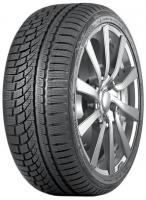
I had to register my utter disappointment with Nokian WR4!!
Both the "2017 Sport Auto Winter Tyre Test" & "AMS Performance 18 inch Winter Tyre Test" were right on the spot with the scores.
The WR4 are horrible on the wet surfaces!! I have a TT Mk3 and driving it on a highway at any levels of rain is utter horror show. I constantly get the feeling that the car is "floating" (aquaplaning). Overtaking anyone on a wet road is like driving on ice. Even on the dry surfaces, the tyres seem to force the car to "wander". You have to constantly make small steering wheel adjustments in order to have the car go straight. At first I thought that this was due to possible road imperfections" but now I know better.
VERDICT: "Not recommended"
Since people rarely drive fast & crazy during the winter, I recommend any other tyre. They might be good on dry, however in most places winter is mostly wet and icy than just being outright cold and dry. Get a tyre with good wet & snow stats.
You will find a feeling this this with any new winter tyres on a car like the TT. The extra siping and blocks of winter tyres cause the car to feel imprecise when compared to a summer tyre.
Probably, however I do have them for 2 years now. Granted they haven't done a big mileage with them but still. The tyres should have been worn in by now. Very disappointed in them in general. Aquaplanning is also dangerously bad, even in perfect conditions. I thought that my inexperience with a sports car was to blame for my feeling of "lack of control and stability" 2 years in and I still cant shake the feeling of pure inadequacy of the tyres.
I actually had a slide as I was driving in Vienna at a roundabout. I started understeer in the middle of my turn. I wasn't even driving fast. Thank god my Quattro system and the fact that no cars were on the road made it possible to get out of the situation with no causalities.
What you say is possible. But the way the tyres act is on the point with what both tests say. Very good website both your "Tyre Reviews" and the testing link choices! Bravo!
Thanks for the kind words :) I hope your next set of tyres are better! Maybe look at something like the CrossClimate as a winter tyre, much less block movement.
I dont understand this :
- Quitetest tyre on test: Kumho WinterCraft WP71
- Negative: increased noise level
??
The "Quietest tyre on test" section is automatically generated based on the numeric score given to the tyre in the results.
If you look at the graph, the top 4 tyres in the noise test were classified as the best, even though tyres 2, 3 and 4 were louder than the best.
I don't understand how Semperit is the best tire on show when Dunlop was first also on Braking and handling in the snow...
The full test included snow traction, and potentially a snow circle, which is why the magazine concluded the Semperit was the strongest overall in the snow.
Hankook is really so bad? Users are not complaining...
Bad in ...? My experience is, Hankook and other Tyres in this priceclass are not bad everywhere, but it´s not balanced like the Top-Tyres. The Hankook is still good in snow and dry, but weaker in wet. I have the feeling Hankook change every year the tyre, still looking for a good balance.
And the biggest problem with satisfied customers: They compare her old, hardened, low thread tyre with the new tyre. If they were not satisfied with the new tyre, how bad it is?
This test highlighted a weakness under wet braking which caused Hankook to have a poor result.
' ... opposing design qualities of wet grip and wet aquaplaning ... '
Different, yes but not opposing, I suggest.
Straight aquaplaning is a function of the tread's capacity to transmit &/or store water.
Wet grip (in merely slick circumstances) is a function of compounding & siping.
It is quite possible for a tyre to have efficient channelling & to _also_ be well compounded/siped for the wet. It is obviously also possible for only one of these to be present.
A better candidate for _opposing_ design demands would be _dry_ grip & aquaplaning (given the former's demands for a high land/sea ratio date latter's demands for a low one).
cheers! Peter
While I agree the dry example is a better example, as you point out, in low water conditions compounding is extremely important, and the more you have in contact with the surface the better.
Michelin actually run a slick intermediate tyre in Le Mans!
I think that it depends on whether we talk of a mere film or something a bit more (but less than streaming) & on the road surface (smooth concrete or a surface with more peaks & troughs in it).
If a coarsish surface which has the potential for mechanical interlocking cum micro-interpenetration & which is merely slick with a film, then compound is king.
If a smooth surface but also merely slick, then (sipes &) block edges become more important than on coarser surfaces for film penetration.
If a coarsish surface with a bit more water (but still less than streaming), then a bit of clearing & storage of the water fosters the chances of compound-dependent micro-interpenetration cum interlocking at the rear part of the contact patch.
If a smooth surface with that "more then slick, less than streaming" level of water, then clearing & storage to allow (sipes &) block edges & compound "give" at the rear of the contact patch to break the residual film become more important again.
Positive: Short braking distance in the snow, good performance on dry and wet surfaces
Negative: Relatively long braking distances and low lateral stability in snow
Don´t understand this in "Negative". Fastest on snow handling, best in snow breaking.
The long braking distances is for dry running. The magazine also tested average lateral acceleration (snow circle) which we didn't list, where the dunlop only scored 8th place.
I will update the listings to make this clearer
The negative in this case is dry ruining and it can be a huge set back for the customer. There are locations were you have winters with 80% of snow on the surface you drive or surfaces are wet all the time in the temperature interval of + 5 to -5 where summer tires are not appropriate. (99% of 100% summer tires performs better on wet than winter ones). In my case I live in location where we have wet/snow/dry surfaces and constant changes therefore I cant make sacrifices to any of the stats.