The 2025 Sport Auto UUHP tyre test is the first to test the new Falken Azenis RS820!
The test used a G series BMW M4 with 275/35 R19 front and 285/30 R20 rear tyre sizes. Sport Auto evaluated four performance tyres: Continental SportContact 7, Michelin Pilot Sport 4S, Falken Azenis RS 820, and the BMW OE-marked Pirelli P Zero (PZ4*). Testing covered wet and dry braking, handling, aquaplaning resistance, and rolling resistance.
Continental won the test with a score of 9.6, thanks to superior wet performance and the lowest rolling resistance. Michelin placed second at 8.5 points, while Falken (7.0) and Pirelli (6.8) followed behind.
OE vs Aftermarket Performance
The test revealed significant differences between the OE-marked Pirelli P Zero and the aftermarket alternatives. The Pirelli tyre, which is factory-equipped on new BMW M models, showed notable shortcomings in wet braking. Its stopping distance from 80 km/h on wet surfaces was nearly 8 meters longer than the Continental.
Sport Auto suggests the OE tyre's firmer rubber compound, likely designed for higher mileage and lower rolling resistance to meet manufacturer specifications, compromises wet weather performance. As vehicles age, the magazine recommends considering aftermarket options like the Continental SportContact 7, which offers improved safety margins particularly in wet conditions.
While the Pirelli demonstrated predictable handling characteristics with a tendency toward understeer, it required larger steering inputs and provided less feedback than the Continental and Michelin alternatives. This translated to a less engaging driving experience that masked some of the M4's dynamic capabilities.
Dry
In dry braking the Continental SportContact 7 delivered the shortest stopping distance from 100-0 km/h, with all four tyres showing relatively minor performance differences of just 1.2 meters between best and worst.
Dry Braking
Spread: 1.20 M (3.6%)|Avg: 33.58 M
Dry braking in meters (100 - 0 ) (Lower is better)
Continental SportContact 7
33.00 M
Michelin Pilot Sport 4 S
33.30 M
Falken Azenis RS820
33.80 M
Pirelli P Zero PZ4
34.20 M
Michelin Pilot Sport 4S recorded the highest average speed on the dry handling circuit, demonstrating its strong cornering grip and stability during performance driving.
Dry Handling
Spread: 2.90 Km/H (2.2%)|Avg: 128.40 Km/H
Dry Handling Average Speed (Higher is better)
Michelin Pilot Sport 4 S
129.30 Km/H
Continental SportContact 7
129.10 Km/H
Pirelli P Zero PZ4
128.80 Km/H
Falken Azenis RS820
126.40 Km/H
Wet
The test revealed significant differences in wet braking performance, with Continental stopping 7.9 meters shorter than the Pirelli P Zero PZ4 from 80 km/h.
Wet Braking
Spread: 7.90 M (27.1%)|Avg: 32.40 M
Wet braking in meters (80 - 0 ) (Lower is better)
Continental SportContact 7
29.10 M
Michelin Pilot Sport 4 S
30.70 M
Falken Azenis RS820
32.80 M
Pirelli P Zero PZ4
37.00 M
Continental maintained its wet performance advantage with the highest average speed on the wet handling circuit, though differences between the top three contenders were relatively small,
Wet Handling
Spread: 2.70 Km/H (3.4%)|Avg: 79.35 Km/H
Wet Handling Average Speed (Higher is better)
Continental SportContact 7
80.40 Km/H
Michelin Pilot Sport 4 S
79.90 Km/H
Falken Azenis RS820
79.40 Km/H
Pirelli P Zero PZ4
77.70 Km/H
Continental and Pirelli led the way in straight and curved aquaplaning.
Curved Aquaplaning
Spread: 0.56 m/sec2 (22.3%)|Avg: 2.23 m/sec2
Remaining lateral acceleration (Higher is better)
Pirelli P Zero PZ4
2.51 m/sec2
Continental SportContact 7
2.43 m/sec2
Falken Azenis RS820
2.01 m/sec2
Michelin Pilot Sport 4 S
1.95 m/sec2
Comfort
Continental proved to be the quietest tyre, though differences in external noise levels were minimal, ranging just 1.6 dB across all tested tyres.
Noise
Spread: 1.60 dB (2.2%)|Avg: 73.85 dB
External noise in dB (Lower is better)
Continental SportContact 7
73.20 dB
Michelin Pilot Sport 4 S
73.40 dB
Pirelli P Zero PZ4
74.00 dB
Falken Azenis RS820
74.80 dB
Value
Continental also had the lowest rolling resistance, measuring 18% lower than the poorest performer in this category.
Rolling Resistance
Spread: 1.70 kg / t (21.8%)|Avg: 8.83 kg / t
Rolling resistance in kg t (Lower is better)
Continental SportContact 7
7.80 kg / t
Falken Azenis RS820
8.90 kg / t
Michelin Pilot Sport 4 S
9.10 kg / t
Pirelli P Zero PZ4
9.50 kg / t
19,000 km
£1.45/L
8.0 L/100km
--
Annual Difference
--
Lifetime Savings
--
Extra Fuel/Energy
--
Extra CO2
Estimates based on typical driving conditions. Rolling resistance accounts for approximately 20% of IC vehicle fuel consumption and 25% of EV energy consumption. Actual savings vary based on driving style, vehicle weight, road conditions, and tyre age. For comparative purposes only. Lifetime savings based on a 40,000km / 25,000 mile tread life.
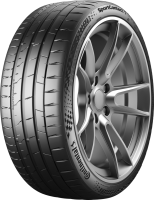
The Continental SportContact 7 is the clear test winner with outstanding wet and dry performance. It delivered the shortest braking distances in all conditions and showed excellent handling characteristics with precise steering response. The Continental offered the best balance of grip and control on both wet and dry surfaces. It was particularly impressive in wet conditions, where it maintained predictable and safe behaviour even at the limit. The tyre also scored top marks for fuel efficiency with the lowest rolling resistance in the test and minimal road noise.
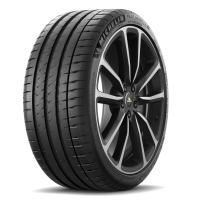
The Michelin Pilot Sport 4S is a very good performer that excelled on dry surfaces with high cornering grip. The Michelin delivered slightly quicker lap times on the track than the Continental, but with a narrower performance window on wet surfaces. While it offered high lateral grip on wet roads, it had a relatively narrow performance window before grip suddenly broke away. The tyre showed a tendency toward gentle understeer, making it predictable and safe even for less experienced drivers. One of the more expensive options in the test.
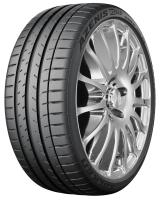
The most budget-friendly option in the test, but the Falken Azenis RS820 struggled to meet the high demands of the powerful BMW M4. While it performed adequately on regular roads, it showed instability at higher speeds and quickly reached its limits on the racetrack. The tyre's front-to-rear grip balance wasn't well matched, making it difficult to maintain the desired line through corners. It also demonstrated weak wet grip and poor aquaplaning resistance combined with higher rolling resistance and more noticeable road noise.
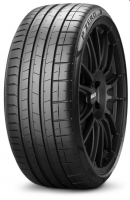
This OE-spec Pirelli P Zero PZ4 tyre (marked with BMW's star symbol) showed notable weaknesses in wet braking, with stopping distances nearly 8 meters longer than the best performer. The Pirelli's harder compound, likely designed for improved durability and rolling resistance, compromised wet grip. While it offered good aquaplaning resistance and forgiving handling with pronounced understeer, it required larger steering inputs during spirited driving, making the M4 feel heavier and less responsive. The tyre's indirect steering feel and limited feedback diminished much of the BMW M4's dynamic potential.



good article very informative Thanks.