Testing Methodology

- Test Driver
- Jonathan Benson
- Tyre Size
- 265/35 R19
- Test Location
- Professional Proving Ground
- Test Year
- 2020
- Tyres Tested
- 3
Script
OE, or original equipment tyres, are tyres which are developed in cooperation between the vehicle and tyre manufacturer while the vehicle is being developed, and also happen to be one of the most confusing aspects of tyre buying.
In theory, at time the vehicle is put to market, you won't find a better tyre for the car. OE tyre programs can go on for years, have countless loops, and vehicle manufacturers can have really strict targets for things like the dry and wet performance, RR, noise, comfort, steering response and lap times etc. Basically, everything a tyre does, can be tuned by the vehicle manufacturer.
But what if you're buying a car a number of years after launch, is the OE tyre still the tyre to have? This is where it gets complicated. Once the OE tyre is approved, it's locked in and can't be updated, no changes at all. This means over the course of its life, which can be easily 10 years, the technology in that tyre will remain the same.
What if there's a new version of the tyre out? Which is best to fit? This is a very common question received at tyre reviews, especially drivers of high performance cars such as Porsche with N rated, BMW M with the * rating Audi with AO and Mercedes with MO, to name just a few.
So to find out, I'm using a very typical example, the BMW M2 Competition. This car comes fitted with the star marked Michelin Pilot SuperSport, and while this tyre was originally released in 2010, the star marked OE version fitted to the car was released with the car original M2 in 2015, so it's now a 6 year old tyre.
Since this car and tyre combination was released, Michelin have replaced the Pilot SuperSport with the Pilot Sport 4S. While the Pilot Sport 4S improved on the aftermarket Pilot SuperSport in almost all areas, is it also better than the bespoke star marked Pilot SuperSport on the M2 competition?
I don't actually know the answer. Fortunately, the UK test specialists at Hornby MIRA have allowed me to use their excellent dry and wet handling circuits to find out! I have a set of the OE approved, * marked Michelin Pilot SuperSport and a set of aftermarket (not star marked) Michelin Pilot Sport 4S, and we'll be doing dry and wet braking, dry and wet handling, and real world road driving to find out if the newer tyre is better than the bespoke tyre!
While I'm at it, and because I've borrowed their M2 Competition, I've decided to answer something else I've been wondering about, and that is, how does the GTR3 compare to the Pilot SuperSport* I've compared it to in previous videos!
Road
PSS*
As the OE tyre, you probably won't be surprised to know the star marked PSS* feels fantastic. The steering is quick and direct, it has good steering weight and the steering force builds up nicely as normal road speeds. As you speed up you start to notice a slight delay in the steering which perhaps you wouldn't want, but the balance always remains neutral with a hint of understeer. It's very very stable, it's not offensively noisy though it drones a little on certain surfaces, and it has good levels of comfort, though BMW are an OE who value high performance AND comfort, which is why you'll never see a runflat on an M car.
Works very well with the M2, well balanced, very neutral with a hint of understeer. If I wanted anything more it would be more detail through the front axle and perhaps slightly more direct steering at higher speeds, but this is a very good package. Good work BMW and Michelin!
PS4S
How about the replacement tyre, the Pilot Sport 4S? Well, it's slightly quieter than the SuperSport, but more noticeable is the comfort level which is much higher. It feels like you've dropped the damping it's that much improved. Steering is a little lighter, and you might need a tiny bit more lock, but feels very similar at lower speeds. As you speed up you get a little more vagueness on the front axle, and maybe a little more understeer, but the differences are VERY small. Traction seems to be slightly better than the PSS, especially when the tyre is cooler.
Out of the PSS* and PS4S, while the handling and grip differences are small, the comfort improvements mean that for the majority of people the PS4S is the better tyre as the increase in comfort outweighs the slight decrease in steering directness. It's a good trade for most people on the road, only the most hardcore drivers will be able to notice the steering difference, and only at speeds they really shouldn't be doing on the road. Turns out Michelin knows what they're doing and that the PS4S is a worthy road upgrade.
GTR3
As for the GT3, like the PSS, the steering is quick and direct, which is great at road speeds. In fact I'd say, you could swap the tyres and at normal road speeds, you wouldn't notice much subjectively. It has a darty feel, a little more so than the PSS*, and builds up steering force in a really lovely linear way, probably the best of the three tyres. Balance wise, at slower road speeds the front tyre has too much authority which makes the car feel a little nervous, ideally for the road you'd rather have a bit of understeer in the car, and as you speed up and load up the tyre more you get some extra vangsness from the front axle I'd not noticed with the Michelins. It also doesn't hold traction in 1st as well as the MPS4S does, but I'm assuming this compound loves heat.
Noise is average, a bit drony on certain surfaces, more so than both the PSS* and 4S. Comfort is average too, a bit crashy on heavy bumps but for a fast road / track tyre, it's surprisingly well mannered on the road!
Dry Handling
PSS*
Dry handling on track is where the PSS* should have the advantage. Initially it feels great on track, quick steering, good levels of grip, the car goes where you want it to. But as you start to really build up speed, I'm finding two issues with it. The first is that understeer starts to creep in, and while you can balance it on the throttle in the lower speed corners, in the high speed ones there's nothing you can do about it. Secondly, the tyre starts to get really fidelity over track imperfections, giving the car a nervous feeling. These are very small niggles, but niggles nonetheless. The tyre almost feels too stiff to deal with the track bumps. The understeer got worse as the session went on. MIRA is a super high grip surface and cooks tyres. Final time, 72.1 seconds.
PS4S
Like on the road, the PS4S is slightly slower to steer, slightly less responsive, a little more floaty on the front axle, which makes it slightly less accurate so you find yourself turning in more than once, but once you've turned its mega mega grip. Seems higher than the PSS*, especially on the front axle.
The positive of that slightly slower feeling is that where the SuperSport felt nervous, the PS4S lets you keep your foot in, especially in the high speed stuff, which is a lot of fun. I'm sure whatever is giving the tyre better comfort levels is also helping on the bumpy track.
4S even felt like it had better heat resistance than the PSS*. I wish it was slightly quicker to steer, but it was super confidence inspiring, had a great front end, and crazy levels of grip.
Overall, I preferred this tyre to supersport as the balance is better, you get more information from the front axle at the limit, though not before. If I was picking a tyre for the track, I'd pick the PS4S too… which is a surprise to me. I really enjoyed it. Final time was 72.34, so just a quarter of a second slower.
GTR3
The slightly more track focused GTR3 brings back the heavier steering again, and is more direct, more meatier, it's what you want from a track tyre. It's also more stable than the supersports. Grip levels are really high, heat resistance really good, and it was the only tyre that got faster across the 4 lap run. It was also the fastest tyre on test, over two seconds faster than both of the Michelins.
That's a lot of good, but there is bad. The biggest issue is the front axle. Like the SuperSport, understeer starts to creep in, but you get much less information as it does. Instead of feeling it through the wheel, the first notice you get that understeer is there is through your bum. If Giti could fix the understeer on the front axle it would be so amazing. It's also worth noting the wide groove in the centre rib, which might just be the cause for the vague feedback at the limit, also causes some irregular wear, though the MIRA surface is a very harsh surface. Giti, for its segment the tyre has way more aquaplaning resistance than the track bias competitors, you can close the groove by widening the centre rib.
Dry braking was extremely close between the PSS* and the PS4S, with the PSS* having a near insignificant 0.2 meter advantage. Strangely, with all the speed of the GTR3 on track, it's the worst tyre of the three for braking, nearly 2 meters behind the Michelin tyres.
Wet
In the wet, the story remained the same. The PSS* was slower to steer with an understeer balance compared to the GTR3. No aquaplaning. Really nice to slide once sliding. Understeer balance but good fun. Similar overall to GTR3.
MPS4S - like in the dry, better front end, better turn in, better grip but more oversteer so harder work to extract the time. The GTR3 was predictable, stable, no aquaplaning, good turn in, good balance, little push oversteer as you'd expect. Positive braking.
Wet braking shows where the newer tyre has a huge advantage, with the PS4S stopping the M2 1.6 meters shorter than the PSS*, with the more track focused GTR3 another 2.5 meters behind the SuperSport.
Results
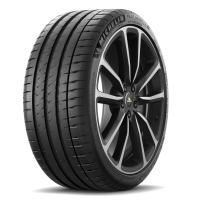
| Test | # | Result | % |
|---|---|---|---|
| Dry Braking | 2nd | 34.14 M | 99.38% |
| Dry Handling | 3rd | 72.34 s | 96.75% |
| Test | # | Result | % |
|---|---|---|---|
| Wet Braking | 1st | 27.51 M | 100% |
| Wet Handling | 1st | 45.48 s | 100% |
| Test | # | Result | % |
|---|---|---|---|
| Subj. Comfort | 1st | 10 Points | 100% |
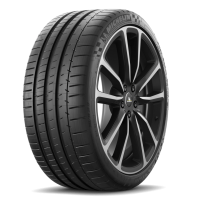
| Test | # | Result | % |
|---|---|---|---|
| Dry Braking | 1st | 33.93 M | 100% |
| Dry Handling | 2nd | 72.1 s | 97.07% |
| Test | # | Result | % |
|---|---|---|---|
| Wet Braking | 2nd | 29.16 M | 94.34% |
| Wet Handling | 2nd | 46.35 s | 98.12% |
| Test | # | Result | % |
|---|---|---|---|
| Subj. Comfort | 2nd | 8.5 Points | 85% |
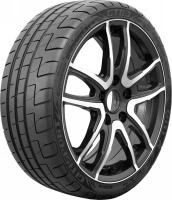
| Test | # | Result | % |
|---|---|---|---|
| Dry Braking | 3rd | 35.88 M | 94.57% |
| Dry Handling | 1st | 69.99 s | 100% |
| Test | # | Result | % |
|---|---|---|---|
| Wet Braking | 3rd | 31.78 M | 86.56% |
| Wet Handling | 3rd | 47.57 s | 95.61% |
| Test | # | Result | % |
|---|---|---|---|
| Subj. Comfort | 3rd | 7 Points | 70% |
Hi, I have BMW X5M 2018 F85
It came with PSS*
285/30/21 front and 325/30/21 rear
My options are either to buy the same PSS* or go for PS4S generic
I do daily commute and long journey in UK so has mixture of wet and dry. Never do track but does go to german autobans occasionally
What do you advise? PSS* or PS4S?
Thanks
Hi I have Mercedes CLS, my current tyre is MPS3 ZP Acoustic Moe* 245/35R20 Y & 275/30r20 Y, I'm Looking to change to the PS4S but in noticed the PS4S MO compared to the PS4S has a decrease of Wet Grip from A to B and efficiency from C to D so would you rather go for The PS4S MO or The PS4S or MPS3 ZP Acoustic MOE* I'm really confused in which to go for.
How much do you enjoy the quiet ride? The acoustic foam really does help there, otherwise I'd probably aim for the PS4S MOE, but perhaps they're the same size as the c63 or similar vehicle which is why it seems they're more dry optimised.
Thank you very much, your videos are really good, helps so much and learn so much about Tyres thank you for the help!!
Glad you enjoy them!
Questions is, can I put BMW oe tire on non-bmw vehicles? I need tires for Fiesta ST better than MPS4. I dont want to change Super Sports for Pilot Sport 4.
You can, your car won't set on fire, but who knows how it will actually be without testing. I would guess fine.
TY for Yr answer. Pls let me be correct: Michelin Pilot Super Sport is any different than Michelin Pilot Super Sport * (OE BMW)?
Yes, bmw do modify the tyres for their vehicles. How much they're different is not public knowledge sadly.
Thank you for the great review! Looking to replace the OE rims & tyres on my Fiesta ST mk8, OE tyres are the Michelin Pilot Super Sports 205/45R17, now looking at 225/35/R18. Any suggestions or should I go again with the PSSs? The use will be sporty road driving mostly in hot & dry climate (Greece).
This video covers most of my thoughts, but as you're changing wheel size to non-oe you're adding in another layer. I'd go with the PS4S if you want to stick with Michelin
I look forward to the track day test hoping to see Bridgestone S007 Dunlop Sport Maxx Race 2 Goodyear Eagle F1 Supersport R and RS and even Continental more sporty tyres in the mix.
Conti don't have a track tyre in the UK at the moment sadly! And the S007 is in so few sizes, like the SuperSport RS, they're sadly unlikely to be in it
great review as always and very informative, having watched the video and read the review I can say I totally like your style of reviews and the only thing I would change is the time, I would enjoy even longer reviews.
The Michelin Pilot Sport 4 s if I am right should be the result of the Michelin tyre technology developed from their Formula E Gen 2 Tyre.
In 2020 Michelin is using the Gen 3 tyre for their Formula E specific tyre whose tread resembles a mix between the energy saver + and the cup 2 so I would expect maybe a cup 3 in the near future derived from Michelin experiences in Formula E.
There's no Cup 3 due, with the Cup 2 Connect just rolled out, however there is the Pilot Sport 5 / 5S range coming next year, which looks a bit interesting :D