

Continental vs Pirelli
380 shared professional tests: Continental finished ahead in 274, Pirelli in 99 and 7 were drawn. Owners rate Continental 7.5 and Pirelli 7.2 out of 10 across 5,635 reviews.
The quick answer
 Continental
Premium · 131 tyres on sale · Continental Group
 Pirelli
Premium · 148 tyres on sale · Pirelli Group
Continental leads in more of the categories we measure. Built from every professional test both brands entered and every vetted owner review we hold for their tyres - the evidence is all further down the page. Data updated October 29, 2026.

Continental vs Pirelli at a glance
Continental and Pirelli are both premium brands - Continental (Germany, founded 1871) is a long-established tyre and automotive technology company, while Pirelli is best known for its performance-led, innovative positioning.
Looking across 366 shared professional tests where both brands competed, plus metric-by-metric results, owner feedback, price-in-test and range breadth, the data points to a consistent test-performance edge for Continental, with Pirelli remaining competitive in a few specific dynamic areas and often appearing at a lower price in like-for-like test line-ups.
| Category | Continental | Pirelli | Winner |
|---|---|---|---|
| Overall test record | 274 wins | 99 wins | Continental |
| Wet Braking | 38.37 m | 39.57 m | Continental |
| Dry Braking | 38.4 m | 38.22 m | Pirelli |
| Snow Braking | 23.72 m | 24.59 m | Continental |
| Rolling Resistance | 7.62 kg/t | 8.05 kg/t | Continental |
| Noise | 71.17 dB | 71.13 dB | Pirelli |
| Tread life (wear tests) | 44,694 km | 39,313 km | Continental |
| Price | cheaper in 35 of 118 tests | cheaper in 82 of 118 tests | Pirelli |
| Overall owner score | 7.5 / 10 | 7.2 / 10 | Continental |
Head-to-head test record
Across 380 professional tests where both brands fielded a tyre, Continental finished ahead in 274 and Pirelli in 99 (7 drew).
By season
| Category | shared tests | Continental | Pirelli | draws |
|---|---|---|---|---|
| Summer | 189 | 128 | 56 | 5 |
| Winter | 136 | 114 | 21 | 1 |
| All Season | 52 | 30 | 21 | 1 |
| All Weather | 2 | 1 | 1 | 0 |
The cleanest comparison is the shared-test head-to-head: across 366 tests where both brands fielded a tyre (using each brand's best-placed entrant), Continental wins 268 to Pirelli's 92 with 6 draws, and posts a notably higher average finish percentile (84 vs 62.5). This pattern holds in the most recent sample too - over the last 5 years (115 shared tests), Continental leads 76 to 35 with 4 draws - suggesting the advantage is current rather than historical noise.
How we count: only tests entered by both brands are used, and each brand is represented by its best-placed tyre in that test. Owner-review and label figures cover the brands' full current ranges.
Performance by metric
Averaged across shared tests, which brand leads each measured discipline and by how much.
Continental won 116 of 195 tests · 5.3% typical margin
Pirelli won 92 of 186 tests · 3.7% typical margin
Pirelli won 79 of 152 tests · 3.6% typical margin
Continental won 99 of 136 tests · 7.8% typical margin
Pirelli won 63 of 119 tests · 1.2% typical margin
Continental won 75 of 102 tests · 3.9% typical margin
Pirelli won 42 of 83 tests · 10.4% typical margin
Continental won 49 of 77 tests · 1.3% typical margin
Pirelli won 38 of 76 tests · 2.3% typical margin
Continental won 49 of 76 tests · 1.8% typical margin
Continental won 30 of 64 tests
Continental won 31 of 61 tests · 1.1% typical margin
each won 27 of 60 tests
Continental won 40 of 60 tests · 2.7% typical margin
Pirelli won 27 of 52 tests · 2.7% typical margin
Pirelli won 27 of 50 tests · 4% typical margin
Continental won 36 of 42 tests · 9.3% typical margin
each won 18 of 38 tests
Continental won 22 of 26 tests · 1.4% typical margin
Continental won 17 of 26 tests · 1.5% typical margin
Continental won 21 of 26 tests · 13.1% typical margin
Pirelli won 15 of 26 tests · 2.5% typical margin
Continental won 19 of 26 tests · 1.3% typical margin
Pirelli won 10 of 19 tests · 2% typical margin
Continental won 58 of 85 tests · 6% typical margin
Continental won 52 of 84 tests · 3% typical margin
Continental won 35 of 64 tests · 2.5% typical margin
Continental won 38 of 57 tests · 7.1% typical margin
Pirelli won 30 of 47 tests · 1.3% typical margin
Pirelli won 23 of 40 tests · 2.6% typical margin
Continental won 17 of 34 tests · 1% typical margin
Continental won 14 of 32 tests
Continental won 17 of 30 tests
Pirelli won 19 of 29 tests · 7.2% typical margin
Continental won 15 of 28 tests · 1.6% typical margin
Continental won 15 of 28 tests · 2.1% typical margin
Pirelli won 39 of 48 tests · 5.9% typical margin
Continental won 30 of 48 tests · 4% typical margin
Continental won 33 of 40 tests · 5.5% typical margin
Pirelli won 23 of 37 tests · 5.2% typical margin
Continental won 24 of 36 tests · 7.2% typical margin
Continental won 18 of 33 tests · 1.2% typical margin
Pirelli won 18 of 27 tests · 11.2% typical margin
Continental won 12 of 23 tests · 0.9% typical margin
Continental won 17 of 22 tests · 1.8% typical margin
Pirelli won 13 of 22 tests · 5.3% typical margin
Continental won 18 of 22 tests · 2.7% typical margin
Continental won 14 of 20 tests · 2% typical margin
By individual metrics, Continental most consistently leads in braking efficiency, efficiency-related measures and winter control: wet braking averages 38.25 m vs 39.58 m (112 wins to 59), rolling resistance 7.61 vs 8.05 (89 wins to 34), snow braking 23.51 m vs 24.42 m (67 wins to 20), and wear longevity 45090.15 km vs 38763.73 km (31 wins to 8). Pirelli's strongest pockets are aquaplaning and some subjective or comfort-adjacent outcomes - it leads straight aquaplaning (67 wins for Continental vs 73 for Pirelli), curved aquaplaning (35 vs 38), and noise in one of the larger noise sets (49 vs 59 with averages 71.13 dB vs 71.11 dB). Dry braking is effectively a knife-edge on wins (84 vs 83) even though Continental is listed as leader overall for that metric, so the real-world takeaway is that dry stopping is close, while the separation is clearer in wet braking, rolling resistance and snow braking.
Typical margin is the average gap between the two brands within a single test. Test conditions vary, so it can be larger than the difference between the overall averages shown. Judged scores use a different scale in each test, so only the win record is comparable.
Which brand wins each season
Head-to-head test wins by season.
Continental leads 114 to 21 here
- Continental strongest at
- Subj. Wet Handling
- Pirelli strongest at
- Subj. Dry Handling
Continental leads 128 to 56 here
- Continental strongest at
- Wear
- Pirelli strongest at
- Subj. Wet Handling
Continental leads 30 to 21 here
- Continental strongest at
- Subj. Snow Handling
- Pirelli strongest at
- Curved Aquaplaning
Season-by-season, Continental holds the upper hand most strongly in winter: in 131 shared winter tests it wins 112 to 19, with winter metric leadership including snow braking (38 wins vs 15), rolling resistance (33 vs 5), dry handling (21 vs 3) and wet handling (16 vs 7), while noise is even (17 vs 17). In summer (187 shared tests), Continental again leads overall (127 wins vs 55 with 5 draws) and tops core safety and efficiency metrics like wet braking (58 vs 22) and dry braking (51 vs 26), while Pirelli's summer strengths show in noise (15 vs 30) and wet handling (15 vs 23). All-season is closer: across 45 shared tests Continental leads 28 to 16 with 1 draw, driven by wet braking (27 vs 13) and snow braking (28 vs 5), but Pirelli dominates all-season dry braking wins (8 vs 33) and leads in straight aquaplaning (11 vs 20) and curved aquaplaning (6 vs 16).
What owners say
Owner reviews, vetted by hand before publication and weighted by how many reviews each tyre has. Ownership is not verified.
Owner scores broadly echo the test picture, with Continental rated higher overall (7.46/10 from 3168 reviews) than Pirelli (7.17/10 from 2351). Continental is also ahead on key everyday feel measures like dry grip (8.52 vs 8.24), wet grip (7.92 vs 7.13), comfort (7.58 vs 7.12) and buy-again intent (6.63 vs 6.28). Pirelli's owners report a higher wear subscore (6.95 vs 6.62) and slightly stronger snow and ice subscores (snow 7.45 vs 7.3, ice 6.67 vs 6.5), even though professional wear testing and several winter metrics favour Continental overall.
Price & value
How long each brand lasts, and how they compare on price.
Tread life (wear tests)
Continental lasted longer in wear testing, winning 34 of 46 tests by an average of 22.5%.
Price
Pirelli was the cheaper of the two in 82 of 118 shared tests.
On average Continental cost about 4.1% more than Pirelli.
On value, there are two opposing forces: price and how long the tyre lasts. In shared tests with pricing (107 samples), Continental costs 4.3% more on average, and Pirelli is cheaper far more often (75 tests vs 31 where Continental is cheaper). However, wear testing strongly favours Continental for tread life - 45090.15 km vs 38763.73 km on average, a 23% gap, with Continental winning 31 of 40 wear tests. In other words, Pirelli more often looks like the lower upfront bill in test line-ups, but Continental more often looks like the longer-running option in controlled wear testing - the better value choice can therefore depend on whether you prioritise purchase price or cost-per-mile.
Fuel economy & EU labels
Current range
How broad each brand's current line-up is.
Continental
| Passenger Car | SUV / 4x4 | Motorcycle | Van | |
|---|---|---|---|---|
| Summer | 37 | 7 | 16 | 4 |
| All Season | 19 | 16 | 1 | 2 |
| Winter | 23 | 3 | - | 2 |
| All Weather | 1 | - | - | - |
Pirelli
| Passenger Car | SUV / 4x4 | Motorcycle | Van | |
|---|---|---|---|---|
| Summer | 49 | 8 | 20 | 3 |
| All Season | 17 | 16 | - | 2 |
| Winter | 24 | 5 | - | 1 |
| All Weather | 1 | 1 | - | - |
Both brands have broad catalogues, with Pirelli offering more active tyre lines (147 vs 127), but Continental covering more total sizes (5526 vs 5045), which can matter if you are trying to match an exact fitment. By season, Pirelli is more heavily weighted to summer lines (80 vs 64) and has slightly more winter and all-season lines (winter 30 vs 28, all season 35 vs 34), while Continental lists 1 all-weather line vs Pirelli's 2. For niches, Pirelli lists more EV-marketed tyres (3 vs 2) and more all-terrain options (6 vs 4), which may suit SUV and crossover buyers looking for those specific categories.
Recommended picks per category
The top-rated current tyres from each brand, by season.
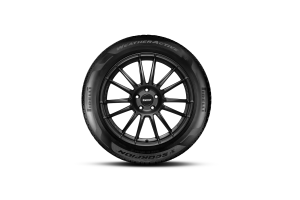
Summer
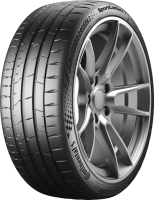
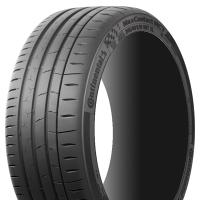
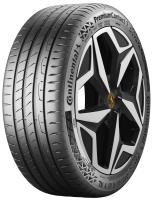

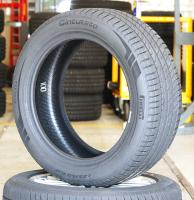
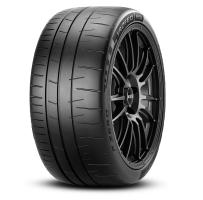
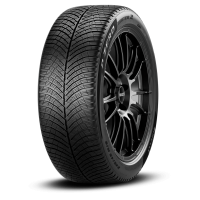
All Season
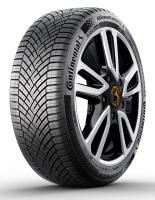
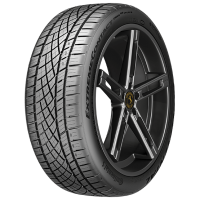

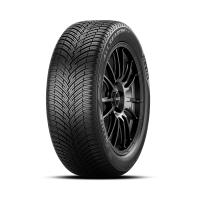
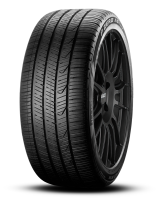

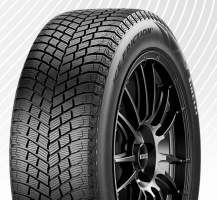
Winter
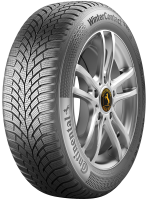
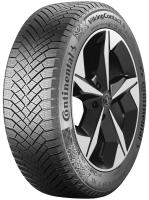
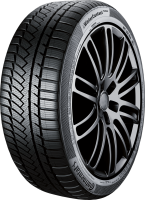

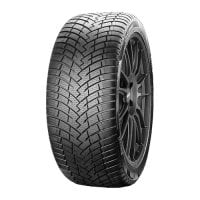
All Weather

Popular Continental vs Pirelli tyre matchups
Head-to-head comparisons between specific tyres from these brands.
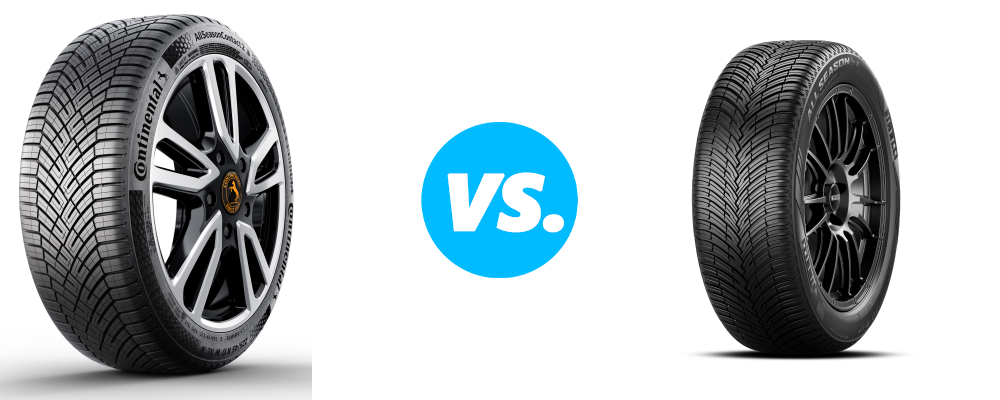 Continental AllSeasonContact 2 vs Pirelli Cinturato All Season SF3
 Continental SportContact 7 vs Pirelli P Zero PZ5
 Continental SportContact 7 vs Pirelli P Zero PZ4
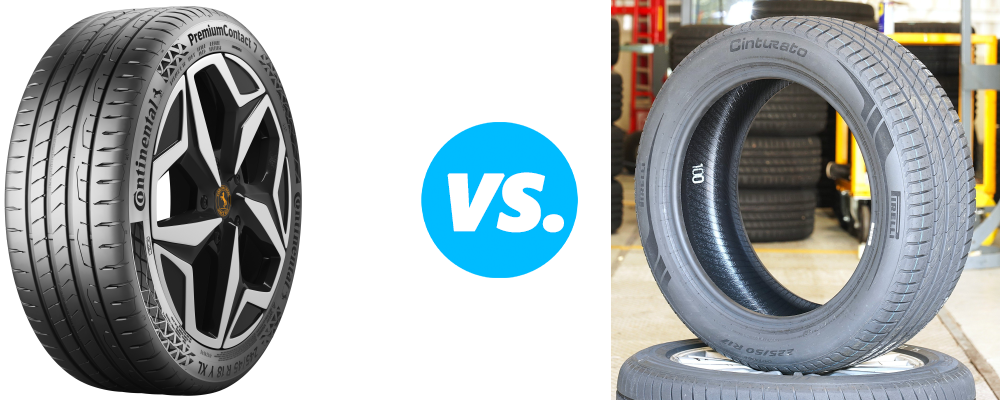 Continental PremiumContact 7 vs Pirelli Cinturato C3
 Continental PremiumContact 7 vs Pirelli Cinturato P7 C2
 Continental VikingContact 8 vs Pirelli Ice Friction
Frequently asked questions
Is Continental better than Pirelli?
Across 380 shared professional tests, Continental finished ahead of Pirelli in 274 (7 drew), and holds a higher owner-review score of 7.5 vs 7.2 out of 10. Pirelli leads on tread life and value.
Which is better in the wet, Continental or Pirelli?
In Wet Braking, Continental averaged 38.37 m versus 39.57 m, winning 116 of 195 shared tests. In Wet Handling, Pirelli averaged 75.37 s versus 75.03 s, winning 38 of 76 shared tests.
Which lasts longer, Continental or Pirelli?
In independent tyre wear testing across 46 shared tests, Continental lasted longer, averaging 44,694 km versus 39,313 km (about 22.5% further) and winning 34 of them. Owners rate Pirelli tread life a little higher, however, at 7 vs 6.6 out of 10.
Which is cheaper, Continental or Pirelli?
Pirelli is usually the cheaper choice, coming in lower in 82 of 118 shared tests, on average about 4.1% less than Continental.
Which is better in winter, Continental or Pirelli?
Across 136 shared winter tests, Continental finished ahead in 114. 35% of its current range is 3PMSF winter-certified, versus 34% for Pirelli. In Snow Braking, Continental averaged 23.72 m versus 24.59 m, winning 75 of 102 shared tests.
Which brand is more fuel efficient, Continental or Pirelli?
Fuel economy and EV range come down to rolling resistance. In Rolling Resistance, Continental averaged 7.62 kg/t versus 8.05 kg/t, winning 99 of 136 shared tests. 46% of Continental's current range earns an A or B EU fuel-efficiency grade, versus 36% for Pirelli.
Which is better for electric cars, Continental or Pirelli?
For an EV the priorities are low rolling resistance for range and low noise for a quiet cabin. In rolling-resistance testing, which directly drives EV range, Continental led 99 of 136 shared tests. Pirelli also currently lists 3 EV-specific tyres versus 2 for Continental.
Which brand is quieter and more comfortable, Continental or Pirelli?
Owners rate Continental higher for comfort, at 7.6 vs 7.1 out of 10. In Noise, Pirelli averaged 71.13 dB versus 71.17 dB, winning 63 of 119 shared tests.
Would owners buy Continental or Pirelli again?
Continental owners are more likely to buy the same brand again, scoring 6.6 vs 6.3 out of 10 on would-buy-again across 5,635 combined reviews.
Final verdict
Category verdicts split fairly cleanly. Continental leads on the most decision-critical test outcomes and consistency - it wins far more shared tests overall (268 to 92), is stronger in wet braking (38.25 m vs 39.58 m), rolling resistance (7.61 vs 8.05) and wear longevity (45090.15 km vs 38763.73 km), and it is particularly dominant in winter shared tests (112 to 19). Pirelli's counterpoints are narrower but real - it more often comes in cheaper in like-for-like test pricing (75 of 107), and it shows advantages in aquaplaning wins and noise outcomes in several datasets.
Overall lean: Continental leads in more areas that map to year-round safety margins and running costs, while Pirelli makes more sense for buyers who want a premium brand that is more frequently lower-priced in tests and who value its strengths in aquaplaning-related measures and quieter results in some test sets. If your priority is predictable test performance across seasons - especially winter - the numbers point you towards Continental; if you are shopping deal-first within the premium segment and still want competitive dynamics, Pirelli is the more natural shortlist brand.