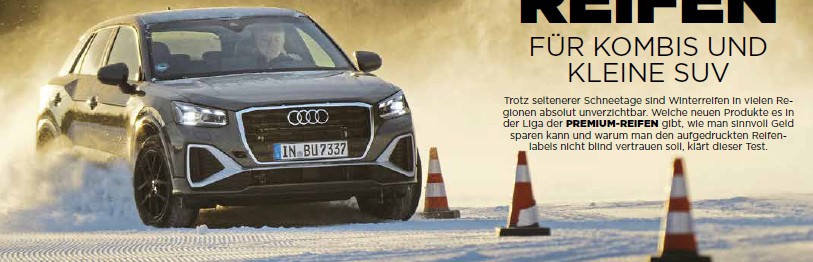
Auto Motor und Sport has published their winter tyre test for 2025, testing ten tyres in the popular 215/55 R17 size. The test field included nine new winter tyres spanning from premium to budget segments, plus one retreaded tyre. Testing was conducted on an Audi Q2 and SQ2, with testing covering snow, wet, and dry conditions.
A critical focus of this test was examining EU tyre label accuracy through rigorous follow-up testing with retail purchases. The Linglong Sport Master Winter exposed significant issues, carrying an optimistic A-rating for wet grip despite mid-pack actual performance. More concerning, retail samples performed over four percent worse in wet braking than the original test sample, with variations also found in samples under the previous "Grip Master Winter" name. The testers concluded that the Serbian manufacturing facility's process stability remains below European standards, and the self-certification system allows misleadingly optimistic claims without adequate oversight.
The Bridgestone Blizzak 6 showed the opposite pattern - retail samples performed four percent better in wet braking than initial test samples, suggesting early production batches hadn't reached optimal specification.
Test Results
Continental's TS 870 P took victory with the shortest wet braking distances (31.2 meters) and outstanding wet handling. It delivered reliable snow performance and excellent dry braking, with only slightly firm ride comfort as a minor weakness. The testers praised its trustworthy behavior across all conditions.
Goodyear's UltraGrip Performance 3 finished second and earned the recommendation for snow-rich regions. It achieved perfect subjective scores for wet handling, dry comfort, and snow dynamics, with the best rolling comfort in test. While braking distances were marginally longer than the Continental, it offered exceptional balance and confidence-inspiring handling.
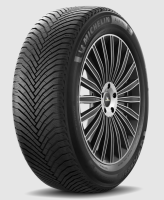
Michelin's Alpin 7 excelled on snow with short wet braking distances but showed sluggish, heavily understeering wet handling. The magazine noted Michelin's reputation for exceptional tread life adds long-term value despite the wet handling quirks.
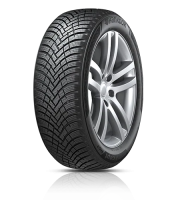
The Hankook i*cept RS3 emerged as the value recommendation with the shortest snow braking distances (27.2 meters) and best aquaplaning protection. It offered precise, almost summer-tyre-like dry characteristics, though it exhibited strong understeer on snow and nervous wet handling requiring driver skill.
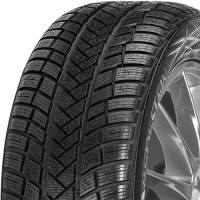
Vredestein's Wintrac Pro+ showed strong wet and dry performance but weaker snow braking. Follow-up testing revealed significant wet handling improvements over initial samples, suggesting early production refinement issues.
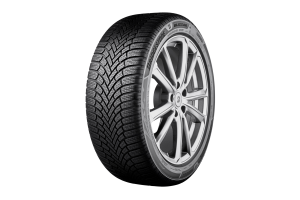
Bridgestone's Blizzak 6 led the snow category with outstanding winter performance but disappointed on wet roads with understeer and lift-off oversteer tendencies. The retail sample improvements suggest the tyre's potential exceeds initial test results.
Pirelli's Cinturato Winter 2 delivered good wet and dry performance but struggled across all snow disciplines with low grip levels and limited reserves.
Budget and Retreaded Tyres
The Linglong Sport Master Winter demonstrated balanced performance on reduced grip levels, with weak snow capability and sluggish wet handling showing lift-off oversteer. Beyond the label and consistency issues, the testers suggested it was optimized specifically for label criteria while neglecting handling dynamics and manufacturing consistency.
Falken's Eurowinter HS02 showed particularly weak snow performance across nearly all disciplines, with sluggish wet handling and poor dry steering response. The magazine suggested it might have been better developed as an all-season tyre.
The Profil Winter Maxx retreaded tyre proved catastrophically dangerous despite good snow performance. Wet braking required 52.5 meters - over 21 meters longer than the Continental - earning zero points. The tyre simply slid away in wet corners with no resistance and showed unpredictable dry handling, likely due to mixed carcass structures from different original tyres. At 480 euros per set, it wasn't genuinely cheap compared to budget new tyres and cannot be recommended.
Conclusions
The test revealed that EU tyre labels remain unreliable guides, particularly for manufacturers with less established quality control. Retreaded winter tyres cannot deliver safe all-around performance for year-round winter use. The Continental suits wet-focused German conditions, the Goodyear excels in snowier regions with superior comfort, and the Hankook delivers the best value despite handling quirks. Budget options showed that aggressive pricing typically involves significant compromises in handling safety and manufacturing consistency.
Dry
Continental leads dry braking with the shortest stopping distances, followed closely by Linglong and Goodyear, while the retreaded Profil requires nearly 15% more distance to stop - a significant safety concern that foreshadows its wet weather struggles.
Dry Braking
Spread: 6.50 M (14.9%)|Avg: 45.62 M
Dry braking in meters (100 - 0 km/h) (Lower is better)
Continental WinterContact TS 870 P
43.60 M
Linglong Sport Master Winter
44.50 M
Goodyear UltraGrip Performance 3
44.60 M
Bridgestone Blizzak 6
45.00 M
Falken EUROWINTER HS02
45.20 M
Pirelli Cinturato Winter 2
45.50 M
Hankook Winter I cept RS3
45.60 M
Michelin Alpin 7
45.70 M
Vredestein Wintrac Pro plus
46.40 M
Profil Winter Maxx
50.10 M
Goodyear takes the top spot in dry handling speed, with most premium tyres clustered within 2 km/h of each other, though the Profil again falls dramatically behind at over 9 km/h slower, demonstrating its fundamental grip deficiencies.
Dry Handling
Spread: 9.50 Km/H (8.6%)|Avg: 108.30 Km/H
Dry Handling Average Speed (Higher is better)
Goodyear UltraGrip Performance 3
110.50 Km/H
Linglong Sport Master Winter
109.60 Km/H
Pirelli Cinturato Winter 2
109.50 Km/H
Bridgestone Blizzak 6
109.30 Km/H
Michelin Alpin 7
109.00 Km/H
Continental WinterContact TS 870 P
108.90 Km/H
Hankook Winter I cept RS3
108.80 Km/H
Falken EUROWINTER HS02
108.60 Km/H
Vredestein Wintrac Pro plus
107.80 Km/H
Profil Winter Maxx
101.00 Km/H
Wet
Continental maintains its braking dominance on wet surfaces with the shortest distances, while the performance gap widens dramatically - the Profil requires an alarming 21.3 meters more to stop than the leader, a difference that could prove life-threatening in emergency situations.
Wet Braking
Spread: 21.30 M (68.3%)|Avg: 34.40 M
Wet braking in meters (80 - 0 km/h) (Lower is better)
Continental WinterContact TS 870 P
31.20 M
Michelin Alpin 7
31.40 M
Vredestein Wintrac Pro plus
31.90 M
Linglong Sport Master Winter
32.20 M
Hankook Winter I cept RS3
32.60 M
Goodyear UltraGrip Performance 3
32.80 M
Pirelli Cinturato Winter 2
32.90 M
Falken EUROWINTER HS02
33.20 M
Bridgestone Blizzak 6
33.30 M
Profil Winter Maxx
52.50 M
Goodyear edges ahead in wet handling, with Continental and Vredestein matching its pace, while the Profil's catastrophic wet performance continues with speeds over 13 km/h slower than the leaders, earning it zero points in the overall wet assessment.
Wet Handling
Spread: 13.80 Km/H (20.9%)|Avg: 63.33 Km/H
Wet Handling Average Speed (Higher is better)
Goodyear UltraGrip Performance 3
65.90 Km/H
Continental WinterContact TS 870 P
65.60 Km/H
Vredestein Wintrac Pro plus
65.60 Km/H
Hankook Winter I cept RS3
65.00 Km/H
Michelin Alpin 7
64.70 Km/H
Pirelli Cinturato Winter 2
64.60 Km/H
Linglong Sport Master Winter
63.70 Km/H
Bridgestone Blizzak 6
63.60 Km/H
Falken EUROWINTER HS02
62.50 Km/H
Profil Winter Maxx
52.10 Km/H
Hankook leads aquaplaning resistance with the highest float speed, though the premium field remains tightly grouped within 7 km/h, while the Profil's poor showing at 16.9 km/h below the leader confirms its lack of water clearing capability.
Straight Aqua
Spread: 16.90 Km/H (21.1%)|Avg: 75.41 Km/H
Float Speed in Km/H (Higher is better)
Hankook Winter I cept RS3
80.00 Km/H
Goodyear UltraGrip Performance 3
78.50 Km/H
Vredestein Wintrac Pro plus
78.30 Km/H
Pirelli Cinturato Winter 2
78.20 Km/H
Continental WinterContact TS 870 P
77.40 Km/H
Falken EUROWINTER HS02
76.20 Km/H
Bridgestone Blizzak 6
75.30 Km/H
Linglong Sport Master Winter
73.60 Km/H
Michelin Alpin 7
73.50 Km/H
Profil Winter Maxx
63.10 Km/H
Snow
The Hankook delivers the shortest snow stopping distances, with the premium field separated by just 2 meters, while even the struggling Profil manages respectable performance here - the only test category where the retreaded tyre approaches competitive standards.
Snow Braking
Spread: 3.60 M (13.2%)|Avg: 28.73 M
Snow braking in meters (50 - 0 km/h) (Lower is better)
Hankook Winter I cept RS3
27.20 M
Profil Winter Maxx
27.70 M
Goodyear UltraGrip Performance 3
28.10 M
Bridgestone Blizzak 6
28.30 M
Michelin Alpin 7
28.40 M
Continental WinterContact TS 870 P
28.70 M
Pirelli Cinturato Winter 2
29.10 M
Linglong Sport Master Winter
29.40 M
Vredestein Wintrac Pro plus
29.60 M
Falken EUROWINTER HS02
30.80 M
Goodyear leads snow handling dynamics with Bridgestone close behind, while the performance spread of 5.6 km/h from best to worst is relatively modest, confirming that winter-specific capability remains strong across the test field even for budget options.
Snow Handling
Spread: 5.60 Km/H (5.7%)|Avg: 95.30 Km/H
Snow handling average speed (Higher is better)
Goodyear UltraGrip Performance 3
97.80 Km/H
Bridgestone Blizzak 6
96.80 Km/H
Profil Winter Maxx
96.70 Km/H
Michelin Alpin 7
96.50 Km/H
Continental WinterContact TS 870 P
96.10 Km/H
Hankook Winter I cept RS3
95.40 Km/H
Linglong Sport Master Winter
94.00 Km/H
Pirelli Cinturato Winter 2
93.80 Km/H
Vredestein Wintrac Pro plus
93.70 Km/H
Falken EUROWINTER HS02
92.20 Km/H
Comfort
Goodyear achieves the best subjective comfort rating with excellent noise suppression and smooth rolling, while Continental, Linglong, Hankook, and Falken show slightly firmer characteristics over cross joints, and the Profil's booming, wummering abrollgeräusch (rolling noise) earns it the poorest comfort assessment in the test.
Subj. Comfort
Spread: 6.00 Points (60%)|Avg: 7.40 Points
Subjective Comfort Score (Higher is better)
Goodyear UltraGrip Performance 3
10.00 Points
Vredestein Wintrac Pro plus
9.00 Points
Bridgestone Blizzak 6
8.00 Points
Michelin Alpin 7
8.00 Points
Continental WinterContact TS 870 P
7.00 Points
Pirelli Cinturato Winter 2
7.00 Points
Falken EUROWINTER HS02
7.00 Points
Hankook Winter I cept RS3
7.00 Points
Linglong Sport Master Winter
7.00 Points
Profil Winter Maxx
4.00 Points
Goodyear produces the quietest external noise at 71.1 dB(A), with Continental and Profil matching closely behind, while the noisiest tyre (Pirelli at 73.4 dB(A)) remains only 2.3 dB(A) louder - a difference barely perceptible to the human ear, showing modern tyres have largely solved the noise issue.
Noise
Spread: 2.30 dB (3.2%)|Avg: 72.18 dB
External noise in dB (Lower is better)
Goodyear UltraGrip Performance 3
71.10 dB
Continental WinterContact TS 870 P
71.40 dB
Profil Winter Maxx
71.40 dB
Michelin Alpin 7
71.50 dB
Falken EUROWINTER HS02
72.00 dB
Hankook Winter I cept RS3
72.10 dB
Bridgestone Blizzak 6
72.90 dB
Vredestein Wintrac Pro plus
72.90 dB
Linglong Sport Master Winter
73.10 dB
Pirelli Cinturato Winter 2
73.40 dB
Value
The Profil achieves the lowest rolling resistance, followed by Michelin and Continental sharing second place, while Hankook and Linglong show the highest resistance - though the 26% difference between best and worst translates to minimal real-world fuel consumption impact.
Rolling Resistance
Spread: 1.70 kg / t (26.2%)|Avg: 7.63 kg / t
Rolling resistance in kg t (Lower is better)
Profil Winter Maxx
6.50 kg / t
Continental WinterContact TS 870 P
7.00 kg / t
Michelin Alpin 7
7.00 kg / t
Goodyear UltraGrip Performance 3
7.70 kg / t
Bridgestone Blizzak 6
7.70 kg / t
Falken EUROWINTER HS02
7.90 kg / t
Vredestein Wintrac Pro plus
8.00 kg / t
Pirelli Cinturato Winter 2
8.10 kg / t
Hankook Winter I cept RS3
8.20 kg / t
Linglong Sport Master Winter
8.20 kg / t
19,000 km
£1.45/L
8.0 L/100km
--
Annual Difference
--
Lifetime Savings
--
Extra Fuel/Energy
--
Extra CO2
Estimates based on typical driving conditions. Rolling resistance accounts for approximately 20% of IC vehicle fuel consumption and 25% of EV energy consumption. Actual savings vary based on driving style, vehicle weight, road conditions, and tyre age. For comparative purposes only. Lifetime savings based on a 40,000km / 25,000 mile tread life.
The Continental TS 870 P takes the overall test victory with reliable and secure performance across all conditions. On snow, it delivers a safe and predictable driving experience, while on wet roads it provides outstanding grip for the shortest braking distances and excellent cornering stability. The testers found it to be particularly trustworthy and secure across all winter conditions. On dry asphalt, it also achieves the best braking performance with flawless overall capability. Minor limitations were noted in rolling comfort, where it can feel somewhat harsh over cross joints, but this doesn't detract from its status as the top choice for those prioritizing wet grip and all-around winter safety.
The Goodyear UltraGrip Performance 3 is the recommended choice for snow-rich regions, combining winter strength with excellent all-around capability. It demonstrates dynamic, neutral, and very confident cornering on both snow and wet asphalt, with very good aquaplaning protection. The tyre is easily controllable in dry conditions with ample reserves and offers the best rolling comfort in the test. Testers praised its stable handling characteristics and excellent noise suppression. The only marginal deficits noted were slightly longer braking distances on snow and wet surfaces compared to the very best, but overall it delivers a remarkably balanced and confidence-inspiring winter driving experience with outstanding comfort levels.
The Michelin Alpin 7 provides secure and dynamic snow performance with good safety reserves in corners and short braking distances on wet roads. The tyre delivers a balanced performance on dry asphalt as well. However, testers noted sluggish and heavily understeering behavior on wet surfaces, which doesn't inspire much confidence, and it showed some aquaplaning sensitivity. On snow, while generally good, the handling requires an experienced driver due to its characteristics. The tyre can feel somewhat harsh over cross joints, affecting comfort. From experience, Michelin tyres are known for particularly good durability and longevity, which adds value despite the handling quirks on wet roads.
The Hankook i*cept RS3 delivers the shortest braking distances on snow and provides confident cornering on wet surfaces with the best aquaplaning protection in the test. It offers very precise, almost summer-tyre-like driving characteristics with pronounced reserves in dry corners. However, the tyre exhibits strong and confidence-reducing understeer on snow, and can be nervous and sensitive to load changes on wet surfaces. In dry conditions, while the reserves are excellent, braking distances are somewhat longer than the leaders. The tyre can also feel harsh over cross joints. Despite these handling quirks, it represents good value and delivers secure all-around performance, making it a solid choice for those seeking the most performance for their money.
The Vredestein Wintrac Pro+ offers very decent winter performance with the exception of somewhat weaker braking on snow. It stands out particularly for its dynamic and reliable wet handling (ranked second-best on wet surfaces overall) and provides steering-responsive, dynamic performance in dry corners. The tyre is always safely controllable in dry conditions and offers good comfort. However, the unbalanced and not very stable wet handling, combined with somewhat longer wet braking distances, are notable weaknesses that emerged in the main test but showed significant improvement in follow-up testing. On snow, while generally competent, the braking performance falls slightly behind. Overall, it represents a good value option with strong wet and dry traction capabilities for those in less snow-heavy regions.
The Bridgestone Blizzak 6 excels on snow and dry roads but lacks the necessary grip on wet surfaces. It demonstrates outstanding performance on snow with a balanced overall capability, leading the snow category. On dry asphalt, it provides secure braking and easily controllable driving behavior with pronounced reserves. However, testers found all snow disciplines delivered comparatively lower grip levels overall. The tyre's main weakness is on wet roads where it tends toward understeer with strong front-axle grip and shows a tendency for lift-off oversteer, though it does brake and handle aquaplaning situations well. The unbalanced and somewhat less stable wet handling holds it back from a higher ranking despite its winter and dry road strengths.
The Pirelli Cinturato Winter 2 is generally reliable but struggles somewhat on snow-covered roads. It provides strong grip in wet corners and good braking with safe aquaplaning behavior. In dry conditions, it offers secure braking and easily controllable handling with pronounced reserves, though it can be somewhat unbalanced with less stable wet handling. On snow, the tyre has particular difficulty across all disciplines with comparatively low grip levels and limited reserves. Testers noted rough rolling characteristics and profile noise during cornering. The tyre's wet performance is solid, but the noticeable weakness in snow capability means it's better suited for regions with milder winters and primarily wet, cold conditions rather than heavy snowfall.
The Linglong Sport Master Winter delivers balanced performance on reduced grip levels overall, but has pronounced weaknesses that limit its appeal. It provides decent braking on both wet and dry asphalt with good aquaplaning protection, and shows sluggish but easily controllable handling on dry roads. However, on snow it demonstrates weak performance across all disciplines except cornering grip. On wet surfaces, the tyre exhibits sluggish steering with limited reserves and a tendency toward lift-off oversteer, which is concerning. In dry conditions, while cornering stability is weak, it maintains some basic competence. The tyre feels somewhat harsh over cross joints. Most critically, the EU label's optimistic A-rating for wet grip proved misleading - the actual performance doesn't match this claim, and process stability in the Serbian manufacturing facility appears questionable based on follow-up testing showing significant variation between production batches.
The Falken Eurowinter HS02 rolls somewhat past its target with weak winter performance despite reasonable pricing. While it provides decent braking on wet and dry asphalt, the tyre's snow capability is its major shortcoming. On snow, it delivers weak performance across nearly all disciplines with low reserves, making it unsuitable for snow-rich regions. The wet handling is sluggish with limited reserves and concerning lift-off oversteer tendencies. In dry conditions, while grip levels and reserves are adequate, the steering response is poor and it can feel harsh over cross joints. The tyre also produces noticeable interior noise from both rolling and lateral scrubbing during cornering. Overall, it represents a compromised package that might have been better developed as an all-season tyre rather than a dedicated winter tyre.
The Profil Winter Maxx is a retreaded tyre that can handle snow but is otherwise dangerous and unacceptable. On snow, it surprisingly delivers good performance - this is the only surface where it shows competence. However, on wet roads it's a catastrophe with non-existent grip: braking distances over 20 meters longer than average are simply dangerous, it slides away in corners with no resistance, offers no aquaplaning protection, and exhibits unpredictable handling. On dry asphalt, it also fails completely with poor braking, sliding in corners, booming rolling noise, and no definable driving behavior. The testers noted uneven side-to-side turn-in response and difficult-to-calculate self-steering characteristics, likely due to the use of different carcass structures in the retreading process. Despite being inexpensive and having the lowest rolling resistance, this tyre received zero points for wet braking and an overall failing grade - it simply cannot be recommended under any circumstances except perhaps for dedicated snow-only use.
Considering the price, Linglong Sport Master Winter is a steel on price/performance ratio. 2025 Auto Express Winter Tyre Test had similar good overall results, this confirms it as an good overall winter tyre in my opinion. Most of the tyres in this list are double the price at the moment, i also think the price will go up for this tire, get it at this price while you can.
The Chinese quality has not caught up yet, but it's getting closer as proven by linglong. Why is linglong much better than it was? It is in least in part due to having EU offices and development. Which makes the tyre more expensive, if you look at the Chinese brands who make a good product it is nearly always more expensive than the general chinese product. The big EU brands are definitely concerned but we're not suppressing the results of brands like linglong, we're promoting how far they've come.




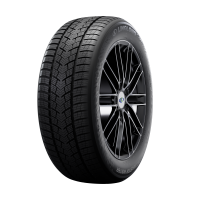
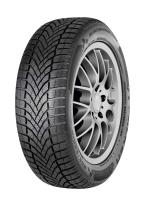
Considering the price, Linglong Sport Master Winter is a steel on price/performance ratio.
2025 Auto Express Winter Tyre Test had similar good overall results, this confirms it as an good overall winter tyre in my opinion.
Most of the tyres in this list are double the price at the moment, i also think the price will go up for this tire, get it at this price while you can.
Autobild tested wear to see the value of it, check out the results as euros per 1000km is a better metric
In this case, wear is not important, since Linglong is 4 times cheaper than premium brands (in my country).
EU is scared of cheap Chinese tyres, which are in this case very good, so they try to discriminate them with poor test results.
The Chinese quality has not caught up yet, but it's getting closer as proven by linglong. Why is linglong much better than it was? It is in least in part due to having EU offices and development. Which makes the tyre more expensive, if you look at the Chinese brands who make a good product it is nearly always more expensive than the general chinese product. The big EU brands are definitely concerned but we're not suppressing the results of brands like linglong, we're promoting how far they've come.