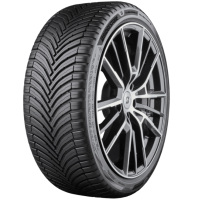
I've performed the world's first test of the new Michelin CrossClimate 3 and CrossClimate 3 Sport all season tyres, putting them up against two of the leading competitors, the multiple test winning Pirelli Cinturato All Season SF3 and the excellent dry and wet focused Bridgestone Turanza All Season 6.
As always I've tested them in the dry, wet, noise and comfort, and I have rolling resistance and snow data to show you exactly how the two new Michelins compare to some of the best competition in the segment.
Testing Methodology
Test Driver
Jonathan Benson
Tyre Size
225/40 R18
Test Location
Professional Proving Ground
Test Year
2025
Tyres Tested
4
Show full testing methodologyHide methodology
Every tyre is tested using calibrated instrumented measurement and structured subjective assessment. Reference tyres are retested throughout each session to correct for changing conditions, ensuring fair, repeatable comparisons. Multiple reference sets are used where needed so that control tyre wear does not affect accuracy.
We use professional-grade testing equipment including GPS data loggers, accelerometers, and calibrated microphones. All tyres are broken in and conditioned before testing begins. For full details on our equipment, preparation process, and calibration procedures, see our complete testing methodology.
Categories Tested
Dry Braking
For dry braking, I drive the test vehicle at an entry speed of 110 km/h and apply full braking effort to a standstill with ABS active on clean, dry asphalt. I typically use an 100–5 km/h measurement window. My standard programme is five runs per tyre set where possible, although the sequence can extend to as many as fifteen runs if conditions and tyre category justify it. I analyse the full set of runs and discard statistical outliers before averaging. Reference tyres are run repeatedly throughout the session to correct for changing conditions.
Dry Handling
For dry handling, I drive at the limit of adhesion around a dedicated handling circuit with ESC disabled where possible so I can assess the tyre's natural balance, transient response, and limit behaviour without electronic intervention masking the result. I usually complete between two and five timed laps per tyre set, depending on the circuit, tyre type, and consistency of conditions. I exclude laps affected by clear driver error or obvious environmental inconsistency. Control runs are carried out frequently throughout the session, and I often use multiple sets of control tyres so that wear on the references does not become a meaningful variable. For more track-focused products, I also do endurance testing, which is a set number of laps at race pace to determine tire wear patterns and heat resistance over longer driving.
Subj. Dry Handling
Objective data is only part of the picture, so I also carry out a structured subjective handling assessment at the limit of adhesion on a dedicated dry handling circuit. I score steering precision, steering response, turn-in behaviour, mid-corner balance, corner-exit traction, breakaway characteristics, and overall confidence using a standardised 1–10 scale used consistently across my testing. The final assessment combines numeric scoring with written technical commentary. I complete familiarisation laps on the control tyre before evaluating each candidate.
Subj. Fun
Some tyres deliver strong measured performance but still feel uninvolving, so I also include an assessment of driving enjoyment during spirited driving. This score considers steering feel, communication, balance, predictability at the limit, driver confidence, and the overall sense of connection between the vehicle and the road. It is intended to capture qualities that matter to enthusiastic drivers but are not always fully described by isolated objective metrics. Rated on a 1–10 scale.
Wet Braking
For wet braking, I drive the test vehicle at an entry speed of 88 km/h and apply full braking effort to a standstill with ABS active on an asphalt surface with a controlled water film. I typically use an 80–5 km/h measurement window to isolate tyre performance from variability in the initial brake application. My standard programme is eight runs per tyre set where possible, although the sequence can extend to as many as fifteen runs if conditions and tyre category justify it. I analyse the full set of runs and discard statistical outliers before averaging. To correct for changing conditions, I run reference tyres repeatedly throughout the session — in wet testing, typically every three candidate test sets.
Wet Handling
For wet handling, I drive at the limit of adhesion around a dedicated handling circuit. I generally use specialist wet circuits with kerb-watering systems designed to maintain a consistent surface condition. ESC is disabled where possible so I can assess the tyre's natural balance, transient response, and limit behaviour without electronic intervention masking the result. I usually complete between two and five timed laps per tyre set, depending on the circuit, tyre type, and consistency of conditions. I exclude laps affected by clear driver error or obvious environmental inconsistency. Control runs are carried out frequently throughout the session, and I often use multiple sets of control tyres so that wear on the references does not become a meaningful variable.
Subj. Wet Handling
Objective data is only part of the picture, so I also carry out a structured subjective handling assessment at the limit of adhesion on a dedicated wet handling circuit. I score steering precision, steering response, turn-in behaviour, mid-corner balance, aquaplaning resistance, breakaway characteristics, and overall confidence using a standardised 1–10 scale used consistently across my testing. The final assessment combines numeric scoring with written technical commentary. I complete familiarisation laps on the control tyre before evaluating each candidate.
Straight Aqua
To measure straight-line aquaplaning resistance, I drive one side of the vehicle through a water trough of controlled depth, typically around 7 mm, while the opposite side remains on dry pavement. I enter at a fixed speed and then accelerate progressively. I define aquaplaning onset as the point at which the wheel travelling through the water exceeds a specified slip threshold relative to the dry-side reference wheel. I usually perform four runs per tyre set and average the valid results.
Curved Aquaplaning
For curved aquaplaning, I use a circular track, typically around 100 metres in diameter, with a flooded arc of controlled water depth, usually about 7 mm. The vehicle is instrumented with GPS telemetry and a tri-axial accelerometer. I drive through the flooded section at progressively increasing speed, typically in 5 km/h increments, and record the minimum sustained lateral acceleration at each step. The test continues until lateral acceleration collapses, indicating complete aquaplaning. The result is expressed as remaining lateral acceleration in m/s² as speed rises.
Snow Braking
For snow braking, I drive the test vehicle at an entry speed of 50 km/h and apply full braking effort to a standstill with ABS active on a groomed, compacted snow surface, measuring 45-5 km/h. I generally use a wide VDA (vehicle dynamic area) and progressively move across the surface between runs so that no tyre ever brakes on the same piece of snow twice. My standard programme is twelve runs per tyre set, although the sequence can extend further if the data justify it. I analyse the full set of runs and discard statistical outliers before averaging. The surface is regularly groomed throughout the session. To correct for changing snow surface conditions, I run reference tyres repeatedly — typically every two candidate test sets.
Snow Traction
For snow traction, I accelerate the vehicle from rest on a groomed snow surface with traction control active and measure speed and time using GPS telemetry. I typically use a 5–35 km/h measurement window to reduce the influence of launch transients and powertrain irregularities. I use a wide VDA (vehicle dynamic area) and progressively move across the surface between runs so that no tyre ever accelerates on the same piece of snow twice. The surface is regularly groomed throughout the session. I complete multiple runs per tyre set and average the valid results. Reference tyres are run typically every two candidate test sets to correct for changing snow surface conditions.
Snow Handling
For snow handling, I drive at the limit of adhesion around a dedicated snow handling circuit with ESC disabled where possible. The circuit is groomed and prepared after every run while tyres are being changed, so each set runs on a consistently prepared surface. I usually complete between two and five timed laps per tyre set, excluding laps affected by clear driver error or obvious environmental inconsistency. Because snow surfaces degrade more rapidly than asphalt, control runs are carried out more frequently — typically every two candidate test sets.
Snow Circle
For snow lateral grip testing, I use a circular snow track of fixed radius, broadly aligned with ISO 4138 principles. The surface is regularly groomed throughout the session. I progressively increase speed until the maximum sustainable cornering speed is reached. I normally record multiple laps in both clockwise and counterclockwise directions to reduce the influence of surface bias. Because snow surfaces degrade more rapidly, the control tyre is retested at regular intervals and I often use multiple sets of control tyres.
Subj. Comfort
To assess comfort, I drive on a wide range of road surfaces (often dedicated comfort tracks at test facilities) at speeds from 50 to 120 km/h, including smooth motorway, coarse surfaces, expansion joints, broken pavement, and sharp-edged obstacles. I evaluate primary ride quality, secondary ride quality, impact harshness, seat-transmitted vibration, and the tyre's ability to absorb sharp inputs. Ratings are assigned on a 1–10 scale relative to the reference tyre.
Subj. Noise
For subjective noise assessment, I drive at constant speeds across multiple surface types with the windows closed, ventilation off, and audio system off. I assess overall noise level, tonal quality, cavity boom, pattern noise, broadband roar, and sensitivity to both speed and road texture. Each tyre is rated on a 1–10 scale and supported by written observations on noise character and annoyance.
Rolling Resistance
Rolling resistance is measured under controlled laboratory conditions in accordance with ISO 28580 and UNECE Regulation 117 Annex 6. The tyre is mounted on a test wheel and loaded against a large-diameter steel drum. After thermal stabilisation at the prescribed test speed, rolling resistance force is measured at the spindle and corrected according to the relevant procedure. The result is expressed as rolling resistance coefficient, typically in kg/tonne.
How each category is weighted in the overall score:
Dry25%
Dry Braking50%
Dry Handling35%
Subj. Dry Handling10%
Subj. Fun5%
Wet35%
Wet Braking45%
Wet Handling30%
Subj. Wet Handling10%
Straight Aqua10%
Curved Aquaplaning5%
Snow25%
Snow Braking30%
Snow Traction30%
Snow Handling30%
Snow Circle10%
Comfort10%
Subj. Comfort50%
Subj. Noise50%
Value5%
Rolling Resistance100%
While I flesh out the article I suggest you watch the video for my subjective thoughts, but if you're here for the data please enjoy the tables below, or on the Charts tab above.
Dry
Dry Braking
Dry Braking
Spread: 1.95 M (5.2%)|Avg: 38.33 M
Dry braking in meters (100 - 5 km/h) [Average Temperature 11.5c] (Lower is better)
Dry Braking: Safety Impact: Best vs Worst Tyre
Dry Handling
Dry Handling
Spread: 1.65 s (2.2%)|Avg: 77.35 s
Dry handling time in seconds (Lower is better)
Michelin CrossClimate 3 Sport
76.60 s
Bridgestone Turanza All Season 6
77.15 s
Pirelli Cinturato All Season SF3
77.40 s
Michelin CrossClimate 3
78.25 s
Subj. Dry Handling
Subj. Dry Handling
Spread: 0.50 Points (5%)|Avg: 9.69 Points
Subjective Dry Handling Score (Higher is better)
Michelin CrossClimate 3 Sport
10.00 Points
Bridgestone Turanza All Season 6
9.75 Points
Pirelli Cinturato All Season SF3
9.50 Points
Michelin CrossClimate 3
9.50 Points
Subj. Fun
Subj. Fun
Spread: 0.50 Points (5%)|Avg: 9.75 Points
Subjective Fun Score (Higher is better)
Michelin CrossClimate 3 Sport
10.00 Points
Bridgestone Turanza All Season 6
9.75 Points
Pirelli Cinturato All Season SF3
9.75 Points
Michelin CrossClimate 3
9.50 Points
Wet
Wet Braking
Wet Braking
Spread: 3.15 M (10.1%)|Avg: 32.14 M
Wet braking in meters (80 - 5 km/h) [Average Temperature 9c] (Lower is better)
Wet Braking: Safety Impact: Best vs Worst Tyre
Wet Handling
Wet Handling
Spread: 4.40 s (4.6%)|Avg: 97.65 s
Wet handling time in seconds (Lower is better)
Pirelli Cinturato All Season SF3
96.07 s
Michelin CrossClimate 3 Sport
96.80 s
Bridgestone Turanza All Season 6
97.27 s
Michelin CrossClimate 3
100.47 s
Subj. Wet Handling
Subj. Wet Handling
Spread: 0.50 Points (5%)|Avg: 9.69 Points
Subjective Wet Handling Score (Higher is better)
Michelin CrossClimate 3 Sport
10.00 Points
Pirelli Cinturato All Season SF3
9.75 Points
Bridgestone Turanza All Season 6
9.50 Points
Michelin CrossClimate 3
9.50 Points
Straight Aqua
Straight Aqua
Spread: 5.65 Km/H (7.1%)|Avg: 77.28 Km/H
Float Speed in Km/H (Higher is better)
Pirelli Cinturato All Season SF3
79.90 Km/H
Bridgestone Turanza All Season 6
78.45 Km/H
Michelin CrossClimate 3
76.53 Km/H
Michelin CrossClimate 3 Sport
74.25 Km/H
Curved Aquaplaning
Curved Aquaplaning
Spread: 0.30 m/sec2 (12.9%)|Avg: 2.17 m/sec2
Remaining lateral acceleration (Higher is better)
Pirelli Cinturato All Season SF3
2.33 m/sec2
Bridgestone Turanza All Season 6
2.16 m/sec2
Michelin CrossClimate 3 Sport
2.15 m/sec2
Michelin CrossClimate 3
2.03 m/sec2
Snow
Snow Braking
Snow Braking
Spread: 0.34 M (4.6%)|Avg: 7.58 M
Snow braking in meters (30 - 10 km/h) [Average Temperature -9c] (Lower is better)
Snow Braking: Safety Impact: Best vs Worst Tyre
Snow Traction
Snow Traction
Spread: 0.36 s (8.1%)|Avg: 4.54 s
Snow acceleration time (5 - 30 km/h) [Average Temperature -9c] (Lower is better)
Michelin CrossClimate 3
4.42 s
Michelin CrossClimate 3 Sport
4.43 s
Pirelli Cinturato All Season SF3
4.54 s
Bridgestone Turanza All Season 6
4.78 s
Snow Handling
Snow Handling
Spread: 3.10 s (4.1%)|Avg: 77.91 s
Snow handling time in seconds [Average Temperature -6.5c] (Lower is better)
Michelin CrossClimate 3
76.44 s
Michelin CrossClimate 3 Sport
77.45 s
Pirelli Cinturato All Season SF3
78.22 s
Bridgestone Turanza All Season 6
79.54 s
Snow Circle
Snow Circle
Spread: 3.17 S (15.2%)|Avg: 22.16 S
Snow Circle Time in Seconds (Lower is better)
Michelin CrossClimate 3
20.81 S
Michelin CrossClimate 3 Sport
21.68 S
Pirelli Cinturato All Season SF3
22.16 S
Bridgestone Turanza All Season 6
23.98 S
Comfort
Subj. Comfort
Subj. Comfort
Spread: 1.00 Points (10%)|Avg: 9.44 Points
Subjective Comfort Score (Higher is better)
Michelin CrossClimate 3
10.00 Points
Michelin CrossClimate 3 Sport
9.50 Points
Pirelli Cinturato All Season SF3
9.25 Points
Bridgestone Turanza All Season 6
9.00 Points
Subj. Noise
Subj. Noise
Spread: 0.50 Points (5%)|Avg: 9.63 Points
Subjective in car noise levels (Higher is better)
Michelin CrossClimate 3
10.00 Points
Bridgestone Turanza All Season 6
9.50 Points
Pirelli Cinturato All Season SF3
9.50 Points
Michelin CrossClimate 3 Sport
9.50 Points
Value
Rolling Resistance
Rolling Resistance
Spread: 1.30 kg / t (17.1%)|Avg: 8.10 kg / t
Rolling resistance in kg t (Lower is better)
Michelin CrossClimate 3 Sport
7.60 kg / t
Michelin CrossClimate 3
7.80 kg / t
Pirelli Cinturato All Season SF3
8.10 kg / t
Bridgestone Turanza All Season 6
8.90 kg / t
19,000 km
£1.45/L
8.0 L/100km
--
Annual Difference
--
Lifetime Savings
--
Extra Fuel/Energy
--
Extra CO2
Estimates based on typical driving conditions. Rolling resistance accounts for approximately 20% of IC vehicle fuel consumption and 25% of EV energy consumption. Actual savings vary based on driving style, vehicle weight, road conditions, and tyre age. For comparative purposes only. Lifetime savings based on a 40,000km / 25,000 mile tread life.
Outstanding in Dry Handling with sharp steering and the quickest lap pace, and excellent Dry Braking that shortens stopping distances. In Wet Handling it leads with strong lateral grip and traction balance, giving confident, neutral behaviour, and Wet Braking is among the best with short, repeatable stops. Low Noise and good Comfort round out its road manners, while Rolling Resistance is competitive, suiting high-mileage drivers without sacrificing performance.
Snow performance trails the wet and dry benchmark it sets; Snow Braking and Snow Handling are solid but not class-leading, meaning less bite and traction on packed snow compared to the best all-season snow specialists. Rolling Resistance, while good, isn’t the absolute lowest, which may matter for eco-focused buyers. Comfort over sharp impacts can feel taut due to its sporty casing and responsive sidewalls.
A dynamic all-season with sports-tyre reflexes: quickest in the dry, the class act in wet handling and braking consistency, and refined on-road. Its winter edge is competent rather than dominant, but for drivers prioritising year-round wet and dry security with engaging feel, the CrossClimate 3 Sport is the standout of this test.
Exceptionally balanced across categories, with top-tier Wet Braking that keeps stopping distances short and very secure Wet Handling that feels predictable on the limit. Strong Snow Braking and Snow Handling deliver dependable cold-weather traction. Dry Braking is short and Dry Handling is tidy and progressive. Cabin Noise is low and Comfort impresses, making it an easy, stress-free choice for mixed climates.
Not the outright quickest in Dry Handling, lacking the final bite and steering urgency of the sportiest rival. Rolling Resistance isn’t the lowest, which slightly dents efficiency. At the limit in wet it’s composed rather than playful, and ultimate lateral grip falls just shy of the very best performer in this test.
The all-rounder of the group: consistently strong in wet, dry and snow with an easy-going character. It trades a little ultimate pace for composure and comfort, making it a superb daily choice where varied conditions are the norm and winter capability matters without sacrificing summer confidence.
Impressive Dry Braking and a calm, confidence-inspiring Dry Handling balance. In the wet it offers short, consistent braking and stable Wet Handling with progressive breakaway, making it easy to trust. Noise levels are low and ride Comfort is supple for the class. Rolling Resistance is competitive, giving sensible fuel economy without dulling response.
Snow performance sits mid-pack; Snow Braking and Snow Handling lack the crisp traction and turn-in of the best, so committed winter drivers may want more bite. Not the sharpest for lap pace in Dry Handling versus the Sport variant. Rolling Resistance isn’t class-leading for efficiency-focused users.
A mature, road-friendly all-season focused on daily confidence: strong dry and wet stopping, stable handling and refined manners. It gives you much of the Sport’s security without its edgy feel, but concedes some snow bite and ultimate agility. A great year-round choice for comfort and consistency.
Standout in Dry Braking and Dry Handling for a non-sport all-season, with crisp initial turn-in and strong mid-corner grip. Wet Braking is competitive with short, repeatable stops, and Wet Handling feels planted once loaded. Road Noise is well suppressed and Comfort is good, giving an adult, composed feel on motorways.
Snow Braking and Snow Handling lag the class leaders, with less traction and lateral grip on compacted snow, limiting confidence in colder regions. Rolling Resistance is higher than the best, impacting efficiency. In wet transitions it can feel less progressive than the top tyres, requiring smoother inputs at the limit.
A dry and wet specialist that flatters keen drivers in warmer months, delivering strong braking and assured handling. Its weaker snow performance and merely average efficiency keep it from troubling the very best overall, but in temperate climates it’s a satisfying, confidence-rich option.
Hi! For BMW iX3 (2022) what would you recommend? It is hard to find Michelin CC3 Sport because of the different front and rear size (245/45 R20 & 275/40 R20). And the vehicle is 2300 kg.
@TyreReviews:disqus Hi, I've just discovered your website and content, and it's really thorough and useful, so thank you. I've been looking at your videos and reviews and trying to figure things out, but I still can't determine the best course of action, so I'd really appreciate your advice. I'm based in the southern UK and I've just become the owner of a 2019 F87 M2 Competition. The car came with four new Michelin Pilot Super Sports on it, which I'm a bit apprehensive about using through the winter. I drive carefully and appropriately for the conditions, and have previously driven on Bridgestone Potenza S001s and Potenza Sports throughout winter in my old car (Mazda MX-5), at temperatures down to -1/0 C with no issues (just taking it very slow and cautiously), but given the increased power of the M2C, I'm hesitant to do the same with the Pilot Super Sports. It seems like my two options are to either run separate winter and summer tyres and change these accordingly, or to opt for all-season tyres (and keep the fresh PSS for the warmer months so as not to waste them). Given the climate of the UK, with heavy snow being relatively rare, I'm not sure that dedicated winter tyres are wholly necessary, and it seems like all-season tyres may be adequate? I enjoy spirited driving when the conditions permit, but the priority would be performance in wet and cold conditions, while still balancing this with overall performance and feel. It doesn't look like the Michelin PS all-season 4 is available in the UK in the correct size/fitment. What would your recommendations be? Would the CrossClimate 3 Sport be a good choice? Thank you.
If you can get the CC3S in your sizes then yes, that would be a good winter option. I'm not sure the M2 will be much worse than the mazda on summers throughout the winter but it will certainly be slippy when it's cold and wet.
@TryeReviews Hi need a set of tires in 215/50 R17. I'm wondering between Michelin CC3 and Pirelli SF3. I'm using all season instead of winter tires nowadays. I need to prepare for cold wet and few centimeters of snow. But want to have good handling in the cold dry. I don't really care about summer performance as I'm running it from November to early March around -10C to 10C temperature range. The car is a Ford Focus 182 Hp 2019.
@TyreReviews:disqus i have a question if you don’t mind. I can’t get Michelin cross climate 3 sport or Pirelli SF3 in the sizes I need to have a full set on my car, but I can get sf3 for front (225/45/18) and cc3s for rear (255/40/18) (staggered set up).
I can also get continental asc2 all round. To me, it seems the mixed set up offers better theoretical performance but I am wondering if the different characteristics will make it overall less safe than the asc2 set up? The car is a w205 c43. Interested to know your thoughts. Asc2 seems like a worse performing tyre than either of the cc3s and sf3 but maybe the consistency between front and rear is better for safety?
So I've got a Porsche mecan GTS that comes with Michelin latitude sport 3, I'm curious how the cross climate 3 sports would compare. Is it worth changing to have an all season sport tyre yet? Or would them latitudes be better?
In your review on September 23, 2024 (The Best All Season Tyres for 2024 / 2025) the Pirelli performed better than the Bridgestone in the wet braking test, here is the opposite, is there a difference in the test? am I missing something here? Thanx in advance.
it seems it's close overall, but Looking at data from twelve tyre tests, the Bridgestone Turanza All Season 6 was better during nine wet braking tests. On average the Bridgestone Turanza All Season 6 stopped the vehicle in 1.58% less distance than the Pirelli Cinturato All Season SF3.
I need help. I want news tyres on my Ford Explorer PHEV in size 255/55 R20. I'm between Pirelli SF3 and CC3S. But i wonder, if in that size Pirellis SCORPION SF3 is the same sa standard SF3 on passanger car. Now I have SF3 on my Mazda 6 GH to use as autumn/winter/spring and I'm satisfied. But they are a bit jelly in hotter conditions. That's why I consider Michelin. I want allrounder with as much safety as I can get.
What would you recommend out of the results as a "winter wheel" set up - I mean using an all season as I think for the uk its a better option. I've got a Mercedes GLB (fwd only). Only requirement is to keep the occupants as safe and mobile as possible during the winter months.
I'm trying to decide between the Pirelli scorpion weatheractive or if I should wait for CC3's to become available in Canada (I know the CC3's may take a while). Which would be better from a comfort and noise standpoint? I've read instances of the pirellis become quite loud after the first year of wear which has me concerned. This is for a 2020 Acura MDX Aspec (265/45r20). Any help would be greatly appreciated!
Thank you for your response! For context I had come across some feedback regarding wear on the Pirellis, in which after the first year they got considerably louder, which has me considering the CC3s as an alternative. I was hoping you could share your thoughts on which tire provides better comfort and lower noise levels (when new is fine), the CC3 or the Pirelli Scorpion WeatherActive. For context, I’ve had the CC2s on two cars, and while they performed well, I found the ride a bit stiffer, harsher and noisier than I prefer
I was aware it could take a year or so from the European release before we get them in Canada. We have decent tires at the moment so we wouldn't mind waiting if the CC3's are worth the wait :). I've bugged you enough, thanks for your help, love your reviews!
@TyreReviews:disqus hope you had a great summer! Do you know when further sizes will be released for the CC3S, specifically 225/45/18? When we can we expect your big annual all season tyre test, where we see CC3/CC3S go up against the full range of rivals?
The results at first glance look very disappointing for MCC3. Beaten across dry and wet by Pirelli and only top in snow where it was already very good - almost too good given it was giving up performance elsewhere to be a snow champ. I've had the MCC2 for 3 years and will keep for another 3 but I doubt I'll replace with the MCC3.
Jon, do you kniw why haven't Michelin addressed their wet weather performance issues and have doubled down on snow ?
As far as I understand the big target was wear without reducing any other performances.
The extra tread life they added is really impressive, however adding such a huge amount of tread life does oppose wet and snow improvements so i guess that's why they didn't jump up in wet grip.
Luckily there's the CC3S however that is size restricted.
The powergy is Pirellis cheaper range so I'd guess it is using one of the old Cinturato molds with some slightly cheaper compound. I've not seen any test results I recall.
I'm currently going through all tests I can find to make my mind up as to which tyre to get this fall for my cupra terramar.
Size 255/45 19 V really only leaves me with: CC2 (non suv), CC3S, Conti ASC2 and Bridgestone Turanza AS6. No Pirelli, no CC3, no CC2 SUV.
I had the CC2 SUV "Maserati" on my outgoing car and was pretty happy with it except the wet performance. I mean it was ok, but could have been better.
We really don't have too many snow days anymore in southern Germany, but I also want to be able to drive as safely as possible in the snow, so the Bridgestone does not make too much sense in my head. Do I go for the Conti, which was the only good rated AS with the ADAC or do I go with the michelin because I was happy with it except wet performance. The CC3S should make up for that right? My CC2 SUV also only came with 6,5mm and lasted 3,5 years above 4mm.
something is off with the wet braking results. When having a look at the "The Best All Season Tyres for 2024 / 2025" test from Sept. 23, 2024, the "wet braking cool" results e.g. for the SF3 were 25.51m from 80km/h to 5, 8c. The current test, at 9c, same km/h, the SF3 is at 31.47m. So 5.96m difference. VW GTI was used for both tests. The 2024 test was on 235/35 R19, the current one on 225/40 R18 - but that should not explain that big of a difference...
Probably the worst release from Michelin in the last years. Cc3s is okay but nothing more. Cc3 is a complete fail.
The wet performance is so bad compared to the rivals! I don’t care if they last 10k km more. If I would drive 20+ tkm I would have changed to winter and summer tyres. But I drive 10tkm a year - man it doest really matter if they last 4-5-6 years. I change my tires after 4 years anyway.
But I care about savety. Breaking wet, dry and snow and wet and snow handling + rolling resistance and comfort and rim protection.
Aquaplaning, dry handling and wear isn’t my concern.
MCCS has second best wet handling and braking (not breaking) and best subjective handling and you say its OK? :D You have no idea what you talking about, yean, winner of test is ok but nothing more :D
I think this perception may be an accidental misinterpretation or misreading of the graphs. The way the graphs are trimmed makes it falsely appear that three are huge differences between these tires, but what I think is most impressive is just how close these tires all perform. In the wet specifically, the best tire is always less than 10% better than the worst, and usually less than 5% better. The snow is where we really see the CC3 shine, and those are some of the biggest margins. In reality, I think most drivers would be satisfied with any of these tires, and would be hard pressed to tell the difference. If you're trying to choose between these, I'd do it like this: is this a one-tire all year tire? Do you see a significant amount of snow and ice? If yes, get a CC. If no, get whichever of these three you can get for the least expensive, or that your local shop will get for you and service for you.
@TyreReviews:disqus , I might suggest a toggle at the beginning of the article to display trimmed graphs, or graphs starting at zero. This will more accurately display the differences between the tires.
Totally agree... it is impressive though how Pirelli is consistent... and has decent aquaplaning unlike cc3s. I'd pick Pirelli this time, and I am actually actuall in October.
" the others will automatically rebalance to maintain a total of 100%."
Please delete that feature immediately, it just doesn't work at all. You set a value, then try to set another one but it change the value you just set... And in the end you have an error because it doesn't add up to 100% but the system won't let you correct it.
This feature is great! It’s true the values sometimes refresh in a way so that they don’t add up to 100 but you can reset the values by reducing all to zero and set one to 100 and then start changing values again. This is a really great feature to help determine the best tyre for a specific set of characteristics.
It actually helped me realise that my Bridgestones as6 are the best tyres for me based on what I value, whereas I may have been thought differently based their placing 4th in this test.
Well, the tool is tricky. I just learned that you must use it from bottom to top in each category. Edit: And now I'm stuck in Wet Sub-Categories!! Try 0,0,0,50,50 from bottom to top here and then try to change to 0,0,10,45,45.
I just can't use it, it doesn't work at all. it's like a video game where you have to find the right way to get the resukt you want. It took me 30 minute to barely manage one result. I just can't, it's broken.
CC3 is not a big step from CC2. Wet performance is still disappointing. Don't know why they improved snow performance instead. CC2 was good enough in that by far. I think Michelin should be afraid of next gen Goodyear (Gen 3 is five years old!) and the next update from Bridgestone (AS 6 evo?). Did Michelin learn something about rim protection on the CC3S? I still like my Bridgestones (235/35 R19).
Well, I am not interested in aquaplaning at all, as long as the tyre doesn't fail completely. Same for comfort, value and snow traction (because of 4WD). So my personal results are different.
Yes, of course, everyone’s personal results will be different.
BTW, 4WD will help with traction but not braking.
Out of interest, is your view on aquaplaning due to the fact that you think all the tyres are basically safe in this respective and so the relative differences are not meaningful?
That's the reason why I didn't write that I am not interested in braking, just in traction. Well, differences in straight aqua are under 10 %. If I am unable to limit my speed in heavy rain, I shouldn't drive a car at all.
It seems to me that the cc3s excels at handling and feel but the Bridgestone and Pirelli seem to have better grip and aquaplaning resistance. It’s not head and shoulders above like I thought it might be.
My takeaway is that:
1) cc3s is the best tyre for fun 2) Bridgestone best for pure braking/straightline grip, rim protection and size availability but less comfy and relatively less snow/ice performance. 3) Pirelli best all rounder





Hi!
For BMW iX3 (2022) what would you recommend?
It is hard to find Michelin CC3 Sport because of the different front and rear size (245/45 R20 & 275/40 R20). And the vehicle is 2300 kg.
What of those two tires has the best option for longest running distance in KM?
I'm having trouble finding the Pirreli SF3 and normal CC3 in wheelsize 235/40R18.
Mild climate, mild winters mostly -3, summer 25+
Bridgestone and CC3 sport are available. But prices are a big difference.
€180 for CC3 vs €130 for Bridgestone.
Justifyable to go for CC3 over bridgestone or you think i won't really notice on daily basis?
Hi Jonathan! Do you have any information for an additional sizes for the CC3 Sport? Seems they are quite few....
Thanks!
I don't sorry, check the label section on the tire page for the latest eprel data.
@TyreReviews:disqus
Hi, I've just discovered your website and content, and it's really thorough and useful, so thank you. I've been looking at your videos and reviews and trying to figure things out, but I still can't determine the best course of action, so I'd really appreciate your advice. I'm based in the southern UK and I've just become the owner of a 2019 F87 M2 Competition. The car came with four new Michelin Pilot Super Sports on it, which I'm a bit apprehensive about using through the winter. I drive carefully and appropriately for the conditions, and have previously driven on Bridgestone Potenza S001s and Potenza Sports throughout winter in my old car (Mazda MX-5), at temperatures down to -1/0 C with no issues (just taking it very slow and cautiously), but given the increased power of the M2C, I'm hesitant to do the same with the Pilot Super Sports. It seems like my two options are to either run separate winter and summer tyres and change these accordingly, or to opt for all-season tyres (and keep the fresh PSS for the warmer months so as not to waste them). Given the climate of the UK, with heavy snow being relatively rare, I'm not sure that dedicated winter tyres are wholly necessary, and it seems like all-season tyres may be adequate? I enjoy spirited driving when the conditions permit, but the priority would be performance in wet and cold conditions, while still balancing this with overall performance and feel. It doesn't look like the Michelin PS all-season 4 is available in the UK in the correct size/fitment. What would your recommendations be? Would the CrossClimate 3 Sport be a good choice? Thank you.
If you can get the CC3S in your sizes then yes, that would be a good winter option. I'm not sure the M2 will be much worse than the mazda on summers throughout the winter but it will certainly be slippy when it's cold and wet.
@TryeReviews
Hi need a set of tires in 215/50 R17. I'm wondering between Michelin CC3 and Pirelli SF3.
I'm using all season instead of winter tires nowadays. I need to prepare for cold wet and few centimeters of snow. But want to have good handling in the cold dry. I don't really care about summer performance as I'm running it from November to early March around -10C to 10C temperature range.
The car is a Ford Focus 182 Hp 2019.
Thanks for the help
SF3 seems ahead to me
@TyreReviews:disqus i have a question if you don’t mind. I can’t get Michelin cross climate 3 sport or Pirelli SF3 in the sizes I need to have a full set on my car, but I can get sf3 for front (225/45/18) and cc3s for rear (255/40/18) (staggered set up).
I can also get continental asc2 all round. To me, it seems the mixed set up offers better theoretical performance but I am wondering if the different characteristics will make it overall less safe than the asc2 set up? The car is a w205 c43. Interested to know your thoughts. Asc2 seems like a worse performing tyre than either of the cc3s and sf3 but maybe the consistency between front and rear is better for safety?
My focus is on safety only.
Many thanks!
In this case I would go ASC2 all round. It even beat the CC3S - https://www.tyrereviews.com...
Thank you for that!
So I've got a Porsche mecan GTS that comes with Michelin latitude sport 3, I'm curious how the cross climate 3 sports would compare. Is it worth changing to have an all season sport tyre yet? Or would them latitudes be better?
In your review on September 23, 2024 (The Best All Season Tyres for 2024 / 2025) the Pirelli performed better than the Bridgestone in the wet braking test, here is the opposite, is there a difference in the test? am I missing something here? Thanx in advance.
https://www.tyrereviews.com...
it seems it's close overall, but Looking at data from twelve tyre tests, the Bridgestone Turanza All Season 6 was better during nine wet braking tests. On average the Bridgestone Turanza All Season 6 stopped the vehicle in 1.58% less distance than the Pirelli Cinturato All Season SF3.
I need help. I want news tyres on my Ford Explorer PHEV in size 255/55 R20. I'm between Pirelli SF3
and CC3S. But i wonder, if in that size Pirellis SCORPION SF3 is the same sa standard SF3 on passanger car. Now I have SF3 on my Mazda 6 GH to use as autumn/winter/spring and I'm satisfied. But they are a bit jelly in hotter conditions. That's why I consider Michelin. I want allrounder with as much safety as I can get.
Scorpion is very similar to SF3, slightly different compound and construction to cope with extra weight.
And do your think, that CC3S is worth extra 100€ over SF3 on set? It's about 10% more (900 vs 1000)
According to the recent autobild test no it's not, the SF3 won the test. I would probably buy michelin for the sidewall lol
Between Nokian Seasonproof 2 and Michelin CC3, which one would you recommend for Toyota corolla in UK
What would you recommend out of the results as a "winter wheel" set up - I mean using an all season as I think for the uk its a better option. I've got a Mercedes GLB (fwd only). Only requirement is to keep the occupants as safe and mobile as possible during the winter months.
I'm trying to decide between the Pirelli scorpion weatheractive or if I should wait for CC3's to become available in Canada (I know the CC3's may take a while). Which would be better from a comfort and noise standpoint? I've read instances of the pirellis become quite loud after the first year of wear which has me concerned. This is for a 2020 Acura MDX Aspec (265/45r20). Any help would be greatly appreciated!
No idea, no one has run the CC3 long enough to know how it wears
Thank you for your response! For context I had come across some feedback regarding wear on the Pirellis, in which after the first year they got considerably louder, which has me considering the CC3s as an alternative. I was hoping you could share your thoughts on which tire provides better comfort and lower noise levels (when new is fine), the CC3 or the Pirelli Scorpion WeatherActive. For context, I’ve had the CC2s on two cars, and while they performed well, I found the ride a bit stiffer, harsher and noisier than I prefer
For what it's worth I'm 99% sure you're not getting the CC3 this year, or even at the start of next year so that might help your choice?
I was aware it could take a year or so from the European release before we get them in Canada. We have decent tires at the moment so we wouldn't mind waiting if the CC3's are worth the wait :). I've bugged you enough, thanks for your help, love your reviews!
@TyreReviews:disqus hope you had a great summer! Do you know when further sizes will be released for the CC3S, specifically 225/45/18? When we can we expect your big annual all season tyre test, where we see CC3/CC3S go up against the full range of rivals?
Sadly I don't, my all season test will be out soon but it was tested before availability of the CC3 range
The results at first glance look very disappointing for MCC3. Beaten across dry and wet by Pirelli and only top in snow where it was already very good - almost too good given it was giving up performance elsewhere to be a snow champ. I've had the MCC2 for 3 years and will keep for another 3 but I doubt I'll replace with the MCC3.
Jon, do you kniw why haven't Michelin addressed their wet weather performance issues and have doubled down on snow ?
As far as I understand the big target was wear without reducing any other performances.
The extra tread life they added is really impressive, however adding such a huge amount of tread life does oppose wet and snow improvements so i guess that's why they didn't jump up in wet grip.
Luckily there's the CC3S however that is size restricted.
What about Pirelli Powergy All Season SF? Is it something like at Michelin CC3 and CC3 Sport? Has someone some experience? I have found only this couple reviews:
https://www.tyreleader.ie/car-tyres/pirelli/powergy-allseason-sf/225-45-r17-94w-1706560
The powergy is Pirellis cheaper range so I'd guess it is using one of the old Cinturato molds with some slightly cheaper compound. I've not seen any test results I recall.
Thank you for explanation and recommendation....avoid them :)
I'm currently going through all tests I can find to make my mind up as to which tyre to get this fall for my cupra terramar.
Size 255/45 19 V really only leaves me with: CC2 (non suv), CC3S, Conti ASC2 and Bridgestone Turanza AS6. No Pirelli, no CC3, no CC2 SUV.
I had the CC2 SUV "Maserati" on my outgoing car and was pretty happy with it except the wet performance. I mean it was ok, but could have been better.
We really don't have too many snow days anymore in southern Germany, but I also want to be able to drive as safely as possible in the snow, so the Bridgestone does not make too much sense in my head.
Do I go for the Conti, which was the only good rated AS with the ADAC or do I go with the michelin because I was happy with it except wet performance. The CC3S should make up for that right? My CC2 SUV also only came with 6,5mm and lasted 3,5 years above 4mm.
something is off with the wet braking results. When having a look at the "The Best All Season Tyres for 2024 / 2025" test from Sept. 23, 2024, the "wet braking cool" results e.g. for the SF3 were 25.51m from 80km/h to 5, 8c.
The current test, at 9c, same km/h, the SF3 is at 31.47m. So 5.96m difference. VW GTI was used for both tests.
The 2024 test was on 235/35 R19, the current one on 225/40 R18 - but that should not explain that big of a difference...
Different pavement, makes alot of difference
Sadly you can't compare braking between tests as surface and conditions have a huge impact in distances.
Rim protection may seem like an insignificant info to some. It's plenty significant for me. Thank you for including this information.
Such a shame there is no 235/45/18 for model 3 and similar cars!
I agree there isn't a size for the Model Y either, and also not for my Model 3 performance... It doesn't make sense that they dint make those sizes.
Probably the worst release from Michelin in the last years. Cc3s is okay but nothing more. Cc3 is a complete fail.
The wet performance is so bad compared to the rivals! I don’t care if they last 10k km more. If I would drive 20+ tkm I would have changed to winter and summer tyres. But I drive 10tkm a year - man it doest really matter if they last 4-5-6 years. I change my tires after 4 years anyway.
But I care about savety. Breaking wet, dry and snow and wet and snow handling + rolling resistance and comfort and rim protection.
Aquaplaning, dry handling and wear isn’t my concern.
Sorry Michelin - I wait for the next Goodyear
MCCS has second best wet handling and braking (not breaking) and best subjective handling and you say its OK? :D You have no idea what you talking about, yean, winner of test is ok but nothing more :D
I think this perception may be an accidental misinterpretation or misreading of the graphs. The way the graphs are trimmed makes it falsely appear that three are huge differences between these tires, but what I think is most impressive is just how close these tires all perform. In the wet specifically, the best tire is always less than 10% better than the worst, and usually less than 5% better. The snow is where we really see the CC3 shine, and those are some of the biggest margins. In reality, I think most drivers would be satisfied with any of these tires, and would be hard pressed to tell the difference. If you're trying to choose between these, I'd do it like this: is this a one-tire all year tire? Do you see a significant amount of snow and ice? If yes, get a CC. If no, get whichever of these three you can get for the least expensive, or that your local shop will get for you and service for you.
@TyreReviews:disqus , I might suggest a toggle at the beginning of the article to display trimmed graphs, or graphs starting at zero. This will more accurately display the differences between the tires.
This is the best way to have differences on mobile. You can press the charts tab to see the 0 starting charts.
Totally agree... it is impressive though how Pirelli is consistent... and has decent aquaplaning unlike cc3s. I'd pick Pirelli this time, and I am actually actuall in October.
" the others will automatically rebalance to maintain a total of 100%."
Please delete that feature immediately, it just doesn't work at all. You set a value, then try to set another one but it change the value you just set... And in the end you have an error because it doesn't add up to 100% but the system won't let you correct it.
This feature is great! It’s true the values sometimes refresh in a way so that they don’t add up to 100 but you can reset the values by reducing all to zero and set one to 100 and then start changing values again. This is a really great feature to help determine the best tyre for a specific set of characteristics.
It actually helped me realise that my Bridgestones as6 are the best tyres for me based on what I value, whereas I may have been thought differently based their placing 4th in this test.
Well, the tool is tricky. I just learned that you must use it from bottom to top in each category.
Edit: And now I'm stuck in Wet Sub-Categories!! Try 0,0,0,50,50 from bottom to top here and then try to change to 0,0,10,45,45.
I just can't use it, it doesn't work at all. it's like a video game where you have to find the right way to get the resukt you want. It took me 30 minute to barely manage one result. I just can't, it's broken.
I'll add a toggle to enable / disable it as soon as I can.
CC3 is not a big step from CC2. Wet performance is still disappointing. Don't know why they improved snow performance instead. CC2 was good enough in that by far. I think Michelin should be afraid of next gen Goodyear (Gen 3 is five years old!) and the next update from Bridgestone (AS 6 evo?). Did Michelin learn something about rim protection on the CC3S? I still like my Bridgestones (235/35 R19).
Agreed! Was quite disappointing to see what was already considered a very snow orientated tyre to be made even more so!
The cc3s also has poor aquaplaning - not sure how bad it is as the values don’t mean much to me but relatively speaking, it didn’t perform well.
Well, I am not interested in aquaplaning at all, as long as the tyre doesn't fail completely. Same for comfort, value and snow traction (because of 4WD). So my personal results are different.
Yes, of course, everyone’s personal results will be different.
BTW, 4WD will help with traction but not braking.
Out of interest, is your view on aquaplaning due to the fact that you think all the tyres are basically safe in this respective and so the relative differences are not meaningful?
That's the reason why I didn't write that I am not interested in braking, just in traction.
Well, differences in straight aqua are under 10 %. If I am unable to limit my speed in heavy rain, I shouldn't drive a car at all.
It seems to me that the cc3s excels at handling and feel but the Bridgestone and Pirelli seem to have better grip and aquaplaning resistance. It’s not head and shoulders above like I thought it might be.
My takeaway is that:
1) cc3s is the best tyre for fun
2) Bridgestone best for pure braking/straightline grip, rim protection and size availability but less comfy and relatively less snow/ice performance.
3) Pirelli best all rounder
True, I was waiting to see this comparison, but now I have a clear winner for my interests, and it’s the Pirelli.