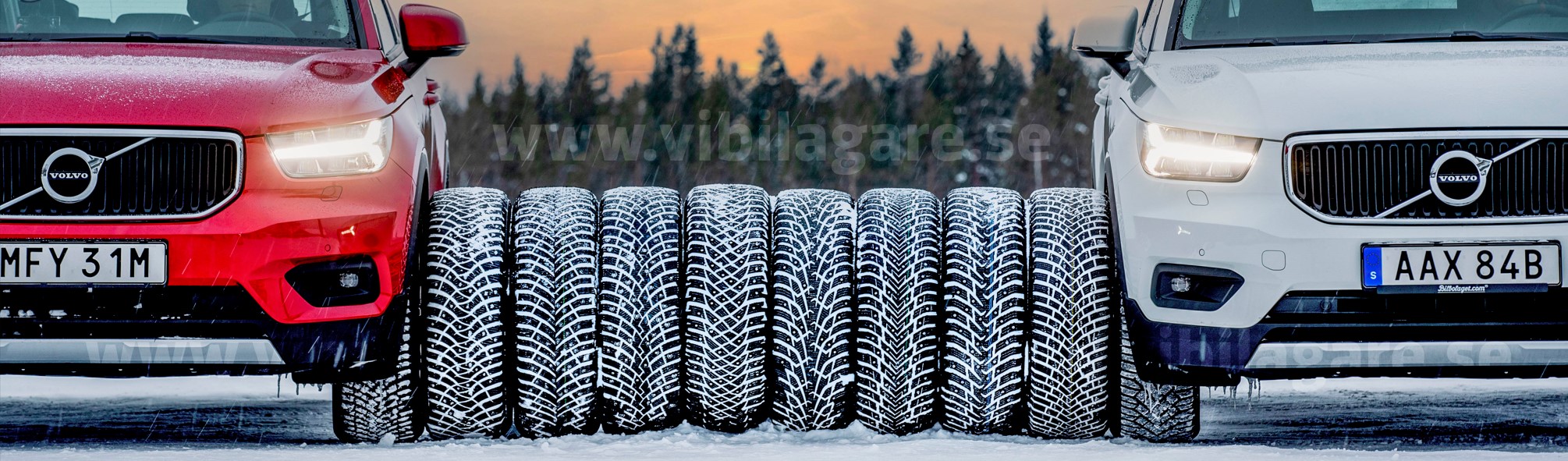
Sadly here at Tyre Reviews we've not had time to do a studded tyre test for 2022, but fortunately the excellent testers at the Nordic publication Vibilagare have tested eight sets of studded winter tyres to show us which of the studded tyres on the market are the best! While the test size is an SUV size (235/55 R18) and the test vehicle a Volvo XC40, these results should give you an idea of the balance between the tyres in all sizes.
As you would hope, the tyres have been tested in the dry, wet, snow and ice. Which is of course the reason studded tyres exist.
The data is interesting, and in full below, but as we saw in the Tyre Reviews Studless Winter Tyre Test there is a pretty clear inversion between the tyres which priorities wet performance, and the tyres which priorities ice performance. The score weighing is heavily in favour of ice (as it should be), but you can adjust the score weighting below to see if your own preferences change the overall result.
Ice is one of the highest priority for a studded tyre, and ice braking is probably the most important aspect! In this safety critical test the Goodyear UltraGrip Arctic 2 led the way with a small advantage over the new Nokian Hakkapeliitta 10 SUV! The Maxxis Premitra Ice Nord struggled, taking nearly 50% longer to stop the test vehicle.
Ice Braking
Spread: 5.37 M (48.2%)|Avg: 13.41 M
Ice braking in meters (25 - 5 km/h) (Lower is better)
Ice Braking: Safety Impact: Best vs Worst Tyre
Ice traction, which is essentially ice braking reversed, almost perfectly matched the braking results, just Continental and Falken were inverted.
Ice Traction
Spread: 0.71 s (30.3%)|Avg: 2.61 s
Ice acceleration time (5 - 15 km/h) (Lower is better)
Goodyear UltraGrip Arctic 2
2.34 s
Nokian Hakkapeliitta 10 SUV
2.36 s
Michelin X Ice North 4 SUV
2.39 s
Nokian Nordman 8 SUV
2.47 s
Pirelli Scorpion IceZero 2
2.56 s
Continental IceContact 3
2.79 s
Falken Winterpeak F Ice 1
2.89 s
Maxxis Premitra Ice Nord 5 SUV
3.05 s
Ice handling challenges the tyres and studs in a different way, this time with Nokian jumping to the top and the Michelin X-Ice North 4 SUV moving from third to second place. The Maxxis was still the least grippiest tyre on test.
Ice Handling
Spread: 4.44 s (10.4%)|Avg: 44.82 s
Ice handling time in seconds (Lower is better)
Nokian Hakkapeliitta 10 SUV
42.49 s
Michelin X Ice North 4 SUV
43.01 s
Goodyear UltraGrip Arctic 2
44.39 s
Falken Winterpeak F Ice 1
44.82 s
Pirelli Scorpion IceZero 2
45.05 s
Continental IceContact 3
45.53 s
Nokian Nordman 8 SUV
46.31 s
Maxxis Premitra Ice Nord 5 SUV
46.93 s
Snow
Any climate which sees a lot of ice will also see a lot of snow. In the snow braking test the Michelin and Nokian were again the best, and the Maxxis was left trailing the group.
Snow Braking
Spread: 1.81 M (16.3%)|Avg: 11.67 M
Snow braking in meters (35 - 5 km/h) (Lower is better)
Snow Braking: Safety Impact: Best vs Worst Tyre
Michelin also led snow traction, with the Nokian surprisingly dropping to sixth place overall.
Snow Traction
Spread: 0.90 s (16.6%)|Avg: 5.65 s
Snow acceleration time (5 - 25 km/h) (Lower is better)
Michelin X Ice North 4 SUV
5.41 s
Falken Winterpeak F Ice 1
5.47 s
Goodyear UltraGrip Arctic 2
5.50 s
Pirelli Scorpion IceZero 2
5.58 s
Continental IceContact 3
5.62 s
Nokian Hakkapeliitta 10 SUV
5.63 s
Nokian Nordman 8 SUV
5.69 s
Maxxis Premitra Ice Nord 5 SUV
6.31 s
Nokian jumped back to the top during snow handling, with the Michelin close behind.
Snow Handling
Spread: 4.87 s (6.3%)|Avg: 79.46 s
Snow handling time in seconds (0 - 0 ) (Lower is better)
Nokian Hakkapeliitta 10 SUV
77.65 s
Michelin X Ice North 4 SUV
77.99 s
Continental IceContact 3
78.53 s
Pirelli Scorpion IceZero 2
79.20 s
Goodyear UltraGrip Arctic 2
79.41 s
Falken Winterpeak F Ice 1
79.53 s
Nokian Nordman 8 SUV
80.86 s
Maxxis Premitra Ice Nord 5 SUV
82.52 s
Wet
As we touched on in the introduction, having a tyre that works well on ice and in the wet is a difficult balance, which is highlighted by the Nokian and Michelin falling down the order to last place during wet braking. In their place, the Falken Winterpeak F-Ice 1 led the group with the Pirelli Scorpion IceZero a close second.
Wet Braking
Spread: 4.25 M (11.7%)|Avg: 37.98 M
Wet braking in meters (80 - 5 km/h) (Lower is better)
Wet Braking: Safety Impact: Best vs Worst Tyre
Maxxis, which had very low grip in the ice and snow tests was the fastest tyre around the wet handling lap, with the Michelin a significant margin behind again.
Wet Handling
Spread: 0.91 s (2.2%)|Avg: 41.62 s
Wet handling time in seconds (Lower is better)
Maxxis Premitra Ice Nord 5 SUV
41.34 s
Pirelli Scorpion IceZero 2
41.41 s
Continental IceContact 3
41.52 s
Falken Winterpeak F Ice 1
41.52 s
Nokian Hakkapeliitta 10 SUV
41.53 s
Nokian Nordman 8 SUV
41.53 s
Goodyear UltraGrip Arctic 2
41.82 s
Michelin X Ice North 4 SUV
42.25 s
The straight aquaplaning test had Maxxis back at the front.
Straight Aqua
Spread: 5.60 Km/H (9.4%)|Avg: 56.41 Km/H
Float Speed in Km/H (Higher is better)
Maxxis Premitra Ice Nord 5 SUV
59.50 Km/H
Falken Winterpeak F Ice 1
59.20 Km/H
Continental IceContact 3
58.70 Km/H
Goodyear UltraGrip Arctic 2
55.70 Km/H
Pirelli Scorpion IceZero 2
55.10 Km/H
Nokian Hakkapeliitta 10 SUV
54.60 Km/H
Nokian Nordman 8 SUV
54.60 Km/H
Michelin X Ice North 4 SUV
53.90 Km/H
Dry
Maxxis was back at the front in the dry braking test.
Dry Braking
Spread: 2.73 M (8%)|Avg: 35.62 M
Dry braking in meters (Lower is better)
Maxxis Premitra Ice Nord 5 SUV
33.98 M
Pirelli Scorpion IceZero 2
34.44 M
Falken Winterpeak F Ice 1
35.42 M
Nokian Hakkapeliitta 10 SUV
35.95 M
Nokian Nordman 8 SUV
35.98 M
Michelin X Ice North 4 SUV
36.08 M
Goodyear UltraGrip Arctic 2
36.36 M
Continental IceContact 3
36.71 M
The test report didn't include a dry handling laptime, this is quite far out of the tyres intended design parameters (we'd still like to see it!) but they did score the tyres in subjective handling, which was led by Michelin and Pirelli.
Subj. Dry Handling
Spread: 2.00 Points (40%)|Avg: 3.75 Points
Subjective Dry Handling Score (Higher is better)
Michelin X Ice North 4 SUV
5.00 Points
Pirelli Scorpion IceZero 2
5.00 Points
Maxxis Premitra Ice Nord 5 SUV
4.00 Points
Falken Winterpeak F Ice 1
4.00 Points
Continental IceContact 3
3.00 Points
Nokian Hakkapeliitta 10 SUV
3.00 Points
Nokian Nordman 8 SUV
3.00 Points
Goodyear UltraGrip Arctic 2
3.00 Points
Environment
The Michelin had the lowest rolling resistance of all the tyres on test, with the rest of the group fairly close.
Fuel Consumption
Spread: 0.46 l/100km (8.4%)|Avg: 5.85 l/100km
Fuel consumption in Litres per 100 km (Lower is better)
Michelin X Ice North 4 SUV
5.50 l/100km
Nokian Hakkapeliitta 10 SUV
5.73 l/100km
Pirelli Scorpion IceZero 2
5.88 l/100km
Continental IceContact 3
5.92 l/100km
Maxxis Premitra Ice Nord 5 SUV
5.94 l/100km
Falken Winterpeak F Ice 1
5.94 l/100km
Nokian Nordman 8 SUV
5.96 l/100km
Goodyear UltraGrip Arctic 2
5.96 l/100km
19,000 km
£1.45/L
8.0 L/100km
--
Annual Difference
--
Lifetime Savings
--
Extra Fuel/Energy
--
Extra CO2
Estimates based on typical driving conditions. Rolling resistance accounts for approximately 20% of IC vehicle fuel consumption and 25% of EV energy consumption. Actual savings vary based on driving style, vehicle weight, road conditions, and tyre age. For comparative purposes only. Lifetime savings based on a 40,000km / 25,000 mile tread life.
The Michelin also had the quietest internal noise.
Noise
Spread: 2.30 dB (3%)|Avg: 76.63 dB
Internal noise in dB (Lower is better)
Michelin X Ice North 4 SUV
75.50 dB
Continental IceContact 3
75.60 dB
Pirelli Scorpion IceZero 2
76.20 dB
Goodyear UltraGrip Arctic 2
76.40 dB
Maxxis Premitra Ice Nord 5 SUV
76.90 dB
Nokian Hakkapeliitta 10 SUV
77.10 dB
Falken Winterpeak F Ice 1
77.50 dB
Nokian Nordman 8 SUV
77.80 dB
But as usual, the Michelin was the most expensive tyre to buy.
Ice and snow grip, steering feel in the dry, noise, rolling resistance.
Wet grip, hydroplaning, lateral grip in sharp turns.
The X-Ice North 4 has long been among the very best in car sizes, and it is in SUV sizes too. It will be a shared test victory with the Nokian. Many small steel studs (280!) contribute to good winter grip. The grip is most impressive in the longitudinal direction. In the curves, the French tyre has a tangible understeer character that requires patience in case of larger steering deflections. That behavior repeats itself on both winter surfaces and asphalt.
The tire's disadvantages are the wet grip and low resistance to aquaplaning.
Michelin suits you who are looking for good ice and snow grip combined with good comfort. In addition to low road noise, there is a linear steering response and comfortable straight-ahead stability. This tyre also has the lowest rolling resistance.
Best grip on ice and snow, good cornering grip on all surfaces.
Aquaplaning, braking on wet roads, road noise.
It will be a shared test victory for the Hakkapeliitta 10 SUV. As usual with Nokian, it achieves top marks on ice and snow, with the very best cornering grip of the test. It is quick to react and has great driving pleasure on winter roads, but the slight oversteer balance becomes wildest under pressure if you already have a car that changes direction nimbly.
On asphalt, the Nokian passes the evasive maneuver tests gallantly with quick steering response and still manages to curb the risk of rollback.
The minuses are a somewhat non-linear steering feel, clear road noise and relatively early hydroplaning.
The Nokian is the choice for those who are looking for the best possible winter grip and appreciate the willingness to turn with alert reactions to the driver's input.
Short braking distances and good traction on ice/snow.
Lacks sharpness in the curves, relatively high rolling resistance.
The second generation Arctic from American Goodyear exhibited an impressive ice grip that was enough for test victory last year. Again this year, Goodyear performs at its best when it comes to starting and braking on ice and snow. However, it does not impress as much in the curves, neither on ice and snow nor on wet or dry roads. The lateral grip is not quite on par with the very best and the tire also has a somewhat numb steering precision which makes it somewhat difficult to place. But it does not invent a lift and never puts the driver in trouble.
This is the tire for those who want the shortest braking distance on the winter road but don't care about perfect cornering behavior. However, the rolling resistance is among the highest in the test.
Grip on asphalt, linear and fine steering feel on all surfaces.
Average grip on ice, slightly worse on aquaplaning.
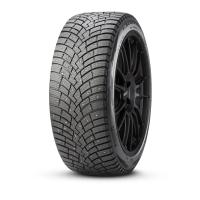
Scorpion in Pirelli language means SUV tyre. Like the usual IceZero 2, it performs very well in the dry. This is the winter tire whose driving experience is closest to that of a summer tyre. the speed rating is also the highest in the bunch (H, 210 km/h). Pirelli boasts a nimble and natural steering response, exquisite stability under pressure and short braking distances on both wet and dry asphalt. On ice and snow, Pirelli has a slightly lower level of grip than the very best, but even then it excels with high driving pleasure through nimble steering and is able to enter the curves with easy co-steering rear axle.
"IZ2" is for those who want the best driving characteristics possible and can imagine compromising on winter grip.
Aquaplaning, noise, easy to handle under pressure.
Ice grip, extended braking distances on all surfaces.
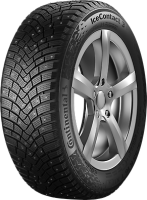
Continental has not quite got it right with "IC3". The general level of grip is a bit behind other premium brands in the price class on almost all surfaces. Above all, the IC3 lags behind in the corners, which is a big minus for a studded tire. However, the tire communicates well with the driver about where the grip limit is, which combined with a neutral balance makes the tire safe and predictable in the curves with a slightly understeer character. Highlights are the aquaplaning properties as well as good noise level for being a studded tire. The studs, which are vulcanized into the tire, show minimal movement throughout the test. Here, the studs are securely fastened! Often in the lower half of the semi-rounds gives a fifth place overall.
Good starting grip and short braking distance on ice.
Everything else – especially road noise.
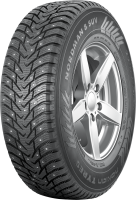
Nordman is Nokian's cheaper brand that sells two generations old Nokian under a new name. The Nordman 8 SUV is thus a reincarnation of the Hakkapeliitta 8 SUV. But it is a tyre with modification. Although the pattern is the same, Nordman has received a different, harder rubber compound. The level of grip is nowhere near the level that the Nokian tire had a few years ago, at least not in this SUV dimension. Nordman places himself in the bottom half of the results list in almost every round. The worst is the tire on dry roads, where the Nordman has a high noise level with troublesome resonances and nonlinear steering feel. The rolling resistance is also the highest in the test.
Short braking distances on asphalt, best in test in the wet.
Short braking distances on asphalt, best in test in the wet
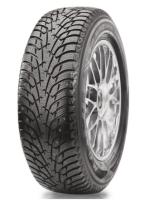
Taiwanese Maxxis has become a respected brand for summer tires. The Premitra Ice Nord 5 SUV studded tire shows that the brand still has a long way to go before it can challenge in the Nordic winter market. An unexpected amount of stud movement during the break-in period meant that the Maxxis had by far the highest stud protrusion when the test moments began. Despite this, the grip on ice was far behind the others. It also had surprisingly poor grip on snow. Instead, the Maxxis performed all the better on asphalt with short braking distances, good stability and was best against aquaplaning. The inability to balance the characteristics on bare ground with sensible winter grip results in a clear last place.
This year's stud news comes from the Japanese Falken with Winterpeak F-Ice 1. The rubber compound is unusually soft (Shore 52), which contributes to a calm character under pressure with a stable rear trailer on both snow and ice. Unfortunately, the actual level of grip on ice does not impress. Instead, the Falken thrives best on wet roads. It has really good aquaplaning resistance and the wet braking distance is the shortest of the test. Even in the dry, braking performance is good. However, it is spongy and somewhat difficult to place in the handling tests on wet and dry asphalt. However, the steering response during quieter driving is good. In terms of points, Falken reaches a fine fifth place, but we have never lost so many studs so quickly! This means that Falken is excluded from the final result.
It should be noted that the Falken tyre - according to Falken - had a manufacturing error. Here’s the statement from the manufacturer:
Our internal investigation identified that in a few cases during the manufacturing period DOT 4921 to 5021 in the above dimension the dubbing process has not been satisfactory. However, Falken can confirm that the other dimensions of the WINTERPEAK F-ICE 1 pattern produced and delivered are manufactured according to the latest specifications, including the 235/55R18 104T XL. Falken guarantees all customers that our WINTERPEAK F-ICE 1 studded tire is completely safe to use for periods other than the previously mentioned time span, and to top it all off, this tire is also covered by Falken's five-year consumer warranty.
As we want to ensure the highest possible customer satisfaction, we offer full exchange rights for Falken WINTERPEAK F-ICE 1 in size 235/55R18 104T XL for tires with manufacturing period DOT 4921 and 5021. For questions regarding the above, you can contact Falken's technical service department via the following e- mailing address: [email protected]. -- Published in the Swedish tyre magazine Däckavisen. https://www.dackavisen.se/falken-svarar-pa-diskning-i-vi-bilagares-dubbdackstest/




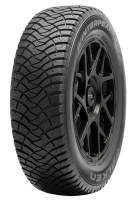
It should be noted that the Falken tyre - according to Falken - had a manufacturing error. Here’s the statement from the manufacturer:
Our internal investigation identified that in a few cases during the manufacturing period DOT 4921 to 5021 in the above dimension the dubbing process has not been satisfactory. However, Falken can confirm that the other dimensions of the WINTERPEAK F-ICE 1 pattern produced and delivered are manufactured according to the latest specifications, including the 235/55R18 104T XL. Falken guarantees all customers that our WINTERPEAK F-ICE 1 studded tire is completely safe to use for periods other than the previously mentioned time span, and to top it all off, this tire is also covered by Falken's five-year consumer warranty.
As we want to ensure the highest possible customer satisfaction, we offer full exchange rights for Falken WINTERPEAK F-ICE 1 in size 235/55R18 104T XL for tires with manufacturing period DOT 4921 and 5021. For questions regarding the above, you can contact Falken's technical service department via the following e- mailing address: [email protected].
--
Published in the Swedish tyre magazine Däckavisen. https://www.dackavisen.se/falken-svarar-pa-diskning-i-vi-bilagares-dubbdackstest/
Thanks for sharing, I'd not got around to updating the article. This is a great move by Falken and shows they care about customers!