

Every year there's a tyre test that makes me stop and wonder how they got to their conclusion, and this year that award goes to the UTAC / Aftonbladet summer tyre test.
As a bit of scene setting, Aftonbladet is a Scandinavian newspaper, so UTAC, who performed the testing, focused on the cold weather ability of the tyres, which is something I love. However, they did make some interesting statements, and ended up with some interesting findings. In total they tested 14 tyres, 10 summer and 4 European spec all season tyres, all in 225/45 R17.
Test setup & methodology
The test setting, the conditions recorded and how the results contribute to the score.
Recorded test conditions
Recorded test conditions
- Dry Braking
- 100 → 5 km/h
- Wet Braking
- 80 → 5 km/h
Firstly, the Goodyear Eagle F1 Asymmetric 6, a tyre that's never had a bad test, had a bad test. A really bad test. The testers found it to be fine at warmer temperatures, but not good when it got cooler. I'm pretty sure I've tested the Asym 6 at 7c, which was their wet handling temperatures and I don't remember it being terrible.
Secondly, at least if the translation is correct, they called the Goodyear Vector 4Season Gen-3 an 'American no-season tyre.' American all season tyres can certainly be called 'no season', but American all season tyres do not have 3PMSF marking and are bad in the winter. The Goodyear Vector 4Season Gen-3 is not sold in America, it is a a 3PMSF marked European all season tyre, a totally different category of tyre.

Thirdly, the inclusion of all season tyres at all is debatable as they're not really intended for the scandinavian market. Perhaps they were intending to position them as a summer tyre alternative, but they certainly shouldn't be viewed as a year round tyre in those regions. The writer seemed pretty angry they existed at all.
I commend the effort put in to test at multiple temperatures, it's a shame they didn't share more of the data. When they have tested at multiple temperatures, they have averaged the data and just provided the average. It would be super interesting to see the swing of tyre temperatures in wet braking, as we did in the same tunnel here.
The biggest question is of course, what happened to the Asymmetric 6. We'll do some more digging to find out.
Here's the data from the test.
Dry
Dry braking results aligned closely with handling assessments, with summer tyres stopping substantially shorter. The difference was particularly dramatic, the best summer tyres (Pirelli Cinturato P7 C2 and Continental PremiumContact 7) stopped from 100 km/h in just 34.2 meters compared to 40.8 meters for the worst-performing all-season tyre (Goodyear Vector 4Seasons Gen-3) - a substantial 6.6-meter or 16.2% difference that could be critical in emergency situations.
Dry Braking
Dry braking in meters (100 - 5 km/h)
Lower is better ↓| Position / Tyre | Result | Gap to best | Residual speed |
|---|---|---|---|
| 34.2 m | Best | 0 km/h | |
| 34.2 m | Best | 0 km/h | |
| 34.6 m | +0.40 m | 14 km/h | |
| 35.1 m | +0.90 m | 21 km/h | |
| 35.1 m | +0.90 m | 21 km/h | |
| 35.2 m | +1.00 m | 22 km/h | |
| 35.7 m | +1.50 m | 27 km/h | |
| 36 m | +1.80 m | 29 km/h | |
| 36.9 m | +2.70 m | 35 km/h | |
| 37.4 m | +3.20 m | 38 km/h | |
| 37.9 m | +3.70 m | 41 km/h | |
| 38 m | +3.80 m | 41 km/h | |
| 39.7 m | +5.50 m | 48 km/h | |
| 40.8 m | +6.60 m | 52 km/h |
The difference between best and worst was 19.3% (6.6 m ≈ 1.5 Car Lengths). From 130 km/h, the Goodyear Vector 4Seasons Gen 3 would still be travelling at 52 km/h when the Pirelli Cinturato P7 C2 had stopped.
Residual speed is calculated from the measured braking distances, assuming constant deceleration; it is not a separate measurement.
Dry handling evaluations were conducted across an even wider temperature range, with tests at the Pirelli track in Vizzola at a summer-like 20-30°C, contrasted with controlled indoor testing at much cooler temperatures.
The Continental PremiumContact 7 stood alone at the top of the subjective ratings with a perfect 10-point score, demonstrating exceptional precision and grip across all test temperatures. Most summer tyres clustered together with strong 9-point ratings, showing their design optimization for these conditions.
All-season tyres showed clear compromises in dry handling, with the Bridgestone Turanza All Season 6 and Goodyear Vector 4Seasons Gen-3 receiving the lowest scores of 7 points. Testers noted that all-season tyres felt noticeably softer with delayed steering responses and earlier onset of understeer compared to dedicated summer options. This performance deficit was consistent across temperatures but became even more apparent as ambient conditions warmed.
Subj. Dry Handling
Subjective Dry Handling Score
Higher is better ↑| Position / Tyre | Result | Gap to best |
|---|---|---|
| 10 Points | Best | |
| 9 Points | -1.00 Points | |
| 9 Points | -1.00 Points | |
| 9 Points | -1.00 Points | |
| 9 Points | -1.00 Points | |
| 9 Points | -1.00 Points | |
| 9 Points | -1.00 Points | |
| 9 Points | -1.00 Points | |
| 8 Points | -2.00 Points | |
| 8 Points | -2.00 Points | |
| 8 Points | -2.00 Points | |
| 8 Points | -2.00 Points | |
| 7 Points | -3.00 Points | |
| 7 Points | -3.00 Points |
The difference between best and worst was 30% (3 Points).
Wet
Rather than just testing tyres under a single set of conditions, the test examined performance across multiple temperature environments, providing insights into how these tyres perform in real-world variation.
Wet braking tests were conducted at +17°C on Pirelli's Italian test track, but also at +2°C, +7°C, and +12°C in Testworld's indoor facility in Finland. The results were averaged.
This approach revealed performance variations that wouldn't be apparent in conventional single-temperature testing. At +12°C, summer and all-season tyres demonstrated comparable braking performance. However, as temperatures increased to +17°C, summer tyres gained a significant advantage, stopping nearly three meters shorter on average.
The most surprising finding came at the lower end of the temperature spectrum. At just +2°C on wet roads, all-season tyres dramatically outperformed their summer counterparts, stopping almost 6.5 meters shorter from 80 km/h. This represents a critical safety advantage in cooler conditions that drivers in northern regions frequently encounter, even during nominal summer months.
When averaged out, the Michelin Primacy 5 delivered the best overall wet braking performance at 33.0 meters, closely followed by the Pirelli Cinturato P7 C2 at 33.1 meters and the Nokian Hakka Blue 3 at 33.2 meters. These premium summer tyres demonstrated their ability to maintain consistent performance across varying temperatures.
Among the all-season options, the Bridgestone Turanza All Season 6 performed ok at 33.5 meters, with the Pirelli Cinturato All Season SF3 following at 33.8 meters. The temperature-specific strengths of these tyres indicate why they earned their "autumn and spring" nickname from the test team.
At the other end of the spectrum, the Vredestein Ultrac struggled significantly with wet braking, requiring 36.5 meters to stop - a full 3.5 meters (or 9.6%) more distance than the class-leading Michelin. Such a difference could prove decisive in an emergency situation, highlighting the importance of tyre selection based on typical driving conditions.
Wet Braking
Wet braking in meters (80 - 5 km/h)
Lower is better ↓| Position / Tyre | Result | Gap to best | Residual speed |
|---|---|---|---|
| 33 m | Best | 0 km/h | |
| 33.1 m | +0.10 m | 7 km/h | |
| 33.2 m | +0.20 m | 10 km/h | |
| 33.4 m | +0.40 m | 14 km/h | |
| 33.5 m | +0.50 m | 16 km/h | |
| 33.8 m | +0.80 m | 20 km/h | |
| 33.9 m | +0.90 m | 21 km/h | |
| 34 m | +1.00 m | 22 km/h | |
| 34.2 m | +1.20 m | 24 km/h | |
| 35.2 m | +2.20 m | 33 km/h | |
| 35.3 m | +2.30 m | 33 km/h | |
| 35.4 m | +2.40 m | 34 km/h | |
| 36.3 m | +3.30 m | 39 km/h | |
| 36.5 m | +3.50 m | 40 km/h |
The difference between best and worst was 10.6% (3.5 m ≈ 0.8 Car Lengths). From 130 km/h, the Vredestein Ultrac would still be travelling at 40 km/h when the Michelin Primacy 5 had stopped.
Residual speed is calculated from the measured braking distances, assuming constant deceleration; it is not a separate measurement.
The wet handling tests provided some of the most revealing insights into the performance differences between dedicated summer tyres and all-season alternatives across varying temperature conditions.
The temperature on the wet track ranged from +7°C to +14°C, which the testers noted are "unfortunately quite normal summer temperatures" for Scandinavian regions.
Summer tyres generally demonstrated better handling characteristics on wet surfaces at moderate to warm temperatures, with the Pirelli Cinturato P7 C2 and Continental PremiumContact 7 achieving the fastest lap times at 75.5 seconds. The Nokian Hakka Blue 3 followed closely at 76.5 seconds. These summer tyres offered precise steering feedback and predictable behavior at the limit.
In contrast, all-season tyres struggled significantly with wet handling, clustering near the bottom of the rankings. The Continental AllSeasonContact 2 recorded the slowest time at 79.0 seconds, 3.5 seconds (or 4.4%) behind the class leaders. This performance gap widens further as temperatures increase, though the all-season options showed improved competitiveness when temperatures dropped closer to freezing.
Wet Handling
Wet handling time in seconds
Lower is better ↓| Position / Tyre | Result | Gap to best |
|---|---|---|
| 75.5 s | Best | |
| 75.5 s | Best | |
| 76.5 s | +1.00 s | |
| 77.4 s | +1.90 s | |
| 77.4 s | +1.90 s | |
| 77.4 s | +1.90 s | |
| 77.8 s | +2.30 s | |
| 77.9 s | +2.40 s | |
| 78 s | +2.50 s | |
| 78.3 s | +2.80 s | |
| 78.3 s | +2.80 s | |
| 78.4 s | +2.90 s | |
| 78.9 s | +3.40 s | |
| 79 s | +3.50 s |
The difference between best and worst was 4.6% (3.5 s).
The subjective assessments reflected these timing differences, with testers noting that summer tyres maintained better steering precision and lateral grip through corners, while all-season alternatives felt softer with more progressive breakaway characteristics but ultimately less capability. The Continental PremiumContact 7 and Michelin Primacy 5 earned perfect 10-point ratings for their exceptional balance of performance and predictability in wet conditions.
Subj. Wet Handling
Subjective Wet Handling Score
Higher is better ↑| Position / Tyre | Result | Gap to best |
|---|---|---|
| 10 Points | Best | |
| 10 Points | Best | |
| 9 Points | -1.00 Points | |
| 9 Points | -1.00 Points | |
| 9 Points | -1.00 Points | |
| 9 Points | -1.00 Points | |
| 8 Points | -2.00 Points | |
| 8 Points | -2.00 Points | |
| 8 Points | -2.00 Points | |
| 8 Points | -2.00 Points | |
| 8 Points | -2.00 Points | |
| 8 Points | -2.00 Points | |
| 7 Points | -3.00 Points | |
| 7 Points | -3.00 Points |
The difference between best and worst was 30% (3 Points).
Unlike some performance metrics where the differences between tyres might be subtle, aquaplaning resistance showed dramatic variations between the best and worst performers. The Michelin Primacy 5 demonstrated exceptional water evacuation capabilities, maintaining contact with the road surface up to 79.4 km/h. The Vredestein Ultrac followed at a respectable 78.6 km/h, with Continental's PremiumContact 7 and Goodyear's Eagle F1 Asymmetric 6 both achieving 78.0 km/h.
All-season tyres as a category showed concerning weakness in aquaplaning resistance, with three of the four options occupying positions at the bottom of the rankings. The Goodyear Vector 4Seasons Gen-3 lost grip at just 73.2 km/h - a full 6.2 km/h (or 8.5%) lower than the class-leading Michelin. The Continental AllSeasonContact 2 performed only marginally better at 73.4 km/h.
Straight Aqua
Float Speed in Km/H
Higher is better ↑| Position / Tyre | Result | Gap to best |
|---|---|---|
| 79.4 km/h | Best | |
| 78.6 km/h | -0.80 km/h | |
| 78 km/h | -1.40 km/h | |
| 78 km/h | -1.40 km/h | |
| 77.7 km/h | -1.70 km/h | |
| 77.4 km/h | -2.00 km/h | |
| 77.4 km/h | -2.00 km/h | |
| 77.3 km/h | -2.10 km/h | |
| 77.1 km/h | -2.30 km/h | |
| 77.1 km/h | -2.30 km/h | |
| 76.3 km/h | -3.10 km/h | |
| 75.3 km/h | -4.10 km/h | |
| 73.4 km/h | -6.00 km/h | |
| 73.2 km/h | -6.20 km/h |
The difference between best and worst was 7.8% (6.2 Km/H).

Comfort
Tyre noise evaluations were conducted using a qualitative approach that mirrors how consumers experience cabin noise. Rather than relying solely on technical measurements, two evaluators - one driving and one in the rear seat - assessed both the volume and tonal quality of tyre noise across various road surfaces.
The testers noted that while instrumented measurements can quantify overall decibel levels, the human ear remains "an unrivalled measuring tool" for determining how intrusive or pleasant different tyre noise signatures feel to occupants. This approach acknowledges that two tyres with identical decibel readings can produce very different subjective experiences due to frequency patterns and sound quality.
The Bridgestone Turanza 6, Michelin Primacy 5, and Falken ZIEX ZE320 all achieved perfect 10-point scores for their quiet and refined operation. The Continental AllSeasonContact 2 also earned top marks, demonstrating that all-season design can offer advantages in comfort metrics even when sacrificing performance in other areas.
Most tyres clustered around the 8-9 point range, suggesting that modern tyre design has generally achieved good noise control across market segments. The test found minimal correlation between noise levels and other performance attributes, indicating manufacturers can optimize for quietness without necessarily compromising grip or handling.
Subj. Noise
Subjective in car noise levels
Higher is better ↑| Position / Tyre | Result | Gap to best |
|---|---|---|
| 10 Points | Best | |
| 10 Points | Best | |
| 10 Points | Best | |
| 10 Points | Best | |
| 9 Points | -1.00 Points | |
| 9 Points | -1.00 Points | |
| 9 Points | -1.00 Points | |
| 8 Points | -2.00 Points | |
| 8 Points | -2.00 Points | |
| 8 Points | -2.00 Points | |
| 8 Points | -2.00 Points | |
| 8 Points | -2.00 Points | |
| 8 Points | -2.00 Points | |
| 8 Points | -2.00 Points |
The difference between best and worst was 20% (2 Points).
Value
Please note, the magazine published the Bridgestone summer as best (0), and then percentage increases in consumption for the rest of the tyres. The calculation or data behind this was not provided, so we have simply taken the rolling resistance value of the Bridgestone in this size from another test and calculated the other values, which might lead to inaccuracies.
Rolling Resistance
Rolling resistance in kg t
Lower is better ↓| Position / Tyre | Result | Gap to best | Extra fuel / year |
|---|---|---|---|
| 7.6 kg/t | Best | £0 | |
| 7.74 kg/t | +0.14 kg/t | £8 | |
| 7.85 kg/t | +0.25 kg/t | £15 | |
| 7.87 kg/t | +0.27 kg/t | £16 | |
| 7.89 kg/t | +0.29 kg/t | £17 | |
| 7.9 kg/t | +0.30 kg/t | £17 | |
| 7.9 kg/t | +0.30 kg/t | £17 | |
| 7.9 kg/t | +0.30 kg/t | £17 | |
| 7.95 kg/t | +0.35 kg/t | £20 | |
| 7.99 kg/t | +0.39 kg/t | £23 | |
| 7.99 kg/t | +0.39 kg/t | £23 | |
| 8.03 kg/t | +0.43 kg/t | £25 | |
| 8.04 kg/t | +0.44 kg/t | £26 | |
| 8.04 kg/t | +0.44 kg/t | £26 |
The difference between best and worst was 5.8% (0.44 kg / t). Over 19,000 km a year at £1.45/L, the Goodyear Eagle F1 Asymmetric 6 uses about 18 L (£26) more fuel than the Bridgestone Turanza 6.
Adjust the assumptions
Calculated estimates, not additional measurements. Use the controls to explore the assumptions.
Results
Michelin Primacy 5
225/45 R17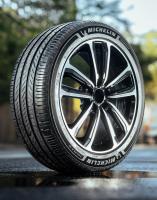
Category scores (% of best)
All discipline results (8)
Discipline positions compare the ranked tyres in this test, not the whole market. These are individual measurements, not weighted overall scores.
| Test | Position in discipline | Result | Gap to best |
|---|---|---|---|
| Dry BrakingLower is better | 8th / 14 | 36 m | +1.80 m |
| Subj. Dry HandlingHigher is better | 2nd / 14 | 9 Points | -1.00 Points |
| Wet BrakingLower is better | 1st / 14 | 33 m | Best in this discipline |
| Wet HandlingLower is better | 4th / 14 | 77.4 s | +1.90 s |
| Subj. Wet HandlingHigher is better | 1st / 14 | 10 Points | Best in this discipline |
| Straight AquaHigher is better | 1st / 14 | 79.4 km/h | Best in this discipline |
| Subj. NoiseHigher is better | 1st / 14 | 10 Points | Best in this discipline |
| Rolling ResistanceLower is better | 2nd / 14 | 7.74 kg/t | +0.14 kg/t |
- Price
- 1456.00
Continental PremiumContact 7
225/45 R17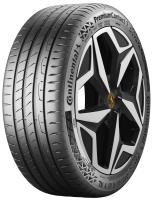
Category scores (% of best)
All discipline results (8)
Discipline positions compare the ranked tyres in this test, not the whole market. These are individual measurements, not weighted overall scores.
| Test | Position in discipline | Result | Gap to best |
|---|---|---|---|
| Dry BrakingLower is better | 1st / 14 | 34.2 m | Best in this discipline |
| Subj. Dry HandlingHigher is better | 1st / 14 | 10 Points | Best in this discipline |
| Wet BrakingLower is better | 4th / 14 | 33.4 m | +0.40 m |
| Wet HandlingLower is better | 1st / 14 | 75.5 s | Best in this discipline |
| Subj. Wet HandlingHigher is better | 1st / 14 | 10 Points | Best in this discipline |
| Straight AquaHigher is better | 3rd / 14 | 78 km/h | -1.40 km/h |
| Subj. NoiseHigher is better | 8th / 14 | 8 Points | -2.00 Points |
| Rolling ResistanceLower is better | 13th / 14 | 8.04 kg/t | +0.44 kg/t |
- Price
- 1230.00
Pirelli Cinturato P7 C2
225/45 R17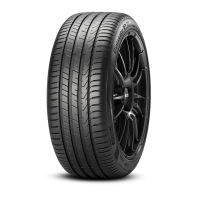
Category scores (% of best)
All discipline results (8)
Discipline positions compare the ranked tyres in this test, not the whole market. These are individual measurements, not weighted overall scores.
| Test | Position in discipline | Result | Gap to best |
|---|---|---|---|
| Dry BrakingLower is better | 1st / 14 | 34.2 m | Best in this discipline |
| Subj. Dry HandlingHigher is better | 2nd / 14 | 9 Points | -1.00 Points |
| Wet BrakingLower is better | 2nd / 14 | 33.1 m | +0.10 m |
| Wet HandlingLower is better | 1st / 14 | 75.5 s | Best in this discipline |
| Subj. Wet HandlingHigher is better | 3rd / 14 | 9 Points | -1.00 Points |
| Straight AquaHigher is better | 6th / 14 | 77.4 km/h | -2.00 km/h |
| Subj. NoiseHigher is better | 5th / 14 | 9 Points | -1.00 Points |
| Rolling ResistanceLower is better | 6th / 14 | 7.9 kg/t | +0.30 kg/t |
- Price
- 1344.00
Bridgestone Turanza 6
225/45 R17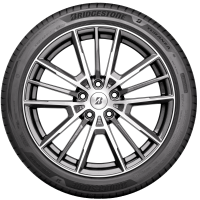
Category scores (% of best)
All discipline results (8)
Discipline positions compare the ranked tyres in this test, not the whole market. These are individual measurements, not weighted overall scores.
| Test | Position in discipline | Result | Gap to best |
|---|---|---|---|
| Dry BrakingLower is better | 7th / 14 | 35.7 m | +1.50 m |
| Subj. Dry HandlingHigher is better | 2nd / 14 | 9 Points | -1.00 Points |
| Wet BrakingLower is better | 7th / 14 | 33.9 m | +0.90 m |
| Wet HandlingLower is better | 7th / 14 | 77.8 s | +2.30 s |
| Subj. Wet HandlingHigher is better | 3rd / 14 | 9 Points | -1.00 Points |
| Straight AquaHigher is better | 12th / 14 | 75.3 km/h | -4.10 km/h |
| Subj. NoiseHigher is better | 1st / 14 | 10 Points | Best in this discipline |
| Rolling ResistanceLower is better | 1st / 14 | 7.6 kg/t | Best in this discipline |
- Price
- 1018.00
Nokian Hakka Blue 3
225/45 R17 94Y XL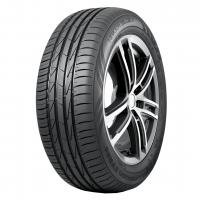
Category scores (% of best)
All discipline results (8)
Discipline positions compare the ranked tyres in this test, not the whole market. These are individual measurements, not weighted overall scores.
| Test | Position in discipline | Result | Gap to best |
|---|---|---|---|
| Dry BrakingLower is better | 3rd / 14 | 34.6 m | +0.40 m |
| Subj. Dry HandlingHigher is better | 2nd / 14 | 9 Points | -1.00 Points |
| Wet BrakingLower is better | 3rd / 14 | 33.2 m | +0.20 m |
| Wet HandlingLower is better | 3rd / 14 | 76.5 s | +1.00 s |
| Subj. Wet HandlingHigher is better | 3rd / 14 | 9 Points | -1.00 Points |
| Straight AquaHigher is better | 9th / 14 | 77.1 km/h | -2.30 km/h |
| Subj. NoiseHigher is better | 8th / 14 | 8 Points | -2.00 Points |
| Rolling ResistanceLower is better | 9th / 14 | 7.95 kg/t | +0.35 kg/t |
- Price
- 1562.00
Hankook Ventus Prime 4
225/45 R17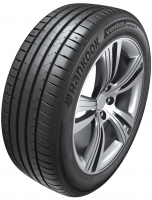
Category scores (% of best)
All discipline results (8)
Discipline positions compare the ranked tyres in this test, not the whole market. These are individual measurements, not weighted overall scores.
| Test | Position in discipline | Result | Gap to best |
|---|---|---|---|
| Dry BrakingLower is better | 4th / 14 | 35.1 m | +0.90 m |
| Subj. Dry HandlingHigher is better | 2nd / 14 | 9 Points | -1.00 Points |
| Wet BrakingLower is better | 8th / 14 | 34 m | +1.00 m |
| Wet HandlingLower is better | 4th / 14 | 77.4 s | +1.90 s |
| Subj. Wet HandlingHigher is better | 3rd / 14 | 9 Points | -1.00 Points |
| Straight AquaHigher is better | 5th / 14 | 77.7 km/h | -1.70 km/h |
| Subj. NoiseHigher is better | 8th / 14 | 8 Points | -2.00 Points |
| Rolling ResistanceLower is better | 10th / 14 | 7.99 kg/t | +0.39 kg/t |
- Price
- 1018.00
Bridgestone Turanza All Season 6
225/45 R17 94W XL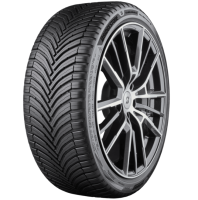
Category scores (% of best)
All discipline results (8)
Discipline positions compare the ranked tyres in this test, not the whole market. These are individual measurements, not weighted overall scores.
| Test | Position in discipline | Result | Gap to best |
|---|---|---|---|
| Dry BrakingLower is better | 12th / 14 | 38 m | +3.80 m |
| Subj. Dry HandlingHigher is better | 13th / 14 | 7 Points | -3.00 Points |
| Wet BrakingLower is better | 5th / 14 | 33.5 m | +0.50 m |
| Wet HandlingLower is better | 9th / 14 | 78 s | +2.50 s |
| Subj. Wet HandlingHigher is better | 7th / 14 | 8 Points | -2.00 Points |
| Straight AquaHigher is better | 11th / 14 | 76.3 km/h | -3.10 km/h |
| Subj. NoiseHigher is better | 5th / 14 | 9 Points | -1.00 Points |
| Rolling ResistanceLower is better | 3rd / 14 | 7.85 kg/t | +0.25 kg/t |
- 3PMSF
- Yes
- Price
- 1195.00
Pirelli Cinturato All Season SF3
225/45 R17 94W XL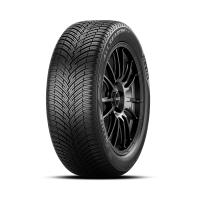
Category scores (% of best)
All discipline results (8)
Discipline positions compare the ranked tyres in this test, not the whole market. These are individual measurements, not weighted overall scores.
| Test | Position in discipline | Result | Gap to best |
|---|---|---|---|
| Dry BrakingLower is better | 11th / 14 | 37.9 m | +3.70 m |
| Subj. Dry HandlingHigher is better | 9th / 14 | 8 Points | -2.00 Points |
| Wet BrakingLower is better | 6th / 14 | 33.8 m | +0.80 m |
| Wet HandlingLower is better | 12th / 14 | 78.4 s | +2.90 s |
| Subj. Wet HandlingHigher is better | 7th / 14 | 8 Points | -2.00 Points |
| Straight AquaHigher is better | 6th / 14 | 77.4 km/h | -2.00 km/h |
| Subj. NoiseHigher is better | 8th / 14 | 8 Points | -2.00 Points |
| Rolling ResistanceLower is better | 6th / 14 | 7.9 kg/t | +0.30 kg/t |
- 3PMSF
- Yes
- Price
- 1312.00
Vredestein Ultrac
225/45 R17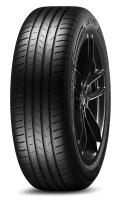
Category scores (% of best)
All discipline results (8)
Discipline positions compare the ranked tyres in this test, not the whole market. These are individual measurements, not weighted overall scores.
| Test | Position in discipline | Result | Gap to best |
|---|---|---|---|
| Dry BrakingLower is better | 9th / 14 | 36.9 m | +2.70 m |
| Subj. Dry HandlingHigher is better | 9th / 14 | 8 Points | -2.00 Points |
| Wet BrakingLower is better | 14th / 14 | 36.5 m | +3.50 m |
| Wet HandlingLower is better | 4th / 14 | 77.4 s | +1.90 s |
| Subj. Wet HandlingHigher is better | 7th / 14 | 8 Points | -2.00 Points |
| Straight AquaHigher is better | 2nd / 14 | 78.6 km/h | -0.80 km/h |
| Subj. NoiseHigher is better | 8th / 14 | 8 Points | -2.00 Points |
| Rolling ResistanceLower is better | 4th / 14 | 7.87 kg/t | +0.27 kg/t |
- Price
- 1280.00
Continental AllSeasonContact 2
225/45 R17 94V XL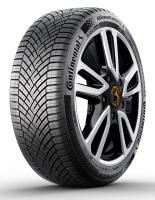
Category scores (% of best)
All discipline results (8)
Discipline positions compare the ranked tyres in this test, not the whole market. These are individual measurements, not weighted overall scores.
| Test | Position in discipline | Result | Gap to best |
|---|---|---|---|
| Dry BrakingLower is better | 13th / 14 | 39.7 m | +5.50 m |
| Subj. Dry HandlingHigher is better | 9th / 14 | 8 Points | -2.00 Points |
| Wet BrakingLower is better | 9th / 14 | 34.2 m | +1.20 m |
| Wet HandlingLower is better | 14th / 14 | 79 s | +3.50 s |
| Subj. Wet HandlingHigher is better | 7th / 14 | 8 Points | -2.00 Points |
| Straight AquaHigher is better | 13th / 14 | 73.4 km/h | -6.00 km/h |
| Subj. NoiseHigher is better | 1st / 14 | 10 Points | Best in this discipline |
| Rolling ResistanceLower is better | 5th / 14 | 7.89 kg/t | +0.29 kg/t |
- 3PMSF
- Yes
- Price
- 1346.00
Goodyear Eagle F1 Asymmetric 6
225/45 R17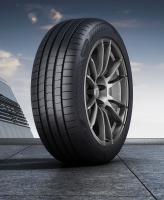
Category scores (% of best)
All discipline results (8)
Discipline positions compare the ranked tyres in this test, not the whole market. These are individual measurements, not weighted overall scores.
| Test | Position in discipline | Result | Gap to best |
|---|---|---|---|
| Dry BrakingLower is better | 4th / 14 | 35.1 m | +0.90 m |
| Subj. Dry HandlingHigher is better | 2nd / 14 | 9 Points | -1.00 Points |
| Wet BrakingLower is better | 10th / 14 | 35.2 m | +2.20 m |
| Wet HandlingLower is better | 10th / 14 | 78.3 s | +2.80 s |
| Subj. Wet HandlingHigher is better | 13th / 14 | 7 Points | -3.00 Points |
| Straight AquaHigher is better | 3rd / 14 | 78 km/h | -1.40 km/h |
| Subj. NoiseHigher is better | 8th / 14 | 8 Points | -2.00 Points |
| Rolling ResistanceLower is better | 13th / 14 | 8.04 kg/t | +0.44 kg/t |
- Price
- 1402.00
Nordman South
225/45 R17 94W XL
Category scores (% of best)
All discipline results (8)
Discipline positions compare the ranked tyres in this test, not the whole market. These are individual measurements, not weighted overall scores.
| Test | Position in discipline | Result | Gap to best |
|---|---|---|---|
| Dry BrakingLower is better | 10th / 14 | 37.4 m | +3.20 m |
| Subj. Dry HandlingHigher is better | 9th / 14 | 8 Points | -2.00 Points |
| Wet BrakingLower is better | 11th / 14 | 35.3 m | +2.30 m |
| Wet HandlingLower is better | 8th / 14 | 77.9 s | +2.40 s |
| Subj. Wet HandlingHigher is better | 7th / 14 | 8 Points | -2.00 Points |
| Straight AquaHigher is better | 8th / 14 | 77.3 km/h | -2.10 km/h |
| Subj. NoiseHigher is better | 5th / 14 | 9 Points | -1.00 Points |
| Rolling ResistanceLower is better | 12th / 14 | 8.03 kg/t | +0.43 kg/t |
- Price
- 1259.00
Falken ZIEX ZE320
225/45 R17 94W XL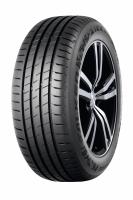
Category scores (% of best)
All discipline results (8)
Discipline positions compare the ranked tyres in this test, not the whole market. These are individual measurements, not weighted overall scores.
| Test | Position in discipline | Result | Gap to best |
|---|---|---|---|
| Dry BrakingLower is better | 6th / 14 | 35.2 m | +1.00 m |
| Subj. Dry HandlingHigher is better | 2nd / 14 | 9 Points | -1.00 Points |
| Wet BrakingLower is better | 13th / 14 | 36.3 m | +3.30 m |
| Wet HandlingLower is better | 13th / 14 | 78.9 s | +3.40 s |
| Subj. Wet HandlingHigher is better | 13th / 14 | 7 Points | -3.00 Points |
| Straight AquaHigher is better | 9th / 14 | 77.1 km/h | -2.30 km/h |
| Subj. NoiseHigher is better | 1st / 14 | 10 Points | Best in this discipline |
| Rolling ResistanceLower is better | 10th / 14 | 7.99 kg/t | +0.39 kg/t |
- Price
- 1162.00
Goodyear Vector 4Seasons Gen 3
225/45 R17 94W XL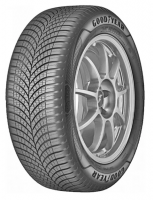
Category scores (% of best)
All discipline results (8)
Discipline positions compare the ranked tyres in this test, not the whole market. These are individual measurements, not weighted overall scores.
| Test | Position in discipline | Result | Gap to best |
|---|---|---|---|
| Dry BrakingLower is better | 14th / 14 | 40.8 m | +6.60 m |
| Subj. Dry HandlingHigher is better | 13th / 14 | 7 Points | -3.00 Points |
| Wet BrakingLower is better | 12th / 14 | 35.4 m | +2.40 m |
| Wet HandlingLower is better | 10th / 14 | 78.3 s | +2.80 s |
| Subj. Wet HandlingHigher is better | 7th / 14 | 8 Points | -2.00 Points |
| Straight AquaHigher is better | 14th / 14 | 73.2 km/h | -6.20 km/h |
| Subj. NoiseHigher is better | 8th / 14 | 8 Points | -2.00 Points |
| Rolling ResistanceLower is better | 6th / 14 | 7.9 kg/t | +0.30 kg/t |
- 3PMSF
- Yes
- Price
- 1163.00
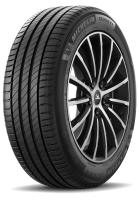
Seems that P7 C2 is still a good tyre worth buying maybe (cheaper then C3 and nonXL version). I am surprised by Falken, ZE320 is pretty good in wet in other tests.
Hi, why, at least, all season contact 2 marked as 3pmsf - no? As I see on other sites and tyres photo it has 3pmfs figure...
Sorry, that should be fixed now
Great test results! It's always helpful to see how different tires perform in various conditions. You might also want to check out Dunlop Tyres -they offer a great balance of performance and durability. Thanks for sharing this detailed review!
Jon, could this actually be an interesting test?
You did the 0-15C temperature one several years ago but this could be the first test with both multiple all season and summer tyres at different temperatures.
It seems to show that some premium summer tyres work well in the dry and wet in low temperature too (snow notwithstanding) and that even the premium all season tyres struggle in the warmer summer temperatures.
I live in the north of England and run all seasons all year round, perhaps I should pick a premium summer tyre and just keep some snow socks in the back instead...?
Any thoughts?
All tests are interesting tests! You're right, this would be super interesting if they had released the breaking data from all the temperatures instead of averaging them. I'd like to see where the Goodyear in particular failed because I have tested it at 7° and it was in no way worse than something like the premium contact 7 which did much better in the test
I have had Goodyear Eagle Asymmetric 6 on my car and at temperature somewhere between 2°C to 4°C you could hear that the tyres changed how they sound when rolling slowly. Normally they did not produce almost any sound at such low speed (<15 km/h). At such cold temperature you suddenly could hear them rolling - to me it was indication that the tyre compound is not happy at all.
I believe the tyre compound got beyond its glass point and at that moment the cold performance took a big hit. I did not observe this "change of sound" with any other summer tyre I had before.
I remember having the same excat experince with Conti Premium Contact 5’s. They were great on warm summer day but when it was raining and the temperature dropped below +10°C they became very noisy and slippy on rough finnish roads.
They did similar test 4 years ago and did a number of stars at all three testing degrees, but also numbers at the end of an article. The exact numbers would be much better but still, that is better then do some averaging.. Goodyear's Efficient Grip Performance 2 ended good at all temperatures.
https://www.aftonbladet.se/bil/a/gWpAp5/samsta-sommardacken-nar-temperaturen-sjunker
I'm not a member so i can't read it, but I did something similar and the summer fell off too.
Would be happy to share the article but not sure if I can (allowed to), took me some time to register with online translator :D, translating the test was easy then. I have of course seen your test! They used the same test center as you. Pity they did not share now the same amount of data as you or as they did in 2021.
You can always email me at [email protected]