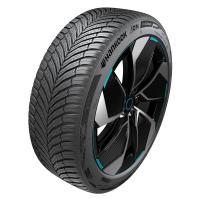
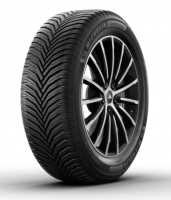
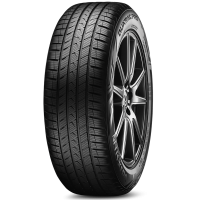
Auto Bild have conducted mini three set all-season tyre test specifically designed for electric vehicles, testing them in the 245/45 R19 size using a Hyundai Ionic 6S. The German publication put the Hankook iON FlexClimate, Michelin CrossClimate 2, and Vredestein Quatrac Pro EV through the usual testing across multiple climate zones to assess their performance in all weather conditions.
While this test was an Auto Bild 'special test' with reduced numbers, it's still an interesting datapoint, especially for the new Hankook and Vredestein EV specific tyres against the well established Michelin CrossClimate 2.
Dry
The Hankook stopped shortest at 39.0 meters, with the Michelin close behind at 40.3 meters. The Vredestein needed an extra 3.3 meters to stop - a meaningful difference in emergency braking situations.
Dry Braking
Spread: 3.30 M (8.5%)|Avg: 40.53 M
Dry braking in meters (100 - 0 km/h) (Lower is better)
Hankook iON FlexClimate
39.00 M
Michelin CrossClimate 2
40.30 M
Vredestein Quatrac Pro EV
42.30 M
The Hankook led with the highest average speed of 110.1 km/h through the handling course. The Vredestein and Michelin were closely matched, showing all three tyres handle well in dry conditions.
Dry Handling
Spread: 3.10 Km/H (2.8%)|Avg: 108.20 Km/H
Dry Handling Average Speed (Higher is better)
Hankook iON FlexClimate
110.10 Km/H
Vredestein Quatrac Pro EV
107.50 Km/H
Michelin CrossClimate 2
107.00 Km/H
Wet
Similar to dry braking, the Hankook achieved the shortest wet stopping distance at 39.1 meters. The 3.2-meter gap between best and worst shows important safety differences in wet conditions.
Wet Braking
Spread: 3.20 M (8.2%)|Avg: 40.57 M
Wet braking in meters (100 - 0 km/h) (Lower is better)
Hankook iON FlexClimate
39.10 M
Michelin CrossClimate 2
40.30 M
Vredestein Quatrac Pro EV
42.30 M
The Hankook maintained its advantage in wet handling with 74.6 km/h average speed. Its 3.5 km/h lead over the Michelin demonstrates better wet grip and control.
Wet Handling
Spread: 3.50 Km/H (4.7%)|Avg: 72.37 Km/H
Wet Handling Average Speed (Higher is better)
Hankook iON FlexClimate
74.60 Km/H
Vredestein Quatrac Pro EV
71.40 Km/H
Michelin CrossClimate 2
71.10 Km/H
The Hankook resisted aquaplaning until 86.0 km/h, giving the best safety margin on standing water. This 7.1 km/h advantage over the worst performer is significant for heavy rain driving.
Straight Aqua
Spread: 7.10 Km/H (8.3%)|Avg: 81.93 Km/H
Float Speed in Km/H (Higher is better)
Hankook iON FlexClimate
86.00 Km/H
Michelin CrossClimate 2
80.90 Km/H
Vredestein Quatrac Pro EV
78.90 Km/H
Curved Aquaplaning
Spread: 0.40 m/sec2 (13.2%)|Avg: 2.81 m/sec2
Remaining lateral acceleration (Higher is better)
Hankook iON FlexClimate
3.04 m/sec2
Michelin CrossClimate 2
2.76 m/sec2
Vredestein Quatrac Pro EV
2.64 m/sec2
Snow
The Michelin excelled in winter conditions, stopping from 50 km/h in just 32.0 meters. Its 3.3-meter advantage shows superior snow grip compared to the other tyres.
Snow Braking
Spread: 3.30 M (10.3%)|Avg: 33.47 M
Snow braking in meters (50 - 0 km/h) (Lower is better)
Michelin CrossClimate 2
32.00 M
Hankook iON FlexClimate
33.10 M
Vredestein Quatrac Pro EV
35.30 M
The Michelin accelerated fastest on snow, taking only 6.2 seconds to reach 40 km/h. This makes it the best choice for drivers facing regular winter conditions.
Snow Traction
Spread: 0.70 s (11.3%)|Avg: 6.53 s
Snow acceleration time (Lower is better)
Michelin CrossClimate 2
6.20 s
Hankook iON FlexClimate
6.50 s
Vredestein Quatrac Pro EV
6.90 s
The Michelin completed its winter dominance with 54.5 km/h average speed through the snow course, confirming its strong winter performance.
Snow Handling
Spread: 2.20 Km/H (4%)|Avg: 53.53 Km/H
Snow handling average speed (Higher is better)
Michelin CrossClimate 2
54.50 Km/H
Hankook iON FlexClimate
53.80 Km/H
Vredestein Quatrac Pro EV
52.30 Km/H
Value
Lower rolling resistance means better EV range. The Michelin achieved the best result at 7.03 kg/t, with the Hankook very close at 7.10 kg/t. The Vredestein's higher resistance would reduce driving range, but not by a significant amount.
Rolling Resistance
Spread: 0.42 kg / t (6%)|Avg: 7.19 kg / t
Rolling resistance in kg t (Lower is better)
Michelin CrossClimate 2
7.03 kg / t
Hankook iON FlexClimate
7.10 kg / t
Vredestein Quatrac Pro EV
7.45 kg / t
19,000 km
£1.45/L
8.0 L/100km
--
Annual Difference
--
Lifetime Savings
--
Extra Fuel/Energy
--
Extra CO2
Estimates based on typical driving conditions. Rolling resistance accounts for approximately 20% of IC vehicle fuel consumption and 25% of EV energy consumption. Actual savings vary based on driving style, vehicle weight, road conditions, and tyre age. For comparative purposes only. Lifetime savings based on a 40,000km / 25,000 mile tread life.
The Hankook iON FlexClimate emerges as the overall winner, earning first place with an overall grade of 1.4 ("very good"). This specialized EV tyre demonstrates exceptional all-around performance, particularly excelling in wet conditions where it significantly outperforms its competitors. The tyre provides outstanding safety reserves in aquaplaning situations and delivers impressive handling characteristics with direct steering response and good balance on dry surfaces. While it performs reliably on snow and ice, it doesn't quite match the winter performance of the Michelin. However, its strength lies in its balanced approach across all weather conditions, offering excellent driving dynamics that don't compromise on driving enjoyment. The tyre successfully combines low rolling resistance for extended EV range with strong wet weather performance, proving that energy efficiency doesn't require sacrificing safety or handling quality.
The Michelin CrossClimate 2 secures second place with an overall grade of 1.9 ("good"), establishing itself as a well-rounded performer with exceptional winter capabilities. This tyre truly shines on snow and ice, delivering performance that rivals dedicated winter tyres and setting the benchmark in these conditions. It offers reliable handling characteristics with short braking distances on both dry and wet surfaces, making it a dependable choice for safety-conscious drivers. The tyre also benefits from low rolling resistance, contributing to energy efficiency. While it performs competently across all weather conditions, its standout feature is its unbeatable snow performance, making it an excellent choice for drivers who frequently encounter winter conditions. The CrossClimate 2 represents proven all-season technology that prioritizes winter safety while maintaining good performance in other conditions.
The Vredestein Quatrac Pro EV finishes third with an overall grade of 2.8 ("satisfactory"), positioning itself as a comfort-oriented option with some notable limitations. This tyre delivers good and safe driving characteristics on both dry and wet surfaces, providing reliable performance in fair weather conditions. It excels in comfort aspects, offering excellent ride quality and operating quietly, which enhances the driving experience. The tyre also features low rolling resistance, contributing to energy efficiency for electric vehicles. However, its significant weakness lies in snow and ice performance, where it falls considerably short of the competition. This makes it less suitable for drivers who regularly encounter winter conditions. The Quatrac Pro EV is best suited for drivers in milder climates who prioritize comfort and quiet operation over winter performance, representing a viable option for those who rarely face snowy conditions.
The dominance of the Hankook is impressive. It don't think that even the new CC3 could compete in wet and dry because of the low difference to CC2. Why don't they replace the old K4S2 completely?
I'm sure there's an update coming. Worth keeping in mind this was tested at Hankooks proving ground, other tests might not have the iON quite as far ahead but there's no doubt it's an impressive tyre.



The dominance of the Hankook is impressive. It don't think that even the new CC3 could compete in wet and dry because of the low difference to CC2. Why don't they replace the old K4S2 completely?
I'm sure there's an update coming. Worth keeping in mind this was tested at Hankooks proving ground, other tests might not have the iON quite as far ahead but there's no doubt it's an impressive tyre.
Based in the current data, can we assume that this tire is better than continental all saison contact 2 & pirelli cinturato all season sf3?
It depends on your priority but I would not go so far as to state that.