The extreme winter specialists at Vi Bilagare are back at it testing the latest and greatest studless friction winter tyres. This year they not only tested seven of the most popular studless friction nordic compounds in the popular 225/45 R17 tyre size, they also included an older tyre to see the effects of aging. The older tyre is an 8 year old, lightly used (6mm remaining) Nokian Hakkapeliitta R2, which has its work cut out as its "two-generation-newer" brother, the Hakkapeliitta R5 is also included in this test!
Due to time constraints we will just present the data, heavy over to the Vi Vilagare website to check out the full article.
Ice braking in meters (25 - 5 km/h) (Lower is better)
Ice Braking: Safety Impact: Best vs Worst Tyre
Ice Traction
Ice Traction
Spread: 3.38 s (46.2%)|Avg: 8.50 s
Ice acceleration time (5 - 25 km/h) (Lower is better)
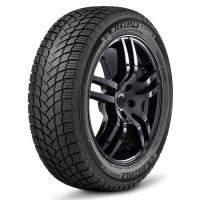
Michelin X Ice Snow
7.32 s
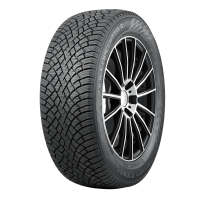
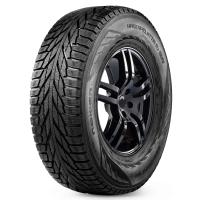
Nokian Hakkapeliitta R5
7.52 s
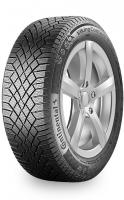
Continental VikingContact 7
7.82 s
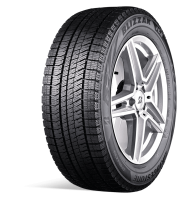
Bridgestone Blizzak Ice
8.05 s
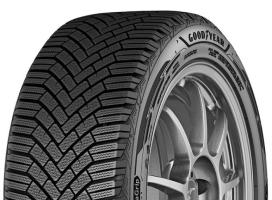
Goodyear UltraGrip Ice 3
8.43 s
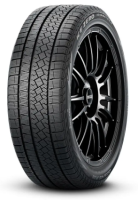
Pirelli Ice Zero Asimmetrico
8.97 s
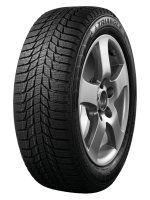
Triangle Snowlink PL01
9.17 s
Nokian Hakkapeliitta R2
10.70 s
Ice Handling
Ice Handling
Spread: 4.50 s (10.1%)|Avg: 46.44 s
Ice handling time in seconds (Lower is better)
Continental VikingContact 7
44.50 s
Nokian Hakkapeliitta R5
44.70 s
Bridgestone Blizzak Ice
44.90 s
Pirelli Ice Zero Asimmetrico
46.00 s
Goodyear UltraGrip Ice 3
46.70 s
Michelin X Ice Snow
47.10 s
Triangle Snowlink PL01
48.60 s
Nokian Hakkapeliitta R2
49.00 s
Snow
Snow Braking
Snow Braking
Spread: 0.58 M (4.8%)|Avg: 12.44 M
Snow braking in meters (35 - 5 km/h) (Lower is better)
Snow Braking: Safety Impact: Best vs Worst Tyre
Snow Traction
Snow Traction
Spread: 0.24 s (5.4%)|Avg: 4.56 s
Snow acceleration time (5 - 35 km/h) (Lower is better)
Goodyear UltraGrip Ice 3
4.44 s
Pirelli Ice Zero Asimmetrico
4.49 s
Continental VikingContact 7
4.55 s
Michelin X Ice Snow
4.57 s
Nokian Hakkapeliitta R5
4.57 s
Bridgestone Blizzak Ice
4.59 s
Nokian Hakkapeliitta R2
4.60 s
Triangle Snowlink PL01
4.68 s
Snow Handling
Snow Handling
Spread: 5.20 s (6.9%)|Avg: 77.18 s
Snow handling time in seconds (Lower is better)
Nokian Hakkapeliitta R5
75.50 s
Continental VikingContact 7
75.70 s
Goodyear UltraGrip Ice 3
75.90 s
Pirelli Ice Zero Asimmetrico
76.40 s
Bridgestone Blizzak Ice
76.60 s
Michelin X Ice Snow
76.70 s
Triangle Snowlink PL01
79.90 s
Nokian Hakkapeliitta R2
80.70 s
Wet
Wet Braking
Wet Braking
Spread: 5.79 M (15.4%)|Avg: 40.34 M
Wet braking in meters (80 - 5 km/h) (Lower is better)
Wet Braking: Safety Impact: Best vs Worst Tyre
Wet Handling
Wet Handling
Spread: 2.90 s (7.1%)|Avg: 42.41 s
Wet handling time in seconds (Lower is better)
Goodyear UltraGrip Ice 3
41.00 s
Continental VikingContact 7
41.40 s
Nokian Hakkapeliitta R5
42.00 s
Michelin X Ice Snow
42.10 s
Triangle Snowlink PL01
42.40 s
Pirelli Ice Zero Asimmetrico
42.80 s
Nokian Hakkapeliitta R2
43.70 s
Bridgestone Blizzak Ice
43.90 s
Straight Aqua
Straight Aqua
Spread: 9.40 Km/H (14.2%)|Avg: 61.63 Km/H
Float Speed in Km/H (Higher is better)
Goodyear UltraGrip Ice 3
66.00 Km/H
Michelin X Ice Snow
65.00 Km/H
Continental VikingContact 7
62.70 Km/H
Nokian Hakkapeliitta R5
61.40 Km/H
Triangle Snowlink PL01
61.00 Km/H
Pirelli Ice Zero Asimmetrico
60.50 Km/H
Bridgestone Blizzak Ice
59.80 Km/H
Nokian Hakkapeliitta R2
56.60 Km/H
Dry
Dry Braking
Dry Braking
Spread: 2.23 M (7.6%)|Avg: 30.49 M
Dry braking in meters (80 - 5 km/h) (Lower is better)
Dry Braking: Safety Impact: Best vs Worst Tyre
Subj. Dry Handling
Subj. Dry Handling
Spread: 3.00 Points (60%)|Avg: 3.50 Points
Subjective Dry Handling Score (Higher is better)
Goodyear UltraGrip Ice 3
5.00 Points
Pirelli Ice Zero Asimmetrico
5.00 Points
Continental VikingContact 7
4.00 Points
Michelin X Ice Snow
4.00 Points
Nokian Hakkapeliitta R5
3.00 Points
Triangle Snowlink PL01
3.00 Points
Nokian Hakkapeliitta R2
2.00 Points
Bridgestone Blizzak Ice
2.00 Points
Comfort
Noise
Noise
Spread: 1.80 dB (2.4%)|Avg: 74.28 dB
External noise in dB (Lower is better)
Bridgestone Blizzak Ice
73.70 dB
Pirelli Ice Zero Asimmetrico
73.90 dB
Continental VikingContact 7
74.00 dB
Goodyear UltraGrip Ice 3
74.00 dB
Nokian Hakkapeliitta R5
74.30 dB
Triangle Snowlink PL01
74.30 dB
Michelin X Ice Snow
74.50 dB
Nokian Hakkapeliitta R2
75.50 dB
Value
Fuel Consumption
Fuel Consumption
Spread: 0.40 l/100km (8.3%)|Avg: 5.01 l/100km
Fuel consumption in Litres per 100 km (Lower is better)
Nokian Hakkapeliitta R2
4.80 l/100km
Goodyear UltraGrip Ice 3
4.85 l/100km
Nokian Hakkapeliitta R5
4.90 l/100km
Continental VikingContact 7
5.00 l/100km
Pirelli Ice Zero Asimmetrico
5.05 l/100km
Triangle Snowlink PL01
5.10 l/100km
Michelin X Ice Snow
5.15 l/100km
Bridgestone Blizzak Ice
5.20 l/100km
19,000 km
£1.45/L
8.0 L/100km
--
Annual Difference
--
Lifetime Savings
--
Extra Fuel/Energy
--
Extra CO2
Estimates based on typical driving conditions. Rolling resistance accounts for approximately 20% of IC vehicle fuel consumption and 25% of EV energy consumption. Actual savings vary based on driving style, vehicle weight, road conditions, and tyre age. For comparative purposes only. Lifetime savings based on a 40,000km / 25,000 mile tread life.
The VikingContact7, despite being one of the oldest tires on the market, still performs at the top. Following a third-place finish in last year's test of SUV sizes, Continental is once again number one. The tire manages to maintain steering grip even in really tight curves on ice. It also remains easy to control on snow with a stable rear without sliding tendencies under pressure. Despite its excellent characteristics on winter roads, Continental continues to convince in dry road conditions. The steering feel on asphalt is good; it handles understeering tests well and shows reasonable stopping distances on both wet and dry asphalt. Almost always being top three in every subtest earns it a well-deserved overall victory. The Continental is suitable for all types of winter needs.
To summarize, the VikingContact7 tire by Continental is praised for its exceptional performance across various conditions, from ice and snow to dry asphalt, showcasing its suitability for diverse winter requirements.
This season's big news is the third generation of UltraGrip Ice from Goodyear. The predecessors have distinguished themselves as Nordic friction tires that perform well on wet roads. The new model retains this market position but has also strengthened its winter grip. It performs at the top in terms of starting and braking on snow and shows good cornering ability. The ice grip is also at a high level, though slightly behind the very best.
The tire is most impressive on asphalt rounds, especially in wet conditions. The steering sensitivity and stability in evasive maneuvers are the best in the group. The same goes for aquaplaning resistance and the stopping distance on wet roads.
Goodyear is the best choice if you drive mostly on bare ground but still want good ice and snow grip.
Nokian's latest friction tire scores the most points of all in the snow and ice rounds. It has lively reactions and steers quickly into curves. For a soft friction tire, it is a joy to drive with a cooperative rear that suits the active driver. Conversely, those who prefer a calm and undramatic tire may find the Nokian somewhat too prone to sliding.
On asphalt, it handles evasive maneuvers well, but has a somewhat nonlinear steering feel. Its wet grip properties are just behind the best competitors, as is the road noise. However, the Hakkapeliitta R5 has low rolling resistance.
The Nokian tire is suitable for those who prioritize winter road properties above all and appreciate its quick cornering characteristics.
The French friction tire has impressive longitudinal winter grip – that is, acceleration and braking. It has the best stopping distance on ice in the test, and the braking performance on snow also receives the highest rating.
However, Michelin struggles in the curves where it does not like to be stressed with sudden steering movements or in tighter curves, responding with clear understeering.
Instead, the tire exhibits good stability on bare ground, where the natural steering feel is also appreciated. However, the understeering balance persists under pressure, especially on wet asphalt.
Michelin is for those who prioritize short stopping distances and a good driving experience in everyday situations over maximum cornering ability.
The Japanese Bridgestone is one of the few winter tires with an asymmetric pattern, marked with an inside/outside instead of rolling direction. This favors cornering but results in poorer water properties.
The Blizzak Ice is also one of the softest tires (the rubber's "Shore value" is a low 49). This provides good cornering grip on snow and ice, but it is not as easily controlled at the grip limit on snow as the best ones. Its braking performance on winter surfaces is average.
The soft rubber bites well when braking on dry asphalt and has low road noise. However, it lacks stability in evasive maneuvers on dry roads, and its wet grip is one of the worst in the group.
Without a clear area of expertise, Bridgestone places a bit behind the top contenders.
When Pirelli was unable to produce its Nordic friction tire IceZero FR in Russia, they brought over their Asian friction tire Asimmetrico instead. As the name suggests, the tire has an asymmetric pattern (with a dedicated inside/outside instead of rolling direction). It also has a somewhat stiffer carcass and harder rubber than the others, and a higher speed rating.
Braking distances on snow and ice are average. In the corners, Pirelli exhibits quick steering reactions but can lose grip suddenly with a long sliding phase when the grip is lost.
The best performance is on dry asphalt. Unfortunately, the braking distances on bare ground and wet grip are the worst in the group, resulting in a modest overall score.
The Chinese Triangle tire boasts in its marketing that it was developed in Finland. Despite this, it has an unusually hard rubber compound with poor winter grip. On icy curves, it loses grip at the front without warning, causing the car to understeer heavily without the driver being able to do anything.
Across the ice and snow subtests, the grip level is on par with the used tire in this comparison. In the tests on bare ground, Triangle performs somewhat better compared to the competition, but it never manages to leave the lower half of the results. Disturbing road noise solidifies an already certain last place among the new tires. In fact, the points are not even enough to beat the eight-year-old wildcard entry. It ends up in a shared last place.
The used tire, a Nokian Hakkapeliitta R2, was a test winner when it was new in 2015. Now, it is eight years old with about six millimeters of tread depth and harder rubber. There is a noticeable deterioration on ice and snow compared to the new top tires, but it still keeps pace with the brand-new Triangle tire in the winter rounds. The R2 is actually more manageable in curves as it is well-balanced and warns early when the grip limit is approaching.
On asphalt, the lower tread depth provides an advantage in terms of braking and consumption, but it causes problems with aquaplaning instead. High wear on the outer part of the front tires results in poor cornering grip.
It is concluded that new tires offer a clear increase in safety – but only if you purchase the best ones.




How this kind of tires compares to standard winter tires? I would love to see single winter tire in this test to see the difference.
Check out the tyre reviews test in this category, it has the TS870 in.