The 2025 Auto Zeitung summer tyre test has tested ten ultra high performance 225/45 R18 patterns in the dry and wet, and this year included wear!
The wear test has added some interesting highlights, which we'll discuss below.
Test Publication:
Auto Zeitung
225/45 R18
10 tyres
4 categories
Test Size:
225/45 R18
Tyres Tested:
10 tyres
Auto Zeitung is not affiliated with, and does not endorse, Tyre Reviews. This is independent editorial coverage of their published test.
We're not sure why, but Auto Zeitung did not calculate value, ie the price per 1000km driven. This paints a really interesting picture as the test winning Goodyear Eagle F1 Asymmetric 6 is ALSO the best value tyre. A set of 4 costs 665 euros and the calculated tread life is 50,000km giving a cost per 1000 km of 13.3 Euros. When you compare it to one of the budget tyres, which only cost 300 euros for a set, and performed terribly in all the tests, the fact they only last 20,000km means they actually cost you more money!
- Goodyear Eagle F1 Asymmetric 6
- Falken Azenis FK520
- Mastersteel Super Sport 2
- Triangle EffeXSport
- Continental PremiumContact 7
- Michelin Pilot Sport 5
- Vredestein Ultrac Pro
- Bridgestone Potenza Sport
- Toyo Proxes Sport 2
- Pirelli P Zero PZ4
Other than the Goodyear having a near perfect results, the Continental PremiumContact 7 was great in wet handling, the Bridgestone Potenza Sport was the sporty option, and the Michelin Pilot Sport 5 was a solid all rounder, even though it was a little down in the wet.
Below is the full dataset.
Dry
In dry braking, the Bridgestone Potenza Sport delivered the shortest stopping distance at 33m, while the Mastersteel Super Sport 2 needed 36.9m - a 10.6% difference that could be crucial in emergency situations.
- Bridgestone Potenza Sport
- Goodyear Eagle F1 Asymmetric 6
- Michelin Pilot Sport 5
- Continental PremiumContact 7
- Toyo Proxes Sport 2
- Pirelli P Zero PZ4
- Falken Azenis FK520
- Vredestein Ultrac Pro
- Triangle EffeXSport
- Mastersteel Super Sport 2
The dry handling test showed the Toyo Proxes Sport 2 was quickest around the track at 68.7 seconds, with the Mastersteel trailing at 71.5 seconds - a 3.9% gap that demonstrates the handling limitations of budget options.
- Toyo Proxes Sport 2
- Goodyear Eagle F1 Asymmetric 6
- Bridgestone Potenza Sport
- Continental PremiumContact 7
- Falken Azenis FK520
- Pirelli P Zero PZ4
- Michelin Pilot Sport 5
- Vredestein Ultrac Pro
- Triangle EffeXSport
- Mastersteel Super Sport 2
Wet
In wet braking, the differences were dramatic. The Continental PremiumContact 7 stopped in just 41.8m, while the Mastersteel required a concerning 52.7m - a massive 20.7% difference that highlights significant safety implications in rainy conditions.
- Continental PremiumContact 7
- Bridgestone Potenza Sport
- Goodyear Eagle F1 Asymmetric 6
- Michelin Pilot Sport 5
- Pirelli P Zero PZ4
- Toyo Proxes Sport 2
- Vredestein Ultrac Pro
- Falken Azenis FK520
- Triangle EffeXSport
- Mastersteel Super Sport 2
The wet handling test saw the Goodyear Eagle F1 Asymmetric 6 lead with 69.7 seconds, while the Mastersteel needed 77 seconds - a 9.5% gap.
- Goodyear Eagle F1 Asymmetric 6
- Bridgestone Potenza Sport
- Pirelli P Zero PZ4
- Continental PremiumContact 7
- Michelin Pilot Sport 5
- Vredestein Ultrac Pro
- Toyo Proxes Sport 2
- Falken Azenis FK520
- Triangle EffeXSport
- Mastersteel Super Sport 2
The Wet Circle test measured cornering ability on wet surfaces, with the Bridgestone Potenza Sport achieving the fastest time at 11.11 seconds while the Mastersteel Super Sport 2 required 12.58 seconds - an 11.7% difference showing how premium tyres maintain grip in wet corners, which is larger than wet handling.
- Bridgestone Potenza Sport
- Goodyear Eagle F1 Asymmetric 6
- Pirelli P Zero PZ4
- Michelin Pilot Sport 5
- Toyo Proxes Sport 2
- Falken Azenis FK520
- Continental PremiumContact 7
- Vredestein Ultrac Pro
- Triangle EffeXSport
- Mastersteel Super Sport 2
The Straight Aquaplaning test assessed resistance to aquaplaning, with the Vredestein Ultrac Pro remaining stable up to 76.6 km/h while the Mastersteel lost grip at just 70.8 km/h.
- Vredestein Ultrac Pro
- Goodyear Eagle F1 Asymmetric 6
- Michelin Pilot Sport 5
- Falken Azenis FK520
- Toyo Proxes Sport 2
- Triangle EffeXSport
- Bridgestone Potenza Sport
- Continental PremiumContact 7
- Pirelli P Zero PZ4
- Mastersteel Super Sport 2
Comfort
In the Subjective Comfort assessment, the Continental PremiumContact 7 led the way.
- Continental PremiumContact 7
- Falken Azenis FK520
- Mastersteel Super Sport 2
- Goodyear Eagle F1 Asymmetric 6
- Michelin Pilot Sport 5
- Toyo Proxes Sport 2
- Vredestein Ultrac Pro
- Pirelli P Zero PZ4
- Bridgestone Potenza Sport
- Triangle EffeXSport
The budget Mastersteel had the lowest external passby noise of the test.
- Mastersteel Super Sport 2
- Goodyear Eagle F1 Asymmetric 6
- Vredestein Ultrac Pro
- Pirelli P Zero PZ4
- Falken Azenis FK520
- Triangle EffeXSport
- Bridgestone Potenza Sport
- Continental PremiumContact 7
- Toyo Proxes Sport 2
- Michelin Pilot Sport 5
Value
Wear testing revealed the most surprising results, with the Goodyear projected to last 50,000km while budget options like Triangle and Mastersteel managed just 20,000km - a 150% difference that completely transforms the value equation despite lower purchase prices.
- Goodyear Eagle F1 Asymmetric 6
- Michelin Pilot Sport 5
- Continental PremiumContact 7
- Falken Azenis FK520
- Bridgestone Potenza Sport
- Pirelli P Zero PZ4
- Vredestein Ultrac Pro
- Toyo Proxes Sport 2
- Triangle EffeXSport
- Mastersteel Super Sport 2
Rolling Resistance measurements showed the Mastersteel Super Sport 2 was most efficient at 7.35 kg/t while the Bridgestone Potenza Sport required 10.15 kg/t - a 27.6% difference that directly impacts fuel consumption and emissions.
The Abrasion test measured tread wear per 1,000km, with the Michelin Pilot Sport 5 losing just 0.085mm while the Triangle EffeXSport lost 0.185mm - a 117.6% difference confirming Michelin's reputation for durability despite higher purchase price.
- Michelin Pilot Sport 5
- Goodyear Eagle F1 Asymmetric 6
- Falken Azenis FK520
- Bridgestone Potenza Sport
- Continental PremiumContact 7
- Vredestein Ultrac Pro
- Toyo Proxes Sport 2
- Mastersteel Super Sport 2
- Pirelli P Zero PZ4
- Triangle EffeXSport
Results
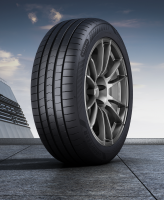
On dry roads, the Goodyear builds tremendous grip with precise steering response and remains completely manageable even at the limit. It stops quickly and handles transitions smoothly while offering decent comfort. In wet conditions, it truly excels with the quickest handling time, strong braking, and a sporty yet neutral balance that inspires confidence. The Goodyear's remarkable environmental credentials with minimal wear, long life expectancy, and good efficiency make it a complete package. It masters both performance and sustainability better than any competitor, justifying its premium price by offering the best value in the long run.
| Test |
# |
Result |
Best |
Diff |
% |
| Dry Braking |
2nd |
33.3 M |
33 M |
+0.3 M |
99.1% |
| Dry Handling |
2nd |
68.8 s |
68.7 s |
+0.1 s |
99.85% |
| Test |
# |
Result |
Best |
Diff |
% |
| Wet Braking |
3rd |
43.3 M |
41.8 M |
+1.5 M |
96.54% |
| Wet Handling |
1st |
69.7 s |
|
|
100% |
| Wet Circle |
2nd |
11.13 s |
11.11 s |
+0.02 s |
99.82% |
| Straight Aqua |
2nd |
75.9 Km/H |
76.6 Km/H |
-0.7 Km/H |
99.09% |
| Test |
# |
Result |
Best |
Diff |
% |
| Subj. Comfort |
4th |
7 Points |
10 Points |
-3 Points |
70% |
| Noise |
2nd |
68 dB |
67 dB |
+1 dB |
98.53% |
| Test |
# |
Result |
Best |
Diff |
% |
| Wear |
1st |
50000 KM |
|
|
100% |
| Value |
1st |
13.3 Price/1000 |
|
|
100% |
| Rolling Resistance |
3rd |
8.35 kg / t |
7.35 kg / t |
+1 kg / t |
88.02% |
| Abrasion |
2nd |
0.088 mm/1000km |
0.085 mm/1000km |
0 mm/1000km |
96.59% |
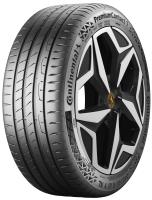
In dry conditions, the Continental delivers performance nearly matching dedicated sports tyres while providing the best ride comfort in the test. It offers high safety reserves and excellent road feel despite its touring tyre designation. On wet roads, it truly shines with the shortest braking distance and predictable, secure handling even in extreme situations. Its consistent grip inspires confidence in all conditions. The Continental achieves an impressive balance between outstanding wet safety, good handling dynamics, and excellent comfort, proving that a touring tyre can compete with UHP models while excelling in everyday usability.
| Test |
# |
Result |
Best |
Diff |
% |
| Dry Braking |
4th |
33.6 M |
33 M |
+0.6 M |
98.21% |
| Dry Handling |
4th |
69.3 s |
68.7 s |
+0.6 s |
99.13% |
| Test |
# |
Result |
Best |
Diff |
% |
| Wet Braking |
1st |
41.8 M |
|
|
100% |
| Wet Handling |
3rd |
70.2 s |
69.7 s |
+0.5 s |
99.29% |
| Wet Circle |
7th |
11.52 s |
11.11 s |
+0.41 s |
96.44% |
| Straight Aqua |
8th |
73.2 Km/H |
76.6 Km/H |
-3.4 Km/H |
95.56% |
| Test |
# |
Result |
Best |
Diff |
% |
| Subj. Comfort |
1st |
10 Points |
|
|
100% |
| Noise |
7th |
70 dB |
67 dB |
+3 dB |
95.71% |
| Test |
# |
Result |
Best |
Diff |
% |
| Wear |
3rd |
42500 KM |
50000 KM |
-7500 KM |
85% |
| Value |
5th |
15.88 Price/1000 |
13.3 Price/1000 |
+2.58 Price/1000 |
83.75% |
| Rolling Resistance |
2nd |
8.25 kg / t |
7.35 kg / t |
+0.9 kg / t |
89.09% |
| Abrasion |
5th |
0.107 mm/1000km |
0.085 mm/1000km |
+0.02 mm/1000km |
79.44% |
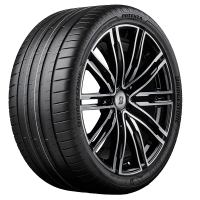
The Bridgestone delivers the shortest dry braking distance and highest slalom speed, demonstrating its sporty character. This comes with firmer ride quality and higher rolling resistance that affects efficiency. In wet conditions, it provides exceptional grip with mild transitions during weight shifts and outstanding front-end precision. The Bridgestone's Japanese engineering emphasizes maximum performance and feedback at the expense of comfort and efficiency, making it the driver's choice. Despite being slightly less balanced than the top two finishers, it delivers the best price-performance ratio for enthusiasts seeking maximum driving engagement.
| Test |
# |
Result |
Best |
Diff |
% |
| Dry Braking |
1st |
33 M |
|
|
100% |
| Dry Handling |
3rd |
69.1 s |
68.7 s |
+0.4 s |
99.42% |
| Test |
# |
Result |
Best |
Diff |
% |
| Wet Braking |
2nd |
42.5 M |
41.8 M |
+0.7 M |
98.35% |
| Wet Handling |
2nd |
69.9 s |
69.7 s |
+0.2 s |
99.71% |
| Wet Circle |
1st |
11.11 s |
|
|
100% |
| Straight Aqua |
7th |
73.7 Km/H |
76.6 Km/H |
-2.9 Km/H |
96.21% |
| Test |
# |
Result |
Best |
Diff |
% |
| Subj. Comfort |
8th |
6 Points |
10 Points |
-4 Points |
60% |
| Noise |
7th |
70 dB |
67 dB |
+3 dB |
95.71% |
| Test |
# |
Result |
Best |
Diff |
% |
| Wear |
5th |
35000 KM |
50000 KM |
-15000 KM |
70% |
| Value |
8th |
18 Price/1000 |
13.3 Price/1000 |
+4.7 Price/1000 |
73.89% |
| Rolling Resistance |
10th |
10.15 kg / t |
7.35 kg / t |
+2.8 kg / t |
72.41% |
| Abrasion |
4th |
0.106 mm/1000km |
0.085 mm/1000km |
+0.02 mm/1000km |
80.19% |
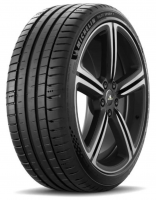
On dry pavement, the Michelin feels secure and stable but not as dynamic as the top performers. It delivers good grip in fast corners but understeers earlier than the sportiest contenders. Wet performance is characterized by balanced, predictable behavior and strong resistance to aquaplaning, though braking distances are merely good rather than exceptional. The Michelin follows brand tradition with minimal wear and excellent longevity, but its higher noise levels and average efficiency hold it back slightly. It prioritizes consistent performance throughout a long service life over maximum initial grip, appealing to high-mileage drivers seeking reliability and durability.
| Test |
# |
Result |
Best |
Diff |
% |
| Dry Braking |
3rd |
33.5 M |
33 M |
+0.5 M |
98.51% |
| Dry Handling |
7th |
69.6 s |
68.7 s |
+0.9 s |
98.71% |
| Test |
# |
Result |
Best |
Diff |
% |
| Wet Braking |
4th |
44.4 M |
41.8 M |
+2.6 M |
94.14% |
| Wet Handling |
5th |
70.8 s |
69.7 s |
+1.1 s |
98.45% |
| Wet Circle |
4th |
11.2 s |
11.11 s |
+0.09 s |
99.2% |
| Straight Aqua |
3rd |
75.7 Km/H |
76.6 Km/H |
-0.9 Km/H |
98.83% |
| Test |
# |
Result |
Best |
Diff |
% |
| Subj. Comfort |
4th |
7 Points |
10 Points |
-3 Points |
70% |
| Noise |
10th |
71 dB |
67 dB |
+4 dB |
94.37% |
| Test |
# |
Result |
Best |
Diff |
% |
| Wear |
2nd |
45000 KM |
50000 KM |
-5000 KM |
90% |
| Value |
6th |
16.67 Price/1000 |
13.3 Price/1000 |
+3.37 Price/1000 |
79.78% |
| Rolling Resistance |
7th |
8.85 kg / t |
7.35 kg / t |
+1.5 kg / t |
83.05% |
| Abrasion |
1st |
0.085 mm/1000km |
|
|
100% |
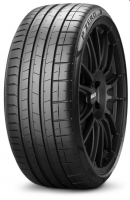
The Pirelli demonstrates excellent dry handling with sharp steering response and good braking performance. It feels balanced and neutral but with slightly less comfort than ideal. In wet conditions, it delivers good overall grip despite falling somewhat behind the class leaders in braking. The tyre provides fine feedback and neutral balance even in challenging wet conditions. While Pirelli has improved the P Zero's efficiency, its higher wear rate and shorter lifespan make it less economical over time. This fourth-generation model shows its age against newer designs but still delivers engaging handling for enthusiasts willing to accept its shorter life and higher long-term costs.
| Test |
# |
Result |
Best |
Diff |
% |
| Dry Braking |
6th |
33.9 M |
33 M |
+0.9 M |
97.35% |
| Dry Handling |
6th |
69.5 s |
68.7 s |
+0.8 s |
98.85% |
| Test |
# |
Result |
Best |
Diff |
% |
| Wet Braking |
5th |
45.2 M |
41.8 M |
+3.4 M |
92.48% |
| Wet Handling |
3rd |
70.2 s |
69.7 s |
+0.5 s |
99.29% |
| Wet Circle |
3rd |
11.18 s |
11.11 s |
+0.07 s |
99.37% |
| Straight Aqua |
9th |
73 Km/H |
76.6 Km/H |
-3.6 Km/H |
95.3% |
| Test |
# |
Result |
Best |
Diff |
% |
| Subj. Comfort |
8th |
6 Points |
10 Points |
-4 Points |
60% |
| Noise |
4th |
69 dB |
67 dB |
+2 dB |
97.1% |
| Test |
# |
Result |
Best |
Diff |
% |
| Wear |
6th |
32500 KM |
50000 KM |
-17500 KM |
65% |
| Value |
10th |
21.38 Price/1000 |
13.3 Price/1000 |
+8.08 Price/1000 |
62.21% |
| Rolling Resistance |
4th |
8.6 kg / t |
7.35 kg / t |
+1.25 kg / t |
85.47% |
| Abrasion |
9th |
0.147 mm/1000km |
0.085 mm/1000km |
+0.06 mm/1000km |
57.82% |
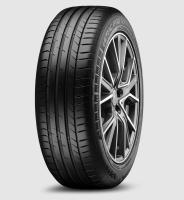
On dry surfaces, the Vredestein delivers average performance across all metrics without any standout strengths or notable weaknesses. Its wet weather behavior is mixed – while offering class-leading aquaplaning resistance, it struggles with braking performance on wet roads. The Vredestein handles predictably but without the precision or feedback of premium competitors. It runs quietly and provides good comfort, making it pleasant for everyday use. The Dutch tyre represents solid middle-ground value with reasonable wear characteristics and efficiency, best suited for drivers seeking balanced all-weather capability at a more affordable price point than premium brands.
| Test |
# |
Result |
Best |
Diff |
% |
| Dry Braking |
8th |
35 M |
33 M |
+2 M |
94.29% |
| Dry Handling |
7th |
69.6 s |
68.7 s |
+0.9 s |
98.71% |
| Test |
# |
Result |
Best |
Diff |
% |
| Wet Braking |
7th |
47.3 M |
41.8 M |
+5.5 M |
88.37% |
| Wet Handling |
6th |
72.6 s |
69.7 s |
+2.9 s |
96.01% |
| Wet Circle |
8th |
11.71 s |
11.11 s |
+0.6 s |
94.88% |
| Straight Aqua |
1st |
76.6 Km/H |
|
|
100% |
| Test |
# |
Result |
Best |
Diff |
% |
| Subj. Comfort |
4th |
7 Points |
10 Points |
-3 Points |
70% |
| Noise |
2nd |
68 dB |
67 dB |
+1 dB |
98.53% |
| Test |
# |
Result |
Best |
Diff |
% |
| Wear |
6th |
32500 KM |
50000 KM |
-17500 KM |
65% |
| Value |
7th |
17.85 Price/1000 |
13.3 Price/1000 |
+4.55 Price/1000 |
74.51% |
| Rolling Resistance |
7th |
8.85 kg / t |
7.35 kg / t |
+1.5 kg / t |
83.05% |
| Abrasion |
6th |
0.11 mm/1000km |
0.085 mm/1000km |
+0.03 mm/1000km |
77.27% |
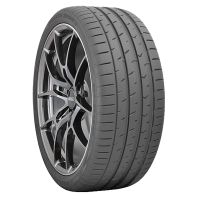
The Toyo excels in dry conditions with the fastest handling time and impressive agility. It brakes well and provides good feedback to the driver, matching premium tyres for dynamic handling. However, wet performance reveals its limitations – while braking is acceptable, it reacts nervously to load changes, reducing confidence in challenging conditions. This Japanese offering presents a specialized character: exceptional dry-weather dynamics at a competitive price point, but with compromises in wet safety and longevity. It's well-suited for enthusiasts in drier climates who prioritize handling response over all-weather versatility.
| Test |
# |
Result |
Best |
Diff |
% |
| Dry Braking |
4th |
33.6 M |
33 M |
+0.6 M |
98.21% |
| Dry Handling |
1st |
68.7 s |
|
|
100% |
| Test |
# |
Result |
Best |
Diff |
% |
| Wet Braking |
6th |
46.6 M |
41.8 M |
+4.8 M |
89.7% |
| Wet Handling |
7th |
72.8 s |
69.7 s |
+3.1 s |
95.74% |
| Wet Circle |
5th |
11.37 s |
11.11 s |
+0.26 s |
97.71% |
| Straight Aqua |
5th |
75.2 Km/H |
76.6 Km/H |
-1.4 Km/H |
98.17% |
| Test |
# |
Result |
Best |
Diff |
% |
| Subj. Comfort |
4th |
7 Points |
10 Points |
-3 Points |
70% |
| Noise |
7th |
70 dB |
67 dB |
+3 dB |
95.71% |
| Test |
# |
Result |
Best |
Diff |
% |
| Wear |
8th |
30000 KM |
50000 KM |
-20000 KM |
60% |
| Value |
9th |
19 Price/1000 |
13.3 Price/1000 |
+5.7 Price/1000 |
70% |
| Rolling Resistance |
6th |
8.8 kg / t |
7.35 kg / t |
+1.45 kg / t |
83.52% |
| Abrasion |
7th |
0.123 mm/1000km |
0.085 mm/1000km |
+0.04 mm/1000km |
69.11% |
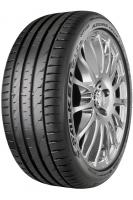
The Falken struggles with precision on dry roads, requiring larger steering inputs and feeling less stable than competitors during dynamic maneuvers. In wet conditions, deficiencies become more apparent with longer braking distances and understeer, though it does offer excellent lateral aquaplaning resistance. The tyre's saving grace is its good durability and relatively low wear rate. The aging design shows its limitations against newer competitors, particularly in handling precision and wet grip. While offering reasonable value through longevity, its performance compromises are too significant to recommend for drivers who frequently encounter wet conditions.
| Test |
# |
Result |
Best |
Diff |
% |
| Dry Braking |
7th |
34.2 M |
33 M |
+1.2 M |
96.49% |
| Dry Handling |
5th |
69.4 s |
68.7 s |
+0.7 s |
98.99% |
| Test |
# |
Result |
Best |
Diff |
% |
| Wet Braking |
8th |
48.2 M |
41.8 M |
+6.4 M |
86.72% |
| Wet Handling |
8th |
74 s |
69.7 s |
+4.3 s |
94.19% |
| Wet Circle |
6th |
11.51 s |
11.11 s |
+0.4 s |
96.52% |
| Straight Aqua |
4th |
75.3 Km/H |
76.6 Km/H |
-1.3 Km/H |
98.3% |
| Test |
# |
Result |
Best |
Diff |
% |
| Subj. Comfort |
2nd |
8 Points |
10 Points |
-2 Points |
80% |
| Noise |
4th |
69 dB |
67 dB |
+2 dB |
97.1% |
| Test |
# |
Result |
Best |
Diff |
% |
| Wear |
4th |
40000 KM |
50000 KM |
-10000 KM |
80% |
| Value |
2nd |
14.38 Price/1000 |
13.3 Price/1000 |
+1.08 Price/1000 |
92.49% |
| Rolling Resistance |
5th |
8.7 kg / t |
7.35 kg / t |
+1.35 kg / t |
84.48% |
| Abrasion |
3rd |
0.098 mm/1000km |
0.085 mm/1000km |
+0.01 mm/1000km |
86.73% |
On dry roads, the Triangle exhibits low grip levels with vague steering feel and significantly longer braking distances. Wet performance is concerning, with poor braking, uncertain handling, and nervous response to load changes. Despite offering acceptable aquaplaning resistance, overall wet safety is compromised. The Chinese budget tyre suffers from rapid wear and short life expectancy, negating much of its price advantage over time. The Triangle demonstrates why focusing solely on purchase price can be misleading – its safety compromises and poor longevity make it difficult to recommend even at its lower price point.
| Test |
# |
Result |
Best |
Diff |
% |
| Dry Braking |
9th |
36.1 M |
33 M |
+3.1 M |
91.41% |
| Dry Handling |
9th |
70.9 s |
68.7 s |
+2.2 s |
96.9% |
| Test |
# |
Result |
Best |
Diff |
% |
| Wet Braking |
9th |
52 M |
41.8 M |
+10.2 M |
80.38% |
| Wet Handling |
9th |
74.9 s |
69.7 s |
+5.2 s |
93.06% |
| Wet Circle |
9th |
11.93 s |
11.11 s |
+0.82 s |
93.13% |
| Straight Aqua |
6th |
74.7 Km/H |
76.6 Km/H |
-1.9 Km/H |
97.52% |
| Test |
# |
Result |
Best |
Diff |
% |
| Subj. Comfort |
8th |
6 Points |
10 Points |
-4 Points |
60% |
| Noise |
4th |
69 dB |
67 dB |
+2 dB |
97.1% |
| Test |
# |
Result |
Best |
Diff |
% |
| Wear |
9th |
20000 KM |
50000 KM |
-30000 KM |
40% |
| Value |
4th |
15.5 Price/1000 |
13.3 Price/1000 |
+2.2 Price/1000 |
85.81% |
| Rolling Resistance |
9th |
9.05 kg / t |
7.35 kg / t |
+1.7 kg / t |
81.22% |
| Abrasion |
10th |
0.185 mm/1000km |
0.085 mm/1000km |
+0.1 mm/1000km |
45.95% |
The Mastersteel shows substantial limitations on dry roads with the longest braking distances and least precise handling in the test. Wet performance is critically deficient across all metrics, scoring poorly in every wet test and presenting potential safety concerns. Its only genuine advantages are low rolling resistance for better fuel economy and quiet operation. This budget option illustrates the significant trade-offs at the lowest price point – while initially inexpensive, its extremely short lifespan, poor grip, and compromised safety characteristics make it the least economical choice over time and difficult to recommend for any regular use case.
| Test |
# |
Result |
Best |
Diff |
% |
| Dry Braking |
10th |
36.9 M |
33 M |
+3.9 M |
89.43% |
| Dry Handling |
10th |
71.5 s |
68.7 s |
+2.8 s |
96.08% |
| Test |
# |
Result |
Best |
Diff |
% |
| Wet Braking |
10th |
52.7 M |
41.8 M |
+10.9 M |
79.32% |
| Wet Handling |
10th |
77 s |
69.7 s |
+7.3 s |
90.52% |
| Wet Circle |
10th |
12.58 s |
11.11 s |
+1.47 s |
88.31% |
| Straight Aqua |
10th |
70.8 Km/H |
76.6 Km/H |
-5.8 Km/H |
92.43% |
| Test |
# |
Result |
Best |
Diff |
% |
| Subj. Comfort |
2nd |
8 Points |
10 Points |
-2 Points |
80% |
| Noise |
1st |
67 dB |
|
|
100% |
| Test |
# |
Result |
Best |
Diff |
% |
| Wear |
9th |
20000 KM |
50000 KM |
-30000 KM |
40% |
| Value |
3rd |
15 Price/1000 |
13.3 Price/1000 |
+1.7 Price/1000 |
88.67% |
| Rolling Resistance |
1st |
7.35 kg / t |
|
|
100% |
| Abrasion |
8th |
0.133 mm/1000km |
0.085 mm/1000km |
+0.05 mm/1000km |
63.91% |

Why do They test the pz4 and not the pz5….
Probably timing, the test will have likely been started end of last year.
I don't believe in the durability of GY asy 6.
Practice has shown the exact opposite of this test.
I'm not sure I've seen a bad wear test of an Asym 6, whether it be machine or road convoy