

| Test Summary | |
| Wet Braking |
Michelin CrossClimate |
| Dry Braking |
Continental WinterContact TS 860 |
| Wet Handling |
Continental WinterContact TS 860 |
| Rolling Resistance |
Continental WinterContact TS 860 |
| Noise |
Continental WinterContact TS 860 Nokian WR D4 Dunlop Winter Sport 5 Vredestein Wintrac xtreme S |
| Snow Handling |
Hankook Winter i cept RS2 GT Radial Champiro WinterPro HP |
The new tyres dominate
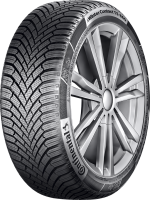
The Continental WinterContact TS850 was largely unbeaten in its four year life, so it is no surprise the new TS860 once again dominates the test, winning on snow, in the wet, lowest fuel use, best comfort, and scoring extremely well in the dry.
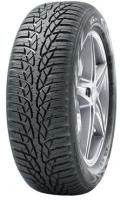
The new Nokian WR D4 also continues where the WR D3 left off, scoring extremely well on snow and in the dry. Compared to the best winter tyres on test, the WR D4 lacks a little in the wet, but it's still one of the best winter tyres on test.
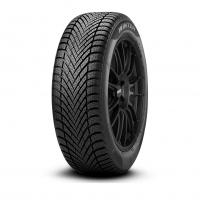
The top three is rounded out by the Pirelli Cinturato Winter. It scores well in the snow and wet tests, but gives up some points due to long braking distances in the dry and a higher rolling resistance than the best tested.
It's no surprise fourth, fifth and sixth places are taken by Goodyear, Michelin and Dunlop. All three tyres offer a strong balanced performance, and with the top six places so closely contested this year, any of these tyres would be excellent choices for winter motoring.
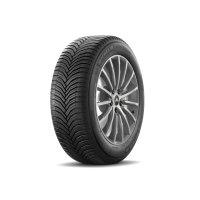
The Michelin CrossClimate
The inclusion of the CrossClimate in a full winter tyre test is extremely interesting, as the main reservation most people have for the CrossClimate is the snow and ice performance.
Unsurprisingly the Michelin dominates under dry braking, stopping the car from 62 mph in 40.2 meters whereas the winning Continental could only manage 44.4 meters. The dry handing lap was closer, but the CrossClimate still wins, completing the 3.3 km lap in 107.9 seconds, compared to 109.3 seconds for the Continental.
In the wet, the Michelin stopped the car from 62 mph in 57.6 meters, with the Continental much closer at 57.9 meters. The Continental wins the wet handling course, completing the 1.7 km lap in 87.5 seconds compared to 89 seconds for the Michelin, which places it fourth overall.
The snow performance is where the Michelin CrossClimate is often questioned. Under snow braking from 31 mph, the Continental stopped the car in 24.2 meters and the Michelin 25.1 meters, less than a meter shorter than the test winner, and beating one of the winter tyres on test. During snow handling the Continental finishes the 1.3 km lap in 74 seconds, and the Michelin 77.1 seconds. While this is a gap to the Continental, the Michelin CrossClimate was faster than three of the full winter tyres, including the winter experts Vredestein.
If you're living in a climate like England where snow is a rare occurrence, this test indicates you're better off running the Michelin CrossClimate as your winter option due to the dry and wet braking advantages the tyre offers.
The Results

The Tyre size of this test is very close to my size, which is 205\60\16. And as far as I see WinterContact TS 860 is the best chose, but the problem is that I cannot find it for my size. During the winter I usually drive on a dry or wet roads therefore the snow traction is not very critical to me. So what type of tire should I get?
Btw It is strange that GoodYear UGP-1 is missing from this test? It would be good if we can see how it compares to the others.
For mostly dry and wet roads the Michelin CrossClimate is proving to be the least compromised choice.
http://www.tyrereviews.co.u...