For 2018, the German publication Auto Zeitung have tested nine SUV / 4X4 winter tyre patterns in the popular 235/60 R18 size using an Audi Q5.
The tyres on test covered the premium and midrange segments, with a single budget tyre included, the Wanli Snowgrip S1083. The Wanli tyre was less than half the price of the most expensive tyres on test, so it will be interesting to see whether the Chinese manufactured tyre can improve on past performances.
Dry
The top two tyres during dry braking testing also happened to be the worst two tyres overall on test, with the Wanli and Yokohama tyres drawing in first place. There was a larger than normal spread across the dry braking testing, with nearly 4 meters covering the best to worst on test.
Dry Braking
Spread: 3.60 M (8.1%)|Avg: 46.06 M
Dry braking in meters (Lower is better)
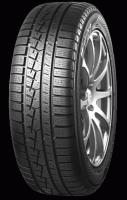
Yokohama W Drive
44.60 M
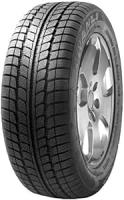
Wanli Snowgrip S1083
44.60 M
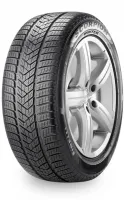
Pirelli Scorpion Winter
45.20 M
Nokian WR SUV 3
45.90 M
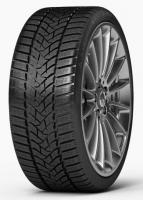
Dunlop Winter Sport 5 SUV
46.00 M
Continental Winter Contact TS 850
46.10 M
Michelin Latitude Alpin 2
46.90 M
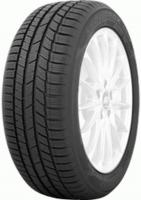
Toyo Snowprox S954 SUV
47.00 M
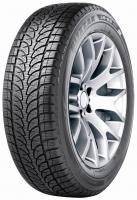
Bridgestone Blizzak LM80 EVO
48.20 M
The dry handling testing was much closer, with less than one second covering all nine tyre patterns. This time the Nokian WR SUV3 proved to be the best of the group.
Dry Handling
Spread: 0.90 s (1.4%)|Avg: 66.36 s
Dry handling time in seconds (Lower is better)
Nokian WR SUV 3
65.80 s
Dunlop Winter Sport 5 SUV
65.80 s
Yokohama W Drive
66.00 s
Bridgestone Blizzak LM80 EVO
66.40 s
Toyo Snowprox S954 SUV
66.50 s
Wanli Snowgrip S1083
66.60 s
Michelin Latitude Alpin 2
66.70 s
Pirelli Scorpion Winter
66.70 s
Continental Winter Contact TS 850
66.70 s
Wet
The all important wet testing was dominated by the Michelin Latitude Alpin 2, which had both the shortest wet braking distance and the quickest wet handling lap.
After winning the dry braking test, the Wanli budget tyre proved that in the wet, you still get what you pay for, finishing a long distance behind the pack in both tests.
Wet Braking
Spread: 15.80 M (28.9%)|Avg: 59.91 M
Wet braking in meters (Lower is better)
Michelin Latitude Alpin 2
54.70 M
Dunlop Winter Sport 5 SUV
55.30 M
Continental Winter Contact TS 850
56.10 M
Nokian WR SUV 3
58.10 M
Toyo Snowprox S954 SUV
59.70 M
Pirelli Scorpion Winter
60.20 M
Yokohama W Drive
60.80 M
Bridgestone Blizzak LM80 EVO
63.80 M
Wanli Snowgrip S1083
70.50 M
Wet Handling
Spread: 10.70 s (12.2%)|Avg: 91.38 s
Wet handling time in seconds (Lower is better)
Michelin Latitude Alpin 2
87.60 s
Dunlop Winter Sport 5 SUV
88.10 s
Nokian WR SUV 3
89.50 s
Continental Winter Contact TS 850
90.20 s
Toyo Snowprox S954 SUV
91.10 s
Pirelli Scorpion Winter
91.30 s
Yokohama W Drive
92.50 s
Bridgestone Blizzak LM80 EVO
93.80 s
Wanli Snowgrip S1083
98.30 s
The straight aquaplaning test brought the first win for the Dunlop Winter Sport 5 SUV.
Straight Aqua
Spread: 9.30 Km/H (11.9%)|Avg: 74.18 Km/H
Float Speed in Km/H (Higher is better)
Dunlop Winter Sport 5 SUV
78.10 Km/H
Continental Winter Contact TS 850
76.30 Km/H
Nokian WR SUV 3
76.20 Km/H
Toyo Snowprox S954 SUV
75.30 Km/H
Michelin Latitude Alpin 2
74.90 Km/H
Pirelli Scorpion Winter
73.20 Km/H
Bridgestone Blizzak LM80 EVO
72.80 Km/H
Yokohama W Drive
72.00 Km/H
Wanli Snowgrip S1083
68.80 Km/H
Snow
The Bridgestone LM80 EVO proved to be the most effective tyre during the snow braking testing.
Snow Braking
Spread: 3.80 M (16%)|Avg: 24.90 M
Snow braking in meters (Lower is better)
Bridgestone Blizzak LM80 EVO
23.80 M
Michelin Latitude Alpin 2
24.00 M
Wanli Snowgrip S1083
24.40 M
Nokian WR SUV 3
24.40 M
Pirelli Scorpion Winter
24.60 M
Continental Winter Contact TS 850
24.70 M
Dunlop Winter Sport 5 SUV
24.90 M
Toyo Snowprox S954 SUV
25.70 M
Yokohama W Drive
27.60 M
While the Michelin Latitude Alpin 2 won the snow handling test.
Snow Handling
Spread: 5.80 s (7.2%)|Avg: 82.47 s
Snow handling time in seconds (Lower is better)
Michelin Latitude Alpin 2
80.20 s
Pirelli Scorpion Winter
81.10 s
Nokian WR SUV 3
81.30 s
Continental Winter Contact TS 850
81.80 s
Wanli Snowgrip S1083
82.20 s
Bridgestone Blizzak LM80 EVO
82.20 s
Toyo Snowprox S954 SUV
83.60 s
Dunlop Winter Sport 5 SUV
83.80 s
Yokohama W Drive
86.00 s
Environment
The Continental WinterContact TS850 P proved to have the lowest fuel use on test.
Rolling Resistance
Spread: 1.39 kg / t (19.8%)|Avg: 7.90 kg / t
Rolling resistance in kg t (Lower is better)
Continental Winter Contact TS 850
7.03 kg / t
Wanli Snowgrip S1083
7.39 kg / t
Pirelli Scorpion Winter
7.47 kg / t
Toyo Snowprox S954 SUV
7.87 kg / t
Bridgestone Blizzak LM80 EVO
8.10 kg / t
Dunlop Winter Sport 5 SUV
8.14 kg / t
Michelin Latitude Alpin 2
8.33 kg / t
Yokohama W Drive
8.38 kg / t
Nokian WR SUV 3
8.42 kg / t
19,000 km
£1.45/L
8.0 L/100km
--
Annual Difference
--
Lifetime Savings
--
Extra Fuel/Energy
--
Extra CO2
Estimates based on typical driving conditions. Rolling resistance accounts for approximately 20% of IC vehicle fuel consumption and 25% of EV energy consumption. Actual savings vary based on driving style, vehicle weight, road conditions, and tyre age. For comparative purposes only. Lifetime savings based on a 40,000km / 25,000 mile tread life.
During internal noise testing, all nine tyres were within just two decibels of each other.
Noise
Spread: 2.00 dB (2.8%)|Avg: 72.33 dB
External noise in dB (Lower is better)
Bridgestone Blizzak LM80 EVO
71.00 dB
Yokohama W Drive
72.00 dB
Michelin Latitude Alpin 2
72.00 dB
Pirelli Scorpion Winter
72.00 dB
Continental Winter Contact TS 850
72.00 dB
Wanli Snowgrip S1083
73.00 dB
Nokian WR SUV 3
73.00 dB
Dunlop Winter Sport 5 SUV
73.00 dB
Toyo Snowprox S954 SUV
73.00 dB
The Nokian proved to be good value, finishing third place overall but significantly cheaper than the most expensive tyres on test.


Discussion