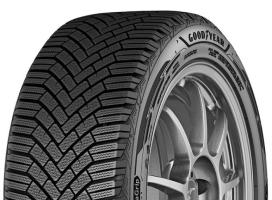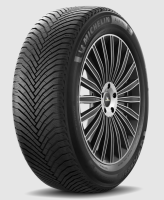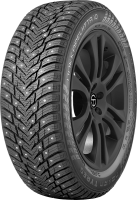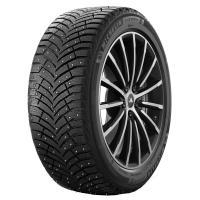

Michelin X Ice North 4
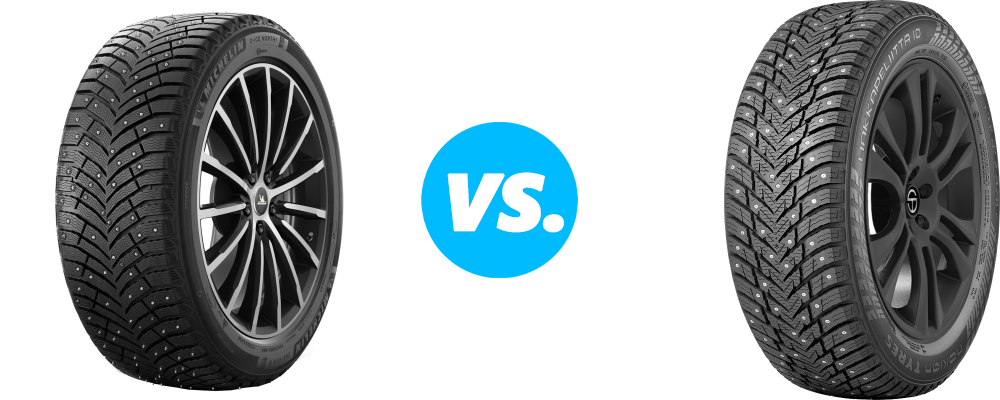
WatchMichelin's new studded tyre with a record number of studs is now available on the market. The X-Ice North 4 won all winter tyre tests conducted by the leading newspapers. The new stud is the only stud manufactured in Europe under controlled conditions and with 100% recycled materials.
In Depth Tyre Comparisons
View More ComparisonsAll Tests
View Test ResultsThe used version of the Michelin X-Ice North 4 studded tyre showed how performance changes over time. After 4,000 km, it still retained acceptable winter performance, especially on ice and snow. However, it struggled significantly with wet braking and aquaplaning resistance. The tyre's rolling resistance had improved with wear. This performance illustrates how studded tyres can maintain some winter capabilities even with significant wear.
Alternative Tyres
Questions and Answers for the Michelin X Ice North 4
Ask a questionAsk a question
We will never publish or share your email address
Review Summary
Based on 8 user reviews
Drivers largely praise the Michelin X Ice North 4 for outstanding grip on ice and snow, predictable handling, and surprisingly low noise for a studded tyre. Many report strong stud retention and durability over multiple winters, though one user experienced significant stud loss and another noted grip variability on loose-snow-over-ice at low speeds. Overall, the tyre is viewed as a top-tier winter performer with minor, less frequent concerns about stud loss and grip predictability in specific conditions.
Strengths
- Ice and snow grip
- Handling/control
- Low noise for studded tyre
- Overall winter performance
- Stud durability (for most users)
Areas for Improvement
- Grip inconsistency on loose snow over hard ice (minor)
- Stud loss reported by one user (isolated)
Top 3 Michelin X Ice North 4 Reviews
- 2007 Focus Cabrio
- 1998 996 C2
In most winnter conditions amazing grip level. However, two shortcomings. 1) The modern light studs do not penetrate well if there is loose snow on top of hard snor/icy surface. Obviously this has more to do with regulations rather than the tyre brand and model. 2) These modern silica tyres seem to collect a layer of snow in slow speeds, say below 30..40 km/h . Both these properties make the tyres a bit Jekyll and Hyde. At best it gives enormous amount of grip but then you come on loose snow and you think you are driving very slow - and suddenly you have absolutely no grip. I wish we could still have the longer studs. I can tell it is not nice to get the impression of good grip for some 50 km (0.3 < muu < 0.5) and then in an open place wind has collected snow on the hard snow surface and a deer runs into your lights and you find absolutely no grip at all (like muu = 0.05). Fortunately I had my insurances. I dont think this would have happened with the old style big block, long heavy stud Hakkapeliittas. Those would have not given the level of grip on the 50 km stretch but they would have lost pretty much nothing coming to the loose snow.
What impresses me is the strong stud base. The cavity seems wrapped with a very strong compound and the studs seem to not come off at all. The construction of the tyre seems very good for winter purposes, not too stiff nor too soft side wall. Subjectively I think I would prefer a sharper shoulder but that is more like an image in my head rather than supported by my driving experience.
If I was to develop this tyre I would look into the slow speed attached snow layer phenomenom - perhaps on all the silica tyres. I also would like to try something like raised tread on the lines of studs to get the modern studs penetrate better the loose snow on top of the hard.
I know one problem with the winter tyre testing is that the tracks are always similar to get good comparability. But in real life the surfaces vary much more in winter conditions and a good winter tyre should even the grip levels to predictable. As good as the X-Ice 4 is it is not the most predictable tyre. Fortunately you can learn to predict the places where you will loose the grip. I find this all more of a result of rather compromized regulations than tyre makes development work.