

| Test Summary | |
| Wet Braking |
Michelin Pilot Sport 4 |
| Dry Braking |
Michelin Pilot Sport 4 |
| Wear |
Michelin Pilot Sport 4 |
| Rolling Resistance |
Dunlop SportMaxx RT 2 |
| Noise |
Michelin Pilot Sport 4 |
As with previous years, the overall result is 60% subjective and 40% objective, making it quite a different test from the traditional tyre tests which rate objective data above subjective. This means that while the raw objective figures from the wet and dry tests are still important, how the tyre feels subjectively with regards to steering speed and car balance has an even more importance on the overall result.
The Top Three
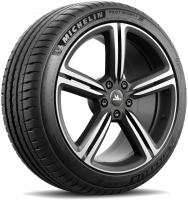
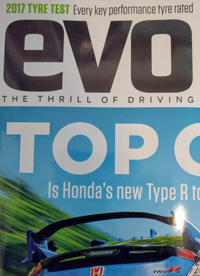 Even with the unique score weighting, the overall result isn't a surprise. The new Michelin Pilot Sport 4 wins the test by a convincing margin with a clean sweep in the subjective ratings, an extremely strong wet performance, and excellent road manners. This is the Michelin Pilot Sport 4's fifth win in five tests, continuing its 100% success rate.
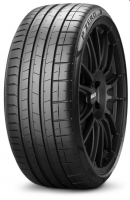
The new Pirelli P Zero PZ4 takes second place. The Pirelli was the fastest in the wet and dry, but didn't quite have the steering feel or balance of the winning Michelin. The Pirelli also struggled in the curved aquaplaning test, where it could only manage eighth place, 20% behind the winning Dunlop.
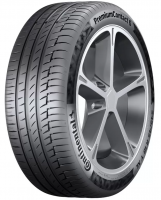
Third place was awarded to the new Continental Premium Contact 6. This tyre merges the Sport Contact 5 and Premium Contact 5 tyres, and blends an excellent wet performance with good road manners. The negatives? The Premium Contact 6 was a little weak in the dry finishing last overall in dry handling, but the pack was so close this didn't cost the tyre too many points overall.
The Rest
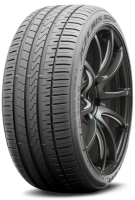
Fourth place was taken by the Falken FK510. The mid-range Falken was more expensive than both the Goodyear and Dunlop on test, but offered a better blend of dry and wet objective and subjective performances, but was also the heaviest tyre on test and used the most fuel. When comparing the Falken to the best tyre on test, the Falken would cost you approximately 0.5mpg extra on a car which averaged around 30mpg.
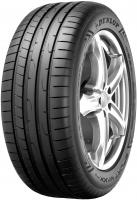
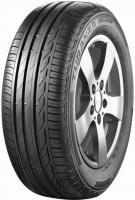
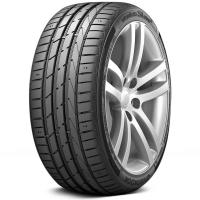
The Dunlop Sport Maxx RT2, Bridgestone Turanza T001 Evo and Hankook Ventus S1 Evo 2 cover fifth to seventh place, split by just 0.5% overall. The Dunlop was one of the fastest tyres in the dry and had the lowest rolling resistance, but weak in the wet, whereas the Bridgestone was strong in the wet, but average in the dry. Seventh placed Hankook wasn't outstanding in any area, but wasn't really weak either.
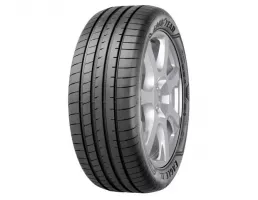
Unusually the Goodyear Eagle F1 Asymmetric 3 could only manage eighth place. As usual, the Goodyear was strong in wet handling, won the aquaplaning tests and was strong in dry braking, however it proved to be weak during dry handling, and scored very poorly subjectively in both the wet and dry which cost it a better result.
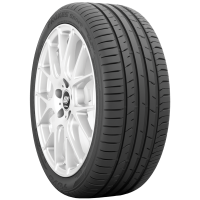
The Toyo Proxes Sport finished the test in last place, proving to be weak in both subjective and objective testing.
Data
Results
As always, we recommended visiting the evo.co.uk website, or buying EVO issue 238 for the full results. Our scoring below covers only the subjective dry and wet scoring (not objective), and "comfort" covers the road route EVO tested.

I really hope you can offer me some urgent advice on a set of new tyres for my 2005 Mercedes CLS 500 (using 245/40/18/93Y). We are currently running Hankook Ventus V12 evo 2s, and have been very impressed by the surefooted smooth, comfortable and quiet ride; they've also lasted very well. I'm therefore tempted to buy the same tyres again. However, have these now been surpassed by newer tyres such as the Continental Premium Contact 6? Our car seems very susceptible to excessive road noise, so I'm very keen to ensure that whatever tyres we choose are at least as quiet, if not quieter, and as comfortable as the Hankooks. What would you recommend to ensure the car runs as quietly as possible?
Check out the Falken FK510 - scores very well in this test for all categories including internal noise - http://www.tyrereviews.co.u...
Thanks very much, that's useful. Looking at the graph on noise, isn't that relating to the external noise though? And would you therefore recommend the Falkens above the Continentals and everything else? In some reviews I thought they had been criticized for being a little noisy and harsh, but it's always difficult to know if that's going to apply to the size I need. Thanks once again.
The test world scoring is internal noise, not external.
Realistically the differences between the top tyres are going to be incredibly small so you will be happy with any of the three options you've mentioned.
Hi. I've looked into the Falkens and they certainly get good reviews and are well priced. However, EVO's Performance Tyre Test Jan 18 gives these a poor noise rating, saying they are the least refined and least comfortable, and the noisiest of the group? Presumably this is because every test is subjective, but it does make it very tricky to make the right decision ?. Would you still recommend them though, or am I safer with the continentals? Sorry to keep asking questions; thank you very much for all your help.
It's worth remembering noise and comfort can also vary depending on tyre size and test vehicle used, nothing is ever easy in the world of tyres!
I would suggest giving a higher weight to any test in your size and using a similar vehicle, but also weight newer tests firsts as tyres are updated through their product life.
Jason D
why are the web braking numbers lower than dry???
I believe you mean higher. It's because there were more wet tests. See the magazine for full info
I would if I could find any trace of it on their website! It's not on Google either.
Can you help? I can find the 2015 & 2018 tests, nothing inbetween.
If google can't find it, no one can :( I took the data from the excellent magazine version.
How does the Pilot Sport 4 comes on top when it loses to the Pirelli P zero PZ4 on every test except wet braking??
There are more tests in the magazine which make the overall result
I'm a little perplexed when I compare these 2017 results with the previous year's - how say the Continental Premium Contact 6 and Goodyear Eagle F1 A3 tyres have slipped so much down the overall table and especially due to the dry handling rating on both tyres being so much worse within a year and also due to their 'subjective test results being poor.
The same Continental tyre in 2016 beat the same Dunlop, Hankook and Falken tyres which helped send it to the bottom of the table in 2017 after coming 3rd in 2016 for dry handling. How can exactly the same tyres have different positions to each other from one year to another in the same dry handling category??
Eagle F1s are same, but Contis arent. Last year was Cont Sports Contact 6, this year is Conti Premium Contact 6. Diff tyre.
Goodyear Eaglef F1 Ass. 3 and Dunlop SportMaxx RT2 behind Bridgestone Turanza T001 Evo ?
It doesn't make any sense, in my mind...
The new T001 EVO is a big step forward for Bridgestone :) It's nice to see the return of Bridgestone making great tyres.
Despite never used any Bridgestone tyres, I think they make good tyres, but my surprise was to see the use of "touring" tyre instead of a sport tyre for the test.
And, for my suprise, the T001 Evo scored better than two "flagship tyres", from the competion. That's what made me get surprised in the first place.
The way the results where commented, by Evo, may lead to thing that the Eagle F1 Ass. 3 and the RT2 are less good than a "touring" tyre. Is this true ?
" Dunlop SportMaxx RT 2
Positive: Quick in the dry, good ride comfort, lowest rolling resistance, strong aquaplaning result.
Negative: Slow in the wet."
Can a tyre be slow in the wet and have a strong aquaplaning result ?
The Continental Premium Contact 6 is a "confusing" tyre, but It seems to be very good.
Tyre reviews said in one of the latest videos, that the Goodyear Eagle F1 Ass. 3 was a tyre whith great feedback from the stearing and Evo says: "poor subjective handling in the dry and wet".
Is this, by comparing with the test winners, or is it a tyre with not good feeback from the wheel ?
Wet handling and aquaplaning are very different tests. Wet handling is on a wet track with a very small amount of standing water. Aquaplaning tests are like hitting a puddle, with much more depth.
In our video we were testing the Eagle F1 Asymmetric 3 against the previous generation Asymmetric 2, and compared to the A2 on the Golf GTI in the tested sizes, it was a marked improvement.
That's why I was wondering, if the tere is such difference between Michelin, Pirelli and the Goodyear's or Dunlop's...
I've used the Michelin Pilot Sport 4, but in steering feel, I still prefer Yokohama Advan Sport V105s.