Update 2023-10-24: To find out which of these are best in the snow, and how they compare to an all season and full winter tyre, please read the all terrain snow test here.
In this test I'll be testing nine of the most popular all terrain tyres to see which has the most grip in the dry, wet, AND offroad, and also to see which uses the least gas, and which has the best comfort and lowest noise in the real world. Basically, everything you'll ever need to know about these all terrain tyres!
Due to the sheer range of all terrain tyres in this tyre size, there's definitely tyres I've missed that I wanted to test, I'm sure you'll let me know your missing favorites in the comments, and if you know the all terrain tyre market well you'll know these are all from the mild end of the all terrain tyre spectrum which are designed to spend more time on-road than their aggressive all terrain brothers! If this test performs well, I'll of course do aggressive all terrain and mud terrain tests in the future.
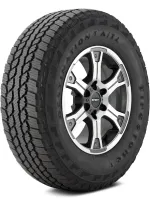
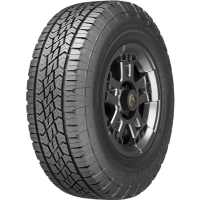
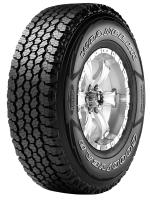
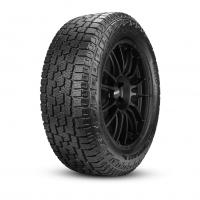
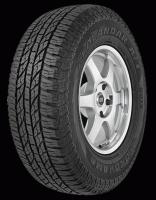
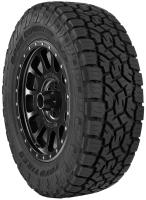
On test we have the BFGoodrich Trail Terrain TA, Continental Terrain Contact AT, Firestone Destination A/T2, Goodyear Wrangler All Terrain Adventure, Nitto Terra Grappler G2, Pirelli Scorpion All Terrain plus, Toyo Open Country A/T III, Travelstar Ecopath AT, and the Yokohama Geolander AT G015.
Testing Methodology
Test Driver
Jonathan Benson
Tyre Size
275/65 R18
Test Location
Professional Proving Ground
Test Year
2022
Tyres Tested
9
Show full testing methodologyHide methodology
Every tyre is tested using calibrated instrumented measurement and structured subjective assessment. Reference tyres are retested throughout each session to correct for changing conditions, ensuring fair, repeatable comparisons. Multiple reference sets are used where needed so that control tyre wear does not affect accuracy.
We use professional-grade testing equipment including GPS data loggers, accelerometers, and calibrated microphones. All tyres are broken in and conditioned before testing begins. For full details on our equipment, preparation process, and calibration procedures, see our complete testing methodology.
Categories Tested
Dry Braking
For dry braking, I drive the test vehicle at an entry speed of 110 km/h and apply full braking effort to a standstill with ABS active on clean, dry asphalt. I typically use an 100–5 km/h measurement window. My standard programme is five runs per tyre set where possible, although the sequence can extend to as many as fifteen runs if conditions and tyre category justify it. I analyse the full set of runs and discard statistical outliers before averaging. Reference tyres are run repeatedly throughout the session to correct for changing conditions.
Dry Handling
For dry handling, I drive at the limit of adhesion around a dedicated handling circuit with ESC disabled where possible so I can assess the tyre's natural balance, transient response, and limit behaviour without electronic intervention masking the result. I usually complete between two and five timed laps per tyre set, depending on the circuit, tyre type, and consistency of conditions. I exclude laps affected by clear driver error or obvious environmental inconsistency. Control runs are carried out frequently throughout the session, and I often use multiple sets of control tyres so that wear on the references does not become a meaningful variable. For more track-focused products, I also do endurance testing, which is a set number of laps at race pace to determine tire wear patterns and heat resistance over longer driving.
Subj. Dry Handling
Objective data is only part of the picture, so I also carry out a structured subjective handling assessment at the limit of adhesion on a dedicated dry handling circuit. I score steering precision, steering response, turn-in behaviour, mid-corner balance, corner-exit traction, breakaway characteristics, and overall confidence using a standardised 1–10 scale used consistently across my testing. The final assessment combines numeric scoring with written technical commentary. I complete familiarisation laps on the control tyre before evaluating each candidate.
Wet Braking
For wet braking, I drive the test vehicle at an entry speed of 88 km/h and apply full braking effort to a standstill with ABS active on an asphalt surface with a controlled water film. I typically use an 80–5 km/h measurement window to isolate tyre performance from variability in the initial brake application. My standard programme is eight runs per tyre set where possible, although the sequence can extend to as many as fifteen runs if conditions and tyre category justify it. I analyse the full set of runs and discard statistical outliers before averaging. To correct for changing conditions, I run reference tyres repeatedly throughout the session — in wet testing, typically every three candidate test sets.
Wet Handling
For wet handling, I drive at the limit of adhesion around a dedicated handling circuit. I generally use specialist wet circuits with kerb-watering systems designed to maintain a consistent surface condition. ESC is disabled where possible so I can assess the tyre's natural balance, transient response, and limit behaviour without electronic intervention masking the result. I usually complete between two and five timed laps per tyre set, depending on the circuit, tyre type, and consistency of conditions. I exclude laps affected by clear driver error or obvious environmental inconsistency. Control runs are carried out frequently throughout the session, and I often use multiple sets of control tyres so that wear on the references does not become a meaningful variable.
Subj. Wet Handling
Objective data is only part of the picture, so I also carry out a structured subjective handling assessment at the limit of adhesion on a dedicated wet handling circuit. I score steering precision, steering response, turn-in behaviour, mid-corner balance, aquaplaning resistance, breakaway characteristics, and overall confidence using a standardised 1–10 scale used consistently across my testing. The final assessment combines numeric scoring with written technical commentary. I complete familiarisation laps on the control tyre before evaluating each candidate.
Wet Circle
For wet lateral grip testing, I use a circular track of fixed radius, typically between 30 and 50 metres, broadly aligned with ISO 4138 principles. The surface is wetted in a controlled and repeatable manner. I progressively increase speed until the maximum sustainable cornering speed is reached. I normally record multiple laps in both clockwise and counterclockwise directions to reduce the influence of camber, banking, or directional track bias. I then calculate average lateral acceleration and compare the result with the reference tyre.
Straight Aqua
To measure straight-line aquaplaning resistance, I drive one side of the vehicle through a water trough of controlled depth, typically around 7 mm, while the opposite side remains on dry pavement. I enter at a fixed speed and then accelerate progressively. I define aquaplaning onset as the point at which the wheel travelling through the water exceeds a specified slip threshold relative to the dry-side reference wheel. I usually perform four runs per tyre set and average the valid results.
Curved Aquaplaning
For curved aquaplaning, I use a circular track, typically around 100 metres in diameter, with a flooded arc of controlled water depth, usually about 7 mm. The vehicle is instrumented with GPS telemetry and a tri-axial accelerometer. I drive through the flooded section at progressively increasing speed, typically in 5 km/h increments, and record the minimum sustained lateral acceleration at each step. The test continues until lateral acceleration collapses, indicating complete aquaplaning. The result is expressed as remaining lateral acceleration in m/s² as speed rises.
Snow Braking
For snow braking, I drive the test vehicle at an entry speed of 50 km/h and apply full braking effort to a standstill with ABS active on a groomed, compacted snow surface, measuring 45-5 km/h. I generally use a wide VDA (vehicle dynamic area) and progressively move across the surface between runs so that no tyre ever brakes on the same piece of snow twice. My standard programme is twelve runs per tyre set, although the sequence can extend further if the data justify it. I analyse the full set of runs and discard statistical outliers before averaging. The surface is regularly groomed throughout the session. To correct for changing snow surface conditions, I run reference tyres repeatedly — typically every two candidate test sets.
Snow Traction
For snow traction, I accelerate the vehicle from rest on a groomed snow surface with traction control active and measure speed and time using GPS telemetry. I typically use a 5–35 km/h measurement window to reduce the influence of launch transients and powertrain irregularities. I use a wide VDA (vehicle dynamic area) and progressively move across the surface between runs so that no tyre ever accelerates on the same piece of snow twice. The surface is regularly groomed throughout the session. I complete multiple runs per tyre set and average the valid results. Reference tyres are run typically every two candidate test sets to correct for changing snow surface conditions.
Snow Handling
For snow handling, I drive at the limit of adhesion around a dedicated snow handling circuit with ESC disabled where possible. The circuit is groomed and prepared after every run while tyres are being changed, so each set runs on a consistently prepared surface. I usually complete between two and five timed laps per tyre set, excluding laps affected by clear driver error or obvious environmental inconsistency. Because snow surfaces degrade more rapidly than asphalt, control runs are carried out more frequently — typically every two candidate test sets.
Gravel Handling
For gravel handling, I drive at the limit of adhesion around a dedicated gravel handling course with ESC typically disabled. I complete multiple timed laps per tyre set, excluding laps affected by driver error or environmental inconsistency. Because natural surfaces are inherently variable, I place particular emphasis on repeat runs, careful reference tracking, and averaged results. The control tyre is retested at regular intervals throughout the session.
Subj. Gravel Handling
Objective data is only part of the picture, so I also carry out a structured subjective handling assessment on a dedicated gravel course. I score steering feel, traction, stability, breakaway characteristics, and overall confidence using a standardised 1–10 scale used consistently across my testing. The final assessment combines numeric scoring with written technical commentary. I complete familiarisation laps on the control tyre before evaluating each candidate.
Dirt Handling
For dirt handling, I drive at the limit of adhesion around a dedicated dirt handling course with ESC typically disabled. I complete multiple timed laps per tyre set, excluding laps affected by driver error or environmental inconsistency. Because natural surfaces are inherently variable, I place particular emphasis on repeat runs, careful reference tracking, and averaged results. The control tyre is retested at regular intervals.
Subj. Dirt Handling
Objective data is only part of the picture, so I also carry out a structured subjective handling assessment on a dedicated dirt course. I score steering feel, traction, stability, breakaway characteristics, and overall confidence using a standardised 1–10 scale used consistently across my testing. The final assessment combines numeric scoring with written technical commentary. I complete familiarisation laps on the control tyre before evaluating each candidate.
Subj. Comfort
To assess comfort, I drive on a wide range of road surfaces (often dedicated comfort tracks at test facilities) at speeds from 50 to 120 km/h, including smooth motorway, coarse surfaces, expansion joints, broken pavement, and sharp-edged obstacles. I evaluate primary ride quality, secondary ride quality, impact harshness, seat-transmitted vibration, and the tyre's ability to absorb sharp inputs. Ratings are assigned on a 1–10 scale relative to the reference tyre.
Subj. Noise
For subjective noise assessment, I drive at constant speeds across multiple surface types with the windows closed, ventilation off, and audio system off. I assess overall noise level, tonal quality, cavity boom, pattern noise, broadband roar, and sensitivity to both speed and road texture. Each tyre is rated on a 1–10 scale and supported by written observations on noise character and annoyance.
Noise
I measure external pass-by noise in accordance with UNECE Regulation 117 and ISO 13325 using the coast-by method on a compliant test surface. Calibrated microphones are positioned beside the test lane, and the vehicle coasts through the measurement zone under controlled conditions. I record the maximum A-weighted sound pressure level in dB(A), complete multiple runs over the relevant speed range, and normalise the result to the reference speed required by the procedure.
Rolling Resistance
Rolling resistance is measured under controlled laboratory conditions in accordance with ISO 28580 and UNECE Regulation 117 Annex 6. The tyre is mounted on a test wheel and loaded against a large-diameter steel drum. After thermal stabilisation at the prescribed test speed, rolling resistance force is measured at the spindle and corrected according to the relevant procedure. The result is expressed as rolling resistance coefficient, typically in kg/tonne.
How each category is weighted in the overall score:
Dry30%
Dry Braking55%
Dry Handling40%
Subj. Dry Handling5%
Wet35%
Wet Braking45%
Wet Handling25%
Subj. Wet Handling5%
Wet Circle5%
Straight Aqua15%
Curved Aquaplaning5%
Off road15%
Gravel Handling25%
Subj. Gravel Handling25%
Dirt Handling25%
Subj. Dirt Handling25%
Comfort10%
Subj. Comfort40%
Subj. Noise40%
Noise20%
Value10%
Rolling Resistance100%
Wet
On the road, it's the wet grip of the tyre that can really make a difference in an emergency situation which is why I feel wet braking and wet handling tests are very important tests of any tyre, including all terrain!
Only one tyre of the group made the raptor difficult to drive that was the Nitto, with the average of the three laps nearly 89 seconds. The balance was fine, but it really didn't want to grip longitudinally or laterally, and was the only tyre I out braked myself so badly I ended up leaving the course. Fortunately this is no problem for a Raptor, but on the road that's less than ideal.
Next up was the BFGoodrich, it had nice steering, and a safe understeer balance, the rear was very stable, but you were just waiting for the understeer to quit before getting on the power so the lap time was slow.
Toyo and Pirelli were next in the 84 second mark, and while they were close in time, they were very different to drive. The Toyo was a confusing tyre, difficult to drive quickly due to limited feedback, and once you were sliding it took a while to recover. The Pirelli conversely was a joy to drive, it felt almost sporty, certainly the most direct of the pack and an enjoyable experience.
The Travelstar finished fifth, another tyre with a lot of understeer and not much detail through the steering wheel, but the grip was good, impressive for the price point!
Goodyear and Yokohama were next. Like the Pirelli, the Goodyear was a really nice rounded tyre to drive, good grip, predictable, the Raptor went where you wanted it to go, just a rounded experience. The Yokohama on the other hand, excellent grip, especially on the brakes, but just lacked feedback and understeered a bit more than its main rivals.
The final two tyres were the Firestone and Continental. These tyres were almost tied on time, the Continental had a fraction of a lead, but they too delivered it in different ways. While the Firestone was fast and had loads of grip, it was a little numb and had more understeer than the Conti. The Continental was just a great tyre to drive, whatever you asked for it. Predictable grip, good communication at the limit, progressive past the limit. Considering this is a mild all terrain tyre, I'm very impressed!
Wet Braking
Spread: 16.05 M (27.7%)|Avg: 63.11 M
Wet braking in meters (100 - 0 km/h) (Lower is better)
Continental TerrainContact AT
58.00 M
Firestone Destination AT2
58.55 M
Goodyear Wrangler All Terrain Adve
59.60 M
Yokohama Geolandar AT G015
60.45 M
Toyo Open Country AT III
62.65 M
Pirelli Scorpion All Terrain Plus
62.95 M
Travelstar Ecopath AT All Terrain
63.25 M
BFGoodrich Trail Terrain TA
68.50 M
Nitto Terra Grappler G2
74.05 M
Wet Handling
Spread: 7.34 s (9%)|Avg: 83.89 s
Wet handling time in seconds (Lower is better)
Continental TerrainContact AT
81.33 s
Firestone Destination AT2
81.59 s
Yokohama Geolandar AT G015
82.28 s
Goodyear Wrangler All Terrain Adve
82.48 s
Travelstar Ecopath AT All Terrain
83.78 s
Pirelli Scorpion All Terrain Plus
84.30 s
Toyo Open Country AT III
84.56 s
BFGoodrich Trail Terrain TA
86.02 s
Nitto Terra Grappler G2
88.67 s
Straight Aqua
Spread: 5.40 Km/H (6.2%)|Avg: 83.98 Km/H
Float Speed in Km/H (Higher is better)
Travelstar Ecopath AT All Terrain
86.50 Km/H
Firestone Destination AT2
85.90 Km/H
Yokohama Geolandar AT G015
85.40 Km/H
Continental TerrainContact AT
84.40 Km/H
Pirelli Scorpion All Terrain Plus
83.80 Km/H
BFGoodrich Trail Terrain TA
83.10 Km/H
Nitto Terra Grappler G2
82.90 Km/H
Toyo Open Country AT III
82.70 Km/H
Goodyear Wrangler All Terrain Adve
81.10 Km/H
Curved Aquaplaning
Spread: 0.96 m/sec2 (25.7%)|Avg: 3.24 m/sec2
Remaining lateral acceleration (Higher is better)
Travelstar Ecopath AT All Terrain
3.73 m/sec2
Firestone Destination AT2
3.63 m/sec2
Pirelli Scorpion All Terrain Plus
3.40 m/sec2
Yokohama Geolandar AT G015
3.34 m/sec2
Nitto Terra Grappler G2
3.17 m/sec2
Continental TerrainContact AT
3.12 m/sec2
Toyo Open Country AT III
3.10 m/sec2
Goodyear Wrangler All Terrain Adve
2.93 m/sec2
BFGoodrich Trail Terrain TA
2.77 m/sec2
Dry
In a repeat of wet handling, Nitto and BFGoodrich were at the back of the dry handling times. They didn't feel bad to drive, none of the tyres did, but they were slightly sluggish to react to inputs and didn't offer the most feedback.
The rest of the tyres were all within a second of each other, and honestly there wasn't a huge spread subjectively either below the limit or beyond. If I had to declare a winner, it would be the Goodyear as the steering was quick and direct and loaded up nicely, with the Firestone, Pirelli, Nitto and Travelstar being the next group of very good tyres.
The Conti and Yoko all felt fairly similar with slightly less responsive steering, and the Toyo felt the least precise, though the margins were small. None of the tyres failed the lane change stability exercise and none gave me any surprises on any of the 33 laps completed.
Dry Braking
Spread: 5.00 M (12%)|Avg: 43.64 M
Dry braking in meters (100 - 0 km/h) (Lower is better)
Continental TerrainContact AT
41.60 M
Travelstar Ecopath AT All Terrain
42.30 M
Goodyear Wrangler All Terrain Adve
42.40 M
Pirelli Scorpion All Terrain Plus
43.40 M
Toyo Open Country AT III
43.60 M
Nitto Terra Grappler G2
43.70 M
Yokohama Geolandar AT G015
44.00 M
Firestone Destination AT2
45.20 M
BFGoodrich Trail Terrain TA
46.60 M
Dry Handling
Spread: 1.02 s (1.5%)|Avg: 68.81 s
Dry handling time in seconds (Lower is better)
Goodyear Wrangler All Terrain Adve
68.32 s
Pirelli Scorpion All Terrain Plus
68.41 s
Continental TerrainContact AT
68.60 s
Toyo Open Country AT III
68.63 s
Travelstar Ecopath AT All Terrain
68.63 s
Yokohama Geolandar AT G015
68.99 s
Firestone Destination AT2
69.06 s
BFGoodrich Trail Terrain TA
69.33 s
Nitto Terra Grappler G2
69.34 s
Gravel
Gravel is an interesting test and very hard to do right! As a little insight, because of the damage I do to the track in my 3 lap run, which takes 3 minutes, the track needs 20 minutes of combing and fixing the surface between tyres to make sure it's the same for every tyre.
Also, I'm going to score off road a little differently to dry and wet. When using your vehicle offroad, you're less likely to need max out handling or emergency avoidance, so I'm going to give more score weight to how the tyre is subjectively, which is how the tyre reacts to your inputs, especially the sub limit. I have of course done max handling laps so you'll know which gives you the most grip too, so we should have all the bases covered. And caveat, it's very close between all the tyres.
The most difficult tyres to get around the lap were the Continental, Nitto and Yokohama. All three tyres felt like they had low grip sublimit, and the Continental was particularly bad as the rear would come around more quickly than any other tyre. This improved as you got faster, and while the grip was there you really had to work for it. Nitto was a bit better past the limit, but did like to slide too.
Goodyear and Pirelli were next in handling, I thought both of these, and the Nitto would do really well because of the tread pattern, but I guess there's more to it than that! There were better sublimit, but both lacked a little grip compared to the best.
Firestone and Travelstar were both very good, if anything it felt like the Travelstar had the edge, they were both responsive sublimit and had good levels of grip, but the stars of the show were BFGoodrich and Toyo. BFGoodrich is an off road brand, and it really showed here, as it had the fastest lap and the most impressive braking, turning and balance both sublimit, and doing big fun slides like these. If you live at the end of a long gravel drive, this is the tyre to have.
Gravel Handling
Spread: 2.46 s (4%)|Avg: 62.53 s
Gravel Handling time in seconds (Lower is better)
BFGoodrich Trail Terrain TA
61.60 s
Firestone Destination AT2
61.77 s
Toyo Open Country AT III
62.12 s
Travelstar Ecopath AT All Terrain
62.12 s
Yokohama Geolandar AT G015
62.47 s
Goodyear Wrangler All Terrain Adve
62.73 s
Continental TerrainContact AT
62.73 s
Pirelli Scorpion All Terrain Plus
63.16 s
Nitto Terra Grappler G2
64.06 s
Subj. Gravel Handling
Spread: 15.00 Points (15%)|Avg: 91.67 Points
Subjective Gravel Handling Score (Higher is better)
BFGoodrich Trail Terrain TA
100.00 Points
Toyo Open Country AT III
100.00 Points
Firestone Destination AT2
95.00 Points
Travelstar Ecopath AT All Terrain
95.00 Points
Goodyear Wrangler All Terrain Adve
90.00 Points
Pirelli Scorpion All Terrain Plus
90.00 Points
Yokohama Geolandar AT G015
85.00 Points
Continental TerrainContact AT
85.00 Points
Nitto Terra Grappler G2
85.00 Points
Dirt
Like gravel, dirt is a very difficult surface to test on. I would go as far to say even more difficult to get consistent timings as some of it is hardpack, some of it is very dusty, some of it gets rutted, the list goes on, however as the group was extremely close we must be doing something right.
The BFGoodrich and Toyo were again the standouts on dirt, with the Nitto and Yoko again struggling. The rest of the group were all very close on time, with the Conti and Pirelli probably my favorites to drive quickly as they were just a little more predictable and responsive.
Dirt Handling
Spread: 1.69 s (3%)|Avg: 58.01 s
Dirt handling time in seconds (Lower is better)
BFGoodrich Trail Terrain TA
56.86 s
Goodyear Wrangler All Terrain Adve
57.76 s
Firestone Destination AT2
57.91 s
Nitto Terra Grappler G2
57.95 s
Continental TerrainContact AT
58.00 s
Pirelli Scorpion All Terrain Plus
58.26 s
Toyo Open Country AT III
58.37 s
Yokohama Geolandar AT G015
58.41 s
Travelstar Ecopath AT All Terrain
58.55 s
Subj. Dirt Handling
Spread: 10.00 Points (10%)|Avg: 94.44 Points
Subjective Dirt Handling Score (Higher is better)
BFGoodrich Trail Terrain TA
100.00 Points
Goodyear Wrangler All Terrain Adve
95.00 Points
Pirelli Scorpion All Terrain Plus
95.00 Points
Continental TerrainContact AT
95.00 Points
Toyo Open Country AT III
95.00 Points
Firestone Destination AT2
95.00 Points
Travelstar Ecopath AT All Terrain
95.00 Points
Yokohama Geolandar AT G015
90.00 Points
Nitto Terra Grappler G2
90.00 Points
Environment
Pulling it back to everyday life, I think noise and comfort is very important for these tyres, and while none of the tyres were super loud and crashy as some all terrain and mud terrain tyres can be, there was definitely a spread.
The "not very good" award goes to the budget travel star tyre. As impressive as it's been so far in the test, it was let down as the only tyre with really intrusive pattern noise at speed, and it really did rattle the cabin over the impact strips and potholes.
Nitto and Toyo were the next pair of tyres, both having some audible noise in the cabin and feeling pretty firm in comfort, with the nitto noisy in a straight line and very noisy when turning left, but not right. Strange.
BFGoodrich and Goodyear were a step up again in noise and comfort, and I'm going to put the Pirelli in this group too as even though it felt like quite a firm tyre, it didn't have any secondary event after a big impact like the other tyres so it didn't feel as crashy overall. Abrupt but honest feeling. I appreciate this.
The Continental and Firestone were both impressive tyres in terms of noise and comfort, though the firestone did have a little tread pattern noise when turning, but was extremely quiet in a straight line. However, if you want the most comfortable and quietest mild all terrain tyre, it has to be the Yokohama. This was mega impressive, and while testing blind, I always instantly knew I was on the yokohama as it was a standout from the group in terms of comfort and in cabin refinement. Impressive job.
Noise
Spread: 6.20 dB (8.6%)|Avg: 74.64 dB
External noise in dB (Lower is better)
Continental TerrainContact AT
71.90 dB
Firestone Destination AT2
72.80 dB
Goodyear Wrangler All Terrain Adve
73.00 dB
Yokohama Geolandar AT G015
73.20 dB
BFGoodrich Trail Terrain TA
73.50 dB
Toyo Open Country AT III
75.30 dB
Travelstar Ecopath AT All Terrain
76.70 dB
Nitto Terra Grappler G2
77.30 dB
Pirelli Scorpion All Terrain Plus
78.10 dB
Subj. Noise
Spread: 15.00 Points (15%)|Avg: 94.44 Points
Subjective in car noise levels (Higher is better)
Goodyear Wrangler All Terrain Adve
100.00 Points
Continental TerrainContact AT
100.00 Points
BFGoodrich Trail Terrain TA
100.00 Points
Yokohama Geolandar AT G015
95.00 Points
Firestone Destination AT2
95.00 Points
Nitto Terra Grappler G2
95.00 Points
Pirelli Scorpion All Terrain Plus
90.00 Points
Toyo Open Country AT III
90.00 Points
Travelstar Ecopath AT All Terrain
85.00 Points
Subj. Comfort
Spread: 20.00 Points (20%)|Avg: 90.00 Points
Subjective Comfort Score (Higher is better)
Yokohama Geolandar AT G015
100.00 Points
Continental TerrainContact AT
95.00 Points
Firestone Destination AT2
95.00 Points
Goodyear Wrangler All Terrain Adve
90.00 Points
Pirelli Scorpion All Terrain Plus
90.00 Points
BFGoodrich Trail Terrain TA
90.00 Points
Toyo Open Country AT III
85.00 Points
Nitto Terra Grappler G2
85.00 Points
Travelstar Ecopath AT All Terrain
80.00 Points
With gas prices as crazy as they are, the rolling resistance of a tyre, which is how much a tyre contributes to your gas bill, is very important. There wasn't a massive gap between the tyres, just under 13% which is around 3% difference in the real world, but over 60,000 miles those differences can add up! Firestone, BFgoodrich and Pirelli had the lowest rolling resistance, and Yokohama, Continental and Nitto had the highest of the group.
Rolling Resistance
Spread: 1.35 kg / t (16%)|Avg: 9.27 kg / t
Rolling resistance in kg t (Lower is better)
Firestone Destination AT2
8.42 kg / t
BFGoodrich Trail Terrain TA
8.86 kg / t
Pirelli Scorpion All Terrain Plus
8.89 kg / t
Toyo Open Country AT III
9.27 kg / t
Goodyear Wrangler All Terrain Adve
9.49 kg / t
Travelstar Ecopath AT All Terrain
9.49 kg / t
Yokohama Geolandar AT G015
9.56 kg / t
Continental TerrainContact AT
9.67 kg / t
Nitto Terra Grappler G2
9.77 kg / t
19,000 km
£1.45/L
8.0 L/100km
--
Annual Difference
--
Lifetime Savings
--
Extra Fuel/Energy
--
Extra CO2
Estimates based on typical driving conditions. Rolling resistance accounts for approximately 20% of IC vehicle fuel consumption and 25% of EV energy consumption. Actual savings vary based on driving style, vehicle weight, road conditions, and tyre age. For comparative purposes only. Lifetime savings based on a 40,000km / 25,000 mile tread life.
Results
As all terrain tyres mean different things to different people, there's no one best tyre for everyone. As we have to present the results in some sort of order, we've used a score weighting we feel suits the intention of a mild all terrain tyre, i.e. more on road then off road. However, we've also just finished an update to the tyre reviews website where you can go and adjust the score weighting based on your own needs to see which tyre is best for you. I highly recommend you do that as it gives you total control in finding the best all terrain tyre for you. You can find it linked below.
Very short wet braking and good wet handling, high aquaplaning resistance, very good off road, low noise, good levels of comfort, lowest rolling resistance on test.
Long dry braking and slow dry handling with slow reactions to steering inputs.
The Firestone Destination A/T2 finished just 0.03% ahead of the Continental, but with a slightly different personality. Like the Continental it was exceptional in all the wet tests, but unlike the TerrainContact AT it was also one of the best tires in the off road tests. It also had an excellent level of comfort, low noise, and the lowest rolling resistance on test which is a fantastic combination of things. The negatives of the tire, it couldn't keep up with the Conti in the dry, and its steering response wasn't the best of the group. Like the Goodyear and Continental, this is the final tire we're putting the tire reviews highly recommended stamp on, and a very good road bias all terrain tire.
Best in wet handling, shortest wet braking distance, good aquaplaning resistance, shortest dry braking, good dry handling time, good on dirt, lowest noise on test, excellent levels of comfort.
Oversteer handling balance on gravel, high rolling resistance.
The Continental TerrainContact AT was the best tire in the wet grip tests with the best wet handling and shortest wet braking, good aquaplaning resistance, shortest dry braking, very good dry handling, and some of the lowest noise levels and best comfort on test. Where could the tire be better? It had a disappointingly high rolling resistance, and while the lap time on gravel finished mid pack, sublimit subjectively it was hindered by slow to react steering and a wandering rear axle. A very very good tire, with peak safety in both the braking tests. We highly recommend this tire and this is exactly what we think a mild AT tire should be.
Very good in the wet grip tests, best in dry handling with short dry braking, very good on dirt, low noise.
Low aquaplaning resistance, average gravel performance.
The Goodyear Wrangler All Terrain Adventure looks like it would struggle on the road with its blocky tread pattern, but it was exceptional in the dry and wet grip tests. It was also fine on gravel, very good on dirt, had low noise levels, good levels of comfort, and one of the most enjoyable tires to drive! The only drawback was its limited aquaplaning resistance and average rolling resistance, but we'd definitely fit it. Highly recommended, this is one of the best all round tires on test.
Good aquaplaning resistance with reasonable wet handling, very good dry handling, good on dirt, low rolling resistance.
High levels of noise, firm ride comfort.
The Pirelli Scorpion All Terrain plus might be one of the older tires in the group, but as a mild AT tire it ticked all the boxes with a great performance in the dry, acceptable in the wet, and a very low rolling resistance. It wasn't the best off road in terms of grip, but wasn't a million miles off and it was subjectively an enjoyable tire to drive on. We liked the character of this tyre, and if aggressive looking shoulders are your thing, this was one of the meatier ones.
Excellent in the wet with short wet braking, good handling and high aquaplaning resistance, best comfort on test, low noise.
Limited grip in the dry and on gravel, high rolling resistance.
The Yokohama Geolander AT G015 is probably the most road biased looking AT tire in this test, and it had a performance to match its looks! It was one of the best in the wet, but did struggle a little in the dry. It was average off-road, but it was by far the most comfortable tire on test and had a low noise level. The real let down, as one of the newer tires on test, it had one of the highest rolling resistance levels, meaning it'll cost you more at the pumps. Still recommended though, a really good product for someone who only does light off roading.
Good wet handling, best aquaplaning resistance on test, good dry braking, good gravel performance, low price.
Extended wet braking, very high levels of noise with harsh ride comfort.
The Travelstar Eco path AT All Terrain is manufactured by a Chinese company called Unicorn Tyre, and it turned out to be an actual unicorn - a budget Chinese tyre that actually performed ok! It was the best tyre in the deep water hydroplaning tests, and very good in dry braking and in gravel.
It was however let down in wet braking, on dirt, and was a very noisy tire so even at the price, there's probably better purchases out there.
Very good off-road, good dry handling, low rolling resistance.
Limited wet performance with high levels of aquaplaning, poor comfort, high noise.
The Toyo Open Country A/T III was a similar tire to the BFGoodrich, in that it had a better off-road performance than its on-road grip, but it did brake better in the dry and wet which is why it finished higher overall. It certainly wasn't as refined as the BFG, with more nose, less comfort and a higher rolling resistance.
Best off road with fastest lap and excellent handling, low noise, good levels of comfort, very low rolling resistance.
Reduced on-road performance with long braking distances in the dry and wet and low grip in the handling tests.
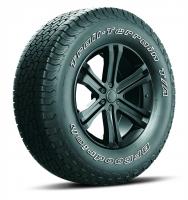
The BFGoodrich Trail Terrain TA was the king of the offroad in this test and is the tire from this group we'd fit if we spent a lot of time offroad. However, it wasn't up to scratch in the dry and wet, and does make us wonder… if you spend a lot of time offroad, why not fit the hugely popular KO2... That said, it does have a very low rolling resistance, so if you want a good off road tyre with low gas use and low noise in the cabin, this is a good choice, just be mindful of it's on road performance.
Extremely long wet braking, slowest wet handling with difficult balance, slowest in dry handling, average offroad performance, noisy, highest rolling resistance on test.
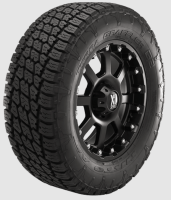
The Nitto Terra Grappler G2 might not be the most expensive tire of the group, but we expected more from the Nitto brand. Sadly, the Terra Grappler was out classed on nearly every surface, and most worryingly had extremely long wet braking, stopping the F150 over 16 meters longer than the best of the group - when the best tire in the test had you stopped safely, you'll still be traveling 27 mph on the Nitto from just 50 mph.
Not sure what was available to you at the time of testing, but in the 275/65 r18 the firestones come in 114 and 116 load index. It appears you tested the 114, which doesn't match the 116 for all the other tires. My OCD does wonder if the 116 would have changed its results slightly. Perhaps the extra stiffness, would have decreased wet performance, or increase rolling resistance. Perhaps not, who knows.
Ok so I'm an engineer who likes tires (a crazy person) and what I found was fascinating. What you tested with was the north american P-Metric (P275/65/r18 114), whats new to the market us the eurometric (275/65/r18 116). I did a deep dive and found out they do the calculation and load inflation charts differently. Long story short a Pmetric 114 is more robust then a eurometric 114 (would be equivalent to a 115.5 if it existed ). If you check at tire rack, discount tire, consumer reports or others they'll tell you euro metric is stronger, and its ok to go to euro metric from pmetric, but it's not true, it's the opposite. Just very confusing.
The pmetric establishes a tires rating by how much it can hold at 35psi, so a 114 rated tires has to hold 2601lbs at 35psi. The euro metric establishes tire rating at 36 psi, so a 114 rated tire has to hold 2601 at 36 psi. It needs more pressure to hold to same load. So if you look at any given pressure in the pressure tables (22,26,35 etc..) The pmetric tire has a higher load capacity.
So unless your adjusting pressure and not using was on the door, your safer going from a eurometric to a stronger pmetric (same load rating) and NOT the visa versa.
Clear example, if your car uses 32psi, 275/65/r18. At that pressure a Pmetric 114 tire has a capacity of 2502, a euro metric 116 rated only has a capacity of 2491 ( eurometric 114 is 2348).
The advice on the big sites is incorrect, please do a video on this the world should know lol ( not sure how many would care, but still!)
P.S. To your point behind the green curtain manufactures are probably using the same tire for both ratings and slapping different sidewall plates.
P.P.S. I dont want to post links here and get flagged, but I have links for all articles and load inflation charts.
Feel free to post some links, sounds interesting, top level of nerding!
The brands I've spoken to in the past that have the same AT product line for NA and EU are the very same tyre, so the assumption would be they're all just tested to the tougher test of the two. Due to EU rolling resistance and noise targets, most of the north american products are not legal in the EU so there's a split product range.
That makes sense for them to do that, there's so much overlap why not use the more rigid spec and simplify the manufacturing lines.
So here is Consumer Reports , Tire Rack and Discount Tire all incorrectly saying the same thing, that the euro metric is more robust. Here are the inflation tables for both P-Metric and Euro Metric showing that isn't exactly true (Toyo posted the table otherwise you'd have to purchase the spec, thank you Toyo!)
Costco only sales the P-Metric version of the firestones 275-65-r18 with a 114 rating. Tire Rack sales both versions for just $6 difference. It's funny that if your vehicle OEM was euro 115 no big tire shop would install the p-metric 114.
XL tires is even more wonky
Any nerds googling this in the future out of confusion, I hope this thread clears things and gives you peace!!
I've still not got my head around why we have XL tires instead of just having higher load rated tires.
Thanks for sharing the links and PDF, very interesting. It seems most of the comparisons are comparing different load indexes between P and EU, where naturally the higher number does seem to win (even if the calculations are a little different.) I need to spend some more time reading that PDF.
Barrys Tire Tech is a blog site run by a retired tire engineer it's a treasure trove of information, but the site is clearly made in the 1990s. He references your work a bit, he's also responsive to emails. I learned a lot from his site. Here's what I learned:
To increase the load capacity of a tire, you have to change the size, increase the sidewall thickness or increase the recommended pressure. There are performance implications for all choices.
The industry decided that the pressure at which a passengers tires load capacity is rated is 35 ( 36 in the EU ). Likely they can handle high loads/pressures but that's the industry rated pressure.
For a given tire size, LT tires significant increase thickness and weight to achieve higher load capacities.
For a given tire size, XL tires accomplish this by rating the tire at 42psi (instead of 35/36), with requires minimal changes to tire structure to allow higher pressures. Since tires have tremendous safety factors on pressure, it could already handle higher pressures. For example, P245/50R19 comes in 100 rating and XL 104. For all overlapping pressures they have the exact same load capacity (XL is not stronger). Except when you get over 36, because SL tires are only rated to 35/36. They are probably selling the same tire for both SL and XL nowadays.
For any given size there generally is no option to have a higher load rated tire. Once you choose a standard (e.g. EU or NA standard), there's only one load rating for that tire size. It's just where the industry landed.
So, if you've chosen a tire size and want more load capacity the cheaper route is the XL options, otherwise you will have to go with a different tire size or an LT option.
Lastly, I noticed that tire sizes with XL options don't have LT options (I did not check all sizes)
P.S. For you ever finds this on google, I'm not a tire engineer (I'm an ME and slightly obsessive), I just find tires fascinating, and this is what I've learned. Throw stones
P.P.S. One of the first tyre review videos I watched, you were weighing the front seats of a BMW car comparison (I forget which) and adding weights to compensate for the difference. I loved it, definitely slightly crazy person like me.
Impressive how irrelevant the Nitto seems here, being low performance across the board. I see tons of Nitto ads, but a lot of the marketing is features like two sidewall style designs.
Great test! I would love to see one now for highway all season tires for a similarly sized vehicle. With tires like the Michelin Defender LTS. I bet highway tires will better suite most drivers, yet I can not find a comprehensive comparison like you did with this all terrain test.
Hello - thanks for another great review! With the addition of snow results, you got me interested in maybe going for a mild AT tire for my Forester (since I anyway plan on changing the OE summer tires that come with it). I anyway wanted to buy an AS tire (Michelin CC2 or Conti AllSeasonContact 2), and although the measurements in your tests are not directly comparable, they suggest that mild AT tires are not much worse in any of the 3 surface condition types (dry/wet/snow) you test in. Of course, if you ever do a test like that, it will be highly appreciated. :) However, I am still not sure about this, as my share of offroad driving would be a mere 5%, 10% tops. Is there an AT tire which is basically a regular PC AS tire, with just a bit more of offroad capability? I know previously BFG had Urban Terrain (the same tire as Kleber Citilander), but I don't know if any of these is still produced, and how well they compare to modern AS tires. Any advice on this or a link to some testing that might help would be highly appreciated. :) Aside from that - just keep up with the great work!
I see. I was hoping to get a tire I can leave on the car for the whole year, and then change in 2-3 years tops. So far, CC2 was my first choice (the regular model, not the SUV one - if there is actually any difference - as it's not offered in 225/60 R17 size), I am just unsure if it would get damaged/pierced through during some light off-roading (forest and village roads, no heavy rock-climbing or anything).
The Firestone Destination AT2 is not offered in Europe (I live in Serbia), as well as Nokian Outpost nAT/APT, we only have the BFGoodrich Trail Terrain (actually, their whole offer - there's a very good BFG importer/distributor here), which also seem as an AT overkill for me. It's good they're good in wintry conditions (we do get some snow each year), but the results from your testing (the braking in wet and dry, especially) make it a no go, considering my driving profile (mostly on tarmac).
I have a couple more months to decide, it will also depend on the availability (for instance, I don't see Conti AllSeasonContact 2 at all in the size I need)...
Yeah, I also found about that while researching, and decided to definitely go with a mild-AT tire. It will most probably be either Geolandar AT G015 (where the fuel economy does concern me a little bit, although I don't know how much would that actually reflect in the real world usage), or Bridgestone Dueler AT002, which is quite new, so not many reviews or impressions are available.
There are also some tires that confuse me, a bit... For instance: Geolandar CV 4S G061 is marketed "just" as an AS tire (or, all-weather), and although it's a part of the Geolandar family (meant for SUVs and off-roading), there's absolutely no mention of it being capable for any kind of off-road, aside from noting that it has a nylon layer for additional protection. Also, the thread pattern looks a bit AT-ish, but that's not reassuring enough.
Finally, it's a pity that some of the EU-available tires just don't come in 225/60 R17 size, such as Cooper Discoverer AT3 4S or Falken WildPeak AT3WA - that would give me a lot of great options.
In all seriousness, it's a pity that the chance of seeing these two compared (Geolandar AT G015 vs Geolandar CV 4S G061) is almost zero... But still, I'll try to find a comparison, or at least a testimony of CV 4S's usability for mild offroading (having in mind it's probably better on-road than its AT sibling). If there isn't one - G015 it is.
P.S. I've even sent an email to Yokohama (through the contact form on their European site), but of course, they haven't replied...
Perhaps I'm splitting hairs here, but I see the tests are conducted on a vehicle with a thundering V8 under the bonnet. Considering you are clearly british, a land where V8 pickups are rare, perhaps a fairer test might be when driving something that brits are more likely to own, such as a sluggish 4 cylinder diesel. If these tests are to be considered truly subjective, then perhaps using a vehicle suited to the target audience.
I'm in the market for all terrain tyres, and whilst your article has been helpful, I'm still concerned about making the right choice here at the base if the highlands in Scotland
I'm not sure anyone has ever done one for the UK market as it's such a niche segment. Some of these tires have European versions, i'm pretty sure the Conti is sold by a different name but is the same tire.
Jon, Do you have any experience with either the General Grabber AT3, Falken Wildpeak AT3WA or Toyo Open Country AT Plus? Looking for something better on road then BFG KO2 without sacrificing loads of off-road performance. Unfortunately none of the tyres in the test available in my size and load index.
I have a 4runner as a daily driver. Every weekend i do good amount of sand driving over dunes. I have currently Geolander AT G015. What All Terrain tire would u suggest for me?
Regarding rolling resistance, what do you mean by a 13% measured difference translating to 3% real world difference? Is the 3% the overall change in fuel consumption, or something else?
Most articles I've found indicate that a 10% change in rolling resistance translates to about 1% change in mileage. Though, I'm sure that's significantly affected by how much an individual vehicle's drag is due to rolling resistance vs. wind drag.
3% would be the overall change in fuel consumption based on the data I've seen, however as you correctly point out there are many factors involved in calculating the % the tyre adds compared to the rest of the vehicle so a single figure does not work for all vehicle types.
Hi. Great comparison. One question: Was it the PC (Passenger Car) or the LT Light Truck) version of the Geolandar A/T G015 tyre that was used in this test? Thanks.
These tests are really great, however I would like to see a couple more tests if possible? 1. Wet Grass, 2. Mud or soft soil (not deep mud). 3. Sand. These are seemly the surfaces that I get stuck in with my van. After driving 300km through rain or mixed conditions :)
I've tested wet grass before, sadly it's really not the most consistent test so I don't go out of my way to do it if I'm short of time. I didn't feel the data was that great.
I'm not sure anyone who's managed to find a way of testing soft soil consistently yet sadly.
Sand is one I really want to do as you can be more consistent, but it takes a lot of prep. Working on it though :)
I've read your detailed test with interest. I am looking for tyres for my heavy motorhome, that works well on roads and deals with deep mud in exits from fields at dog agility meetings. My Toyos worked well but are no longer available, so I'm searching here. We are not talking fast cornering here, just safety comfort and dependable recovery at ends of meetings.
I'm afraid that's so far out of my experience I wouldn't know where to start. I guess if there's deep mud you'll need at least a more aggressive all terrain tire than these, but when you get to that end of the spectrum you're going to be giving up comfort.
I need some AT capability, 3 peak rating, good road manners and low rolling resistance to replace the sad OEM Conti tires to perform better as my work truck. I was all but sold on the BFG Trail Terrain T/As but thanks to your review I will be hunting for the Firestones. Looks like I might have to up-size slightly to get them, which is something I was contemplating do in anyway.... THANKS!
I would be interested to snow test them and also endurance test. You can't work out too much by feel, but I would guess with BFG being BFG they would have higher endurance offroad.
Great information, thanks. I am ready for new tires on my 4wd chev Silverado 1500 and in my small town the dealer suggested Sailun Terramax AT 3 PMS. I done some research and no really bad reviews, what is your opinion and others if you have experience with these. 85% highway and 15% approximate logging road type use for year around in Canada.
We've no direct experience with that tyre, however other Sailun products usually test poorly when compared to a premium tyre. It might perform well for the price point but we expect it to be behind the more known brands in overall performance.
Thank you for doing this test, comprehensive AT tests are few and far between and yours are always appreciated.
You intimated in the video that you were unable to select other popular brands, so a future test of your two top choices from this test against others including the General Grabber AT3, Falken Wildpeak AT3AW, Cooper Discoverer ATT and Michelin Latitude perhaps.
I’m reluctant to change to the Continental you recommended despite your useful findings around wet grip as the Contis fitted to my car (CrossContact LX Sport) have been frightening in the wet with two episodes of aquaplaning, whilst surrounding vehicles were not! At least 6mm of tread, moderate speed.
The other issue is tyre sizes as we are having to accept larger wheels reducing the choice of tyres available (at least in the UK). Many who would fit AT tyres now have 18-20+ inch wheels.
Agreed, I'd like to another test with more aggressive AT tyres such as the AT3AW, K02, Nokian Outpost AT and others!
The Continental CrossContact LX Sport is a totally different tyre to the AT, they'll have been designed by different teams with totally different design goals so don't let one put you off another. That said, the Conti certainly isn't the best AT in aquaplaning performance in this test, but I think all the tyres should perform better than the LX Sport just by virtue of their tread patterns.
Would be good to have a control tyre included in your future test of a representative OE road tyre for the on road bits to give an understanding of what trade offs / gains would be had moving from one category to another.
Btw awesome work as always. Highly valuable info you’re giving out.







Not sure what was available to you at the time of testing, but in the 275/65 r18 the firestones come in 114 and 116 load index. It appears you tested the 114, which doesn't match the 116 for all the other tires. My OCD does wonder if the 116 would have changed its results slightly. Perhaps the extra stiffness, would have decreased wet performance, or increase rolling resistance. Perhaps not, who knows.
I can't remember now but I know we'd have tried our hardest to match, so it must have been availability.
There's a non-zero chance that the 114 and 116 are the same tire built to 116 with different sidewall plates. That's the way the market is heading.
You know, The fact that there's only a $6 difference in cost on tire rack between the 114 and 116 really implies that it's mostly marketing
Ok so I'm an engineer who likes tires (a crazy person) and what I found was fascinating. What you tested with was the north american P-Metric (P275/65/r18 114), whats new to the market us the eurometric (275/65/r18 116). I did a deep dive and found out they do the calculation and load inflation charts differently. Long story short a Pmetric 114 is more robust then a eurometric 114 (would be equivalent to a 115.5 if it existed ). If you check at tire rack, discount tire, consumer reports or others they'll tell you euro metric is stronger, and its ok to go to euro metric from pmetric, but it's not true, it's the opposite. Just very confusing.
The pmetric establishes a tires rating by how much it can hold at 35psi, so a 114 rated tires has to hold 2601lbs at 35psi. The euro metric establishes tire rating at 36 psi, so a 114 rated tire has to hold 2601 at 36 psi. It needs more pressure to hold to same load. So if you look at any given pressure in the pressure tables (22,26,35 etc..) The pmetric tire has a higher load capacity.
So unless your adjusting pressure and not using was on the door, your safer going from a eurometric to a stronger pmetric (same load rating) and NOT the visa versa.
Clear example, if your car uses 32psi, 275/65/r18. At that pressure a Pmetric 114 tire has a capacity of 2502, a euro metric 116 rated only has a capacity of 2491 ( eurometric 114 is 2348).
The advice on the big sites is incorrect, please do a video on this the world should know lol ( not sure how many would care, but still!)
P.S. To your point behind the green curtain manufactures are probably using the same tire for both ratings and slapping different sidewall plates.
P.P.S. I dont want to post links here and get flagged, but I have links for all articles and load inflation charts.
Feel free to post some links, sounds interesting, top level of nerding!
The brands I've spoken to in the past that have the same AT product line for NA and EU are the very same tyre, so the assumption would be they're all just tested to the tougher test of the two. Due to EU rolling resistance and noise targets, most of the north american products are not legal in the EU so there's a split product range.
That makes sense for them to do that, there's so much overlap why not use the more rigid spec and simplify the manufacturing lines.
So here is Consumer Reports , Tire Rack and Discount Tire all incorrectly saying the same thing, that the euro metric is more robust. Here are the inflation tables for both P-Metric and Euro Metric showing that isn't exactly true (Toyo posted the table otherwise you'd have to purchase the spec, thank you Toyo!)
Costco only sales the P-Metric version of the firestones 275-65-r18 with a 114 rating. Tire Rack sales both versions for just $6 difference. It's funny that if your vehicle OEM was euro 115 no big tire shop would install the p-metric 114.
XL tires is even more wonky
Any nerds googling this in the future out of confusion, I hope this thread clears things and gives you peace!!
I've still not got my head around why we have XL tires instead of just having higher load rated tires.
Thanks for sharing the links and PDF, very interesting. It seems most of the comparisons are comparing different load indexes between P and EU, where naturally the higher number does seem to win (even if the calculations are a little different.) I need to spend some more time reading that PDF.
Barrys Tire Tech is a blog site run by a retired tire engineer it's a treasure trove of information, but the site is clearly made in the 1990s. He references your work a bit, he's also responsive to emails. I learned a lot from his site. Here's what I learned:
To increase the load capacity of a tire, you have to change the size, increase the sidewall thickness or increase the recommended pressure. There are performance implications for all choices.
The industry decided that the pressure at which a passengers tires load capacity is rated is 35 ( 36 in the EU ). Likely they can handle high loads/pressures but that's the industry rated pressure.
For a given tire size, LT tires significant increase thickness and weight to achieve higher load capacities.
For a given tire size, XL tires accomplish this by rating the tire at 42psi (instead of 35/36), with requires minimal changes to tire structure to allow higher pressures. Since tires have tremendous safety factors on pressure, it could already handle higher pressures. For example, P245/50R19 comes in 100 rating and XL 104. For all overlapping pressures they have the exact same load capacity (XL is not stronger). Except when you get over 36, because SL tires are only rated to 35/36. They are probably selling the same tire for both SL and XL nowadays.
For any given size there generally is no option to have a higher load rated tire. Once you choose a standard (e.g. EU or NA standard), there's only one load rating for that tire size. It's just where the industry landed.
So, if you've chosen a tire size and want more load capacity the cheaper route is the XL options, otherwise you will have to go with a different tire size or an LT option.
Lastly, I noticed that tire sizes with XL options don't have LT options (I did not check all sizes)
P.S. For you ever finds this on google, I'm not a tire engineer (I'm an ME and slightly obsessive), I just find tires fascinating, and this is what I've learned. Throw stones
P.P.S. One of the first tyre review videos I watched, you were weighing the front seats of a BMW car comparison (I forget which) and adding weights to compensate for the difference. I loved it, definitely slightly crazy person like me.
I'm not sure how geeky you are but I fed the pdf into notebook lm and this is the podcast about it https://notebooklm.google.c...
Pretty impressive, I'm not sure how right it is though, I'm only 5 minutes in and not paying a lot of attention currently.
Impressive how irrelevant the Nitto seems here, being low performance across the board. I see tons of Nitto ads, but a lot of the marketing is features like two sidewall style designs.
This was enjoyable to read and has helped me decide what tire tire to go next with confidence that fits my needs. Thank you
Glad you enjoyed it. I've just published a new version too!
Needed a highway tire as control. How do they compare on highway?
Next time for sure
Great test! I would love to see one now for highway all season tires for a similarly sized vehicle. With tires like the Michelin Defender LTS. I bet highway tires will better suite most drivers, yet I can not find a comprehensive comparison like you did with this all terrain test.
I would like to do that too! Working on it :)
Hello - thanks for another great review!
With the addition of snow results, you got me interested in maybe going for a mild AT tire for my Forester (since I anyway plan on changing the OE summer tires that come with it). I anyway wanted to buy an AS tire (Michelin CC2 or Conti AllSeasonContact 2), and although the measurements in your tests are not directly comparable, they suggest that mild AT tires are not much worse in any of the 3 surface condition types (dry/wet/snow) you test in. Of course, if you ever do a test like that, it will be highly appreciated. :)
However, I am still not sure about this, as my share of offroad driving would be a mere 5%, 10% tops. Is there an AT tire which is basically a regular PC AS tire, with just a bit more of offroad capability? I know previously BFG had Urban Terrain (the same tire as Kleber Citilander), but I don't know if any of these is still produced, and how well they compare to modern AS tires.
Any advice on this or a link to some testing that might help would be highly appreciated. :) Aside from that - just keep up with the great work!
I think the closest would be the Firestone, but I expect an all season tire to cope much better in cold wet conditions than any AT tire.
I run the Conti from this test as a summer tire and the CC2 as a winter where I live (Salt lake)
I see. I was hoping to get a tire I can leave on the car for the whole year, and then change in 2-3 years tops. So far, CC2 was my first choice (the regular model, not the SUV one - if there is actually any difference - as it's not offered in 225/60 R17 size), I am just unsure if it would get damaged/pierced through during some light off-roading (forest and village roads, no heavy rock-climbing or anything).
The Firestone Destination AT2 is not offered in Europe (I live in Serbia), as well as Nokian Outpost nAT/APT, we only have the BFGoodrich Trail Terrain (actually, their whole offer - there's a very good BFG importer/distributor here), which also seem as an AT overkill for me. It's good they're good in wintry conditions (we do get some snow each year), but the results from your testing (the braking in wet and dry, especially) make it a no go, considering my driving profile (mostly on tarmac).
I have a couple more months to decide, it will also depend on the availability (for instance, I don't see Conti AllSeasonContact 2 at all in the size I need)...
Sadly EU tyres are not very puncture resistant due to rolling resistance regulations so I would be hesitant to take them offroad.
Yeah, I also found about that while researching, and decided to definitely go with a mild-AT tire. It will most probably be either Geolandar AT G015 (where the fuel economy does concern me a little bit, although I don't know how much would that actually reflect in the real world usage), or Bridgestone Dueler AT002, which is quite new, so not many reviews or impressions are available.
There are also some tires that confuse me, a bit... For instance: Geolandar CV 4S G061 is marketed "just" as an AS tire (or, all-weather), and although it's a part of the Geolandar family (meant for SUVs and off-roading), there's absolutely no mention of it being capable for any kind of off-road, aside from noting that it has a nylon layer for additional protection. Also, the thread pattern looks a bit AT-ish, but that's not reassuring enough.
Finally, it's a pity that some of the EU-available tires just don't come in 225/60 R17 size, such as Cooper Discoverer AT3 4S or Falken WildPeak AT3WA - that would give me a lot of great options.
The G015 is still a great option, and I agree with your assumption that the CV4S should be able to take some mild offroading given it's a geolander.
Maybe you could do a test where you compare the tires across the ranges of Yokohama, similarly to what you did with the Nokian, or General in here:
https://www.tire-reviews.co...
:D
In all seriousness, it's a pity that the chance of seeing these two compared (Geolandar AT G015 vs Geolandar CV 4S G061) is almost zero... But still, I'll try to find a comparison, or at least a testimony of CV 4S's usability for mild offroading (having in mind it's probably better on-road than its AT sibling). If there isn't one - G015 it is.
P.S. I've even sent an email to Yokohama (through the contact form on their European site), but of course, they haven't replied...
Perhaps I'm splitting hairs here, but I see the tests are conducted on a vehicle with a thundering V8 under the bonnet. Considering you are clearly british, a land where V8 pickups are rare, perhaps a fairer test might be when driving something that brits are more likely to own, such as a sluggish 4 cylinder diesel. If these tests are to be considered truly subjective, then perhaps using a vehicle suited to the target audience.
I'm in the market for all terrain tyres, and whilst your article has been helpful, I'm still concerned about making the right choice here at the base if the highlands in Scotland
Cheers
Steve
These are american market tyres and this was a test intended for the us market. Plus, Raptors are fun.
You don't learn much about the limit of a tyre in a sluggish diesel!
If this was intended for the US market, then where can we find the test for the UK/European market?
I'm not sure anyone has ever done one for the UK market as it's such a niche segment. Some of these tires have European versions, i'm pretty sure the Conti is sold by a different name but is the same tire.
Jon,
Do you have any experience with either the General Grabber AT3, Falken Wildpeak AT3WA or Toyo Open Country AT Plus? Looking for something better on road then BFG KO2 without sacrificing loads of off-road performance.
Unfortunately none of the tyres in the test available in my size and load index.
Thanks.
Just the General, which was very positive. The Falken is really well regarded though. I'd not rush to the Toyo.
I have a 4runner as a daily driver. Every weekend i do good amount of sand driving over dunes. I have currently Geolander AT G015. What All Terrain tire would u suggest for me?
Hi - great review!
Regarding rolling resistance, what do you mean by a 13% measured difference translating to 3% real world difference? Is the 3% the overall change in fuel consumption, or something else?
Most articles I've found indicate that a 10% change in rolling resistance translates to about 1% change in mileage. Though, I'm sure that's significantly affected by how much an individual vehicle's drag is due to rolling resistance vs. wind drag.
3% would be the overall change in fuel consumption based on the data I've seen, however as you correctly point out there are many factors involved in calculating the % the tyre adds compared to the rest of the vehicle so a single figure does not work for all vehicle types.
Hi. Great comparison. One question: Was it the PC (Passenger Car) or the LT Light Truck) version of the Geolandar A/T G015 tyre that was used in this test? Thanks.
All tires were PC :)
These tests are really great, however I would like to see a couple more tests if possible?
1. Wet Grass, 2. Mud or soft soil (not deep mud). 3. Sand.
These are seemly the surfaces that I get stuck in with my van. After driving 300km through rain or mixed conditions :)
I've tested wet grass before, sadly it's really not the most consistent test so I don't go out of my way to do it if I'm short of time. I didn't feel the data was that great.
I'm not sure anyone who's managed to find a way of testing soft soil consistently yet sadly.
Sand is one I really want to do as you can be more consistent, but it takes a lot of prep. Working on it though :)
I've read your detailed test with interest. I am looking for tyres for my heavy motorhome, that works well on roads and deals with deep mud in exits from fields at dog agility meetings. My Toyos worked well but are no longer available, so I'm searching here. We are not talking fast cornering here, just safety comfort and dependable recovery at ends of meetings.
I'm afraid that's so far out of my experience I wouldn't know where to start. I guess if there's deep mud you'll need at least a more aggressive all terrain tire than these, but when you get to that end of the spectrum you're going to be giving up comfort.
I need some AT capability, 3 peak rating, good road manners and low rolling resistance to replace the sad OEM Conti tires to perform better as my work truck. I was all but sold on the BFG Trail Terrain T/As but thanks to your review I will be hunting for the Firestones. Looks like I might have to up-size slightly to get them, which is something I was contemplating do in anyway.... THANKS!
I would be interested to snow test them and also endurance test. You can't work out too much by feel, but I would guess with BFG being BFG they would have higher endurance offroad.
Great information, thanks. I am ready for new tires on my 4wd chev Silverado 1500 and in my small town the dealer suggested Sailun Terramax AT 3 PMS. I done some research and no really bad reviews, what is your opinion and others if you have experience with these. 85% highway and 15% approximate logging road type use for year around in Canada.
We've no direct experience with that tyre, however other Sailun products usually test poorly when compared to a premium tyre. It might perform well for the price point but we expect it to be behind the more known brands in overall performance.
Thank you for doing this test, comprehensive AT tests are few and far between and yours are always appreciated.
You intimated in the video that you were unable to select other popular brands, so a future test of your two top choices from this test against others including the General Grabber AT3, Falken Wildpeak AT3AW, Cooper Discoverer ATT and Michelin Latitude perhaps.
I’m reluctant to change to the Continental you recommended despite your useful findings around wet grip as the Contis fitted to my car (CrossContact LX Sport) have been frightening in the wet with two episodes of aquaplaning, whilst surrounding vehicles were not! At least 6mm of tread, moderate speed.
The other issue is tyre sizes as we are having to accept larger wheels reducing the choice of tyres available (at least in the UK). Many who would fit AT tyres now have 18-20+ inch wheels.
Thanks!
Agreed, I'd like to another test with more aggressive AT tyres such as the AT3AW, K02, Nokian Outpost AT and others!
The Continental CrossContact LX Sport is a totally different tyre to the AT, they'll have been designed by different teams with totally different design goals so don't let one put you off another. That said, the Conti certainly isn't the best AT in aquaplaning performance in this test, but I think all the tyres should perform better than the LX Sport just by virtue of their tread patterns.
Would be good to have a control tyre included in your future test of a representative OE road tyre for the on road bits to give an understanding of what trade offs / gains would be had moving from one category to another.
Btw awesome work as always. Highly valuable info you’re giving out.
That was the plan actually but sadly it couldn't be realized. You might find this test interesting though.
https://www.tire-reviews.co...