The ADAC tyre tests are always my favourite tyre tests, while they sadly don't release all the data they generate; they do provide excellent notes with their tests, and most importantly they are the most independent tyre testing team in the world meaning there is no manufacturer involvement in any way, which is rare in the world of tyre testing.
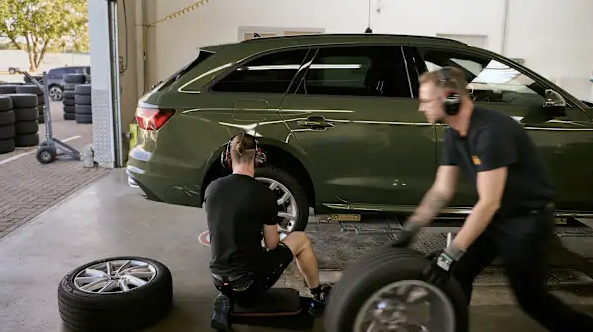
For the 2026 Summer Test ADAC tested 16 tyres in the dry/wet noise comfort value and, most importantly, tread life to find out exactly which tyre is best for you. They tested the popular 225/50R17 tyre size using an Audi A4 but this is a premium touring tyre size that is available in which fits many vehicles.
I highly recommend following the link below, especially if you're German is strong and watching their tyre test video. It is excellent, but below is my summary of the test.
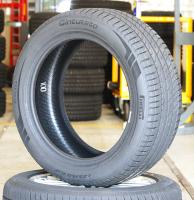
If you follow tyre testing regularly, the top 3 of this test will come as no surprise to you. It is the Continental Premium Contact 7, closely followed by the Pirelli Cinturato C3 and the Goodyear EfficientGrip Performance 2,
The blend of dry and wet grip and the wear results meant these three tyres were the only three tyres to receive the very difficult to get good recommendation from ADAC. The next ten were satisfactory and the bottom three were only rated as adequate.
I think the most interesting aspect of this test was the dual nature of the LingLong Sportmaster and how hard ADAC were on the tyre. It was the best tyre in wet braking as we've seen recently in the autobild 50 set Summer Shootout. It was, however, by far the worst in the wear test, with poor environmental factors and poor dry handling performance.
This highlights how far Chinese manufacturers have come. Beating premium tyres in wet braking is an achievement in itself but they're still unable to mass produce a tyre at a reasonable cost that is as rounded or as well balanced as a premium tyre.
Dry
The Falken ZIEX ZE320 was the best in dry braking, closely followed by the LingLong Sportmaster. The delta between the best and worst was less than 3 m, with the Ventus Prime 4 finishing in last place.
Dry Braking
Spread: 2.80 M (8.3%)|Avg: 35.46 M
Dry braking in meters (100 - 0 km/h) (Lower is better)
Falken ZIEX ZE320
33.90 M
Linglong Sport Master
34.20 M
Lassa Revola
34.40 M
Pirelli Cinturato C3
34.50 M
Firestone Roadhawk 2 ENLITEN
34.90 M
Continental PremiumContact 7
35.00 M
Leao Nova Force Acro
35.20 M
Vredestein Ultrac plus
35.30 M
Kumho Ecsta HS52
35.70 M
Maxxis Premitra HP6
35.80 M
Greentrac Quest X
36.20 M
Goodyear EfficientGrip Performance
36.30 M
Michelin Primacy 5
36.30 M
Bridgestone Turanza 6
36.40 M
BFGoodrich Advantage
36.50 M
Hankook Ventus Prime 4
36.70 M
When braking from highway speeds the difference would be nearly 5 m, which is about 1.1 car lengths.
Wet
As always the delta in wet braking was much larger, with a difference of nearly 8 m. The LingLong tied with the Continental at the top of the table, and the BF Goodrich, Firestone, and GreenTrac propped up the base of the table.
Wet Braking
Spread: 7.80 M (25.9%)|Avg: 33.14 M
Wet braking in meters (80 - 0 km/h) (Lower is better)
Linglong Sport Master
30.10 M
Continental PremiumContact 7
30.10 M
Kumho Ecsta HS52
31.10 M
Goodyear EfficientGrip Performance
31.30 M
Pirelli Cinturato C3
31.80 M
Michelin Primacy 5
32.70 M
Lassa Revola
32.90 M
Leao Nova Force Acro
33.00 M
Maxxis Premitra HP6
33.40 M
Bridgestone Turanza 6
33.80 M
Vredestein Ultrac plus
33.90 M
Falken ZIEX ZE320
34.30 M
BFGoodrich Advantage
34.50 M
Hankook Ventus Prime 4
34.50 M
Firestone Roadhawk 2 ENLITEN
34.90 M
Greentrac Quest X
37.90 M
This means that from highway speeds the calculated difference is over 20 m, which means that when you are stopped on the LingLong or Continental, you will still be traveling 60 km/h on the worst.
The wet braking results on concrete were broadly similar.
Wet Braking - Concrete
Spread: 12.20 M (37.8%)|Avg: 38.81 M
Wet braking on Concrete in meters (80 - 0 km/h) (Lower is better)
Linglong Sport Master
32.30 M
Continental PremiumContact 7
34.90 M
Kumho Ecsta HS52
35.90 M
Pirelli Cinturato C3
37.30 M
Falken ZIEX ZE320
37.70 M
Goodyear EfficientGrip Performance
38.10 M
Maxxis Premitra HP6
38.10 M
Michelin Primacy 5
38.80 M
Lassa Revola
39.20 M
Vredestein Ultrac plus
39.50 M
Firestone Roadhawk 2 ENLITEN
40.10 M
Bridgestone Turanza 6
40.20 M
Leao Nova Force Acro
40.80 M
BFGoodrich Advantage
41.50 M
Hankook Ventus Prime 4
42.10 M
Greentrac Quest X
44.50 M
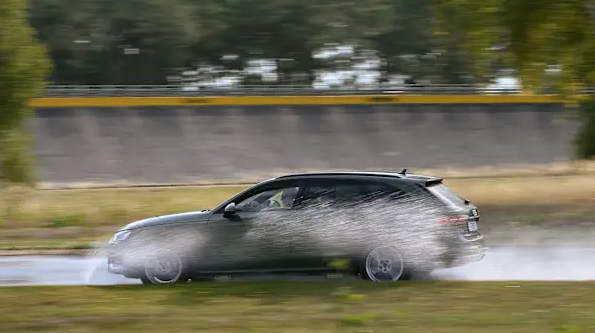
ADAC do publish straight and curved aquaplaning results. You can see the curved aquaplaning results on the results table tab above. Generally there wasn't a huge delta between the best and the worst
Straight Aqua
Spread: 6.80 Km/H (8.5%)|Avg: 76.66 Km/H
Float Speed in Km/H (Higher is better)
Continental PremiumContact 7
79.70 Km/H
Pirelli Cinturato C3
79.70 Km/H
Vredestein Ultrac plus
79.30 Km/H
Linglong Sport Master
78.60 Km/H
Kumho Ecsta HS52
77.30 Km/H
Bridgestone Turanza 6
77.20 Km/H
Firestone Roadhawk 2 ENLITEN
77.20 Km/H
Lassa Revola
76.60 Km/H
Michelin Primacy 5
76.50 Km/H
BFGoodrich Advantage
76.20 Km/H
Goodyear EfficientGrip Performance
75.70 Km/H
Greentrac Quest X
75.70 Km/H
Falken ZIEX ZE320
75.20 Km/H
Maxxis Premitra HP6
75.00 Km/H
Leao Nova Force Acro
73.70 Km/H
Hankook Ventus Prime 4
72.90 Km/H
Value
The wear test was the gold standard wear test performed on the road in a convoy, unlike other publications which use a machine. In this test the Goodyear EfficientGrip Performance 2 was the best, over doubling the expected tread life to 1.6 mm compared to the bottom two tyres.
As usual Michelin are strong in wear, and what I'm assuming is a revised Turanza 6 is also very strong in tread life. The Pirelli Cinturato C3 finishing in fourth place was a nice surprise too given how well this tyre grips.
Sadly ADAC did not publish the purchase price of the tyres so we can't work out costs per 100 km driven.
Wear
Spread: 31700.00 KM (54.8%)|Avg: 41712.50 KM
Predicted tread life in KM (Higher is better)
Goodyear EfficientGrip Performance
57800.00 KM
Michelin Primacy 5
56000.00 KM
Bridgestone Turanza 6
55600.00 KM
Pirelli Cinturato C3
48600.00 KM
BFGoodrich Advantage
46700.00 KM
Hankook Ventus Prime 4
44700.00 KM
Continental PremiumContact 7
44700.00 KM
Kumho Ecsta HS52
43200.00 KM
Greentrac Quest X
38200.00 KM
Falken ZIEX ZE320
37500.00 KM
Maxxis Premitra HP6
37200.00 KM
Firestone Roadhawk 2 ENLITEN
36700.00 KM
Lassa Revola
36100.00 KM
Vredestein Ultrac plus
30600.00 KM
Leao Nova Force Acro
27700.00 KM
Linglong Sport Master
26100.00 KM
ADAC do not release rolling resistance levels. Instead they drive the tyres on an oval to get the average liters per 100 km. Usually this test is only separated by 0.1 or 0.2 liters per 100 km and in this case it's 0.6, showing just what a compromise the LingLong has to get that wet grip.
Fuel Consumption
Spread: 0.60 l/100km (11.1%)|Avg: 5.60 l/100km
Fuel consumption in Litres per 100 km (Lower is better)
Hankook Ventus Prime 4
5.40 l/100km
Continental PremiumContact 7
5.40 l/100km
Michelin Primacy 5
5.40 l/100km
Goodyear EfficientGrip Performance
5.50 l/100km
Leao Nova Force Acro
5.50 l/100km
Bridgestone Turanza 6
5.50 l/100km
BFGoodrich Advantage
5.60 l/100km
Falken ZIEX ZE320
5.60 l/100km
Vredestein Ultrac plus
5.60 l/100km
Maxxis Premitra HP6
5.60 l/100km
Lassa Revola
5.60 l/100km
Firestone Roadhawk 2 ENLITEN
5.70 l/100km
Pirelli Cinturato C3
5.70 l/100km
Greentrac Quest X
5.70 l/100km
Kumho Ecsta HS52
5.80 l/100km
Linglong Sport Master
6.00 l/100km
19,000 km
£1.45/L
8.0 L/100km
--
Annual Difference
--
Lifetime Savings
--
Extra Fuel/Energy
--
Extra CO2
Estimates based on typical driving conditions. Rolling resistance accounts for approximately 20% of IC vehicle fuel consumption and 25% of EV energy consumption. Actual savings vary based on driving style, vehicle weight, road conditions, and tyre age. For comparative purposes only. Lifetime savings based on a 40,000km / 25,000 mile tread life.
Abrasion is the measure of particulate matter, measured in milligrams per kilometre per ton. Michelin always aces this test and once again it had a big advantage, emitting over half the tyre particulates the LingLong produces, which is a big difference for the environment.
Abrasion
Spread: 77.00 mg/km/t (142.6%)|Avg: 82.56 mg/km/t
Weight of Tyre Wear Particles Lost (mg/km/t) (Lower is better)
The PremiumContact 7 was the clear test winner. ADAC praise its “balanced” performance: it offers the best safety on dry and wet roads, high reserves in the limit range and short braking distances, while also delivering high efficiency and long life. It gives a precise steering response and high grip on dry pavement, making the car easy to control even at the limit. On wet roads it delivers very short braking distances and secure, easily controlled handling; aquaplaning behaviour is judged good in both directions. The environmental balance is also good thanks to high predicted mileage, low abrasion and good efficiency, although the rolling noise is slightly above average.
Pirelli’s Cinturato (C3) finishes just behind Continental. According to the test report, it secures a good rating for both safety and environmental balance, earning a clear recommendation. On dry roads the tyre has slight steering-feedback and precision weaknesses but remains safe and easily controllable due to high grip, and its braking distance from 100 km/h is rated very good. On wet surfaces it offers short braking distances, good handling and strong aquaplaning resistance. The environmental assessment is also good thanks to high predicted mileage, low abrasion and good efficiency. Strengths cited include good driving safety, high mileage and low wear, though the tyre is relatively noisy.
Goodyear’s EfficientGrip Performance 2 earns a good overall rating, trailing the top two mainly because of minor dynamic weaknesses. The summary explains that dry-road feedback and braking distances are only moderate, though the tyre maintains high grip and remains stable at the limit. Wet-road performance is “just good” with weaknesses in aquaplaning and handling. The tyre’s environmental balance is very good: it has very high predicted mileage, low abrasion and good efficiency. ADAC lists its strengths as a balanced tyre with good safety, very high mileage and low wear, with minor weaknesses in aquaplaning and wet handling.
The Roadhawk 2 scores “good” for driving safety but only fair in the environmental balance. The tyre offers decent grip but imprecise steering on dry roads; braking is short yet overall precision is lacking. Wet performance is barely good: braking distances and longitudinal aquaplaning are weak, though handling remains acceptable. Predicted mileage and abrasion are only satisfactory, though efficiency is rated good. Consequently, ADAC sees it as a conditionally recommendable tyre with some safety and efficiency advantages but notable weaknesses in dry precision, wet braking and longevity.
The Ziex ZE320 narrowly misses a good safety rating. The summary notes modest steering precision on dry roads and sensitivity to heat, although it has the shortest dry-braking distance in the test. On wet roads it performs well in braking and handling but only fairly in aquaplaning. Environmental performance is “fair” because of mediocre mileage, but low wear, low weight and low fuel consumption contribute to good efficiency. Strengths include very short dry braking, good wet-road performance, low abrasion and very low weight, while weaknesses include deficits on dry roads, susceptibility to aquaplaning and only satisfactory mileage.
Bridgestone’s Turanza 6 does not achieve a good safety rating because of imprecise steering and heat sensitivity on both dry and wet roads; it tends to under- or oversteer early despite good braking. Nonetheless, its environmental performance is good, featuring very high predicted mileage, low abrasion, low weight and low fuel consumption. Therefore the tyre is recommended primarily for drivers who prioritise longevity and efficiency over sporty handling.
The Primacy 5 also misses a good safety rating. The summary describes imprecise steering and thermal sensitivity on dry and wet roads, although braking on both surfaces is good. Its environmental rating is the best in the test: the tyre offers very high predicted mileage, the lowest abrasion and low weight, and it achieves the lowest fuel consumption among all candidates. Consequently, ADAC gives only a conditional recommendation, noting good braking and excellent efficiency but shortcomings in overall handling.
Maxxis’s Premitra HP6 receives only fair ratings in safety and environmental categories. The tyre provides short braking distances on dry and wet roads but displays modest steering precision and grip at the limit on dry pavement. Wet-road performance is only fair. Environmentally, its predicted mileage is low, though weight and fuel consumption are favourable. ADAC highlights short braking, low abrasion and low fuel consumption as strengths, but notes handling weaknesses on both dry and wet surfaces and low mileage.
The updated Ecsta HS52 scores well on wet roads but only fair overall because of weak dry-road performance and increased weight. According to the summary, dry-road steering feedback and precision are merely adequate; wet grip and braking are good. Environmental performance is fair due to high abrasion and heavy weight, despite good predicted mileage and efficiency. ADAC lists short dry braking, good wet handling and good mileage as strengths, but notes deficits in dry handling, aquaplaning behaviour and slightly elevated abrasion and weight.
BFGoodrich’s Advantage fails to achieve a good rating mainly because of poor wet performance and higher wear. Dry-road steering feedback and stability are good, but braking distances are long. On wet roads, braking, aquaplaning and handling are only fair or sufficient, leading to early under- or oversteer. Predicted mileage and efficiency are good, but abrasion is slightly elevated. ADAC therefore gives a conditional recommendation, praising the dry-road handling and high mileage but cautioning about wet-road weaknesses and above-average weight.
The Ventus Prime4 narrowly misses a good safety rating due to weak wet performance. The summary notes slightly indirect steering on dry roads but good grip. Wet braking, aquaplaning and handling are only fair or sufficient, which leads to early under- or oversteer. The environmental rating is just good thanks to high predicted mileage and low abrasion, although the tyre is relatively heavy and noisy. Strengths include good handling at the limit on dry roads, high mileage and low fuel consumption; weaknesses include comfort issues on dry roads, wet-performance deficits and slightly increased weight.
Vredestein’s Ultrac+ fails to achieve a good rating in both safety and environmental categories. Dry-road steering feedback and precision are only fair; dry braking is good. On wet roads the tyre performs reasonably in aquaplaning and handling but not in braking. The environmental rating is fair due to low mileage and high abrasion, though weight and fuel consumption are low. ADAC notes short dry braking, good aquaplaning and wet handling, low weight and fuel consumption as strengths, but poor dry handling, slight wet-braking weakness, low mileage and high abrasion as weaknesses.
The Chinese Greentrac Quest-X receives a conditional recommendation. The summary criticises its wet-road performance: wet braking is the worst in the test, and aquaplaning behaviour and handling are only fair. Dry-road feedback and precision are also not very good due to an elastic rear axle, though braking is good. Environmental performance is fair because of moderate mileage, slightly high abrasion and high weight, although fuel consumption is low. Strengths include short dry braking, good cross-aquaplaning and low fuel consumption, while weaknesses comprise deficits in dry handling, wet performance and moderate mileage with slightly high abrasion.
The Turkish-made Lassa Revola is rated “not recommendable.” The summary states that it barely reaches a satisfactory score in safety: dry-road performance is poor, with the tyre losing grip as temperature rises, offering only minimal steering feedback and making it hard to control the vehicle; it tends to oversteer in emergency manoeuvres. Wet performance is somewhat better, with average braking and above-average handling, though aquaplaning resistance is only average. The environmental rating is only “befriedigend” due to average mileage and abrasion; efficiency is good thanks to low weight and fuel consumption. Strengths include very short dry braking, good wet performance, low weight and low fuel consumption, but the tyre is very weak on dry roads, has aquaplaning weaknesses and only satisfactory mileage and abrasion.
Leao’s Nova-Force Acro, a sub-brand of Linglong, receives a “not recommendable” verdict. It fails to achieve even a satisfactory rating in safety because of very weak dry performance; the tyre loses grip as temperature rises, provides delayed steering response and feels elastic, making it difficult to hit the correct steering angle. At the limit it tends to oversteer and proves hard to control. Wet-road performance is merely adequate; braking and aquaplaning behaviour are average, and handling is only sufficient. The environmental rating is also only adequate due to very low predicted mileage, high abrasion and high weight; efficiency is saved only by modest fuel consumption. ADAC notes that the tyre’s only strengths are a very short dry-braking distance and low fuel consumption, while weaknesses include very poor performance on both dry and wet surfaces, low mileage, high abrasion and above-average weight.
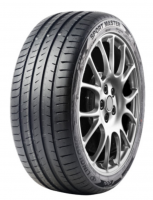
The Linglong Sport Master scores the lowest overall. Although it delivers the best wet-road performance in the test - very short wet braking distances, excellent wet handling and good longitudinal aquaplaning behaviour - its dry-road performance is very poor. As temperature rises the tyre loses grip, steering response becomes delayed and elastic, and the car tends to oversteer in evasive manoeuvres. The tyre therefore earns only a sufficient rating for safety and is not recommended. The environmental balance is also weak: extremely high abrasion, very low predicted mileage, high weight and high fuel consumption lead to an “ausreichend” rating. Strengths are limited to the very short dry-braking distance and the best wet performance in the test, whereas weaknesses include very poor dry performance, low mileage, high wear, high weight and high fuel consumption.
I gotta agree with others , weird ranking and based almost solely on abrasion and fuel efficiency. Kumho is obviously better than the Maxxis in terms of safety when looking at the results, but finishes after the maxxis anyway. That's just one observation.
The final ranking is a joke... The best wet braking, the second best dry braking and 4th place on wet aquaplaning, equals to last place... Maybe Ling long (and the sister brand Leao) didn't send them a cheque... I am wearing these tyres from September of 2024 and have already done around 20k km (205/55R16). I cannot say that my tyres are going to fall off on 26k km (additional 6k km than those i've already have...). I am very happy with performance both on wet and dry surfaces. For my tyres size, the difference between ling long and continental were 160 euros for all 4 tyres... It no wonder that german products keep receiving the middle finger from Chinese ones, no matter if we are talking about tyres or cars...
I’m honestly disappointed with the overall ADAC test results. It’s hard to ignore the feeling that a small group of “chosen” manufacturers is systematically favored, while tires that are objectively very strong in real-world conditions are pushed down the rankings.
Seeing a tire in 4th place that doesn’t even come close to Falken or Vredestein in wet grip and aquaplaning resistance really raises questions. It feels like progressive eco-politics has started to outweigh common sense, where rolling resistance and “green scores” matter more than actual safety and cost efficiency.
The top three tires cost €150-160 per piece, while Falken or Vredestein are roughly €40 cheaper per tire. That’s €160 saved per set - so the obvious question is: how many extra kilometers can I drive for that money?
For me, aquaplaning resistance in heavy rain is far more important than saving a few grams of CO₂ in a lab test. I drive on real roads, not perfect German asphalt, and definitely not in a spreadsheet.
ADAC tests may look nice on paper, but maybe it’s time for a hard reset - and a reminder that safety, realism, and value for money should come before ideology.
It's not about "chosen" brands, it's the eco-cancer. Think about it. The only thing that holds you on the road is the tyre so it has to be SAFE and only SAFE, everything else is absolutely irrelevant. It does not have to do a million miles but it has to stay safe over a period of time, say, for at least six, seven years. Unfortunately, no currently produced tyre lasts as long without losing most of its original safety performance. Only fleet cars can do such high mileages in range of three or (max.) four years which is the time summer tyres (at least Goodyear) deteriorate to such extent that they become dangerous (cracked, no traction). Nokian lasts a bit longer, cca five years.
Before somenone starts arguing with me, try real life - emergency braking in a smaller car without ABS first. Try new set of tyres and then try four year old ones of the same type. You will never ever buy eco tyres again.




I gotta agree with others , weird ranking and based almost solely on abrasion and fuel efficiency. Kumho is obviously better than the Maxxis in terms of safety when looking at the results, but finishes after the maxxis anyway. That's just one observation.
The final ranking is a joke... The best wet braking, the second best dry braking and 4th place on wet aquaplaning, equals to last place... Maybe Ling long (and the sister brand Leao) didn't send them a cheque... I am wearing these tyres from September of 2024 and have already done around 20k km (205/55R16). I cannot say that my tyres are going to fall off on 26k km (additional 6k km than those i've already have...). I am very happy with performance both on wet and dry surfaces. For my tyres size, the difference between ling long and continental were 160 euros for all 4 tyres... It no wonder that german products keep receiving the middle finger from Chinese ones, no matter if we are talking about tyres or cars...
I’m honestly disappointed with the overall ADAC test results. It’s hard to ignore the feeling that a small group of “chosen” manufacturers is systematically favored, while tires that are objectively very strong in real-world conditions are pushed down the rankings.
Seeing a tire in 4th place that doesn’t even come close to Falken or Vredestein in wet grip and aquaplaning resistance really raises questions. It feels like progressive eco-politics has started to outweigh common sense, where rolling resistance and “green scores” matter more than actual safety and cost efficiency.
The top three tires cost €150-160 per piece, while Falken or Vredestein are roughly €40 cheaper per tire. That’s €160 saved per set - so the obvious question is: how many extra kilometers can I drive for that money?
For me, aquaplaning resistance in heavy rain is far more important than saving a few grams of CO₂ in a lab test. I drive on real roads, not perfect German asphalt, and definitely not in a spreadsheet.
ADAC tests may look nice on paper, but maybe it’s time for a hard reset - and a reminder that safety, realism, and value for money should come before ideology.
It's not about "chosen" brands, it's the eco-cancer. Think about it. The only thing that holds you on the road is the tyre so it has to be SAFE and only SAFE, everything else is absolutely irrelevant. It does not have to do a million miles but it has to stay safe over a period of time, say, for at least six, seven years. Unfortunately, no currently produced tyre lasts as long without losing most of its original safety performance. Only fleet cars can do such high mileages in range of three or (max.) four years which is the time summer tyres (at least Goodyear) deteriorate to such extent that they become dangerous (cracked, no traction). Nokian lasts a bit longer, cca five years.
Before somenone starts arguing with me, try real life - emergency braking in a smaller car without ABS first. Try new set of tyres and then try four year old ones of the same type. You will never ever buy eco tyres again.
Oops. The first sentence should have ended with "it's the eco-cancer and testers' emphasis on it".
“Sadly ADAC did not publish the purchase price of the tyres so we can't work out costs per 100 km driven.”
The price is listed in Allgemeinen Daten, Preis in Euro on each tyre’s page:
https://www.adac.de/rund-ums-fahrzeug/ausstattung-technik-zubehoer/reifen/reifentest/sommerreifen/225-50-r17-2026/continental-premiumcontact-7-id-5128/
How did I miss that. I must be getting hard of sight.