Test Publication:
ADAC
235/55 R17
9 tyres
4 categories
Test Size:
235/55 R17
Tyres Tested:
9 tyres
ADAC is not affiliated with, and does not endorse, Tyre Reviews. This is independent editorial coverage of their published test.
The 2020 ADAC SUV All season tyre test has tested seven all season tyres in the popular 235/55 R17, and include a summer tyre in the dry and wet, and a winter tyre during snow and ice testing.
ADAC usually hides all their data and just gives numeric scores, but this year have released braking distances for all four braking tests. This might be to back up their conclusion from this test, which is even the best all season tyres are deficient compared to a summer and winter tyre combination.
The other thing worth noting, ADAC gives 30% of the score weighting to snow and ice performance, which is ideal for the colder European climates, but less ideal for climates like the UK which see snow once every few years. As always, dig into the data yourself, as according to these results, the last placed Bridgestone might just be a better all season tyre for the South of England than the other all season tyres in this test.
Braking
The dry braking test (from 100 km/h) really highlighted why ADAC believes a summer and winter tyre combination is a safer year round option than an all season tyre, as even the best all season tyre still took an extra 6.5 meters to stop the SUV.
- Reference Summer
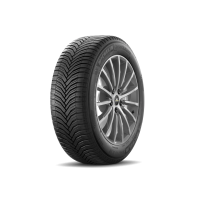
- Michelin CrossClimate Plus
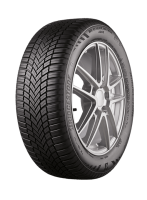
- Bridgestone Weather Control A005
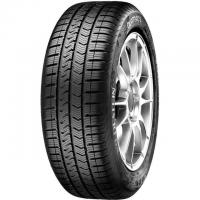
- Vredestein Quatrac Pro
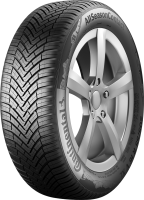
- Continental AllSeasonContact
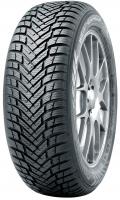
- Nokian WeatherProof
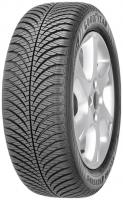
- Goodyear Vector 4 Seasons Gen 2
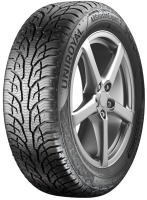
- Uniroyal AllSeasonExpert 2
The Bridgestone A005 had an impressive advantage when stopping in the wet from 80 km/h. The summer tyre could only place third.
- Bridgestone Weather Control A005
- Goodyear Vector 4 Seasons Gen 2
- Reference Summer
- Continental AllSeasonContact
- Uniroyal AllSeasonExpert 2
- Michelin CrossClimate Plus
- Vredestein Quatrac Pro
- Nokian WeatherProof
Snow braking from 50 km/h was led by the winter tyre, with Nokian, Uniroyal, Continental and Goodyear all performing well.
- Reference Winter
- Nokian WeatherProof
- Uniroyal AllSeasonExpert 2
- Goodyear Vector 4 Seasons Gen 2
- Continental AllSeasonContact
- Michelin CrossClimate Plus
- Bridgestone Weather Control A005
- Vredestein Quatrac Pro
Ice braking from 30 km/h again gave the winter tyre a clear advantage.
- Reference Winter
- Continental AllSeasonContact
- Goodyear Vector 4 Seasons Gen 2
- Bridgestone Weather Control A005
- Michelin CrossClimate Plus
- Uniroyal AllSeasonExpert 2
- Nokian WeatherProof
- Vredestein Quatrac Pro
Results
Relatively good in the wet, satisfactory on snow.
Weakness on dry roads.
Total: 53.6
Dry
4.8
Wet
6.8
Snow
6
Ice
7.2
Rolling Resistance
9
Noise
6
Wear
9
Overall
4.8
Relatively good in the wet, low wear.
Weakness on dry roads and in the snow.
Total: 52.2
Dry
4.4
Wet
6.8
Snow
4.8
Ice
7.2
Rolling Resistance
8.2
Noise
6.4
Wear
10
Overall
4.4
Top marks in the dry and lowest wear.
Weak on snow.
Total: 53.8
Dry
6.8
Wet
6.6
Snow
4.2
Ice
7.2
Rolling Resistance
8
Noise
6
Wear
10.8
Overall
4.2
Satisfactory on snow.
Weak on dry roads, relatively loud.
Total: 47.6
Dry
4.2
Wet
6.2
Snow
6
Ice
6.6
Rolling Resistance
7.2
Noise
5.2
Wear
8
Overall
4.2
Satisfactory on snow, low wear.
Very weak on dry roads.
Total: 50.8
Dry
3.4
Wet
6.6
Snow
6
Ice
7.2
Rolling Resistance
7.6
Noise
6.6
Wear
10
Overall
3.4
Relatively good in the wet, low wear.
Very weak in the snow, weak on dry roads.
Total: 44.4
Dry
4.2
Wet
6.8
Snow
1.6
Ice
6.6
Rolling Resistance
7
Noise
6.6
Wear
10
Overall
1.6
Top marks in the dry and wet.
Very weak in the snow.
Total: 46.8
Dry
6.8
Wet
8
Snow
1.2
Ice
7.2
Rolling Resistance
8.2
Noise
6.2
Wear
8
Overall
1.2

I wonder what the reference tyre was...
Sadly it's not something autobild share
I am wondering, why are the results of ADAC for All Season tyres so much worse than all the others, including your own. Where does this inconsistency comes from. OK, there can always be some discrepancy and some difference could be explained by temperature, but that is a bit much. Have you thought about asking ADAC for clarification?
There are certainly variations created by different size / vehicle / test locations, but the data here doesn't look too different from my own?
Auto Bild All Season test came out today too.
The difference (i.e. dry braking) between summer and all season is in your case much less than ADAC.
For wet at least ADAC use a low mu surface to make the gaps bigger, this is something I don't like as it's not realistic to real life.
OK, so their method might unrealistically favour summer tyre...Something similar seems to be happening also in dry...Funny, they're not addressing deficiencies of Winter tyres in dry...they seem a bit bias to me...
Wow, these all seasons do seem to be getting better - looking forward to hearing how the Vector 4 Seasons Gen-3 perform.
What's your current thinking for mid/south UK driving a RWD 2 litre family wagon? Torn between 1 set of cross climates, or running a summer/vector 4 mix.
All season test out next week, I just finished it!
Great to hear, look forward to reading next week.
Did you have a view (if garage space/money weren't an issue) on running two sets in the UK now or whether the best all seasons negate that for a non performance car? Or is that into spoiler territory for your review next week ;-)
Depends where in the UK, but I think a summer and all season combination is still better
Thanks for the clarification, appreciated.
Out of interest, if you're going to run two sets of wheels/tyres, why wouldn't you run summers and winters? It's something I've done for years, even in the UK. Switching wheels come winter time and not having tyres that can deal with the worst of anything we might get seems a bit, er, daft to me?
My theory is that an all season tyre is better in 99% of the winter conditions (cold, dry and wet) and still way better than a summer tyre / not far off a full winter for the 1%
I have had Goodyear Vector 4 Seasons Gen 2 on my Audi Q5 for the last 3 years. I live in Edinburgh, where there is not much snow, but spend at least 6 weeks in the Alps every year. They are great in snow, I have never needed chains even in the most extreme conditions. I have also found them excellent in all other conditions.
The Gen-3 is out now and improves on the gen-2 !
I believe the all seasons tyres have a really huge growth potential in markets like Italy where I live, the winters are so much less snowy that a full winter tyre is to much for the road conditions and temperatures, I believe an all season tyre is better suited for the November to march period with temperatures ranging from -10 to + 30, seldom rainfalls and nearly non existent snow and ice. 20 years ago winters used to be much colder with snow and ice lasting for weeks or months and average temperatures in the period November to march from -20 - 25 to + 15 + 20, then full winter tyres were better suited for the season. I am interested in the new Goodyear Vector 4 seasons gen 3.
My test with the G3 should be out in 2 weeks
This is excellent news, from my readings the Goodyear Vector 4 seasons should be the balanced option between a more winter oriented Continental All Seasons Contact and a more warm biased Michelin Cross Climate +.
Oh my God! What a stupid point system! Overall is the lowest of the categories. I've lost my trust in them. Note that I had before.
For Audi S1 as a quattro would you recommend conti-6 or ps-4 - michelin have a £40 deal on currently but i'm leaning to conti?
https://www.tyrereviews.co.... should answer all your questions :)