

The extreme winter specialists at Vi Bilagare are back at it testing the latest and greatest studless friction winter tyres. This year they not only tested seven of the most popular studless friction nordic compounds in the popular 225/45 R17 tyre size, they also included an older tyre to see the effects of aging. The older tyre is an 8 year old, lightly used (6mm remaining) Nokian Hakkapeliitta R2, which has its work cut out as its "two-generation-newer" brother, the Hakkapeliitta R5 is also included in this test!
Due to time constraints we will just present the data, heavy over to the Vi Vilagare website to check out the full article.
Test setup & methodology
The test setting, the conditions recorded and how the results contribute to the score.
Recorded test conditions
Recorded test conditions
- Dry Braking
- 80 → 5 km/h
- Wet Braking
- 80 → 5 km/h
- Snow Braking
- 35 → 5 km/h
- Snow Traction
- 5 → 35 km/h
- Ice Braking
- 25 → 5 km/h
- Ice Traction
- 5 → 25 km/h
Ice
Ice Braking
Ice Braking
Ice braking in meters (25 - 5 km/h)
Lower is better ↓| Position / Tyre | Result | Gap to best | Residual speed |
|---|---|---|---|
| 12.09 m | Best | 0 km/h | |
| 12.32 m | +0.23 m | 18 km/h | |
| 12.49 m | +0.40 m | 23 km/h | |
| 13 m | +0.91 m | 34 km/h | |
| 13.23 m | +1.14 m | 38 km/h | |
| 13.3 m | +1.21 m | 39 km/h | |
| 13.93 m | +1.84 m | 47 km/h | |
| 14.04 m | +1.95 m | 48 km/h |
The difference between best and worst was 16.1% (1.95 m ≈ 0.4 Car Lengths). From 130 km/h, the Nokian Hakkapeliitta R2 would still be travelling at 48 km/h when the Michelin X Ice Snow had stopped.
Residual speed is calculated from the measured braking distances, assuming constant deceleration; it is not a separate measurement.
Ice Traction
Ice Traction
Ice acceleration time (5 - 25 km/h)
Lower is better ↓| Position / Tyre | Result | Gap to best |
|---|---|---|
| 7.32 s | Best | |
| 7.52 s | +0.20 s | |
| 7.82 s | +0.50 s | |
| 8.05 s | +0.73 s | |
| 8.43 s | +1.11 s | |
| 8.97 s | +1.65 s | |
| 9.17 s | +1.85 s | |
| 10.7 s | +3.38 s |
The difference between best and worst was 46.2% (3.38 s).
Ice Handling
Ice Handling
Ice handling time in seconds
Lower is better ↓| Position / Tyre | Result | Gap to best |
|---|---|---|
| 44.5 s | Best | |
| 44.7 s | +0.20 s | |
| 44.9 s | +0.40 s | |
| 46 s | +1.50 s | |
| 46.7 s | +2.20 s | |
| 47.1 s | +2.60 s | |
| 48.6 s | +4.10 s | |
| 49 s | +4.50 s |
The difference between best and worst was 10.1% (4.5 s).
Snow
Snow Braking
Snow Braking
Snow braking in meters (35 - 5 km/h)
Lower is better ↓| Position / Tyre | Result | Gap to best | Residual speed |
|---|---|---|---|
| 12.19 m | Best | 0 km/h | |
| 12.21 m | +0.02 m | 5 km/h | |
| 12.27 m | +0.08 m | 10 km/h | |
| 12.34 m | +0.15 m | 14 km/h | |
| 12.52 m | +0.33 m | 21 km/h | |
| 12.52 m | +0.33 m | 21 km/h | |
| 12.73 m | +0.54 m | 27 km/h | |
| 12.77 m | +0.58 m | 28 km/h |
The difference between best and worst was 4.8% (0.58 m). From 130 km/h, the Bridgestone Blizzak Ice would still be travelling at 28 km/h when the Goodyear UltraGrip Ice 3 had stopped.
Residual speed is calculated from the measured braking distances, assuming constant deceleration; it is not a separate measurement.
Snow Traction
Snow Traction
Snow acceleration time (5 - 35 km/h)
Lower is better ↓| Position / Tyre | Result | Gap to best |
|---|---|---|
| 4.44 s | Best | |
| 4.49 s | +0.05 s | |
| 4.55 s | +0.11 s | |
| 4.57 s | +0.13 s | |
| 4.57 s | +0.13 s | |
| 4.59 s | +0.15 s | |
| 4.6 s | +0.16 s | |
| 4.68 s | +0.24 s |
The difference between best and worst was 5.4% (0.24 s).
Snow Handling
Snow Handling
Snow handling time in seconds
Lower is better ↓| Position / Tyre | Result | Gap to best |
|---|---|---|
| 75.5 s | Best | |
| 75.7 s | +0.20 s | |
| 75.9 s | +0.40 s | |
| 76.4 s | +0.90 s | |
| 76.6 s | +1.10 s | |
| 76.7 s | +1.20 s | |
| 79.9 s | +4.40 s | |
| 80.7 s | +5.20 s |
The difference between best and worst was 6.9% (5.2 s).
Wet
Wet Braking
Wet Braking
Wet braking in meters (80 - 5 km/h)
Lower is better ↓| Position / Tyre | Result | Gap to best | Residual speed |
|---|---|---|---|
| 37.55 m | Best | 0 km/h | |
| 38.4 m | +0.85 m | 19 km/h | |
| 39.31 m | +1.76 m | 28 km/h | |
| 40.28 m | +2.73 m | 34 km/h | |
| 40.74 m | +3.19 m | 36 km/h | |
| 40.88 m | +3.33 m | 37 km/h | |
| 42.19 m | +4.64 m | 43 km/h | |
| 43.34 m | +5.79 m | 48 km/h |
The difference between best and worst was 15.4% (5.79 m ≈ 1.3 Car Lengths). From 130 km/h, the Pirelli Ice Zero Asimmetrico would still be travelling at 48 km/h when the Goodyear UltraGrip Ice 3 had stopped.
Residual speed is calculated from the measured braking distances, assuming constant deceleration; it is not a separate measurement.
Wet Handling
Wet Handling
Wet handling time in seconds
Lower is better ↓| Position / Tyre | Result | Gap to best |
|---|---|---|
| 41 s | Best | |
| 41.4 s | +0.40 s | |
| 42 s | +1.00 s | |
| 42.1 s | +1.10 s | |
| 42.4 s | +1.40 s | |
| 42.8 s | +1.80 s | |
| 43.7 s | +2.70 s | |
| 43.9 s | +2.90 s |
The difference between best and worst was 7.1% (2.9 s).
Straight Aqua
Straight Aqua
Float Speed in Km/H
Higher is better ↑| Position / Tyre | Result | Gap to best |
|---|---|---|
| 66 km/h | Best | |
| 65 km/h | -1.00 km/h | |
| 62.7 km/h | -3.30 km/h | |
| 61.4 km/h | -4.60 km/h | |
| 61 km/h | -5.00 km/h | |
| 60.5 km/h | -5.50 km/h | |
| 59.8 km/h | -6.20 km/h | |
| 56.6 km/h | -9.40 km/h |
The difference between best and worst was 14.2% (9.4 Km/H).

Dry
Dry Braking
Dry Braking
Dry braking in meters (80 - 5 km/h)
Lower is better ↓| Position / Tyre | Result | Gap to best | Residual speed |
|---|---|---|---|
| 29.23 m | Best | 0 km/h | |
| 30.03 m | +0.80 m | 21 km/h | |
| 30.32 m | +1.09 m | 25 km/h | |
| 30.37 m | +1.14 m | 25 km/h | |
| 30.65 m | +1.42 m | 28 km/h | |
| 30.9 m | +1.67 m | 30 km/h | |
| 30.96 m | +1.73 m | 31 km/h | |
| 31.46 m | +2.23 m | 35 km/h |
The difference between best and worst was 7.6% (2.23 m ≈ 0.5 Car Lengths). From 130 km/h, the Pirelli Ice Zero Asimmetrico would still be travelling at 35 km/h when the Nokian Hakkapeliitta R2 had stopped.
Residual speed is calculated from the measured braking distances, assuming constant deceleration; it is not a separate measurement.
Subj. Dry Handling
Subj. Dry Handling
Subjective Dry Handling Score
Higher is better ↑| Position / Tyre | Result | Gap to best |
|---|---|---|
| 5 Points | Best | |
| 5 Points | Best | |
| 4 Points | -1.00 Points | |
| 4 Points | -1.00 Points | |
| 3 Points | -2.00 Points | |
| 3 Points | -2.00 Points | |
| 2 Points | -3.00 Points | |
| 2 Points | -3.00 Points |
The difference between best and worst was 60% (3 Points).
Comfort
Noise
Noise
External noise in dB
Lower is better ↓| Position / Tyre | Result | Gap to best |
|---|---|---|
| 73.7 dB | Best | |
| 73.9 dB | +0.20 dB | |
| 74 dB | +0.30 dB | |
| 74 dB | +0.30 dB | |
| 74.3 dB | +0.60 dB | |
| 74.3 dB | +0.60 dB | |
| 74.5 dB | +0.80 dB | |
| 75.5 dB | +1.80 dB |
All the tyres in the Noise test finished less than 3% apart.
Value
Fuel Consumption
Fuel Consumption
Fuel consumption in Litres per 100 km
Lower is better ↓| Position / Tyre | Result | Gap to best | Extra fuel / year |
|---|---|---|---|
| 4.8 l/100km | Best | £0 | |
| 4.85 l/100km | +0.05 l/100km | £14 | |
| 4.9 l/100km | +0.10 l/100km | £28 | |
| 5 l/100km | +0.20 l/100km | £55 | |
| 5.05 l/100km | +0.25 l/100km | £69 | |
| 5.1 l/100km | +0.30 l/100km | £83 | |
| 5.15 l/100km | +0.35 l/100km | £96 | |
| 5.2 l/100km | +0.40 l/100km | £110 |
The difference between best and worst was 8.3% (0.4 l/100km). Over 19,000 km a year at £1.45/L, the Bridgestone Blizzak Ice uses about 76 L (£110) more fuel than the Nokian Hakkapeliitta R2.
Adjust the assumptions
Calculated estimates, not additional measurements. Use the controls to explore the assumptions.
Results
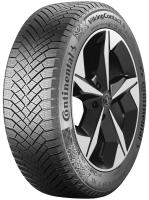
Continental VikingContact 7
225/45 R17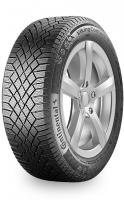
To summarize, the VikingContact7 tire by Continental is praised for its exceptional performance across various conditions, from ice and snow to dry asphalt, showcasing its suitability for diverse winter requirements.
Category scores (% of best)
All discipline results (13)
Discipline positions compare the ranked tyres in this test, not the whole market. These are individual measurements, not weighted overall scores.
| Test | Position in discipline | Result | Gap to best |
|---|---|---|---|
| Dry BrakingLower is better | 3rd / 8 | 30.32 m | +1.09 m |
| Subj. Dry HandlingHigher is better | 3rd / 8 | 4 Points | -1.00 Points |
| Wet BrakingLower is better | 3rd / 8 | 39.31 m | +1.76 m |
| Wet HandlingLower is better | 2nd / 8 | 41.4 s | +0.40 s |
| Straight AquaHigher is better | 3rd / 8 | 62.7 km/h | -3.30 km/h |
| Snow BrakingLower is better | 4th / 8 | 12.34 m | +0.15 m |
| Snow TractionLower is better | 3rd / 8 | 4.55 s | +0.11 s |
| Snow HandlingLower is better | 2nd / 8 | 75.7 s | +0.20 s |
| Ice BrakingLower is better | 2nd / 8 | 12.32 m | +0.23 m |
| Ice TractionLower is better | 3rd / 8 | 7.82 s | +0.50 s |
| Ice HandlingLower is better | 1st / 8 | 44.5 s | Best in this discipline |
| NoiseLower is better | 3rd / 8 | 74 dB | +0.30 dB |
| Fuel ConsumptionLower is better | 4th / 8 | 5 l/100km | +0.20 l/100km |
- 3PMSF
- Yes
Goodyear UltraGrip Ice 3
225/45 R17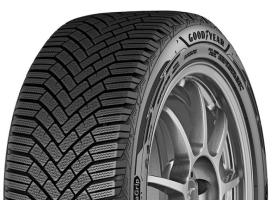
The tire is most impressive on asphalt rounds, especially in wet conditions. The steering sensitivity and stability in evasive maneuvers are the best in the group. The same goes for aquaplaning resistance and the stopping distance on wet roads.
Goodyear is the best choice if you drive mostly on bare ground but still want good ice and snow grip.
Category scores (% of best)
All discipline results (13)
Discipline positions compare the ranked tyres in this test, not the whole market. These are individual measurements, not weighted overall scores.
| Test | Position in discipline | Result | Gap to best |
|---|---|---|---|
| Dry BrakingLower is better | 6th / 8 | 30.9 m | +1.67 m |
| Subj. Dry HandlingHigher is better | 1st / 8 | 5 Points | Best in this discipline |
| Wet BrakingLower is better | 1st / 8 | 37.55 m | Best in this discipline |
| Wet HandlingLower is better | 1st / 8 | 41 s | Best in this discipline |
| Straight AquaHigher is better | 1st / 8 | 66 km/h | Best in this discipline |
| Snow BrakingLower is better | 1st / 8 | 12.19 m | Best in this discipline |
| Snow TractionLower is better | 1st / 8 | 4.44 s | Best in this discipline |
| Snow HandlingLower is better | 3rd / 8 | 75.9 s | +0.40 s |
| Ice BrakingLower is better | 4th / 8 | 13 m | +0.91 m |
| Ice TractionLower is better | 5th / 8 | 8.43 s | +1.11 s |
| Ice HandlingLower is better | 5th / 8 | 46.7 s | +2.20 s |
| NoiseLower is better | 3rd / 8 | 74 dB | +0.30 dB |
| Fuel ConsumptionLower is better | 2nd / 8 | 4.85 l/100km | +0.05 l/100km |
- 3PMSF
- Yes
Nokian Hakkapeliitta R5
225/45 R17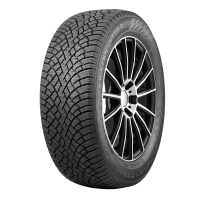
On asphalt, it handles evasive maneuvers well, but has a somewhat nonlinear steering feel. Its wet grip properties are just behind the best competitors, as is the road noise. However, the Hakkapeliitta R5 has low rolling resistance.
The Nokian tire is suitable for those who prioritize winter road properties above all and appreciate its quick cornering characteristics.
Category scores (% of best)
All discipline results (13)
Discipline positions compare the ranked tyres in this test, not the whole market. These are individual measurements, not weighted overall scores.
| Test | Position in discipline | Result | Gap to best |
|---|---|---|---|
| Dry BrakingLower is better | 5th / 8 | 30.65 m | +1.42 m |
| Subj. Dry HandlingHigher is better | 5th / 8 | 3 Points | -2.00 Points |
| Wet BrakingLower is better | 4th / 8 | 40.28 m | +2.73 m |
| Wet HandlingLower is better | 3rd / 8 | 42 s | +1.00 s |
| Straight AquaHigher is better | 4th / 8 | 61.4 km/h | -4.60 km/h |
| Snow BrakingLower is better | 5th / 8 | 12.52 m | +0.33 m |
| Snow TractionLower is better | 4th / 8 | 4.57 s | +0.13 s |
| Snow HandlingLower is better | 1st / 8 | 75.5 s | Best in this discipline |
| Ice BrakingLower is better | 3rd / 8 | 12.49 m | +0.40 m |
| Ice TractionLower is better | 2nd / 8 | 7.52 s | +0.20 s |
| Ice HandlingLower is better | 2nd / 8 | 44.7 s | +0.20 s |
| NoiseLower is better | 5th / 8 | 74.3 dB | +0.60 dB |
| Fuel ConsumptionLower is better | 3rd / 8 | 4.9 l/100km | +0.10 l/100km |
- 3PMSF
- Yes
Michelin X Ice Snow
225/45 R17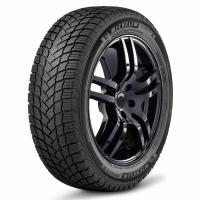
However, Michelin struggles in the curves where it does not like to be stressed with sudden steering movements or in tighter curves, responding with clear understeering.
Instead, the tire exhibits good stability on bare ground, where the natural steering feel is also appreciated. However, the understeering balance persists under pressure, especially on wet asphalt.
Michelin is for those who prioritize short stopping distances and a good driving experience in everyday situations over maximum cornering ability.
Category scores (% of best)
All discipline results (13)
Discipline positions compare the ranked tyres in this test, not the whole market. These are individual measurements, not weighted overall scores.
| Test | Position in discipline | Result | Gap to best |
|---|---|---|---|
| Dry BrakingLower is better | 7th / 8 | 30.96 m | +1.73 m |
| Subj. Dry HandlingHigher is better | 3rd / 8 | 4 Points | -1.00 Points |
| Wet BrakingLower is better | 2nd / 8 | 38.4 m | +0.85 m |
| Wet HandlingLower is better | 4th / 8 | 42.1 s | +1.10 s |
| Straight AquaHigher is better | 2nd / 8 | 65 km/h | -1.00 km/h |
| Snow BrakingLower is better | 2nd / 8 | 12.21 m | +0.02 m |
| Snow TractionLower is better | 4th / 8 | 4.57 s | +0.13 s |
| Snow HandlingLower is better | 6th / 8 | 76.7 s | +1.20 s |
| Ice BrakingLower is better | 1st / 8 | 12.09 m | Best in this discipline |
| Ice TractionLower is better | 1st / 8 | 7.32 s | Best in this discipline |
| Ice HandlingLower is better | 6th / 8 | 47.1 s | +2.60 s |
| NoiseLower is better | 7th / 8 | 74.5 dB | +0.80 dB |
| Fuel ConsumptionLower is better | 7th / 8 | 5.15 l/100km | +0.35 l/100km |
- 3PMSF
- Yes
Bridgestone Blizzak Ice
225/45 R17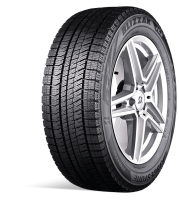
The Blizzak Ice is also one of the softest tires (the rubber's "Shore value" is a low 49). This provides good cornering grip on snow and ice, but it is not as easily controlled at the grip limit on snow as the best ones. Its braking performance on winter surfaces is average.
The soft rubber bites well when braking on dry asphalt and has low road noise. However, it lacks stability in evasive maneuvers on dry roads, and its wet grip is one of the worst in the group.
Without a clear area of expertise, Bridgestone places a bit behind the top contenders.
Category scores (% of best)
All discipline results (13)
Discipline positions compare the ranked tyres in this test, not the whole market. These are individual measurements, not weighted overall scores.
| Test | Position in discipline | Result | Gap to best |
|---|---|---|---|
| Dry BrakingLower is better | 2nd / 8 | 30.03 m | +0.80 m |
| Subj. Dry HandlingHigher is better | 7th / 8 | 2 Points | -3.00 Points |
| Wet BrakingLower is better | 5th / 8 | 40.74 m | +3.19 m |
| Wet HandlingLower is better | 8th / 8 | 43.9 s | +2.90 s |
| Straight AquaHigher is better | 7th / 8 | 59.8 km/h | -6.20 km/h |
| Snow BrakingLower is better | 8th / 8 | 12.77 m | +0.58 m |
| Snow TractionLower is better | 6th / 8 | 4.59 s | +0.15 s |
| Snow HandlingLower is better | 5th / 8 | 76.6 s | +1.10 s |
| Ice BrakingLower is better | 6th / 8 | 13.3 m | +1.21 m |
| Ice TractionLower is better | 4th / 8 | 8.05 s | +0.73 s |
| Ice HandlingLower is better | 3rd / 8 | 44.9 s | +0.40 s |
| NoiseLower is better | 1st / 8 | 73.7 dB | Best in this discipline |
| Fuel ConsumptionLower is better | 8th / 8 | 5.2 l/100km | +0.40 l/100km |
- 3PMSF
- Yes
Pirelli Ice Zero Asimmetrico
225/45 R17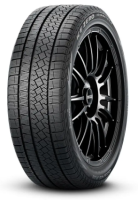
Braking distances on snow and ice are average. In the corners, Pirelli exhibits quick steering reactions but can lose grip suddenly with a long sliding phase when the grip is lost.
The best performance is on dry asphalt. Unfortunately, the braking distances on bare ground and wet grip are the worst in the group, resulting in a modest overall score.
Category scores (% of best)
All discipline results (13)
Discipline positions compare the ranked tyres in this test, not the whole market. These are individual measurements, not weighted overall scores.
| Test | Position in discipline | Result | Gap to best |
|---|---|---|---|
| Dry BrakingLower is better | 8th / 8 | 31.46 m | +2.23 m |
| Subj. Dry HandlingHigher is better | 1st / 8 | 5 Points | Best in this discipline |
| Wet BrakingLower is better | 8th / 8 | 43.34 m | +5.79 m |
| Wet HandlingLower is better | 6th / 8 | 42.8 s | +1.80 s |
| Straight AquaHigher is better | 6th / 8 | 60.5 km/h | -5.50 km/h |
| Snow BrakingLower is better | 3rd / 8 | 12.27 m | +0.08 m |
| Snow TractionLower is better | 2nd / 8 | 4.49 s | +0.05 s |
| Snow HandlingLower is better | 4th / 8 | 76.4 s | +0.90 s |
| Ice BrakingLower is better | 5th / 8 | 13.23 m | +1.14 m |
| Ice TractionLower is better | 6th / 8 | 8.97 s | +1.65 s |
| Ice HandlingLower is better | 4th / 8 | 46 s | +1.50 s |
| NoiseLower is better | 2nd / 8 | 73.9 dB | +0.20 dB |
| Fuel ConsumptionLower is better | 5th / 8 | 5.05 l/100km | +0.25 l/100km |
- 3PMSF
- Yes
Triangle Snowlink PL01
225/45 R17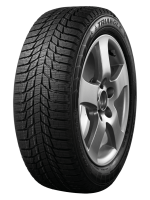
Across the ice and snow subtests, the grip level is on par with the used tire in this comparison. In the tests on bare ground, Triangle performs somewhat better compared to the competition, but it never manages to leave the lower half of the results. Disturbing road noise solidifies an already certain last place among the new tires. In fact, the points are not even enough to beat the eight-year-old wildcard entry. It ends up in a shared last place.
Category scores (% of best)
All discipline results (13)
Discipline positions compare the ranked tyres in this test, not the whole market. These are individual measurements, not weighted overall scores.
| Test | Position in discipline | Result | Gap to best |
|---|---|---|---|
| Dry BrakingLower is better | 4th / 8 | 30.37 m | +1.14 m |
| Subj. Dry HandlingHigher is better | 5th / 8 | 3 Points | -2.00 Points |
| Wet BrakingLower is better | 7th / 8 | 42.19 m | +4.64 m |
| Wet HandlingLower is better | 5th / 8 | 42.4 s | +1.40 s |
| Straight AquaHigher is better | 5th / 8 | 61 km/h | -5.00 km/h |
| Snow BrakingLower is better | 5th / 8 | 12.52 m | +0.33 m |
| Snow TractionLower is better | 8th / 8 | 4.68 s | +0.24 s |
| Snow HandlingLower is better | 7th / 8 | 79.9 s | +4.40 s |
| Ice BrakingLower is better | 7th / 8 | 13.93 m | +1.84 m |
| Ice TractionLower is better | 7th / 8 | 9.17 s | +1.85 s |
| Ice HandlingLower is better | 7th / 8 | 48.6 s | +4.10 s |
| NoiseLower is better | 5th / 8 | 74.3 dB | +0.60 dB |
| Fuel ConsumptionLower is better | 6th / 8 | 5.1 l/100km | +0.30 l/100km |
- 3PMSF
- Yes
Nokian Hakkapeliitta R2
225/45 R17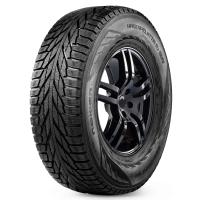
On asphalt, the lower tread depth provides an advantage in terms of braking and consumption, but it causes problems with aquaplaning instead. High wear on the outer part of the front tires results in poor cornering grip.
It is concluded that new tires offer a clear increase in safety – but only if you purchase the best ones.
Category scores (% of best)
All discipline results (13)
Discipline positions compare the ranked tyres in this test, not the whole market. These are individual measurements, not weighted overall scores.
| Test | Position in discipline | Result | Gap to best |
|---|---|---|---|
| Dry BrakingLower is better | 1st / 8 | 29.23 m | Best in this discipline |
| Subj. Dry HandlingHigher is better | 7th / 8 | 2 Points | -3.00 Points |
| Wet BrakingLower is better | 6th / 8 | 40.88 m | +3.33 m |
| Wet HandlingLower is better | 7th / 8 | 43.7 s | +2.70 s |
| Straight AquaHigher is better | 8th / 8 | 56.6 km/h | -9.40 km/h |
| Snow BrakingLower is better | 7th / 8 | 12.73 m | +0.54 m |
| Snow TractionLower is better | 7th / 8 | 4.6 s | +0.16 s |
| Snow HandlingLower is better | 8th / 8 | 80.7 s | +5.20 s |
| Ice BrakingLower is better | 8th / 8 | 14.04 m | +1.95 m |
| Ice TractionLower is better | 8th / 8 | 10.7 s | +3.38 s |
| Ice HandlingLower is better | 8th / 8 | 49 s | +4.50 s |
| NoiseLower is better | 8th / 8 | 75.5 dB | +1.80 dB |
| Fuel ConsumptionLower is better | 1st / 8 | 4.8 l/100km | Best in this discipline |
- 3PMSF
- Yes
How this kind of tires compares to standard winter tires? I would love to see single winter tire in this test to see the difference.
Check out the tyre reviews test in this category, it has the TS870 in.