Menu

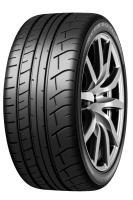
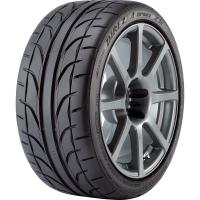
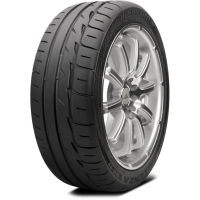
Dunlop SP Sport 600 DSST

The Dunlop SP Sport 600 DSST is a Extreme Performance Summer tyre designed to be fitted to Passenger Cars.

6.5
Tyre Reviews Score Based on User Reviews
Limited Confidence View Breakdown
Dry Grip
91%
Wet Grip
63%
Road Feedback
73%
Handling
79%
Wear
60%
Comfort
32%
Buy again
49%
10 Reviews
64% Average
109,000 miles driven
Dunlop SP Sport 600 DSST

Dunlop SP Sport 600 DSST

Summer Premium
BETA
6.5 / 10
Based on User Reviews · Limited Confidence · Updated 30 Jan 2026

The Tyre Reviews Score is the most comprehensive tyre scoring system available. It aggregates professional test data from multiple independent publications, user reviews, and consistency analysis using Bayesian statistical methods, weighted normalisation, and recency-adjusted scoring to produce a single, reliable performance rating.

Learn more about our methodology
Score Components
Professional Tests
Weight: 80%
Tests: 0
Publications: 0
User Reviews
Weight: 15%
Reviews: 10
Avg Rating: 63.9%
Min Required: 5
Consistency
Weight: 5%
Score Std Dev: 1.94
History Points: 10
Methodology & Configuration
Scoring Process
  1. Collect Test Data: Gather results from professional tyre tests across multiple publications. Minimum 1 test(s) required.
  2. Normalize Positions: Convert test positions to percentile scores using exponential weighting (factor: 1.2).
  3. Apply Recency Weighting: More recent tests are weighted higher with a decay rate of 0.95.
  4. Incorporate User Reviews: Factor in user review data (minimum 5 reviews). Weight: 15%.
  5. Bayesian Smoothing: Apply Bayesian prior (score: 7, weight: 1.5) to prevent extreme scores with limited data.
  6. Calculate Final Score: Combine all components using normalization factor of 1.1. Max score with limited data: 9.5.
Component Weights
Test Data
80%
User Reviews
15%
Consistency
5%
All Configuration Parameters
ParameterValueDescription
safety_weight 0.7 Weight multiplier for safety-related metrics
performance_weight 0.55 Weight multiplier for performance metrics
comfort_weight 0.4 Weight multiplier for comfort metrics
value_weight 0.45 Weight multiplier for value-for-money metrics
user_reviews_weight 0.15 How much user reviews contribute to the final score
test_data_weight 0.8 How much professional test data contributes to the final score
consistency_weight 0.05 How much score consistency contributes to the final score
recency_decay_rate 0.95 Rate at which older test results lose influence (higher = slower decay)
min_test_count 1 Minimum number of professional tests required
min_review_count 5 Minimum number of user reviews required
score_version 1.8 Current version of the scoring algorithm
score_normalization_factor 1.1 Factor used to normalize raw scores to the 0-10 scale
confidence_factor_weight 0.2 How much data confidence affects the final score
position_penalty_weight 0.2 Penalty applied for poor test positions
gap_penalty_threshold 8 Score gap (%) that triggers additional penalties
min_metrics_count 2 Minimum number of test metrics needed per test
limited_data_threshold 2 Number of tests below which data is considered limited
single_test_penalty 0.1 Score multiplier when only one test is available
critical_metric_penalty 0.7 Penalty for poor performance on critical safety metrics
critical_metric_threshold 70 Score below which a critical metric penalty applies
position_exponential_factor 1.2 Exponent used to amplify position-based scoring
position_exponential_threshold 0.9 Position percentile below which exponential scoring applies
gap_multiplier_critical 3 Multiplier for critical gap penalties
max_category_weight 2 Maximum weight any single category can have
max_score_limited_data 9.5 Score cap when data is limited
bayesian_prior_weight 1.5 Weight of the Bayesian prior in smoothing
bayesian_prior_score 7 Prior score used for Bayesian smoothing
evidence_test_multiplier 1.9 Multiplier for test evidence in confidence calculation
evidence_metric_divisor 3 Divisor for metric count in evidence calculation
evidence_review_divisor 10 Divisor for review count in evidence calculation
All Tests

Sorry, we don't currently have any magazine tyre tests for the Dunlop SP Sport 600 DSST

Questions and Answers for the Dunlop SP Sport 600 DSST

Ask a question
September 8, 2021

hi there i have a evo x fq440 currently running dunlop sp 600 hate how nosey they are was looking at maybe f1SS what would you recommend for hard road and track

F1 SuperSport for sure, if you don't mind losing the DSST.
Ask a question

We will never publish or share your email address

captcha

To verify you are human please type the word you see in the box below.

Top 3 Dunlop SP Sport 600 DSST Reviews

Given 60% while driving a Nissan GT R (285/35 R20 W) on a combination of roads for 10,000 spirited miles
Great grip in the dry, acceptable in the wet, very good feedback but extremely noisy, they sell them only in Nissan dealership and they are incredibly expensive

Buy again? NO WAY
Ask a question | Helpful 487
October 21, 2015
Given 31% while driving a BMW 530d (225/40 R18) on mostly motorways for 15,000 easy going miles
I have had these tyres on the front of my BMW for 15,000 miles and they have been terrible. They have gone out of shape and make a loud grinding noise on most road surfaces. The local garage told me I should replace them even though there is lots of tread left.
November 12, 2013
Given 77% while driving a Nissan GT R (255/40 R20 W) on a combination of roads for 3,000 spirited miles
Not cheap, but superior to similarly priced European brands.
November 6, 2014
Have you driven on the Dunlop SP Sport 600 DSST tyre?

Have YOU got experience with the Dunlop SP Sport 600 DSST? Help millions of other tyre buyers

Review your Dunlop SP Sport 600 DSST >

Latest Dunlop SP Sport 600 DSST Reviews

Given 70% while driving a Subaru 2008 subaru impreza sti (225/45 R17) on a combination of roads for 18,000 spirited miles
They lasted much longer than expected with agressive driving. Good dry grip, agile tyres but too noisy. Having other options that are better at the same price, i would rather not buy these again.
June 21, 2012
Given 87% while driving a Nissan GT R (285/35 R20 W) on a combination of roads for 8,000 spirited miles
Stunning tyres, better than the Bridgestones, too bad Dunlop have limited supply to the nissan dealers so you get ripped off buying them. Import them from tirerack in the us, much cheaper!
September 7, 2010
Check out how the BEST all seasons tyres perform against premium summer and winter tyres!
Given 87% while driving a Evolution (245/40 R18 W) on a combination of roads for 2,000 spirited miles
Having driven on Dunlop SP 600 tyres fitted to a Mitsubishi Evolution X for only two months(and 2000 miles from date purchase) I can't comment significantly on tyre wear - partly because I bought the car as a demo with close to 1000 miles on it. The initial tyre wear at the time of delivery seemed relatively high, consistent with some hard test drives. I will say that considering how much I love to push the car I'm not unhappy with the rate of wear since.

I was prepared to be dissatisfied with the SP600s based on reports I had read. However, the adhesion levels have been ridiculously high. I've never before driven a car that could encourage me to progressively increase cornering speeds and maneuver so much more aggresively, pleasure me and scare me, all at the same time, to the point of finding my hands shaking upon exiting the car; I have owned Porsches, Nissan 300 ZX twin turbos, a 7 litre Cobra Jet Mustang, a 5.7 litre Chev Monaro, and driven a 426 Hemi Charger and Ferraris.

The ride seemed excessively harsh until a tyre pressure check three days ago revealed 37 psi all round. Granted this would have been partly due a very warm summers' day in Australia. Mitsubishi recommend 32 front and 29 rear (cold). I settled on 34 front and 31 rear. As a result the ride is more comfortable but the Evo seems to have lost some of its incredible edge.

I've read and heard that lower pressures are better for tight twisting roads because there is more rapid and higher tyre temperature increase. I think however, for country drives with fewer extreme curves and more long sweepers, I'd opt for higher pressures.

To sum up the tires feel great, but how much of the handling is due to the Evo x's computerised computerised anti skid and yaw control? Obviously a lot.

My tire specialist tells me that Pirreli P Zero Rosso would be the ultimate replacement, or in second place Yokohama A 041.

PS. My tire specialist has just informed me that his staff would have inflated the tyre pressures to 36 psi cold when I was last there. Apparently if you don't run high pressures your tyres get chopped around, which probably explains why I was there - replacing a near new tyre. Considering there's no spare tyre on an Evo it's another reason to drive with higher pressures. Getting a tip tray truck to take you to get a replacement tyre is time consuming and inconvenient, not to mentionion embarrassing and expensive. A narrower than standard wheel and tyre are on my acquisition list for spare use.

PPS.
I haven't yet found the limit of dry handling capability - As previously mentioned much credit must go to the car.

I did manage to spin one of the wheels in the wet for an instant, but there was no sense of loss of directional control.

This is the right way to spell "definItely"

January 12, 2009