All season tyres are trying to be one tyre for every situation, but as we know no tyre can excel in every category, meaning tyre manufacturers often take away from one area to be better in another.
So, which all season tyre is best for YOUR own needs? To find out Tyre Reviews has ten of the most popular all season tyres on the market, and will be testing them in the snow, dry and wet, noise, comfort and rolling resistance!
The tyre size I'm testing is massively popular 225/45 R17, and while there might not be any new names in the test this year, a different size and different testing location means we're likely to get some interesting results! The Michelin Crossclimate 2 stormed to victory last year in 16", will this year be any different?
Testing Methodology
Test Driver
Jonathan Benson
Tyre Size
225/45 R17
Test Location
Professional Proving Ground
Test Year
2022
Tyres Tested
10
Show full testing methodologyHide methodology
Every tyre is tested using calibrated instrumented measurement and structured subjective assessment. Reference tyres are retested throughout each session to correct for changing conditions, ensuring fair, repeatable comparisons. Multiple reference sets are used where needed so that control tyre wear does not affect accuracy.
We use professional-grade testing equipment including GPS data loggers, accelerometers, and calibrated microphones. All tyres are broken in and conditioned before testing begins. For full details on our equipment, preparation process, and calibration procedures, see our complete testing methodology.
Categories Tested
Dry Braking
For dry braking, I drive the test vehicle at an entry speed of 110 km/h and apply full braking effort to a standstill with ABS active on clean, dry asphalt. I typically use an 100–5 km/h measurement window. My standard programme is five runs per tyre set where possible, although the sequence can extend to as many as fifteen runs if conditions and tyre category justify it. I analyse the full set of runs and discard statistical outliers before averaging. Reference tyres are run repeatedly throughout the session to correct for changing conditions.
Dry Handling
For dry handling, I drive at the limit of adhesion around a dedicated handling circuit with ESC disabled where possible so I can assess the tyre's natural balance, transient response, and limit behaviour without electronic intervention masking the result. I usually complete between two and five timed laps per tyre set, depending on the circuit, tyre type, and consistency of conditions. I exclude laps affected by clear driver error or obvious environmental inconsistency. Control runs are carried out frequently throughout the session, and I often use multiple sets of control tyres so that wear on the references does not become a meaningful variable. For more track-focused products, I also do endurance testing, which is a set number of laps at race pace to determine tire wear patterns and heat resistance over longer driving.
Wet Braking
For wet braking, I drive the test vehicle at an entry speed of 88 km/h and apply full braking effort to a standstill with ABS active on an asphalt surface with a controlled water film. I typically use an 80–5 km/h measurement window to isolate tyre performance from variability in the initial brake application. My standard programme is eight runs per tyre set where possible, although the sequence can extend to as many as fifteen runs if conditions and tyre category justify it. I analyse the full set of runs and discard statistical outliers before averaging. To correct for changing conditions, I run reference tyres repeatedly throughout the session — in wet testing, typically every three candidate test sets.
Wet Handling
For wet handling, I drive at the limit of adhesion around a dedicated handling circuit. I generally use specialist wet circuits with kerb-watering systems designed to maintain a consistent surface condition. ESC is disabled where possible so I can assess the tyre's natural balance, transient response, and limit behaviour without electronic intervention masking the result. I usually complete between two and five timed laps per tyre set, depending on the circuit, tyre type, and consistency of conditions. I exclude laps affected by clear driver error or obvious environmental inconsistency. Control runs are carried out frequently throughout the session, and I often use multiple sets of control tyres so that wear on the references does not become a meaningful variable.
Straight Aqua
To measure straight-line aquaplaning resistance, I drive one side of the vehicle through a water trough of controlled depth, typically around 7 mm, while the opposite side remains on dry pavement. I enter at a fixed speed and then accelerate progressively. I define aquaplaning onset as the point at which the wheel travelling through the water exceeds a specified slip threshold relative to the dry-side reference wheel. I usually perform four runs per tyre set and average the valid results.
Curved Aquaplaning
For curved aquaplaning, I use a circular track, typically around 100 metres in diameter, with a flooded arc of controlled water depth, usually about 7 mm. The vehicle is instrumented with GPS telemetry and a tri-axial accelerometer. I drive through the flooded section at progressively increasing speed, typically in 5 km/h increments, and record the minimum sustained lateral acceleration at each step. The test continues until lateral acceleration collapses, indicating complete aquaplaning. The result is expressed as remaining lateral acceleration in m/s² as speed rises.
Snow Braking
For snow braking, I drive the test vehicle at an entry speed of 50 km/h and apply full braking effort to a standstill with ABS active on a groomed, compacted snow surface, measuring 45-5 km/h. I generally use a wide VDA (vehicle dynamic area) and progressively move across the surface between runs so that no tyre ever brakes on the same piece of snow twice. My standard programme is twelve runs per tyre set, although the sequence can extend further if the data justify it. I analyse the full set of runs and discard statistical outliers before averaging. The surface is regularly groomed throughout the session. To correct for changing snow surface conditions, I run reference tyres repeatedly — typically every two candidate test sets.
Snow Traction
For snow traction, I accelerate the vehicle from rest on a groomed snow surface with traction control active and measure speed and time using GPS telemetry. I typically use a 5–35 km/h measurement window to reduce the influence of launch transients and powertrain irregularities. I use a wide VDA (vehicle dynamic area) and progressively move across the surface between runs so that no tyre ever accelerates on the same piece of snow twice. The surface is regularly groomed throughout the session. I complete multiple runs per tyre set and average the valid results. Reference tyres are run typically every two candidate test sets to correct for changing snow surface conditions.
Snow Handling
For snow handling, I drive at the limit of adhesion around a dedicated snow handling circuit with ESC disabled where possible. The circuit is groomed and prepared after every run while tyres are being changed, so each set runs on a consistently prepared surface. I usually complete between two and five timed laps per tyre set, excluding laps affected by clear driver error or obvious environmental inconsistency. Because snow surfaces degrade more rapidly than asphalt, control runs are carried out more frequently — typically every two candidate test sets.
Noise
For cabin noise assessment, I drive at controlled speeds, typically 50, 80, 100, and 120 km/h, on NVH test surfaces with defined texture characteristics. Calibrated microphones are positioned at ear height within the cabin. Measurements are taken using A-weighting, with one-third octave analysis where required to identify tonal features such as cavity resonance. Windows remain closed, ventilation is off, and ambient conditions are controlled so the data reflects the tyre rather than external interference.
Rolling Resistance
Rolling resistance is measured under controlled laboratory conditions in accordance with ISO 28580 and UNECE Regulation 117 Annex 6. The tyre is mounted on a test wheel and loaded against a large-diameter steel drum. After thermal stabilisation at the prescribed test speed, rolling resistance force is measured at the spindle and corrected according to the relevant procedure. The result is expressed as rolling resistance coefficient, typically in kg/tonne.
How each category is weighted in the overall score:
Dry25%
Dry Braking55%
Dry Handling40%
Subj. Dry Handling5%
Wet35%
Wet Braking50%
Wet Handling25%
Subj. Wet Handling5%
Straight Aqua10%
Curved Aquaplaning10%
Snow25%
Snow Braking45%
Snow Traction5%
Snow Handling40%
Subj. Snow Handling10%
Comfort5%
Noise100%
Value10%
Rolling Resistance100%
Snow
Before I start on the snow handling results, I'd like to remind everyone these are ALL season tyres, and depending where you live, the snow performance of them can range from not very important at all, to very important so don't write off a bad tyre in snow handling if you live in the south of the UK and see snow once every 5 years, the wet grip is more important.
The snow handling lap is long, but there's over 12% from best to worst so you can tell how some tyre companies are focusing on snow more than others.
In last place, a full 15 seconds behind the best was the Bridgestone WeatherControl A005 evo. This tyre never places too highly in the snow, but usually places well in the dry and wet. After driving it in this group of tyres, if you live in a climate that sees anything but the smallest amount of random snow, skip this. It is way better than a summer tyre in these conditions, but it should be used as a "get you out of trouble" tyre in snow. Difficult to drive compared to the rest.
The Vredestein Quatrac Pro and Falken AS210 were next around 9 seconds from the lead. They both took longer to recover once sliding compared to the tyres ahead, but of the two the Falken felt a little better on the brakes.
Seventh was the Pirelli Cinturato AllSeason SF2 just under 7 seconds or 5.7% off the best. And the tyre just had a touch of oversteer in the balance which was fun, but not the grippiest.
Sixth was the Tomket Allyear 3, 5% or 5.8 seconds off the best. The tyre had reasonable levels of grip, but it gave you the lowest amount of communication from the front axle meaning you didn't really know when it was sliding or not, and it had the most understeer of any tyre.
If snow is important to you, the top 5 tires are where you should focus.
The Continental AllSeasonContact was in 5th, under 5% from the best and Goodyear Vector 4Season Gen-3 a little ahead, 4% away from the leader. Both tyres felt fairly similar to drive, both were understeer primary tyres with reasonable levels of communication, both did feel good on the brakes too.
A little ahead, the Hankook Kinergy 4S2 had very good grip, but it was a little peaky, meaning when you started to slide it took a little more work to recover. Fast if you can manage it, but a tiny bit less friendly than the Conti and Goodyear.
Kleber Quadraxer 2 had impressive grip, in fact it felt a lot like the Conti and Goodyear, just a little more understeer than I'd want. But it was still 3.3 seconds or 3% from the best tyre, which was the Michelin CrossClimate 2.
I know the original CrossClimate wasn't always the best in snow as it was really focused on the dry and wet, but they have significantly improved the snow performance for the CrossClimate 2. It was literally a league of one, and was as far ahead at the front as the Bridgestone was at the rear in terms of grip and driveability. The CrossClimate 2 has winter tyre levels of snow grip.
Snow Handling
Spread: 15.40 s (14%)|Avg: 116.46 s
Snow handling time in seconds (Lower is better)
Michelin CrossClimate 2
110.00 s
Kleber Quadraxer 2
113.30 s
Hankook Kinergy 4S2
114.30 s
Goodyear Vector 4Seasons Gen 3
114.70 s
Continental AllSeasonContact
115.50 s
Tomket Allyear 3
115.80 s
Pirelli Cinturato All Season SF2
116.70 s
Falken EUROALL SEASON AS210
118.90 s
Vredestein Quatrac Pro
120.00 s
Bridgestone Weather Control A005 E
125.40 s
The CrossClimate 2 retained it's lead in snow traction and braking, with Kleber holding second placed. As in handling, the Bridgestone was the worst.
Snow Traction
Spread: 4.00 s (72.7%)|Avg: 6.72 s
Snow acceleration time (5 - 40 km/h) (Lower is better)
Michelin CrossClimate 2
5.50 s
Kleber Quadraxer 2
5.70 s
Tomket Allyear 3
5.90 s
Hankook Kinergy 4S2
6.00 s
Falken EUROALL SEASON AS210
6.20 s
Pirelli Cinturato All Season SF2
6.70 s
Continental AllSeasonContact
6.80 s
Goodyear Vector 4Seasons Gen 3
7.10 s
Vredestein Quatrac Pro
7.80 s
Bridgestone Weather Control A005 E
9.50 s
Snow Braking
Spread: 5.60 M (18%)|Avg: 33.10 M
Snow braking in meters (40 - 5 km/h) (Lower is better)
Snow Braking: Safety Impact: Best vs Worst Tyre
Wet
Unable to continue its reasonable performance in the snow, the Tomket budget tyre is an excellent option if you want to show off to your mates by drifting around your front wheel drive car in the wet, but not the best purchase if you want a safe, predictably balanced car with grip. It oversteered a lot, and it was slow, 12 seconds off the fastest. I might sound like a stuck record, but please avoid budget all season tyres, they can be fine in one area, but never all of them.
Kleber and Pirelli were the next two tyres, but we're already within 5% of the best and way better subjectively than the budget. Instead of lots of oversteer, there was now predictability and assurance with a primary understeer balance. Not bad, but not the best for sure.
The incredible snow domination of the Michelin CrossClimate 2 seems to have unfortunately come at the expense of wet handling, and while it was only 2.4% off the best, I'm a little disappointed. The CC2 had a nice safe understeer primary balance, but it did lack a little detail though the steering wheel mid corner where you'd spend a lot of time waiting for the throttle.
I was shocked to see the Bridgestone WeatherControl A005 Evo in sixth, as wet handling is usually one of Bridgestones strengths. There was nothing bad about the tyre, it was grippy and consistent, it just wasn't the best of the group. It felt great on the brakes so let's see how it does in braking.
Continental was fifth, and we're now only 1.5% off the lead so you can see how close it is at the time. The AllSeasonContact felt surprisingly sporty for an all season tyre, and I really enjoyed driving it. Good steering, a tiny amount oversteer in the balance but progressive enough to still be safe. It worked well with this VW Golf.
Falken was fourth with… well… I'm not sure how to describe the handling. My notes say "sporty and spongy" which are two opposing qualities. Sporgy? It had a quick turn in, but then there was what felt like some excess deflection onto the sidewall which made the car wobble a bit. But the grip was excellent and it's an impressive tyre.
Goodyear and Hankook were a very close third and second. In this tyre test there have been some tyres with too much oversteer and some tyres with too much understeer, but the Goodyear was the goldilocks tyre as it had just the right amount of both. If I didn't emphasize enough already, there's not a huge amount of differences between all these tyres (apart from the budget) so the differences are subtle, but they're there and fun to find out.
Hankook was almost as lovely to drive, and the hankook had a MIGHTY first lap pace, fastest of all, but it did also have the most drop off in time across the four laps we do to get the average, which meant its average was a little behind the fastest tyre overall, the Vredestein Quatrac Pro.
We wondered during snow handling if the asymmetric pattern was going to pay back in the wet, and it did as it felt sporty and had good grip. The tyre did have a bit of oversteer in it, which is perhaps not the most ideal in the real world but it was controllable which really helped the time. Great job Vredestein.
Wet Handling
Spread: 12.00 s (12.4%)|Avg: 99.48 s
Wet handling time in seconds (Lower is better)
Vredestein Quatrac Pro
96.60 s
Hankook Kinergy 4S2
97.10 s
Goodyear Vector 4Seasons Gen 3
97.50 s
Falken EUROALL SEASON AS210
97.70 s
Continental AllSeasonContact
98.10 s
Bridgestone Weather Control A005 E
98.60 s
Michelin CrossClimate 2
99.00 s
Pirelli Cinturato All Season SF2
100.30 s
Kleber Quadraxer 2
101.30 s
Tomket Allyear 3
108.60 s
Nicely tying up with wet handling, the Vredestein Quatrac Pro, Hankook Kinergy 4S2 and Goodyear Vector 4Seasons Gen-3 were also the best in wet braking.
Wet Braking
Spread: 10.50 M (34.4%)|Avg: 33.75 M
Wet braking in meters (80 - 5 km/h) (Lower is better)
Wet Braking: Safety Impact: Best vs Worst Tyre
The Hankook had a significant advantage in straight aquaplaning, with the asymmetric patterned Vredestein and Tomket struggling the most.
Straight Aqua
Spread: 8.40 Km/H (10.4%)|Avg: 77.49 Km/H
Float Speed in Km/H (Higher is better)
Hankook Kinergy 4S2
80.50 Km/H
Goodyear Vector 4Seasons Gen 3
79.30 Km/H
Kleber Quadraxer 2
78.80 Km/H
Michelin CrossClimate 2
78.80 Km/H
Continental AllSeasonContact
78.30 Km/H
Bridgestone Weather Control A005 E
78.10 Km/H
Pirelli Cinturato All Season SF2
77.90 Km/H
Falken EUROALL SEASON AS210
77.00 Km/H
Vredestein Quatrac Pro
74.10 Km/H
Tomket Allyear 3
72.10 Km/H
Dry
While no tyres were awful in the dry, even the budget, the big disappointment was the Vredestein, but I guess it goes to prove having good wet and dry at the same time is difficult. In spite of its asymmetric pattern and its excellent performance in the wet, it didn't have the most responsive steering or the most grip in the dry meaning it wasn't sporty as I hoped.
The "very good" group of tyres were Hankook, Conti and Goodyear, all working surprisingly well in the dry, and the "really" good tyre was the Bridgestone, it might have been midpack in the wet but in the dry, in this 17" size it was a really nice blend of dynamics, feedback and grip. Very drivable and very enjoyable (for an all season tyre!)
You may have noticed I've not mentioned the Michelin Crossclimate 2. It had the fastest one lap pace, but the compound seemed to struggle a little more over three laps than some of the other tyres, this is a very punishing track, meaning the average lap time didn't show a significant lead once I'd averaged the three laps. The tyre still was one of the best, but the reason I'm talking about this separately is that the Michelin CrossClimate was a game changer when launched, it was a summer tyre with some winter capabilities and it really felt like that in the dry. Either the CrossClimate 2 has lost some of that, or the competition is catching up fast as it doesn't have a huge lead anymore in dry handling.
Dry Handling
Spread: 2.10 s (2.7%)|Avg: 79.64 s
Dry handling time in seconds (Lower is better)
Goodyear Vector 4Seasons Gen 3
78.70 s
Continental AllSeasonContact
78.80 s
Bridgestone Weather Control A005 E
78.90 s
Hankook Kinergy 4S2
79.30 s
Michelin CrossClimate 2
79.30 s
Falken EUROALL SEASON AS210
79.70 s
Vredestein Quatrac Pro
80.10 s
Tomket Allyear 3
80.20 s
Pirelli Cinturato All Season SF2
80.60 s
Kleber Quadraxer 2
80.80 s
The Michelin did retain its lead in dry braking, with the Hankook and Bridgestone close behind!
Dry Braking
Spread: 4.90 M (12.7%)|Avg: 40.59 M
Dry braking in meters (100 - 5 km/h) (Lower is better)
Dry Braking: Safety Impact: Best vs Worst Tyre
Environment
The Falken had the lowest internal noise, however the group was split by less than 1db.
Noise
Spread: 0.70 dB (1%)|Avg: 69.47 dB
Internal noise in dB (Lower is better)
Falken EUROALL SEASON AS210
69.10 dB
Vredestein Quatrac Pro
69.30 dB
Kleber Quadraxer 2
69.40 dB
Hankook Kinergy 4S2
69.40 dB
Tomket Allyear 3
69.40 dB
Goodyear Vector 4Seasons Gen 3
69.50 dB
Pirelli Cinturato All Season SF2
69.50 dB
Michelin CrossClimate 2
69.60 dB
Continental AllSeasonContact
69.70 dB
Bridgestone Weather Control A005 E
69.80 dB
The Bridgestone and Pirelli had the joint lowest rolling resistance, with the Falken and Vredestein having the highest.
Rolling Resistance
Spread: 1.90 kg / t (25.3%)|Avg: 8.29 kg / t
Rolling resistance in kg t (Lower is better)
Bridgestone Weather Control A005 E
7.50 kg / t
Pirelli Cinturato All Season SF2
7.50 kg / t
Michelin CrossClimate 2
7.90 kg / t
Continental AllSeasonContact
8.10 kg / t
Goodyear Vector 4Seasons Gen 3
8.20 kg / t
Tomket Allyear 3
8.20 kg / t
Kleber Quadraxer 2
8.50 kg / t
Hankook Kinergy 4S2
8.50 kg / t
Falken EUROALL SEASON AS210
9.10 kg / t
Vredestein Quatrac Pro
9.40 kg / t
19,000 km
£1.45/L
8.0 L/100km
--
Annual Difference
--
Lifetime Savings
--
Extra Fuel/Energy
--
Extra CO2
Estimates based on typical driving conditions. Rolling resistance accounts for approximately 20% of IC vehicle fuel consumption and 25% of EV energy consumption. Actual savings vary based on driving style, vehicle weight, road conditions, and tyre age. For comparative purposes only. Lifetime savings based on a 40,000km / 25,000 mile tread life.
At time of test, the Falken was the cheapest tyre to purchase.
The best snow performance on test by a margin, rivaling winter tyre ability, shortest dry braking with good grip in dry handling, high aquaplaning resistance, low rolling resistance.
Limited grip in the wet grip tests with high levels of understeer.
The Michelin CrossClimate 2 wins the test in the balanced scoring, but does drop down to third in the mild climate results. Why? The CrossClimate 2 is quite frankly ridiculously good in the snow, Tyre Reviews ran the all season test alongside the winter test in the same size and if the Crossclimate 2 was in the winter tyre test, it would have been better than half of the winter tyres in the snow! It also had a very low rolling resistance, and it had the shortest dry braking, the CrossClimate party piece. However, it seems to have lost its significant lead in the dry, just 1.5% ahead of the hankook in dry braking, and it no longer has the subjective lead in dry handling, the Bridgestone won that show. But the biggest reason it could only finish third in the mild climate results was because of its wet performance, it was great in straight aquaplaning but it was only midpack in wet braking and struggled a little during the wet handling laps. The CrossClimate 2 is certainly an exceptional all season tire, and worthy of the test winning award, but we hope for the next generation of CrossClimate Michelin trade some of that incredible snow performance for a little more ability in the dry and particularly the wet to bring back the "summer tyre with winter capabilities" theme the Crossclimate is so loved for.
Best aquaplaning resistance, extremely short wet braking and excellent wet handling, excellent grip in all snow tests, high grip levels in the dry, low noise.
High rolling resistance.
The Hankook Kinergy 4S2 H750 finishes an impressive second in the balanced results, but even more impressively it wins with the mild climate score weighting! The Hankook was just incredibly consistent, finishing first place in both aquaplaning tests, second in wet handling, wet braking and dry braking, third in snow handling, and fourth in snow traction, snow braking and dry handling! It's only let down, which we've seen in other tests, is an increased rolling resistance, but given how exceptional it is in every other category, I highly recommend this tyre. Outstanding work by Hankook.
Excellent grip in the wet with short braking distances and good handling, very high aquaplaning resistance, excellent braking and handling in the snow, fastest dry handling time.
Lower snow traction, long dry braking distances.
The Goodyear Vector 4Season Gen 3 had a poor result in the Tyre Reviews all season test last year, but that was certainly an outlier rather than the rule, and now the tyre is back exactly where it should be. The only drawback, which we've seen many times before, was average dry braking, but it was consistently amongst the best in the wet, including aquaplaning results, and the snow.
Good handling in the wet and dry, good snow braking and handling, low rolling resistance.
High internal noise, weak snow traction, extended dry braking.
The Continental AllSeasonContact might be one of the oldest all season tyres in the group now, but it's still performing well with a solid balanced result in all categories. Consistency is important in an all season tyre, and while the Continental didn't win any test, it didn't do badly in any test either, with a solid string of 4th and 5th places putting it in fourth place overall in the balanced score weighting, and fifth in the mild climate. Recommended.
Excellent grip in the wet and dry, good aquaplaning resistance, short dry braking, lowest rolling resistance on test.
Extremely limited snow performance with the longest braking, lowest traction and most difficult snow handling lap. Highest internal noise.
The Bridgestone WeatherControl A005 EVO might just be the all season of the group designed specially for climates which get minimal snow, as in the balanced score weighting it finished fifth but in the mild climate score weighting it jumped up to second place overall! As the results imply, this tire was great in the dry, pretty good in the wet and it had the joint lowest rolling resistance on test, BUT it was a firm last in the snow. Even though there wasn't a summer reference tire in this test, we cna be sure that the Bridgestone will still vastly outperform any summer tire on snow, however compared to a good all season tire its performance was extremely limited. Definitely an all season tyre for a climate where snow is the exception rather than the rule.
Lowest internal noise on test, good snow traction and wet handling.
Average grip in the snow and the dry, low aquaplaning resistance, very high rolling resistance.
The Falken Euroall Season AS210 finishes in sixth with a very similar overall performance and score to the Vredestein - in fact the Vredestein and Falken were so close their places swap in each score weighting. Like the Vredestein it was most at home in the wet, and like the Vredestein its snow performance couldn't match the best, or even the average of the group. It also had a high rolling resistance but it did however have the lowest internal noise.
Best wet grip on test with the shortest wet braking and fastest wet handling lap, low internal noise.
Low grip in the snow and in the dry, low aquaplaning resistance, highest rolling resistance in the test.
The Vredestein Quatrac Pro finishes in seventh place overall. This tyre was an absolute beast in the wet with the shortest wet braking by over a meter, and the fastest wet handling lap by a significant margin! Sadly, a midpack dry braking was the next best highlight as the tyre struggled in both aquaplaning tests, had low grip on the snow and a very high rolling resistance.
Lowest rolling resistance on test, short braking distance in the dry.
Limited snow and wet grip in braking and handling.
In eighth place overall was the Pirelli Cinturato AllSeason SF2. This was a disappointing result for the SF2, and while it did have the lowest rolling resistance on test and very good dry braking, it was let down by an average snow performance and low grip in the wet. I've actually spoken to Pirelli about this result as the SF2 seems to have variable results in tests depending on size, and Pirelli have informed me that unfortunately this tyre was an older spec tyre which has now been updated with significantly more grip in all conditions. I'll be sure to retest this next year.
Excellent grip in the snow, high aquaplaning resistance, low internal noise.
Low grip in the wet and dry with long braking distances and slow to react handling. High rolling resistance.
The Kleber Quadraxer 2 had an excellent performance in all the snow tests and one of the best aquaplaning performances, but sadly couldn't keep up in the dry and wet grip tests where it had long braking and poor handling results.
Good snow traction, low internal noise, reasonable rolling resistance.
Dangerously long braking distances in the wet and dry, inharmonious handling in the wet with oversteer, very low aquaplaning resistance.
The Tomket Allyear 3 once again proves that a budget tyre can be fine in one category, it was reasonable in the snow, but then be a disaster in other areas, with a 10.5 meter difference stopping the golf from just 50 mph and really difficult wet handling making the allyear 3 a tyre to avoid.
I live down a very long muddy farm track. I find that tyres have less traction in mud than snow. How about expanding your tests to include driving on slippy wet muddy fields.
Autobild do some mud tests for summer SUV tires. I probably won't, the reality is that sort of testing is almost impossible to get right and if you repeat the test on three different days you're likely to get three different results. I only publish data I'm 100% about.
I've mud tested all terrains and that's hard enough!
Hi, @TyreReviews:disqus ! I've been following your reviews for quite a while now. Truly amazing how complex a tyre can be! Because of your reviews, I've reached to the conclusion I should step away from the "use winter tyres in the winter, all-seasons are garbage" since in the past couple of winters I drove on snow like 2 times, so I'm now looking to buy some all season tyres as my winter tyres.
Now, I've looked through like 6 different articles reviewing all seasons tyres here on the website, all from the past 2 years and a common theme I'm seeing is that Michelin CC2, Goodyear Vector 4Seasons Gen3 and Hankook Kinergy 4S2 always seem to be in top 3 switching places (most often Michelin and Goodyear win the top 2 places with Hankook winning your last year's mild climate award). Since I do not often drive on snow, I'm focusing more on the wet and dry conditions and I came to a standstill trying to decide what to buy.
- CC2 is definitely king on snow and dry braking, but most of the reviews mark them as average in wet. - Goodyear seem to be a great all-around, but always seem to somewhat lack the dry braking capabilities. - Hankook also seem to perform well in wet and dry with decent snow capabilities, but the results seem to be a lot more inconsistent between different reviews compared to the other 2
So, with a focus on wet & dry (while still not wanting to risk it in the ocasional snow), can I get your opinion on which tyres to choose? The car in question is a Honda Civic XI with a 235/40 R18 wheels size, hence why commenting on this older article where the wheel size is much closer to mine rather than commenting on your newer article.
You mean Bridgestone Turanza All Season 6 and Continental AllSeasonContact? Yes, but I think Conti has a newer AllSeasonContact 2 which I can't find.
I've seen a review of the Bridgestone Turanza (I think it was from AutoBlid or TUV) and it had amazing performance, although because I didn't find more reviews of it I was skeptic on relying on a sole review. Do you have any experience with it and would recommend it over Goodyear / Hankook?
Which tires are noisier, winter tires or all-season/weather tires? I have read both tire tests and I see that the noise levels are higher (more dB) with all-season/weather tires than with winter tires. Is this correct and are they indeed noisier?
I always thought that winter tires make the most noise. I have been driving on Bridgestone Blizzak LM005 winter tires for three winter seasons now and I find them to make a lot of noise that most resembles a broken wheel bearing. It's a constant buzzing and whining sound. As soon as I install my Michelin Primacy 3 summer tires, the noise disappears.
I drive an electric car so the sound is more pronounced. Because the Blizzaks are worn out, I want to buy a new set and am thinking of buying a set of all-season/weather tires because we hardly have snow here in the Netherlands. But if they make more noise than winter tires, I might be better off going for a set of new winter tires. What are your thoughts?
Noise levels depends more on the tyre than the tyre of tyre, there are some very quiet winters and some very noisy ones.
One thing you'll find is that it's harder for a siped tyre to wear without generating more noise which is something you might be experiencing. It might be worth having your alignment checked to ensure you don't have the same problem again.
I don't think the noise is a result of weather or teperature, the Blizzaks are noisy all the time as well in the wet and the dry.
Also I don't think it's a alignment issue because my Michelin Primacy 3 are very quiet and all tyres are wearing even. But what you say about the many sipes of the tyre in the profile sounds very plausible because the blocks twist more due to the softer compound and would explain the increased noise. But all-season/weather tyres have fewer of those sipes and the rubber is less soft. Shouldn't these be quieter than winter tyres?
Hi there, I think my needs may stretch all season tyres, but worth a check here. I have a Skoda Karoq DSG petrol so not a sports car. We live in the SE of England, and have a holiday home in Greece where I drive to from the UK and where summer temps hit 35 plus degrees. I usually travel on my way out to Greece in late Winter / early Spring via the Austrian ski resorts where M&S rated winter or all season tyres are mandatory. The Greek roads can be wet and slippery after the long summer when I return to the UK in Oct / Nov. Would the Michelin CC2 or the Hankook Kinergy 4S2 work for the extremes above, and would they wear so quickly that it better pay to have both Summer and Winter tyres on extra rims in my garage?
I have a couple of questions about 4 season and winter tyres.
I'm looking to purchase a second set of wheels and tyres for my car, to go with my existing summer wheels/tyres. I live in SE England and get fairly mild winters, where snow is infrequent and temperatures can regularly go above the circa 7 degree max level where winter tyres are best. So I'm thinking a set of summer wheel/tyres and 4 season wheel/tyres is better than summer and winter sets. Do you agree?
If I look at the tyre sizes recommended for my BMW for summer it is staggered and for winter it is square (also narrower all round than the summer size). My second question is for the second set of wheels, if I go with 4 season tyres should I get them in the recommended winter tyre size or the recommended summer tyre size?
Kinergy KS2 750 vs Vector 4 Seasons Gen 3 on 225/45 R17 (like your test):
I am a bit concerned: i was tending to the Goodyear, but read, that the profile is just about 4-5mm in the middle. Would that not be a deal breaker if one intend to usw the tires for more then 2 Years?
And yould you recommend (sujectively) the goodyear over the hankook in the mentioned size for a passat station wagon? Mostly dry and rainy and sometimes snow (mild climate)
Would love to see the Nokian WRG4 in this mix. Seems odd not to have it here, but maybe I'm missing something. It seems like the WRG4 is perhaps slightly better in snow/ice and worse in the wet, but I can't find a good comparison. I've been using them for years on our ski car and love them. It is hard for me to switch without better data.
Simple answer, WRG4 isn't really available in Europe, we have the SnowProof range instead. But I couldn't test that as Nokian lost its main factory in Europe so production has been cut in half :(
I have a test with the WRG4 in it out later this year though!
Hey! Looking at the results and I picked two out of all Goodyear Vector 4seasons 3 and Michelin Crossclimate 2 for my Peugeot 508 (215/55 r17). I tend to pick Vectors as it seems to make longer distances giving better grip on wet (which is a priority for me). On the other hand I found tests that say Michelin makes a much better distances. Can you please advise which one, out of these two, will make longer distance in Europe? (I assume that CC2 may have slightly different compound in Europe than US)
If you mean how many miles the tyres will cover, the Goodyear has quite a large advantage over the European CC2. The US version of the CC2 has a tweaked compound and a much higher starting tread depth than the EU version.
Just bought a spare set of wheels for my Jaguar XF (245/40/19) so thinking ahead to what is best to fit in readiness for next winter. The car will predominantly be used in the southern England, but also for a skiing trip to the Alps. Thinking of the Hankooks, but wonder if winter tyres might be a better bet? Grateful for any guidance.
You're certainly planning ahead! Assuming you're sticking to the main roads in the alps I'd personally have no problems on a good all season tyre as that should give you an advantage for most of your driving in the UK. The Hankook is a great product, but don't ignore the Goodyear. Also, there will be a new Continental AllSeasonContact 2 out in the middle of the year!
Wondering whether some of the results might imply that some of the tyres may suit certain types of tyre size combination (e.g. skinnier, higher profile tyres) than low-er profile tyres, though admitedly the 225/45 R17 is by no means a very low profile tyre, now often used on many 'average' performing mid-spec cars.
I'd certainly be interested to see how the same lot fair when using (say) 195/65 R15 or 205/55 R16 tyres, both of which are still very popular sizes, mainly on Focus / Golf sized cars from the early 2000s to about 2015, though they are, I think, still used on some newer cars (KIA Ceed / Hyundai i30?).
I think that the equivalent now is 205/60 R16 (not compatible size with those other two but an 'in-between' one to reduced car manufacturers' need to test every trim and tyre size combo for safety and emissions [saving them a fortune]) - I've seen that size as the 'base' for lower and mid-spec Focuses, Mazda3s and some others, along with the 215/45 R18 (interchangable total rolling diameter within the legal limit) on upper spec models.
Thanks Jon - good to hear, especially as my ageing Mazda3 is currently shod on 5yo 195/65 R15s Michelin CC+s, albeit with a decent amount of tread left (as with many people, I haven't done a lot of mileage over the last few years). Nice to be able to see what's available should the need arise.
I'm seeing more and more Brits go (like me) the all-season route, despite most of us not seeing that much snow generally, especially after the price and particularly the performance differential compared to summer/winter tyres is far less than it used to be.
Great review. One question many might ask is how does a particular car negate or not to one of your tested tyres? If you know this answer, which all season tyre would you recommend for my BMW 520d Xdrive (G31)?
Question: For a UK car with 7.0x16 rims and 215/45 tyres as standard, would I be better off getting the Hankook tyre in 195/50 or one of the runners-up in 215/45?
Hankook seems to be the clear leader for UK conditions but doesn't make a 215/45 R16, so the only size that would fit my rims without significantly affecting the speedo accuracy would be their 195/50 R16.
Otherwise, I'd have to pick a 215/45 R16 from Bridgestone, Conti, or Michelin, all of which cost a lot more. (Or there's the old Gen 2 Goodyear which @TyreReviews has never tested and is similarly costly).
Many thanks for the great review provided, very helpful in deciding which tires to select for next buy!! I only miss one thing though, how did they perform comfort wise? More in particular difference between Hankook, Michellin, Goodyear and Continental?
Great website, and another interesting test! In total I have driven almost a million miles in all kinds of cars, weather, trafic, on all kinds of roads. I usually drive quickly but fluently and very anticipating (my tires wear out much faster then my brakes). The few accidents I’ve had (the last one is 20 years ago), the ones I have witnessed, and the occasional almost-accidents made me very aware of the importance of good tires (and the condition of the shock absorbers of course - the influence of worn dampers might be an interesting test). So I became a bit of a tire geek (I noticed that I’m not the only one here). My current car is a more budget oriented Ford Focus MK3 125 hp with 205/55/16 Continental PremiumContact 6 summer tires. Great tires! And a great combination with the car. I never expected to have so much driving pleasure in such a modest car. I’m happy I chose them -thanks to all the info on your website. I live in Belgium, where we rarely have snow on the roads. Icy and frosty roads or salted slush do occur more, but the main risk is (lots of) rain at colder temperatures. And in fall and spring, the temperature can swing between almost freezing, +20 °C and back. So, for my new winter tires, I decided to follow your advice and go for all seasons. To keep my future winter holiday options open, I still want the tires to provide a workable amount of traction and safety on snow. I finally chose the Goodyear Vector 4S. I’ve been driving on them about 3k km now, at temperatures between -3 and + 10°C. They perform as expected: very predictable and controllable, certainly an excellent stable grip on cold wet roads, in the dry noticeably more comfortable but less direct (= less pleasant) than my summer tires, the PC6, but sufficient grip and a firmer road contact than with the Continental WinterContact TS 860’s that I had been driving on the last winters. I find the aquaplaning resistance of the V4S also impressive, certainly compared to the PC6 (but this is to my scary experience the PC6 ’s main weak point). On the minor side is that the fuel consumption went up from 6,2 (with PC6) to 6,6 l/100 km with the V4S. I’ll write a review on the Goodyear V4S once I’ve had the chance to drive them on snow. I never drove an all season tire in the snow, so ’m very curious to experience how it compares to the real winter tire I’m familiar with. In short: I feel safe while still enjoying driving in wet winter conditions (and while lending out my car to my girlfriend). Thanks for your advice and all the interesting information! Just one thing: Driving pleasure is important to me, but safety still more. And I find that more difficult to evaluate while reviewing tire tests. In my experience (near-)accidents don’t happen when a fully focused professional driver tests the limits of the tires on a perfect racetrack, while anticipating or even provoking the reactions of the car, but accidents rather happen when a tired or otherwise less focused driver is surprised (a brusque evasive maneuver due to another car doing something unexpected, a curve beying sharper or more slippery then expected). That is when the tires are pushed to the limit and when good tires make the difference between an accident and just a scary moment. So, I would love to see the moose test (or elk test, how is called?) beying a standard part of each tire test. But as your tests are already quite extensive and your comments during the tests are very helpful, I won’t hold it against you if you don’t ;-)
Great read, thanks for posting. I actually do aggressive lane changes for nearly all tests, and this years test out in feb actually talks about it for a change. These are only possible in the dry, I've not seen a test facility where people are doing it in the wet, but the balance of the tyre is discussed as part of wet handling.
Naturally the key safety criteria is braking, which is repeatable by everyone.
Glad you're getting on with your tyres and liking the PC6. It's still on my car in the UK!
Thanks for your answer. I can now say that I spoke to the master himself! And indeed, you clearly explain the balance and behaviour of the different tires in the wet handling tests, like how progressive they are on the grip limit, and that gives a pretty good idea of what to expect in real life situations.
Abrupt lane changing on a wet surface while keeping (or regaining) control of your car after that is now part of the program for new drivers in Belgium who want to obtain their drivers licence. You can see it in this video: https://www.fordlpg.ford.co...
I was just thinking: since the outcome of exercises such as this highly depends on the tires, it might be useful to have some kind of objective way of measuring the performance and behaviour of tires in this kind of situations. Regaining grip, or regaining control, that is where things often go wrong. So, I’m curious about your next video.
Anyway, I have my summer and winter tires now, so I hopefully won’t need any new ones the coming years. I’m nevertheless still looking forward to your next tests.
The thing I need to purchase now is a dishwasher. I wonder if the search and evaluation process for that will be just as interesting and exciting as it was for the tires. I doubt it…
Hello, Does MPS All Season/4s have available in R15? Or, alternatively, what is available in the same radius among comparable UHP All Season tires to buy in USA? In my opinion/driving habits the best tire for me is the one that is safest in wet/rain conditions. When it snows I simply do not drive (can wait couple of days without going anywhere). But the most important thing is to have the car that is stable in wet conditions. Because even in summer (summer tires) it is very often raining and raining hard in US Midwest. I really don't care about snow breaking abilities of the tire. Just need the one that would give me almost 0 chance of hydroplaning when I'm occasionally ended up crossing through the water on a high speed. Thank you!
I'm not sure if any UHP all seasons are available in 15" wheel size, however if you're looking for the best aquaplaning resistance I'd suggest not looking at a sports tire. Premium touring tires will offer better hydroplaning resistance by design.
My wish list for future allseason tyre tests: I heard that Continental will release the AllSeason 2 in 2023. Then there are new allseasons like the Kleber Quadraxer 3, the Nexen N'blue 4 Season 2 and the Kumho Solus 4S HA32+. And as a budget tyre I'd like to see the Sentury Landsail Seasons Dragon being involved . Would be very interesting I guess. With best regards. Keep up the great work.
Sadly the AllSeasonContact 2 will arrive too late for my main test next year, but I'll try and do something with it. I have the Quadraxer 3, but not the Nexen.
Hi Jonathan great reviews as always. Im curious though, have you looked at or intended to look at the Continental CrossContact RX? I believe it may be replacement to LX? The reason I ask is because I am always on the lookout for tyres for my Volvo XC90 which has 275/40 R21 tyres which seem to very annoyingly be outside the sizes for all the great all season tyres out there. I'd have loved the Cross Climates in particular but they stop at R20. I also note that most of our EU All Season tyres tend to be decent winter tyres. What im really looking for is a Summer tyre that performs well in all aspects (wet/dry grip but also efficiency, rolling resistance and noise) but then on the odd UK bad weather day when its snowy or icy I have enough grip to manage my way back home again with my 4 wheel drive. A lightly sipped summer tyre? Does it exist? The only other choices are the Pirelli Scorpion Verde which have terrible reviews and im not sure if they have updated them yet? Or the Vreidsteen Quadrac Pro which again don't perform well. I'm hoping you just reply with - Buy this tyre its what you want lol. Thanks Chris
Buy this tyre, its what you want: Michelin Cross Climate 2 SUV, it might exist in the future in your needed size: 275/40 R21 107 V XL Request was: Summer tyre that performs well in all aspects (wet/dry grip but also efficiency, rolling resistance and noise) but then on the odd UK bad weather day when its snowy or icy... Alternative: PILOT ALPIN 5 SUV
Hi Jon. From your previous recommandations for mild climate with only a few days of snow and also "hot" winter days with 12-15°C, I'm considering using a 4S as a UHP winter tyre for a 200ish HP front-wheel drive family car. From this review and also users reviews, it seems the Hankook is the best for this, but I would how you did feel it for dynamic driving. Some people say it's up to the task compared to the PS4. That's why, also from your previous statement, I'm also considering the TS870P which seems to work as good as a winter-biased 4S on wet and dry with enhanced snow performance. It's way more expensive than the 4S tyres, because it only exists in 205/50 size for 17" while the others are widely available in 225/45.
Hankook or Bridgestone. Neither will feel like a PS4 though, no siped tire will.
TS870P also a very interesting option, I've not tested it back to back with an all season tire though. I suspect the all season would still be the better option.
Anyway the chance has chosen for me. One sidewall punctured the other day, so I had to change the 4 tyres on short notice with whatever local stocks there were. Fortunately, I had my shortlist thanks to you and tyrereviews.com.
So I have now 4 Hankook 4S2 fitted. And wow, what an improvement. It doesn't feel like a PS4, that's right, but it feels and behaves nonetheless way better than my previous TS860. Where the TS860, while still safe and predictable, showed early and massive understeer, the 4S2 can pushed far more away that point, despite the slugishness of a brand new tyre.
Moreover, with the cold weather that happened in West Europe last week, I had the opportunity in two days to run them both à -7°C and the next day at 15°C! It looks like the perfect case scenario demonstration in favor of a 4S for winter use.
I had the original CrossClimate SUVs fitted to a previous Freelander 2 and they were brilliant in the wet and dry, surviving driving all the way to Italy and back 2 or 3 times in cold winters and very hot summers! When we replaced the Freelander with an X3, I went with the CCs again, this time they were the CC2, but not the SUV version, despite our car being a typical SUV.
Didn't seems as good in the wet and only came with 6mm tread, so lost a third of their usable mileage, so not that happy.
Now have a Skoda Enyaq EV, about the same size as the X3, and living in wet Wales (plus snow this week!) so looking to swap the OE summer tyres for All Seasons. In our tyre size, 235/55 R19 101T, I can get CC2 or CC2 SUVs. What's the difference between these and any advice on tyres for the EV? As far as I am concerned, the only difference from non EV tyres is the typically higher load rating (101 isn't that high) and ideally getting low rolling resistance, which the CCs are anyway..?
It's irresponsible to see such compromised braking distances on test winning all season tyres in dry and wet because performance on snow was taken too far for countries that might see zero to 4 days of snow a year. To many making the wrong choice for that reason.
Good that you include the mild climate scores. Tyre that would fit well into category 2:
- Bridgestone Weather Control A005 EVO - Vredestein Quatrac - Michelin Pilot Sport AS4 - Continental ExtremeContac
The tires exist, just not in Europe. UHP All season tires or american all season tires are these tires you mean, European all season tires are called all weather tires in the US
Yes, the American system makes sense. I reckon it would a good idea to make these American all-season tyres (called “Season Safe” below) a dedicated and legislated segment of the European market as well. They would be an excellent choice for year round use in mild climates if you don’t want to change tyres. They would just provide the bare minimum of snow performance to get you home safely in the snow. Apart from that, they would be completely optimized for dry and wet weather at all temperatures.
Using both summer tyres and winter tyres (as has been normal practise in Europe for many years) is not the safest option for mild climate countries. Winter tyres are generally way too optimized for snow. Their braking and wet weather performance is often pretty poor. The safety risk from this for mild climate countries is much larger than the marginally better performance on snow than all-season tyres for the handful of snow days (and shrinking with global warming).
Even worse is the reality that many people keep driving their summer tyres through winter. This is not only really dangerous on snow, but as can be seen by your test especially, dry cold weather performance is also very poor. Consider all those mini class cars of which owners never change their summer tyres.
In fact I think it would be a good idea if this “season safe” class of tyres would be mandatory from December till February for mild climate countries. Then you can choose, you change from summer tyres to something in winter that fits your region and/or travel habits or ride at least “season proof” tyres all year.
For mild climate countries I think the best options are:
- If you do not change tyres: o “Season safe” tyres if you don’t travel much through snowy regions or don’t go on winter holidays. o All-season tyres if you do have to travel through snowy regions.
- If you do change tyres: o Changing summer tyres to all-season tyres (as said winter tyres are generally not a good idea for mild climate countries).
Another advantage of an mild climate optimized tyre like for instance the Vredestein Quatrac, is that the grip levels change less due to temperature or wetness of the road. So the response of the tyre and your car is more consistence in all weather and your braking distances in sub seven tyres don’t drastically increase like with a summer tyre.
To me it’s irresponsible that for instance travelers' association in a mild climate country like the Dutch ANWB, crack down on certain all-season tyres for their limited snow performance for the sporadic days of snow in the Netherlands, while they are completely fine apparently with the significant safety risk of very poor dry and wet performance of many winter tyres through all of winter.
In think your mild climate rating system is great, but in my view, like in the States it should be a section of the market that tyre manufactures should specially target/ label and legislators of mild climate countries in Europe should endorse or even make mandatory in the coldest months. Perhaps that would be a good topic for a video...
You are sympathetic, obviously a very good driver. It is pleasant and useful to look at your videos. I’m about to change my all-season tyres and was to go for the Michelin Cross Climate 2. But as I live in a rather rainy mild climate area and drive only a few times a year on snow ( yet hating to put on chains) you make me now consider the Hankook Kinergy 4S2, maybe more adapted for my use while significantly cheaper.. Yet the point I’m worried about is the Hankook’s comparatively high rolling resistance. - It surely has an impact on fuel consumption, but to what extent? -Furthermore, does it or not have an impact on the tread wear rate, and if yes to what extent? Speaking of the tread wear, Michelin boast on their web site of the outstanding longevity of their Cross Climate 2 with the preservation of its qualities until the tread wear legal limit, which are no negligible arguments. Probably not easy to organize, but could you once consider to test tyres in used condition?...
Tread wear and rolling resistance are separate, there's tests with tread wear tests on the site. The rolling resistance differences are actually pretty minor, tires are about 20% of the cars energy use so a difference of 10% between tires (or whatever it is) would be 10% of 20%.
I'd like to do more worn testing but costs are very high. I'm working on this all the time :)
I live in the very south of Ireland we rarely get snow but do get frost and Ice. Lowest average temp is 4 degrees in January. There are steep hills up to my house and work. I love to know does a all season tyre offer much advantage in grip on frost / ice. I know when there is snow the tyre picks up the snow and uses that to grip but when there little to no snow would a all season tyre help me get up a frosty / icy hill and have traction inside a housing estate etc over running summer tyres year round.
Surely yes, look and compare both tyre patterns. Newly produced all seasons tyres have all sign of 3 PMSF (Three Peak Mountain Snow Flake) for their better winter adhesion and grip (not only in the snow). P.S. + Watch Jonathan's video: Winter Tires vs All Season [All Weather] Tires - What the Data Tells Us
What's your vision on the most sporty tyre of the bunch? I would argue its the vredestein since its the only uuhp tyre tested, or is it the tyre with the best result on the handling tests?
From the text, I would say that the most sporty overall seems to be the Goodyear. It has never the first place in feedback, but seems to be second on the three surfaces (behind the Michelin in the snow, behind the Vred in the wet, and behind the Bridgestone in the dry). But I'm interested to have the point of view of Jon as well.
From others say in their reviews, it seems the Hankook is well regarded in this matter as well. Some even say it doesn't feel like a downgrade from their summer UHP setup.
My MG BEV uses "XL" tyres. I can't find any details of testing using EVs which are generally heavier than ICE cars, use heavier duty tyres and run at higher pressures. Are any of the tested tyres XL rated, and suitable for an EV?
Jonathan When you lived in Europe, would you rather have dealt with a good all-weather tire on your ski trip to the alps, or daily drive a Nordic winter tire? I ask because for my SUV tire size the only options are Nordic winters or all seasons. But my milder Maryland winter(3-5 snow events a year) really calls for CE tires. I also take a few trips to the slopes every winter. Not sure what's the lesser evil, daily driving Nordic winter tires with crappy rain performance, which I'll see more of. Or taking road trips to the Poconos and Montreal with all-weather tires
You have often said that all season tires may be better than winter tires in mild climates.
I am trying to decide between all season and winter tires for my winter set. I will be switching to summer tires in the summer. I will rarely be driving on snow as it snows only a few days a year and the roads are almost always cleared. So I am looking for a tire that performs well with low temperatures in the dry and wet and that won't leave me stranded or causing an accident when it does snow on 2 days a year.
What do you see as the benefits of using an all season vs a winter tire in winter?
If I choose an all season tire I have mostly narrowed it down to the Goodyear Vector 4Seasons Gen-3 but may consider the Continental or Michelin as well. If you actually do recommend a winter tire, which one would you pick for my profile?
As said, in your case the clear choice is the all season tyres, whose advantage/benefit is exactly much higher interval of operational temperatures, where winter tyres risks are growing with temperature increase above 10C. Therefore the much more sophisticated compoud with slightly different patterns as well, of the all season tyres is logically more expensive, but you can use it, complying with the CZ legislation annually between November and March, up to 4mm profile remaining, and the rest finishing at any other time period.
So, I'm comparing results to last year, and straight aqua is very important to me. How are the CrossClimate 2 suddenly better than the Vector 4Seasons? How can I trust the data if they are so different from test to test?
I also got a suggestion for tests. Electric cars weigh a lot more than regular ICE powered ones. Could you do a test with a Model 3 (it got high cabin noise, so its good for comfort ratings) or the likes, as I'm very curious about how the performance differs.
Tyre side and water depth can have an influence when everything is very close. There will be loads of tests on the site with both in, I'd go through them and average them out!
Bought the 4S2 for the Opel Meriva in 185/60R15. Replaced the Dunlop SP Sport 01 AS from 2014. Ithink this tyre was worth it´s price but it wasn´t nice to drive in wet and snow the last years.
So far drived only in the dry and this car isn´t sporty and don´t have a very direct steering. The steering feels heavy which surprised me for a new tyre. But the tyre feels much more grippy than the old Dunlops. It´s also more quiet.
Only if I drive some mid-speed corners very hard (which is not easy with this car) it gets a bit noisy.
I had the Hankook 185/65/15 92T XLs installed on my 2017 Panda Cross 4x4 1.3 MJT yesterday...they handle and feel GREAT on the dry road at all speeds. Looking forward to some dirt, rain and snow...THANKS again!
Hi Jonathan! I want to thank you first of all for always answering me on Instagram. Secondly, let me give my opinion regarding the Kleber Quadraxer 2 tires, size 195/65-15. I had them on the car, for 2 years, during which I drove 36k km. After two years, in the summer, in heat of 35 degrees Celsius, they started to creak in the curves. In the winter, they hardened so much that I couldn't brake at all in the wet. The first two years were good when they behaved excellently in the wet and dry, but also in the winter in the snow. They were weak on the ice from the start. Let's hope that the new Quadraxer 3 will solve the composition problems and will be more durable.
Hey! I have the best idea for your next research project: "Best summer tyres for cold weather."
My reasoning is as follows, in the UK we have around 6 months with temperatures that go below 7 degrees and 6 months with temperatures above that. So, while snow is not generally a problem, cold temperatures also affect car and tyre dynamics and it would be really helpful to understand how summer tyres work in the cold weather.
One day you are going to try the all seasons I have on my cheap as chips Yaris ... Yokohama BlueEarth 4S AW21 . Previously had Cross climates on them but kept getting punctures now gone to them for 2/3 the cost.
You really need to also give a mark on bang per buck as well as overall winner !
Good to see the venerable V105 did ok in the summer tyre test, can you test the V107?
As you can tell, am a Yokohama fan boy. Had from A520s, the first track day tyre for the road, to parada spec C to now er, all season as I got older and slower and the dog needs walking ... in all road conditions to get him to using his all paw drive..
That A520 tread pattern. Brilliant in the dry, hopeless in snow. Got overtaken by a van at 2mph as I slipped sideways off the camber of the road.
One question if I may Jonathan. We have two cars one with the original MCC the other with the MCC2. Clearly the 2 is better in the snow. But if I was to do a long distance drive in dry or wet which would be the better. Tests would seem to show that the 2 is losing its advantage to other AS tyres but is this because it has improved only marginally in these conditions and the opposition has closed up or is it because the 2 is actually very marginally worse than the original MCC in dry or wet?
Good question. The low rolling resistance of the CC2 would probably make it the better tyre if nothing else, the CC2 did improve the CC+ in all conditions, but it seems the competition has improved faster in the wet.
Thanks for all your work on this and other excellent reviews. For many of us in mild climates such as lowland Southern Britain, on treated roads and not in a position to swap tyres twice a year, the first question is whether to choose all-season or summer tyres for year-round use. For this, I've really appreciated the comparisons with a reference summer tyre in previous reviews and your superb feature on Summer, All Season and Winter Tyres Tested at 0c to15c.
For an average driver in a small, low-powered, unrefined car, not intentionally approaching the limits of grip, the priorities may be (in order) safety, fuel efficiency, noise and comfort.
In your 0C to 15C feature, your UK recommendation is the combination of all-seasons for winter and summers for summer. For a year-round tyre, one could argue...
(1) Summer-optimised all-seasons have significantly shorter braking distances than summers in the cold, wet conditions often seen in UK winters and are close in dry and mild wet conditions. They also have some snow capability in case that's ever needed. They're superior in the conditions where we're most likely to come unstuck. The sportier handling of summer tyres may not be noticeable in everyday driving. So all-seasons are the better option.
(2) Summer tyres are superior in the conditions we see most of the year and better in the dry at all temperatures tested. UK winters are getting milder and summers hotter. Michelin say all-seasons are designed for -10C to +30C but the UK hit 40C this year. So summers are the better option.
Would value the benefit of your wisdom & experience on this!
There's really no right answer for everyone. I started using summer tyres year round for my last few years in the UK as I didn't do any driving early in the morning when it was cold, and if we got bad weather I had the luxury of not needing my car. I also priorities steering response and feel more than most!
Which goes to the point below and that you make in your review that for mild climates Michelin have rather taken their eye off the ball with the 2. The MCC was a summer tyre with snow capability. The 2 is an AS tyre. A phenomenally good one but it is no longer what it was.
Ultimately I want a tyre that is as close as possible to a summer tyre in wet and dry but with the ability to get me home safely if it snows. I don't need a snow beast.
For a mild climate where it rarely snows it is no good the MCC being better than the other AS tyres if it's braking distances are 15ft+ worse at 50 than a summer tyre.
Just a thought but do you think that Michelin are chasing scores in German tyre tests which tend to put a higher premium on snow compared to mild climate? Certainly Michelin have been scored 5th or 6th overall in the past with the original MCC and the Plus largely down to average snow performance. I'm sure this would have annoyed them and just maybe they've concentrated on snow performance (hugely successfully) at the expense of wet and to a lesser extent dry performance. Just a theory.
OK, I´m still a bit careful about Pirelli Winter Tyres. Some of their winter tyres were in the past disappointing, they fight(ed?) with the balance of wet/dry/snowy. My last Pirelli winter tyres were the Snowcontrol ~20 years ago.
Pirelli Winter Cinturato 2 and Hankook icept RS3 are not tested :(
A surprise is the mediocre result of the LM005. But to understand the way the ADAC is testing I have to say if the tyre have a bad grading in one category (Snow, Dry, etc.) the tyre will be devaluated. The 185-LM005 because of high waer, the 215-LM005 because of snow-properties.
The test-surprise for me is the new Semperit Spped-Grip on 3rd place in the 185-size. Maybe also an option for me.
The next surprise is the brother Uniroyal which is also relative new and show a bad performance, especially in the dry (but not so surprising, dry was never favorite condition for Uniroyal).
Next disappointment is the Nokian Snowproof because of it´s awful wet performance.
But two oldies, the Dunlop Winter Sport 5 and Goodyear Ultragrip 9+ are on 2nd place, wow
I know, Conti often wins wintertyre-tests but in the ADAC-magazine more than in most others ;) (ADAC use the Contidrom for some tests)
Jon - Was the large difference in the 'cost' rating between the CC2 and (say) the Hankook because the former has a very good wear rate, given it is more expensive to buy?
Whilst I realise that it is nigh on impossible for wear tests to be accurate during a day or three's testing, were you (quite rightly) applying Michelin's historical results for previous CC tyres (and others in their range) to the CC2? It might've been worth mentioning something on this issue (weighting/factors) in the report.
I actually don't include price in the overall score weighting, as you're right without wear results there's no point including cost. You have made me realize the "adjust your own results" section does include cost, so I need to work on that!
Your tests are brilliant - so much more interesting than the typical "German" scores ;-) Would it be safe to assume that premium all season tyres will generally outperform winter tyres in cold wet & cold dry conditions? i.e. where no snow/frost is present?
In my experience premium winter tyres perform well enough in warmer weather (e.g 1-7 celsius) but the big downside is their high (almost excessive) thread wear in non-freezing temperatures. I live in southern Poland and winters are mostly cold and wet with the occasional snow/slush for a few days. My friends and I noticed that once premium winter tyres hit the 4.5mm mark they become louder and their wet and snow/slush performance is already significantly impaired compared with new.
I am seriously considering switching to all-seasons for the winter purely for their performance advantage wet&dry conditions. I will still be using summer tyres when it gets warmer for fun & safety. My theory is that all season tyres might actually outperform winter tyres in wet & dry as long as temperatures are not sub-zero and provided they have anough thread left they should keep you covered for the occasional snow/slush. What do you think?At what temperatures did you test? All the best!
It depends on the all season and winter tyre :) Generally there are small differences between all season and central Europeans winter tyres these days. But all season tyres as winter tyres is definitely a valid solution for places which don't much ice.
Hi Jonathan, I love the way you present your results! I have a question for you. I have Michelin Cross Climate SUV tyres on the front of my land cruiser, as the new CC2 ones were not available in the size I need (265/60x18) when I needed tyres earlier in the year. Now I need 2 more tyres, and I can't get those, but can get the new Michelin Cross Climate 2 SUV. you mention in this test that some of the characteristic are now quite different, so, which would you recommend to go on the front, and which on the back? or is there a different tyre you would recommend to 'match' the existing CC SUV tyres? I can't be the only one who find that because of uneven wear, or replacements for non-reparable punctures, I have 2 almost new tyres, and 2 that are nearly worn out! I have also found that this tyre size is often not available from manufactures. Many thanks for your help. Roger
Traditionally the new tyres go on the back and I see no reason to change that, especially with the increased snow performance of the CC2, understeer is easier than oversteer to deal with in the real world!
Huh, I had the last days here in germany Temps about 3-5° Celsius in the night/early morning. And I don´t know if I risk to buy to late, maybe I don´t get the tyre I want.
I think not many new tyres (untested) are available , at the moment I think the only one which could be interesting for me is the Pirelli Winter Cinturato 2 and the Hankook icept RS³. If you had these tyres in your review, can you tell how good it is ;) ?
Hello, just a big thanks for you amazing work. I just feel you should, if possible of course, try to add the lifetime in the tests (maybe theorical and lifetime during a small test). It is so much important to know as Michelin for example is more expensive but has also a better resistance to mileage. Maybe a km/€ would be interesting.
I would really love to but proper wear testing is incredibly expensive :( If you can check out the auto bild tests on the website they usually test wear and include a euro per 1000km figure.
Great test again Jonathan, Tyre Reviews is definitely the best source for tyre data on the internet! I'm especially looking forward to the worn testing you're doing in the future.
A thought on the mild testing data - I'm not sure if I'm inputting the weightings incorrectly, but when I put in the mild climate weightings in the results tables (dry 35%, wet 45%, snow 5%) I'm getting a slightly different result to you:
I would also like to know about the temperatures, and whether this is part of how you differentiate between Balanced and Mild climate. The UK may not get several feet of snow every year but it has plenty of days below 7 degrees. When you refer to Mild climate, does that include temperature or just likelihood of snow + ice? Thanks
As we can't yet control the test temperature, I'm calling low snow climates mild climate. In theory all the tyres should work well (or at least much better than summer tyres) at near freezing temperatures
It's somewhat worrying that CC2 have only 6.5mm tread. Regardless of what Michelin says about their tyres working well with very low thread, it's illegal in some countries to drive during winter with tread below 4mm. So in such case you could be buying just 2.5mm worth of tread.
That is a good point. Do you know what countries still have 4mm? I assume it's the more extreme climates where these tyres aren't really suitable as winter tyres anyway?
I've found a table that lists such requirements in EU countries: https://www.uniroyal-tyres.... . Some of those countries don't necessarily have extreme winters, at least not in all regions, for example Czech Republic as far as I know.
Really very strange with the Pirelli. Because of your test last year, I just had them pulled on my Tesla Model 3 and am now a bit perplexed. The question is now whether you can see somewhere whether it is according to Pirelli an old version or the allegedly improved. Is there any insight into this?
Do you have the same comparison but for the size 225/65/17. I am struggling to find it. Or there is no big difference in that size with the 225/45/17, so you don't do the tests
Usually if there's cross over in patterns things should be very similar. Yours is an SUV size so there might be some variation in patterns but generally the good here will be good, Michelin, Hankook, Goodyear, and Conti.
Let's just hope Michelin keeps selling the CC+ along with the CC2, since the CC+ is definitely better for milder weathers, specially in the dry and, according to the wear test results at 2021 Auto Bild's All Season tyre test (225/50R17 size) compared to 2019 Auto Bild's All Season tyre test (225/45 R17), 2020 ADAC's SUV All Season tyres (235/55 R17), 2020 Auto Bild's All Season tyre test (205/55 R16) and even the 2018 Auto Bild's All Season tyre test (195/65 R15), the CC+ seems to last much longer than the CC2. With this snow test results, maybe now Sweden will let this CC2 be considered a true All Season tyre and let people there be able to drive with it all year round!
A few years ago I sent you a comment regarding that matter. Can't find it, right now! If you go to Norwegian, Swedish and Finland's CC+ Michelin's link (all you have to do is change the country's code internet domain: "no", "se" and "fi") you'll see the note 4 in the "legal mentions" (page bottom) that the CC+ is not recommended in winter for Nordic roads. A few years ago that could only be seen on Michelin's Swedish website but it mentioned that it was not allowed, or something. No mentions now for the CC 2, though!...
Someone pointed out in another comment in regions where they require winter tyres to have more than 4mm tread depth the CC2 would be less than ideal as it starts at 6.5!
Quite right! We can read that at Michelin's and Continental's website. The countries requiring a minimum of 4,0 mm of tread depth on winter tyres between certain dates are: Austria, Belarus, Bosnia and Herzegovina, Bulgaria, Croatia, Czech Republic, Latvia, Macedonia, Montenegro, Russia and Serbia/Kosovo. Strangely enough, in Finland, Sweden, Norway and Denmark it's only required a minimum of 3,0 mm! They must assume everyone there installs winter Nokian tyres!
It's interesting to see from last year's Tyre Reviews All Season tyre test (205/55 R16) that Michelin CC2 has 7,0 mm tread depth but this test's size (225/45 R17) has 6,5 mm. Since this sizes have the same diameter, we can see an additional advantage to use narrow sizes in the snow. I believe ADAC still has published in their website a winter tyre size test comparison using the Dunlop Winter Sport 5 going from 195/55 R15 up to 225/40 R18.
Ignoring tread depth there's an argument that a narrower tyre is better in the snow due to increased ability to cut through, and also worse because less sipe edges to bite. I'd really have to test your idea to know for sure! I'm sure at new state it would be very close given the CC2 is by far the best in this test with the lowest tread depth.
Wondering how would Kinergy 4S2 stack against Vredestein Quatrac in 205/55/R16. Hoped for direct comparison this year. Unfortunately you went with bigger size and therefore Quatrac Pro. Still great piece of content. :)
Thank you for your great tests! I will get a Hyundai Tuscon PHEV SUV 4WD (235/50/R19) in december. I live in Germany, so i would say in a mild climate. Not really much snow in the last years. 65% dry, 30% wet, 5% snow/slush. I'm thinking about buying the CC2. Do you think that would be a good idea or what would you prefer?
Astonishing. Little sad to see the CC2 performing average in wet and dry. I still run the CC+ in same size on my GTI during winter only as I only need moderate to non existing snow performance. Hopefully Michelin will finally sell a LI 91 version. My CC+ 94W don't ride smoothly. Thanks for this excellent review!
Depending on size, if they do sell a 91 LI it might just be exactly the same tyre as the 94. A lot of manufacturers are doing this now as the differences are almost none!

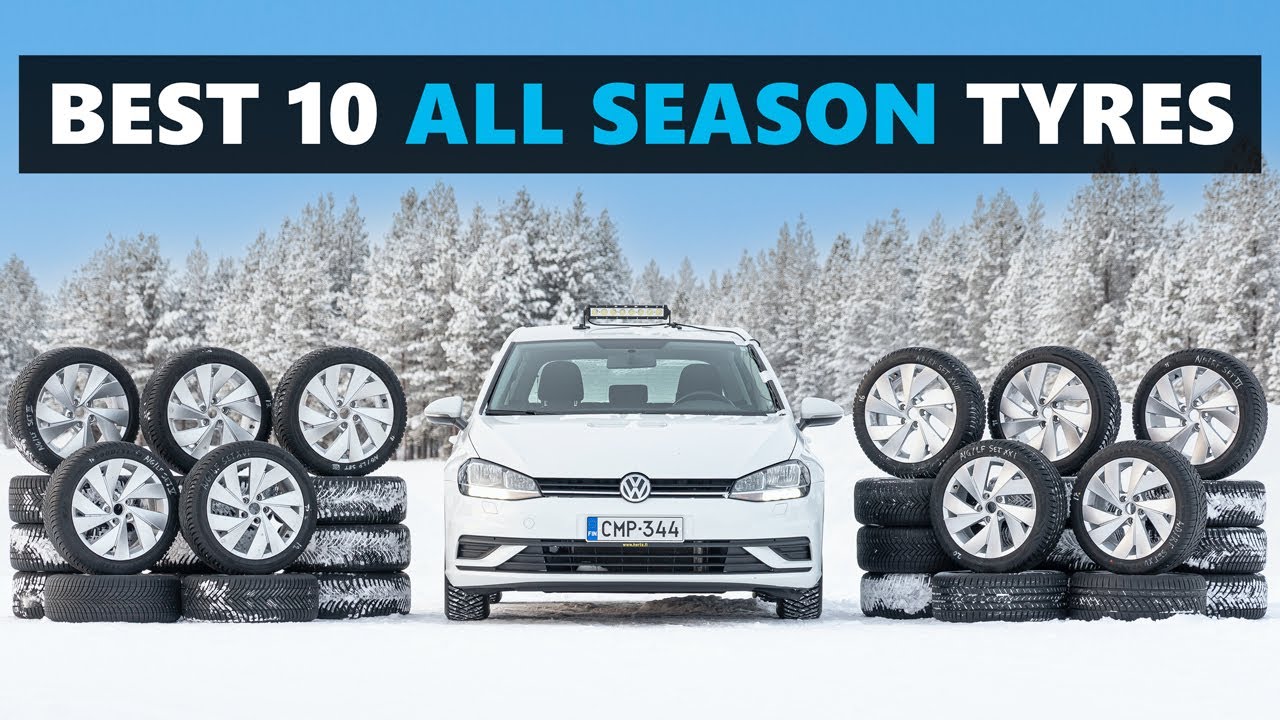




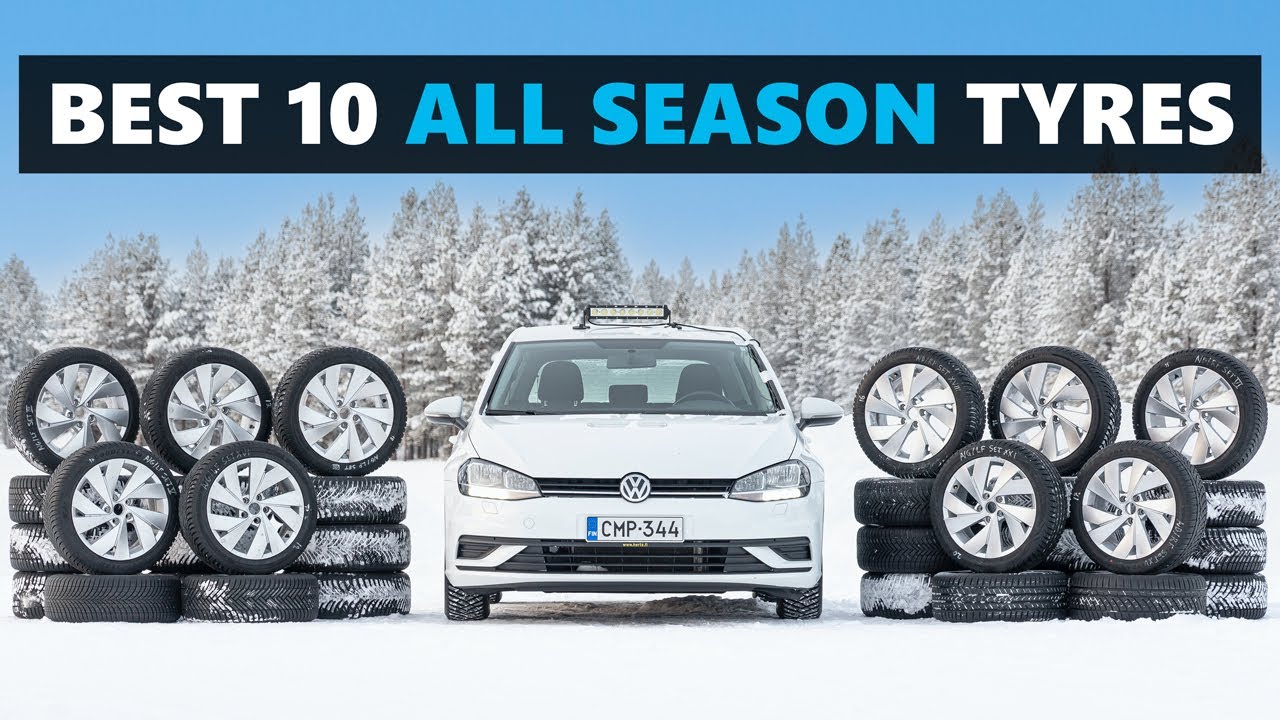
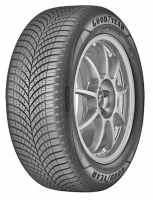
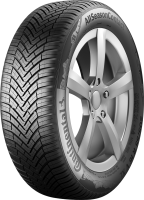
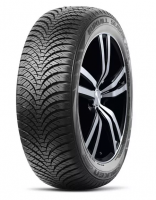
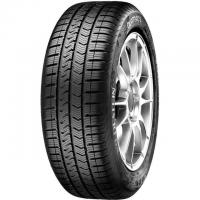
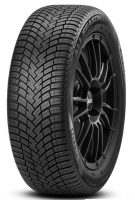
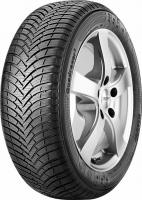
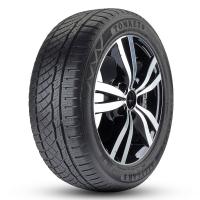
I live down a very long muddy farm track. I find that tyres have less traction in mud than snow. How about expanding your tests to include driving on slippy wet muddy fields.
Autobild do some mud tests for summer SUV tires. I probably won't, the reality is that sort of testing is almost impossible to get right and if you repeat the test on three different days you're likely to get three different results. I only publish data I'm 100% about.
I've mud tested all terrains and that's hard enough!
Hi, @TyreReviews:disqus ! I've been following your reviews for quite a while now. Truly amazing how complex a tyre can be! Because of your reviews, I've reached to the conclusion I should step away from the "use winter tyres in the winter, all-seasons are garbage" since in the past couple of winters I drove on snow like 2 times, so I'm now looking to buy some all season tyres as my winter tyres.
Now, I've looked through like 6 different articles reviewing all seasons tyres here on the website, all from the past 2 years and a common theme I'm seeing is that Michelin CC2, Goodyear Vector 4Seasons Gen3 and Hankook Kinergy 4S2 always seem to be in top 3 switching places (most often Michelin and Goodyear win the top 2 places with Hankook winning your last year's mild climate award). Since I do not often drive on snow, I'm focusing more on the wet and dry conditions and I came to a standstill trying to decide what to buy.
- CC2 is definitely king on snow and dry braking, but most of the reviews mark them as average in wet.
- Goodyear seem to be a great all-around, but always seem to somewhat lack the dry braking capabilities.
- Hankook also seem to perform well in wet and dry with decent snow capabilities, but the results seem to be a lot more inconsistent between different reviews compared to the other 2
So, with a focus on wet & dry (while still not wanting to risk it in the ocasional snow), can I get your opinion on which tyres to choose? The car in question is a Honda Civic XI with a 235/40 R18 wheels size, hence why commenting on this older article where the wheel size is much closer to mine rather than commenting on your newer article.
Many thanks and keep up the good work!
Can you get the new Bridgestone or Conti in your size?
You mean Bridgestone Turanza All Season 6 and Continental AllSeasonContact? Yes, but I think Conti has a newer AllSeasonContact 2 which I can't find.
I've seen a review of the Bridgestone Turanza (I think it was from AutoBlid or TUV) and it had amazing performance, although because I didn't find more reviews of it I was skeptic on relying on a sole review. Do you have any experience with it and would recommend it over Goodyear / Hankook?
Those two are very impressive, I'm not sure what I'd pick but it would be one of them (the T6 all season or ASC2)
Many thanks! I'll make sure to review whichever I end up choosing. Probably T6 given I can't find ASC2 for my size.
Which tires are noisier, winter tires or all-season/weather tires? I have read both tire tests and I see that the noise levels are higher (more dB) with all-season/weather tires than with winter tires. Is this correct and are they indeed noisier?
I always thought that winter tires make the most noise. I have been driving on Bridgestone Blizzak LM005 winter tires for three winter seasons now and I find them to make a lot of noise that most resembles a broken wheel bearing. It's a constant buzzing and whining sound. As soon as I install my Michelin Primacy 3 summer tires, the noise disappears.
I drive an electric car so the sound is more pronounced. Because the Blizzaks are worn out, I want to buy a new set and am thinking of buying a set of all-season/weather tires because we hardly have snow here in the Netherlands. But if they make more noise than winter tires, I might be better off going for a set of new winter tires. What are your thoughts?
Noise levels depends more on the tyre than the tyre of tyre, there are some very quiet winters and some very noisy ones.
One thing you'll find is that it's harder for a siped tyre to wear without generating more noise which is something you might be experiencing. It might be worth having your alignment checked to ensure you don't have the same problem again.
Thank you for your swift reply.
I don't think the noise is a result of weather or teperature, the Blizzaks are noisy all the time as well in the wet and the dry.
Also I don't think it's a alignment issue because my Michelin Primacy 3 are very quiet and all tyres are wearing even. But what you say about the many sipes of the tyre in the profile sounds very plausible because the blocks twist more due to the softer compound and would explain the increased noise. But all-season/weather tyres have fewer of those sipes and the rubber is less soft. Shouldn't these be quieter than winter tyres?
Hi there, I think my needs may stretch all season tyres, but worth a check here. I have a Skoda Karoq DSG petrol so not a sports car. We live in the SE of England, and have a holiday home in Greece where I drive to from the UK and where summer temps hit 35 plus degrees. I usually travel on my way out to Greece in late Winter / early Spring via the Austrian ski resorts where M&S rated winter or all season tyres are mandatory. The Greek roads can be wet and slippery after the long summer when I return to the UK in Oct / Nov. Would the Michelin CC2 or the Hankook Kinergy 4S2 work for the extremes above, and would they wear so quickly that it better pay to have both Summer and Winter tyres on extra rims in my garage?
I think you'd be fine with an all season, include the Goodyear in your list too.
I have a couple of questions about 4 season and winter tyres.
I'm looking to purchase a second set of wheels and tyres for my car, to go with my existing summer wheels/tyres. I live in SE England and get fairly mild winters, where snow is infrequent and temperatures can regularly go above the circa 7 degree max level where winter tyres are best. So I'm thinking a set of summer wheel/tyres and 4 season wheel/tyres is better than summer and winter sets. Do you agree?
If I look at the tyre sizes recommended for my BMW for summer it is staggered and for winter it is square (also narrower all round than the summer size). My second question is for the second set of wheels, if I go with 4 season tyres should I get them in the recommended winter tyre size or the recommended summer tyre size?
I do agree, and you can get them in whatever size you want to. Personally I'd go to a smaller wheel for cost savings and improved comfort.
Kinergy KS2 750 vs Vector 4 Seasons Gen 3 on 225/45 R17 (like your test):
I am a bit concerned: i was tending to the Goodyear, but read, that the profile is just about 4-5mm in the middle.
Would that not be a deal breaker if one intend to usw the tires for more then 2 Years?
And yould you recommend (sujectively) the goodyear over the hankook in the mentioned size for a passat station wagon?
Mostly dry and rainy and sometimes snow (mild climate)
According to wear tests the Goodyear will last longer than the Hankook, so if you expect a lot of miles that should be your choice.
It's been a long time since I performed this test so what's in the video is better than my memory!
Would love to see the Nokian WRG4 in this mix. Seems odd not to have it here, but maybe I'm missing something. It seems like the WRG4 is perhaps slightly better in snow/ice and worse in the wet, but I can't find a good comparison. I've been using them for years on our ski car and love them. It is hard for me to switch without better data.
Simple answer, WRG4 isn't really available in Europe, we have the SnowProof range instead. But I couldn't test that as Nokian lost its main factory in Europe so production has been cut in half :(
I have a test with the WRG4 in it out later this year though!
Hey! Looking at the results and I picked two out of all Goodyear Vector 4seasons 3 and Michelin Crossclimate 2 for my Peugeot 508 (215/55 r17). I tend to pick Vectors as it seems to make longer distances giving better grip on wet (which is a priority for me). On the other hand I found tests that say Michelin makes a much better distances.
Can you please advise which one, out of these two, will make longer distance in Europe? (I assume that CC2 may have slightly different compound in Europe than US)
If you mean how many miles the tyres will cover, the Goodyear has quite a large advantage over the European CC2. The US version of the CC2 has a tweaked compound and a much higher starting tread depth than the EU version.
Just bought a spare set of wheels for my Jaguar XF (245/40/19) so thinking ahead to what is best to fit in readiness for next winter. The car will predominantly be used in the southern England, but also for a skiing trip to the Alps. Thinking of the Hankooks, but wonder if winter tyres might be a better bet? Grateful for any guidance.
You're certainly planning ahead! Assuming you're sticking to the main roads in the alps I'd personally have no problems on a good all season tyre as that should give you an advantage for most of your driving in the UK. The Hankook is a great product, but don't ignore the Goodyear. Also, there will be a new Continental AllSeasonContact 2 out in the middle of the year!
Thank you. I look forward to hearing your thoughts on the new Continental tyre later in the year.
Wondering whether some of the results might imply that some of the tyres may suit certain types of tyre size combination (e.g. skinnier, higher profile tyres) than low-er profile tyres, though admitedly the 225/45 R17 is by no means a very low profile tyre, now often used on many 'average' performing mid-spec cars.
I'd certainly be interested to see how the same lot fair when using (say) 195/65 R15 or 205/55 R16 tyres, both of which are still very popular sizes, mainly on Focus / Golf sized cars from the early 2000s to about 2015, though they are, I think, still used on some newer cars (KIA Ceed / Hyundai i30?).
I think that the equivalent now is 205/60 R16 (not compatible size with those other two but an 'in-between' one to reduced car manufacturers' need to test every trim and tyre size combo for safety and emissions [saving them a fortune]) - I've seen that size as the 'base' for lower and mid-spec Focuses, Mazda3s and some others, along with the 215/45 R18 (interchangable total rolling diameter within the legal limit) on upper spec models.
Generally a good tyre is a good tyre, though there can definitely be some inversions when everything is close as the tyre size changes.
I'm doing all season in 195/65 R15 this year so quite a different size. Only done snow so far and had very similar results so far.
Thanks Jon - good to hear, especially as my ageing Mazda3 is currently shod on 5yo 195/65 R15s Michelin CC+s, albeit with a decent amount of tread left (as with many people, I haven't done a lot of mileage over the last few years). Nice to be able to see what's available should the need arise.
I'm seeing more and more Brits go (like me) the all-season route, despite most of us not seeing that much snow generally, especially after the price and particularly the performance differential compared to summer/winter tyres is far less than it used to be.
Where is the tool that shows which tire I should get based on circumstances? Can I get a direct link? Thanks.
It is linked just below the "Results" title on the page, "View as a single table and adjust the score weighting"
Hi
Great review. One question many might ask is how does a particular car negate or not to one of your tested tyres? If you know this answer, which all season tyre would you recommend for my BMW 520d Xdrive (G31)?
Generally a good tyre is a good tyre. If results are very close there could be some inversions but overall the best and worst should remain.
Question: For a UK car with 7.0x16 rims and 215/45 tyres as standard, would I be better off getting the Hankook tyre in 195/50 or one of the runners-up in 215/45?
Hankook seems to be the clear leader for UK conditions but doesn't make a 215/45 R16, so the only size that would fit my rims without significantly affecting the speedo accuracy would be their 195/50 R16.
Otherwise, I'd have to pick a 215/45 R16 from Bridgestone, Conti, or Michelin, all of which cost a lot more. (Or there's the old Gen 2 Goodyear which @TyreReviews has never tested and is similarly costly).
I'm afraid we can't weigh in on changing to non-oe sizes :(
Many thanks for the great review provided, very helpful in deciding which tires to select for next buy!! I only miss one thing though, how did they perform comfort wise? More in particular difference between Hankook, Michellin, Goodyear and Continental?
I must have discussed comfort in the video at some point, it's usually towards the end!
Great website, and another interesting test!
In total I have driven almost a million miles in all kinds of cars, weather, trafic, on all kinds of roads. I usually drive quickly but fluently and very anticipating (my tires wear out much faster then my brakes). The few accidents I’ve had (the last one is 20 years ago), the ones I have witnessed, and the occasional almost-accidents made me very aware of the importance of good tires (and the condition of the shock absorbers of course - the influence of worn dampers might be an interesting test). So I became a bit of a tire geek (I noticed that I’m not the only one here).
My current car is a more budget oriented Ford Focus MK3 125 hp with 205/55/16 Continental PremiumContact 6 summer tires. Great tires! And a great combination with the car. I never expected to have so much driving pleasure in such a modest car. I’m happy I chose them -thanks to all the info on your website.
I live in Belgium, where we rarely have snow on the roads. Icy and frosty roads or salted slush do occur more, but the main risk is (lots of) rain at colder temperatures. And in fall and spring, the temperature can swing between almost freezing, +20 °C and back. So, for my new winter tires, I decided to follow your advice and go for all seasons. To keep my future winter holiday options open, I still want the tires to provide a workable amount of traction and safety on snow.
I finally chose the Goodyear Vector 4S. I’ve been driving on them about 3k km now, at temperatures between -3 and + 10°C. They perform as expected: very predictable and controllable, certainly an excellent stable grip on cold wet roads, in the dry noticeably more comfortable but less direct (= less pleasant) than my summer tires, the PC6, but sufficient grip and a firmer road contact than with the Continental WinterContact TS 860’s that I had been driving on the last winters. I find the aquaplaning resistance of the V4S also impressive, certainly compared to the PC6 (but this is to my scary experience the PC6 ’s main weak point). On the minor side is that the fuel consumption went up from 6,2 (with PC6) to 6,6 l/100 km with the V4S. I’ll write a review on the Goodyear V4S once I’ve had the chance to drive them on snow. I never drove an all season tire in the snow, so ’m very curious to experience how it compares to the real winter tire I’m familiar with.
In short: I feel safe while still enjoying driving in wet winter conditions (and while lending out my car to my girlfriend). Thanks for your advice and all the interesting information!
Just one thing: Driving pleasure is important to me, but safety still more. And I find that more difficult to evaluate while reviewing tire tests. In my experience (near-)accidents don’t happen when a fully focused professional driver tests the limits of the tires on a perfect racetrack, while anticipating or even provoking the reactions of the car, but accidents rather happen when a tired or otherwise less focused driver is surprised (a brusque evasive maneuver due to another car doing something unexpected, a curve beying sharper or more slippery then expected). That is when the tires are pushed to the limit and when good tires make the difference between an accident and just a scary moment. So, I would love to see the moose test (or elk test, how is called?) beying a standard part of each tire test. But as your tests are already quite extensive and your comments during the tests are very helpful, I won’t hold it against you if you don’t ;-)
Great read, thanks for posting. I actually do aggressive lane changes for nearly all tests, and this years test out in feb actually talks about it for a change. These are only possible in the dry, I've not seen a test facility where people are doing it in the wet, but the balance of the tyre is discussed as part of wet handling.
Naturally the key safety criteria is braking, which is repeatable by everyone.
Glad you're getting on with your tyres and liking the PC6. It's still on my car in the UK!
Thanks for your answer. I can now say that I spoke to the master himself!
And indeed, you clearly explain the balance and behaviour of the different tires in the wet
handling tests, like how progressive they are on the grip limit, and that gives a pretty good idea of what to expect in real life situations.
Abrupt lane changing on a wet surface while keeping (or regaining) control of your car
after that is now part of the program for new drivers in Belgium who want to obtain their drivers licence. You can see it in this video: https://www.fordlpg.ford.co...
I was just thinking: since the outcome of exercises such as this highly depends on the tires, it might be useful to have some kind of objective way of measuring the performance and behaviour of tires in this kind of situations. Regaining grip, or regaining control, that is where things often go wrong. So, I’m curious about your next video.
Anyway, I have my summer and winter tires now, so I hopefully won’t need any new ones the
coming years. I’m nevertheless still looking forward to your next tests.
The thing I need to purchase now is a dishwasher. I wonder if the search and evaluation
process for that will be just as interesting and exciting as it was for the tires. I doubt it…
Quattroruote does the similar test on the wet.
Hello,
Does MPS All Season/4s have available in R15? Or, alternatively, what is available in the same radius among comparable UHP All Season tires to buy in USA? In my opinion/driving habits the best tire for me is the one that is safest in wet/rain conditions. When it snows I simply do not drive (can wait couple of days without going anywhere). But the most important thing is to have the car that is stable in wet conditions. Because even in summer (summer tires) it is very often raining and raining hard in US Midwest. I really don't care about snow breaking abilities of the tire. Just need the one that would give me almost 0 chance of hydroplaning when I'm occasionally ended up crossing through the water on a high speed.
Thank you!
I'm not sure if any UHP all seasons are available in 15" wheel size, however if you're looking for the best aquaplaning resistance I'd suggest not looking at a sports tire. Premium touring tires will offer better hydroplaning resistance by design.
I'm afraid not, it's a north american market tire and I don't know much about it! There's some reviews on tirerack though!
My wish list for future allseason tyre tests: I heard that Continental will release the AllSeason 2 in 2023. Then there are new allseasons like the Kleber Quadraxer 3, the Nexen N'blue 4 Season 2 and the Kumho Solus 4S HA32+. And as a budget tyre I'd like to see the Sentury Landsail Seasons Dragon being involved . Would be very interesting I guess. With best regards. Keep up the great work.
Sadly the AllSeasonContact 2 will arrive too late for my main test next year, but I'll try and do something with it. I have the Quadraxer 3, but not the Nexen.
Hi Jonathan great reviews as always. Im curious though, have you looked at or intended to look at the Continental CrossContact RX? I believe it may be replacement to LX? The reason I ask is because I am always on the lookout for tyres for my Volvo XC90 which has 275/40 R21 tyres which seem to very annoyingly be outside the sizes for all the great all season tyres out there. I'd have loved the Cross Climates in particular but they stop at R20. I also note that most of our EU All Season tyres tend to be decent winter tyres. What im really looking for is a Summer tyre that performs well in all aspects (wet/dry grip but also efficiency, rolling resistance and noise) but then on the odd UK bad weather day when its snowy or icy I have enough grip to manage my way back home again with my 4 wheel drive. A lightly sipped summer tyre? Does it exist? The only other choices are the Pirelli Scorpion Verde which have terrible reviews and im not sure if they have updated them yet? Or the Vreidsteen Quadrac Pro which again don't perform well. I'm hoping you just reply with - Buy this tyre its what you want lol. Thanks Chris
Buy this tyre, its what you want: Michelin Cross Climate 2 SUV, it might exist in the future in your needed size: 275/40 R21 107 V XL
Request was: Summer tyre that performs well in all aspects (wet/dry grip but also efficiency, rolling resistance and noise) but then on the odd UK bad weather day when its snowy or icy...
Alternative: PILOT ALPIN 5 SUV
Two good tires!
I'm afraid not, this is the most I know https://www.tirerack.com/ti... !
Hi Jon.
From your previous recommandations for mild climate with only a few days of snow and also "hot" winter days with 12-15°C, I'm considering using a 4S as a UHP winter tyre for a 200ish HP front-wheel drive family car.
From this review and also users reviews, it seems the Hankook is the best for this, but I would how you did feel it for dynamic driving. Some people say it's up to the task compared to the PS4.
That's why, also from your previous statement, I'm also considering the TS870P which seems to work as good as a winter-biased 4S on wet and dry with enhanced snow performance. It's way more expensive than the 4S tyres, because it only exists in 205/50 size for 17" while the others are widely available in 225/45.
So do you have any advice on this matter?
Hankook or Bridgestone. Neither will feel like a PS4 though, no siped tire will.
TS870P also a very interesting option, I've not tested it back to back with an all season tire though. I suspect the all season would still be the better option.
Thanks a lot for your quick answer.
So, in your opinion, a touring 4S as the Hankook or the Bridgestone would still feel and perform better than the UHP winter TS870P?
I don't know, I've not tested it! I figure it would be close
I really thought you had tested it!
Anyway the chance has chosen for me. One sidewall punctured the other day, so I had to change the 4 tyres on short notice with whatever local stocks there were. Fortunately, I had my shortlist thanks to you and tyrereviews.com.
So I have now 4 Hankook 4S2 fitted. And wow, what an improvement. It doesn't feel like a PS4, that's right, but it feels and behaves nonetheless way better than my previous TS860.
Where the TS860, while still safe and predictable, showed early and massive understeer, the 4S2 can pushed far more away that point, despite the slugishness of a brand new tyre.
Moreover, with the cold weather that happened in West Europe last week, I had the opportunity in two days to run them both à -7°C and the next day at 15°C! It looks like the perfect case scenario demonstration in favor of a 4S for winter use.
All that's left is to drive through the winter!
Awesome, so happy you like them :)
CC2 vs. CC2 SUV?
I had the original CrossClimate SUVs fitted to a previous Freelander 2 and they were brilliant in the wet and dry, surviving driving all the way to Italy and back 2 or 3 times in cold winters and very hot summers! When we replaced the Freelander with an X3, I went with the CCs again, this time they were the CC2, but not the SUV version, despite our car being a typical SUV.
Didn't seems as good in the wet and only came with 6mm tread, so lost a third of their usable mileage, so not that happy.
Now have a Skoda Enyaq EV, about the same size as the X3, and living in wet Wales (plus snow this week!) so looking to swap the OE summer tyres for All Seasons. In our tyre size, 235/55 R19 101T, I can get CC2 or CC2 SUVs. What's the difference between these and any advice on tyres for the EV? As far as I am concerned, the only difference from non EV tyres is the typically higher load rating (101 isn't that high) and ideally getting low rolling resistance, which the CCs are anyway..?
Cheers
Tyre manufacturers should target the mild winter climate countries as a separate category:
1 Summer tyre: Optimized for wet and dry at decent temperatures.
2 Season Safe tyre: Optimized for wet and dry also in colder temperatures. Good enough in snow to get you home safely at sensible speed.
3 All Season tyre: Balanced performance between wet, dry and snow in all temperatures.
4 Winter tyre: Optimized for snow with decent performance on wet and dry in colder temperatures.
https://uploads.disquscdn.c...
It's irresponsible to see such compromised braking distances on test winning all season tyres in dry and wet because performance on snow was taken too far for countries that might see zero to 4 days of snow a year. To many making the wrong choice for that reason.
Good that you include the mild climate scores. Tyre that would fit well into category 2:
- Bridgestone Weather Control A005 EVO
- Vredestein Quatrac
- Michelin Pilot Sport AS4
- Continental ExtremeContac
Regards,
The tires exist, just not in Europe. UHP All season tires or american all season tires are these tires you mean, European all season tires are called all weather tires in the US
Yes, the American system makes sense. I reckon it would a good idea to make these American
all-season tyres (called “Season Safe” below) a dedicated and legislated
segment of the European market as well. They would be an excellent choice for
year round use in mild climates if you don’t want to change tyres. They would
just provide the bare minimum of snow performance to get you home safely in the
snow. Apart from that, they would be completely optimized for dry and wet
weather at all temperatures.
Using both summer tyres and winter tyres (as has been normal practise in Europe for many
years) is not the safest option for mild climate countries. Winter tyres are generally
way too optimized for snow. Their braking and wet weather performance is often pretty
poor. The safety risk from this for mild climate countries is much larger than
the marginally better performance on snow than all-season tyres for the handful
of snow days (and shrinking with global warming).
Even worse is the reality that many people keep driving their summer tyres through winter.
This is not only really dangerous on snow, but as can be seen by your test
especially, dry cold weather performance is also very poor. Consider all those
mini class cars of which owners never change their summer tyres.
In fact I think it would be a good idea if this “season safe” class of tyres would be mandatory
from December till February for mild climate countries. Then you can choose,
you change from summer tyres to something in winter that fits your region and/or
travel habits or ride at least “season proof” tyres all year.
For mild climate countries I think the best options are:
- If you do not change tyres:
o “Season safe” tyres if you don’t travel much through snowy regions or don’t go on
winter holidays.
o All-season tyres if you do have to travel through snowy regions.
- If you do change tyres:
o Changing summer tyres to all-season tyres (as said winter tyres are generally not a good
idea for mild climate countries).
Another advantage of an mild climate optimized tyre like for instance the Vredestein Quatrac, is
that the grip levels change less due to temperature or wetness of the road. So
the response of the tyre and your car is more consistence in all weather and your braking distances in sub seven tyres don’t drastically increase like with a summer tyre.
To me it’s irresponsible that for instance travelers' association in a mild climate country like the
Dutch ANWB, crack down on certain all-season tyres for their limited snow
performance for the sporadic days of snow in the Netherlands, while they are completely
fine apparently with the significant safety risk of very poor dry and wet
performance of many winter tyres through all of winter.
In think your mild climate rating system is great, but in my view, like in the States it should
be a section of the market that tyre manufactures should specially target/
label and legislators of mild climate countries in Europe should endorse or even
make mandatory in the coldest months. Perhaps that would be a good topic for a
video...
You are sympathetic, obviously a very good driver. It is pleasant and useful to look at your videos.
I’m about to change my all-season tyres and was to go for the Michelin Cross Climate 2.
But as I live in a rather rainy mild climate area and drive only a few times a year on snow ( yet hating to put on chains) you make me now consider the Hankook Kinergy 4S2, maybe more adapted for my use while significantly cheaper..
Yet the point I’m worried about is the Hankook’s comparatively high rolling resistance.
- It surely has an impact on fuel consumption, but to what extent?
-Furthermore, does it or not have an impact on the tread wear rate, and if yes to what extent?
Speaking of the tread wear, Michelin boast on their web site of the outstanding longevity of their Cross Climate 2 with the preservation of its qualities until the tread wear legal limit, which are no negligible arguments.
Probably not easy to organize, but could you once consider to test tyres in used condition?...
Tread wear and rolling resistance are separate, there's tests with tread wear tests on the site. The rolling resistance differences are actually pretty minor, tires are about 20% of the cars energy use so a difference of 10% between tires (or whatever it is) would be 10% of 20%.
I'd like to do more worn testing but costs are very high. I'm working on this all the time :)
I live in the very south of Ireland we rarely get snow but do get frost and Ice. Lowest average temp is 4 degrees in January. There are steep hills up to my house and work. I love to know does a all season tyre offer much advantage in grip on frost / ice. I know when there is snow the tyre picks up the snow and uses that to grip but when there little to no snow would a all season tyre help me get up a frosty / icy hill and have traction inside a housing estate etc over running summer tyres year round.
Love the videos
Surely yes, look and compare both tyre patterns. Newly produced all seasons tyres have all sign of 3 PMSF (Three Peak Mountain Snow Flake) for their better winter adhesion and grip (not only in the snow).
P.S. + Watch Jonathan's video: Winter Tires vs All Season [All Weather] Tires - What the Data Tells Us
What's your vision on the most sporty tyre of the bunch? I would argue its the vredestein since its the only uuhp tyre tested, or is it the tyre with the best result on the handling tests?
trust the numbers, not the label, not the marketing departments
Thanks. I meant the subjective feel of the tyre. Steering, responsiveness, etcetera.
From the text, I would say that the most sporty overall seems to be the Goodyear. It has never the first place in feedback, but seems to be second on the three surfaces (behind the Michelin in the snow, behind the Vred in the wet, and behind the Bridgestone in the dry).
But I'm interested to have the point of view of Jon as well.
From others say in their reviews, it seems the Hankook is well regarded in this matter as well. Some even say it doesn't feel like a downgrade from their summer UHP setup.
How much can I use these test results as indicator for the performance of different size 255/45 R19 with a Tesla Y?
It should translate well.
My MG BEV uses "XL" tyres. I can't find any details of testing using EVs which are generally heavier than ICE cars, use heavier duty tyres and run at higher pressures. Are any of the tested tyres XL rated, and suitable for an EV?
Many tyre manufacturers tyres are EV ready now, so if you can get the correct load rating the EV ready tyres should be just fine.
Jonathan When you lived in Europe, would you rather have dealt with a good all-weather tire on your ski trip to the alps, or daily drive a Nordic winter tire? I ask because for my SUV tire size the only options are Nordic winters or all seasons. But my milder Maryland winter(3-5 snow events a year) really calls for CE tires. I also take a few trips to the slopes every winter. Not sure what's the lesser evil, daily driving Nordic winter tires with crappy rain performance, which I'll see more of. Or taking road trips to the Poconos and Montreal with all-weather tires
Best to have another set of dedicated tyres for your road trips.
You have often said that all season tires may be better than winter tires in mild climates.
I am trying to decide between all season and winter tires for my winter set. I will be switching to summer tires in the summer. I will rarely be driving on snow as it snows only a few days a year and the roads are almost always cleared. So I am looking for a tire that performs well with low temperatures in the dry and wet and that won't leave me stranded or causing an accident when it does snow on 2 days a year.
What do you see as the benefits of using an all season vs a winter tire in winter?
If I choose an all season tire I have mostly narrowed it down to the Goodyear Vector 4Seasons Gen-3 but may consider the Continental or Michelin as well. If you actually do recommend a winter tire, which one would you pick for my profile?
Thanks for the amazing tests!
As said, in your case the clear choice is the all season tyres, whose advantage/benefit is exactly much higher interval of operational temperatures, where winter tyres risks are growing with temperature increase above 10C. Therefore the much more sophisticated compoud with slightly different patterns as well, of the all season tyres is logically more expensive, but you can use it, complying with the CZ legislation annually between November and March, up to 4mm profile remaining, and the rest finishing at any other time period.
Where is the tool/filter for adjusting the desired specs to your needs for choosing the tyre? The one that you mention in the videos?
It's linked above the final results area
Thanks.
So, I'm comparing results to last year, and straight aqua is very important to me. How are the CrossClimate 2 suddenly better than the Vector 4Seasons? How can I trust the data if they are so different from test to test?
I also got a suggestion for tests. Electric cars weigh a lot more than regular ICE powered ones. Could you do a test with a Model 3 (it got high cabin noise, so its good for comfort ratings) or the likes, as I'm very curious about how the performance differs.
Tyre side and water depth can have an influence when everything is very close. There will be loads of tests on the site with both in, I'd go through them and average them out!
Bought the 4S2 for the Opel Meriva in 185/60R15. Replaced the Dunlop SP Sport 01 AS from 2014. Ithink this tyre was worth it´s price but it wasn´t nice to drive in wet and snow the last years.
So far drived only in the dry and this car isn´t sporty and don´t have a very direct steering. The steering feels heavy which surprised me for a new tyre. But the tyre feels much more grippy than the old Dunlops. It´s also more quiet.
Only if I drive some mid-speed corners very hard (which is not easy with this car) it gets a bit noisy.
I like it.
I had the Hankook 185/65/15 92T XLs installed on my 2017 Panda Cross 4x4 1.3 MJT yesterday...they handle and feel GREAT on the dry road at all speeds. Looking forward to some dirt, rain and snow...THANKS again!
:D lmk how you find them
Hi Jonathan! I want to thank you first of all for always answering me on Instagram. Secondly, let me give my opinion regarding the Kleber Quadraxer 2 tires, size 195/65-15. I had them on the car, for 2 years, during which I drove 36k km. After two years, in the summer, in heat of 35 degrees Celsius, they started to creak in the curves. In the winter, they hardened so much that I couldn't brake at all in the wet. The first two years were good when they behaved excellently in the wet and dry, but also in the winter in the snow. They were weak on the ice from the start.
Let's hope that the new Quadraxer 3 will solve the composition problems and will be more durable.
That's a surprise, sorry you found that!
Do all seasons perform better than all terrains on snow (ie braking) ?
These sort of all season (called all weather in us) do, yes
Hey! I have the best idea for your next research project: "Best summer tyres for cold weather."
My reasoning is as follows, in the UK we have around 6 months with temperatures that go below 7 degrees and 6 months with temperatures above that. So, while snow is not generally a problem, cold temperatures also affect car and tyre dynamics and it would be really helpful to understand how summer tyres work in the cold weather.
I hope you like the idea.
Best summer tyre for cold weather are all season tyres.
Not at all. Im talking about tyres that handle cold weather NOT SNOW. All Weather tyres are designed to tackle snow too.
The new Continental PremiumContact 7 can be interesting on this situation.
With the new compound for the PremiumContact 7, Continental hassucceeded in enabling optimum performance across the broadest possible
temperature range. This allows the tire to develop high grip even at low
temperatures in daily traffic - without any prior warm-up phase.
Customers particularly benefit from this during the transitional spring
and fall months.
https://www.continental.com...
interesting, thanks for sharing!
That is not what I said. I did not even think of, let alone mentioned snow.
I like the idea, but from what I've seen there's not a huge variance. I'll dig out the one test I've seen and write it up.
fantastic!!!
One day you are going to try the all seasons I have on my cheap as chips Yaris ... Yokohama BlueEarth 4S AW21 . Previously had Cross climates on them but kept getting punctures now gone to them for 2/3 the cost.
You really need to also give a mark on bang per buck as well as overall winner !
Good to see the venerable V105 did ok in the summer tyre test, can you test the V107?
As you can tell, am a Yokohama fan boy. Had from A520s, the first track day tyre for the road, to parada spec C to now er, all season as I got older and slower and the dog needs walking ... in all road conditions to get him to using his all paw drive..
That A520 tread pattern. Brilliant in the dry, hopeless in snow. Got overtaken by a van at 2mph as I slipped sideways off the camber of the road.
https://uploads.disquscdn.c...
I'm not sure if I'll get to them in the future, but others have! https://www.tyrereviews.com...
One question if I may Jonathan. We have two cars one with the original MCC the other with the MCC2. Clearly the 2 is better in the snow. But if I was to do a long distance drive in dry or wet which would be the better. Tests would seem to show that the 2 is losing its advantage to other AS tyres but is this because it has improved only marginally in these conditions and the opposition has closed up or is it because the 2 is actually very marginally worse than the original MCC in dry or wet?
Good question. The low rolling resistance of the CC2 would probably make it the better tyre if nothing else, the CC2 did improve the CC+ in all conditions, but it seems the competition has improved faster in the wet.
Thanks for all your work on this and other excellent reviews. For many of us in mild climates such as lowland Southern Britain, on treated roads and not in a position to swap tyres twice a year, the first question is whether to choose all-season or summer tyres for year-round use. For this, I've really appreciated the comparisons with a reference summer tyre in previous reviews and your superb feature on Summer, All Season and Winter Tyres Tested at 0c to15c.
For an average driver in a small, low-powered, unrefined car, not intentionally approaching the limits of grip, the priorities may be (in order) safety, fuel efficiency, noise and comfort.
In your 0C to 15C feature, your UK recommendation is the combination of all-seasons for winter and summers for summer. For a year-round tyre, one could argue...
(1) Summer-optimised all-seasons have significantly shorter braking distances than summers in the cold, wet conditions often seen in UK winters and are close in dry and mild wet conditions. They also have some snow capability in case that's ever needed. They're superior in the conditions where we're most likely to come unstuck. The sportier handling of summer tyres may not be noticeable in everyday driving. So all-seasons are the better option.
(2) Summer tyres are superior in the conditions we see most of the year and better in the dry at all temperatures tested. UK winters are getting milder and summers hotter. Michelin say all-seasons are designed for -10C to +30C but the UK hit 40C this year. So summers are the better option.
Would value the benefit of your wisdom & experience on this!
I agree with both 1) and 2).
There's really no right answer for everyone. I started using summer tyres year round for my last few years in the UK as I didn't do any driving early in the morning when it was cold, and if we got bad weather I had the luxury of not needing my car. I also priorities steering response and feel more than most!
Which goes to the point below and that you make in your review that for mild climates Michelin have rather taken their eye off the ball with the 2. The MCC was a summer tyre with snow capability. The 2 is an AS tyre. A phenomenally good one but it is no longer what it was.
Ultimately I want a tyre that is as close as possible to a summer tyre in wet and dry but with the ability to get me home safely if it snows. I don't need a snow beast.
For a mild climate where it rarely snows it is no good the MCC being better than the other AS tyres if it's braking distances are 15ft+ worse at 50 than a summer tyre.
The Hankook and Bridgestone seem to have picked up where the original CC was.
Just a thought but do you think that Michelin are chasing scores in German tyre tests which tend to put a higher premium on snow compared to mild climate? Certainly Michelin have been scored 5th or 6th overall in the past with the original MCC and the Plus largely down to average snow performance. I'm sure this would have annoyed them and just maybe they've concentrated on snow performance (hugely successfully) at the expense of wet and to a lesser extent dry performance. Just a theory.
That is a theory I agree with :)
How can I find out which tires are on which vehicles as OEM?
I'm not sure I understand the question. If you mean on your vehicle your dealer should be able to tell you what tyres the car was fitted when new
Auto Zeitung have released their winter tyre test, 225/45R17.
The Winter Cinturato 2 is 7th place of 8 tyres, only the Giti Winter W2 is more worse.
It looks like there is a newer/better version of the Pirelli available, date of production 2622
I spoke with Pirelli and yes there was an early production issue. I have the same size but a much newer tyre and it performed much better.
OK, I´m still a bit careful about Pirelli Winter Tyres. Some of their winter tyres were in the past disappointing, they fight(ed?) with the balance of wet/dry/snowy. My last Pirelli winter tyres were the Snowcontrol ~20 years ago.
The Pirelli joints wins the AB test just out!
Autobild? In the actual is an All Season Tyre Test, 6th October issue is the one with wintertyres
Edit: Found it on Website, I think you mean this
https://www.autobild.de/art...
Yep :)
ADAC have now released the winter tyre test
https://reifenpresse.de/202...
https://www.adac.de/rund-um...
https://www.adac.de/rund-um...
Not my kind of tyresize :(
Pirelli Winter Cinturato 2 and Hankook icept RS3 are not tested :(
A surprise is the mediocre result of the LM005. But to understand the way the ADAC is testing I have to say if the tyre have a bad grading in one category (Snow, Dry, etc.) the tyre will be devaluated. The 185-LM005 because of high waer, the 215-LM005 because of snow-properties.
The test-surprise for me is the new Semperit Spped-Grip on 3rd place in the 185-size. Maybe also an option for me.
The next surprise is the brother Uniroyal which is also relative new and show a bad performance, especially in the dry (but not so surprising,
dry was never favorite condition for Uniroyal).
Next disappointment is the Nokian Snowproof because of it´s awful wet performance.
But two oldies, the Dunlop Winter Sport 5 and Goodyear Ultragrip 9+ are on 2nd place, wow
I know, Conti often wins wintertyre-tests but in the ADAC-magazine more than in most others ;) (ADAC use the Contidrom for some tests)
I think I need to employee you to write up the tests for the website, you seem to do a better job than I do! ?
It's a good year for Conti for sure. Auto Express winter test is out with those two tyres, and mine should be very soon!
I think my english is to bad =)
I know the AE-reviews but I still don´t like such results with % instead of lap times, cornering speeds, brake distances and so on.
Similar for ADAC, grades instead of values.
So I would be happy to see your review soon :)
I'm hoping for early next week :)
Also 225/45R17? Would be nice :)
It is
Jon - Was the large difference in the 'cost' rating between the CC2 and (say) the Hankook because the former has a very good wear rate, given it is more expensive to buy?
Whilst I realise that it is nigh on impossible for wear tests to be accurate during a day or three's testing, were you (quite rightly) applying Michelin's historical results for previous CC tyres (and others in their range) to the CC2? It might've been worth mentioning something on this issue (weighting/factors) in the report.
I actually don't include price in the overall score weighting, as you're right without wear results there's no point including cost. You have made me realize the "adjust your own results" section does include cost, so I need to work on that!
Your tests are brilliant - so much more interesting than the typical "German" scores ;-)
Would it be safe to assume that premium all season tyres will generally outperform winter tyres in cold wet & cold dry conditions? i.e. where no snow/frost is present?
In my experience premium winter tyres perform well enough in warmer weather (e.g 1-7 celsius) but the big downside is their high (almost excessive) thread wear in non-freezing temperatures. I live in southern Poland and winters are mostly cold and wet with the occasional snow/slush for a few days. My friends and I noticed that once premium winter tyres hit the 4.5mm mark they become louder and their wet and snow/slush performance is already significantly impaired compared with new.
I am seriously considering switching to all-seasons for the winter purely for their performance advantage wet&dry conditions. I will still be using summer tyres when it gets warmer for fun & safety. My theory is that all season tyres might actually outperform winter tyres in wet & dry as long as temperatures are not sub-zero and provided they have anough thread left they should keep you covered for the occasional snow/slush. What do you think?At what temperatures did you test? All the best!
It depends on the all season and winter tyre :) Generally there are small differences between all season and central Europeans winter tyres these days. But all season tyres as winter tyres is definitely a valid solution for places which don't much ice.
Hi Jonathan, I love the way you present your results! I have a question for you. I have Michelin Cross Climate SUV tyres on the front of my land cruiser, as the new CC2 ones were not available in the size I need (265/60x18) when I needed tyres earlier in the year. Now I need 2 more tyres, and I can't get those, but can get the new Michelin Cross Climate 2 SUV. you mention in this test that some of the characteristic are now quite different, so, which would you recommend to go on the front, and which on the back? or is there a different tyre you would recommend to 'match' the existing CC SUV tyres? I can't be the only one who find that because of uneven wear, or replacements for non-reparable punctures, I have 2 almost new tyres, and 2 that are nearly worn out! I have also found that this tyre size is often not available from manufactures. Many thanks for your help. Roger
Traditionally the new tyres go on the back and I see no reason to change that, especially with the increased snow performance of the CC2, understeer is easier than oversteer to deal with in the real world!
Big Thanks for this very interesting test :)
But I´m more interested in your upcoming winter tyre test :)
I bought a new car 3 month ago and need soon some winter ytres
Winter test should be out in a few weeks, it's too warm in Europe at the moment to publish sadly!
Huh, I had the last days here in germany Temps about 3-5° Celsius in the night/early morning. And I don´t know if I risk to buy to late, maybe I don´t get the tyre I want.
I think not many new tyres (untested) are available , at the moment I think the only one which could be interesting for me is the Pirelli Winter Cinturato 2 and the Hankook icept RS³. If you had these tyres in your review, can you tell how good it is ;) ?
Both are very good :) I would be happy fitting either!
Nice to read :)
These two tyres on my list, if I get them for good conditions the chance is high to use of of them.
But some more Details, especially for the handling are needed by me :)
Snow Traction is not so important, I think I will never have a problem with my 4WD :)
Full test should be out in around a week! Auto Express have both of them in their test which is now on their website too!
Sounds good :)
Seems like CC2 is sold as a summer tyre in Iceland (not all season)... :/
Very interesting! I Guess in Iceland it never really gets that summery :)
Hello, just a big thanks for you amazing work.
I just feel you should, if possible of course, try to add the lifetime in the tests (maybe theorical and lifetime during a small test).
It is so much important to know as Michelin for example is more expensive but has also a better resistance to mileage.
Maybe a km/€ would be interesting.
Thanks !
I would really love to but proper wear testing is incredibly expensive :( If you can check out the auto bild tests on the website they usually test wear and include a euro per 1000km figure.
Great test again Jonathan, Tyre Reviews is definitely the best source for tyre data on the internet!
I'm especially looking forward to the worn testing you're doing in the future.
A thought on the mild testing data - I'm not sure if I'm inputting the weightings incorrectly, but when I put in the mild climate weightings in the results tables (dry 35%, wet 45%, snow 5%) I'm getting a slightly different result to you:
1) 4S2, 2) CC2, 3) A005 EVO, 4) V4S G3, 5) Quatrac Pro, 6) ASC
Your mild climate results in text:
1) 4S2, 2) A005 EVO, 3) CC2), 5) ASC
I noticed that too, I need to look into it, with everything so close it might just be a rounding variance! Thanks for pointing it out though.
Apologies, I may have missed it, but what was the temperature for the wet and dry testing?
I would also like to know about the temperatures, and whether this is part of how you differentiate between Balanced and Mild climate. The UK may not get several feet of snow every year but it has plenty of days below 7 degrees. When you refer to Mild climate, does that include temperature or just likelihood of snow + ice? Thanks
As we can't yet control the test temperature, I'm calling low snow climates mild climate. In theory all the tyres should work well (or at least much better than summer tyres) at near freezing temperatures
Sorry, I should have written it down. It was around 20c air and sunny.
It's somewhat worrying that CC2 have only 6.5mm tread. Regardless of what Michelin says about their tyres working well with very low thread, it's illegal in some countries to drive during winter with tread below 4mm. So in such case you could be buying just 2.5mm worth of tread.
That is a good point. Do you know what countries still have 4mm? I assume it's the more extreme climates where these tyres aren't really suitable as winter tyres anyway?
Bulgaria has 4mm
Serbia also
I've found a table that lists such requirements in EU countries: https://www.uniroyal-tyres.... . Some of those countries don't necessarily have extreme winters, at least not in all regions, for example Czech Republic as far as I know.
Thanks for digging that out, not sure on the logic of the areas that require 4mm!
In Austria are as well 4mm for a winter tire demanded. Below 4mm it’s a summer tire in terms of law, regardless it’s specifications.
This map is wrong, Serbia should be gray, not red, as winter tyres are only mandatory if there is snow or ice on the road.
4mm minimum during winter in Serbia as well...
Really very strange with the Pirelli. Because of your test last year, I just had them pulled on my Tesla Model 3 and am now a bit perplexed. The question is now whether you can see somewhere whether it is according to Pirelli an old version or the allegedly improved. Is there any insight into this?
I believe by now all of the SF2 should be updated. These tyres were 2021 production.
Do you have the same comparison but for the size 225/65/17. I am struggling to find it. Or there is no big difference in that size with the 225/45/17, so you don't do the tests
Usually if there's cross over in patterns things should be very similar. Yours is an SUV size so there might be some variation in patterns but generally the good here will be good, Michelin, Hankook, Goodyear, and Conti.
Let's just hope Michelin keeps selling the CC+ along with the CC2, since the CC+ is definitely better for milder weathers, specially in the dry and, according to the wear test results at 2021 Auto Bild's All Season tyre test (225/50R17 size) compared to 2019 Auto Bild's All Season tyre test (225/45 R17), 2020 ADAC's SUV All Season tyres (235/55 R17), 2020 Auto Bild's All Season tyre test (205/55 R16) and even the 2018 Auto Bild's All Season tyre test (195/65 R15), the CC+ seems to last much longer than the CC2.
With this snow test results, maybe now Sweden will let this CC2 be considered a true All Season tyre and let people there be able to drive with it all year round!
What was Sweden's objection? I thought they just required a 3PMS marking for it to be legal winter?
A few years ago I sent you a comment regarding that matter. Can't find it, right now! If you go to Norwegian, Swedish and Finland's CC+ Michelin's link (all you have to do is change the country's code internet domain: "no", "se" and "fi") you'll see the note 4 in the "legal mentions" (page bottom) that the CC+ is not recommended in winter for Nordic roads. A few years ago that could only be seen on Michelin's Swedish website but it mentioned that it was not allowed, or something. No mentions now for the CC 2, though!...
Someone pointed out in another comment in regions where they require winter tyres to have more than 4mm tread depth the CC2 would be less than ideal as it starts at 6.5!
Quite right! We can read that at Michelin's and Continental's website. The countries requiring a minimum of 4,0 mm of tread depth on winter tyres between certain dates are: Austria, Belarus, Bosnia and Herzegovina, Bulgaria, Croatia, Czech Republic, Latvia, Macedonia, Montenegro, Russia and Serbia/Kosovo. Strangely enough, in Finland, Sweden, Norway and Denmark it's only required a minimum of 3,0 mm! They must assume everyone there installs winter Nokian tyres!
It's interesting to see from last year's Tyre Reviews All Season tyre test (205/55 R16) that Michelin CC2 has 7,0 mm tread depth but this test's size (225/45 R17) has 6,5 mm. Since this sizes have the same diameter, we can see an additional advantage to use narrow sizes in the snow. I believe ADAC still has published in their website a winter tyre size test comparison using the Dunlop Winter Sport 5 going from 195/55 R15 up to 225/40 R18.
Ignoring tread depth there's an argument that a narrower tyre is better in the snow due to increased ability to cut through, and also worse because less sipe edges to bite. I'd really have to test your idea to know for sure! I'm sure at new state it would be very close given the CC2 is by far the best in this test with the lowest tread depth.
Wondering how would Kinergy 4S2 stack against Vredestein Quatrac in 205/55/R16.
Hoped for direct comparison this year. Unfortunately you went with bigger size and therefore Quatrac Pro.
Still great piece of content. :)
I would guess the Vred would have the edge in the wet still but it would be close overall.
Thank you for your great tests! I will get a Hyundai Tuscon PHEV SUV 4WD (235/50/R19) in december. I live in Germany, so i would say in a mild climate. Not really much snow in the last years. 65% dry, 30% wet, 5% snow/slush. I'm thinking about buying the CC2. Do you think that would be a good idea or what would you prefer?
Buying the CC2 is never a bad idea, I use it as a winter tyre on my wifes vehicle!
Astonishing. Little sad to see the CC2 performing average in wet and dry. I still run the CC+ in same size on my GTI during winter only as I only need moderate to non existing snow performance. Hopefully Michelin will finally sell a LI 91 version. My CC+ 94W don't ride smoothly. Thanks for this excellent review!
Depending on size, if they do sell a 91 LI it might just be exactly the same tyre as the 94. A lot of manufacturers are doing this now as the differences are almost none!
Thanks again!