
Menu

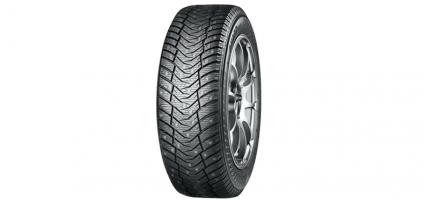
Yokohama iceGUARD iG65

The Yokohama iceGUARD iG65 is a Premium Touring Winter tyre designed to be fitted to Passenger Cars.

5.7
Tyre Reviews Score Based on Professional Tests
Limited Confidence View Breakdown
Dry Grip
75%
Wet Grip
50%
Road Feedback
50%
Handling
60%
Wear
80%
Comfort
75%
Buy again
25%
Snow Grip
45%
Ice Grip
75%
3 Reviews
59% Average
32,000 miles driven
1 Tests (avg: 6th)
Yokohama iceGUARD iG65

Yokohama iceGUARD iG65

Winter Mid-Range
BETA
5.7 / 10
Based on Professional Tests · Limited Confidence · Updated 30 Jan 2026

The Tyre Reviews Score is the most comprehensive tyre scoring system available. It aggregates professional test data from multiple independent publications, user reviews, and consistency analysis using Bayesian statistical methods, weighted normalisation, and recency-adjusted scoring to produce a single, reliable performance rating.

Learn more about our methodology
Value
91.1
0.38x / 1 test
Wet
90.6
2x / 1 test
Ice
81.8
1.26x / 3 tests
Snow
80.7
1.5x / 3 tests
Dry
68.5
1.2x / 1 test

Cross-category scores are derived metrics that combine data from multiple test disciplines to evaluate real-world performance characteristics.

Braking
86
4 tests
Traction
85
2 tests
Handling
64.2
2 tests
Score Components
Professional Tests
Weight: 80%
Tests: 1
Publications: 1
Period: 2018
User Reviews
Weight: 15%
Reviews: 3
Avg Rating: 59.4%
Min Required: 5
Consistency
Weight: 5%
Score Std Dev: 0.51
History Points: 6
Methodology & Configuration
Scoring Process
  1. Collect Test Data: Gather results from professional tyre tests across multiple publications. Minimum 1 test(s) required.
  2. Normalize Positions: Convert test positions to percentile scores using exponential weighting (factor: 1.2).
  3. Apply Recency Weighting: More recent tests are weighted higher with a decay rate of 0.95.
  4. Incorporate User Reviews: Factor in user review data (minimum 5 reviews). Weight: 15%.
  5. Bayesian Smoothing: Apply Bayesian prior (score: 7, weight: 1.5) to prevent extreme scores with limited data.
  6. Calculate Final Score: Combine all components using normalization factor of 1.1. Max score with limited data: 9.5.
Component Weights
Test Data
80%
User Reviews
15%
Consistency
5%
All Configuration Parameters
ParameterValueDescription
safety_weight 0.7 Weight multiplier for safety-related metrics
performance_weight 0.55 Weight multiplier for performance metrics
comfort_weight 0.4 Weight multiplier for comfort metrics
value_weight 0.45 Weight multiplier for value-for-money metrics
user_reviews_weight 0.15 How much user reviews contribute to the final score
test_data_weight 0.8 How much professional test data contributes to the final score
consistency_weight 0.05 How much score consistency contributes to the final score
recency_decay_rate 0.95 Rate at which older test results lose influence (higher = slower decay)
min_test_count 1 Minimum number of professional tests required
min_review_count 5 Minimum number of user reviews required
score_version 1.8 Current version of the scoring algorithm
score_normalization_factor 1.1 Factor used to normalize raw scores to the 0-10 scale
confidence_factor_weight 0.2 How much data confidence affects the final score
position_penalty_weight 0.2 Penalty applied for poor test positions
gap_penalty_threshold 8 Score gap (%) that triggers additional penalties
min_metrics_count 2 Minimum number of test metrics needed per test
limited_data_threshold 2 Number of tests below which data is considered limited
single_test_penalty 0.1 Score multiplier when only one test is available
critical_metric_penalty 0.7 Penalty for poor performance on critical safety metrics
critical_metric_threshold 70 Score below which a critical metric penalty applies
position_exponential_factor 1.2 Exponent used to amplify position-based scoring
position_exponential_threshold 0.9 Position percentile below which exponential scoring applies
gap_multiplier_critical 3 Multiplier for critical gap penalties
max_category_weight 2 Maximum weight any single category can have
max_score_limited_data 9.5 Score cap when data is limited
bayesian_prior_weight 1.5 Weight of the Bayesian prior in smoothing
bayesian_prior_score 7 Prior score used for Bayesian smoothing
evidence_test_multiplier 1.9 Multiplier for test evidence in confidence calculation
evidence_metric_divisor 3 Divisor for metric count in evidence calculation
evidence_review_divisor 10 Divisor for review count in evidence calculation
Data Sources
TestPublicationDateSizePositionMetrics
2018 Vi Studded Winter Tyre Test Tyre Reviews 2018 205/55 R16 6/8 9 metrics
1
Tests
6th
Average
6th
Best
6th
Worst
Latest Tyre Test Results
6th/8
Short braking distances in the wet.
High noise, poor snow and ice handling.

Questions and Answers for the Yokohama iceGUARD iG65

Ask a question
Sorry, we don't currently have any questions and answers for the Yokohama iceGUARD iG65. Why not submit a question to our tyre experts using the form below!
Ask a question

We will never publish or share your email address

captcha

To verify you are human please type the word you see in the box below.

Top 3 Yokohama iceGUARD iG65 Reviews

Toyota (205/55 R16 Q) on mostly country roads for 5,000 average miles
I want to try nordic tyres instead of european winter tyres, so this was the reason why I bought Yokohama IceGuard. Compared to the tyres from the past ( michelin A6, continental TS830, nokian w...) you can feel the difference from the first kilometer. Thy tyre is not designed for wet/dry/hot but the handling is still better then some budget class tyres, but when the real winter begins, then you can feel the difference, if you live close to the mountains or in countryside, where you have only 2-3class roads, then I suggest you to try...
Ask a question | Helpful 905
January 16, 2021
Given 52% while driving a Honda Civic 1.5T (215/55 R16) on mostly town for 15,000 spirited miles
I've had these fitted, now, for three Canadian winters. Consider this a mid-life/end-life review (depending if I toss them early). Snow? They're ok. Reasonable grip, reasonable clearing capability from snow/slush building in the treads. Ice? Surprisingly ok. For a winter-rated rubber, they're "as-expected". Ice really isn't fun to drive on, I've never really been caught offguard by ice on the roads, so I'd actually consider these to be pretty decent here. Dry? Mediocre-to-bad. On dry cold roads, the car slides and moves more than it should. Aggressive (or, spirited) driving is heavily discouraged by the Yokohamas and they will give-way quickly. Wet? Downright dangerous. These have got got to be one of the worst sets of rubber on a car for damp/wet/rainy/slush weather that I've ever experienced. Other comfort related notes: these tires wander in grooved pavement and brushed concrete surfaces and generally make the car feel unsettled. They provide little-to-no feedback from the front end which is exasperated by the wandering. I would not purchase again. Winter tires need to be capable in a wide range of weather from ice & snow, to wet & slush as the temperatures rise before you swap over to all-season/summer tires. The lack of traction in the rain is absolutely horrendously dangerous and forces you to drive so cautiously that you'd think you'd be on proper ice. Thankfully (or oddly) the traction in the wet, whilst braking, is not as bad as it is for acceleration/turning.
February 22, 2022
Given 67% while driving a Peugeot 3008 1,5 Diesel (225/55 R18) on mostly town for 12,000 average miles
Not particular good in snow. Rather low grip in snow but much better on icy roads.
February 14, 2022
Have you driven on the Yokohama iceGUARD iG65 tyre?

Have YOU got experience with the Yokohama iceGUARD iG65? Help millions of other tyre buyers

Review your Yokohama iceGUARD iG65 >

Latest Yokohama iceGUARD iG65 Reviews