205/55 R16, a Ford Focus and the usual wide array of wet and dry tests summarises the 2014 Test World summer tyre test.
Interestingly, in 2014 Test world have included both a European winter tyre, and a full nordic studless extreme winter tyre to give the reader an idea of what performance you can expect if you choose to run winters year round.
While the European winter tyre (the best of the category, the Continental Winter Contact TS850) was usable in the warm wet and dry conditions, it still unsurprisingly lagged behind the best of the summer tyres, beating only the worst summer tyre in wet braking and none of the summer tyres in dry braking. The nordic winter tyre worse again, proving that extreme winter tyres are dangerous to run year round.
Results
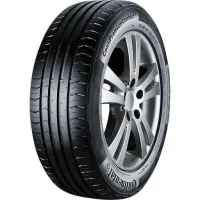
The Continental Premium Contact 5 provides excellent grip and optimal handling in bad weather. They are very accurate tyres with good steering response and good stability at the limit. They are also very quiet and comfortable. The Continental is almost the ideal tyre for all conditions, with only a high rolling resistance letting them down
All discipline results (6)
Total: 93.5
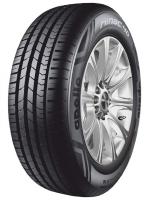
Apollo present a real surprise and become one of the best on test in wet braking. These tyres have no problem coping with emergency maneuvers, with no unexpected loss of grip. With no obvious weaknesses, Apollo have never never demonstrated such consistencies in all areas
All discipline results (6)
Total: 91.2
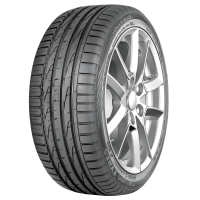
The Nokian is well suited for driving on wet roads, which showcases the successful combination of high grip, precise steering response and, if required, predictable behavior during abrupt maneuvers. In the dry the tyre isn't as strong, with longer dry braking distances. Low noise and low rolling resistance give the Nokian a solid third
All discipline results (6)
Total: 92.2
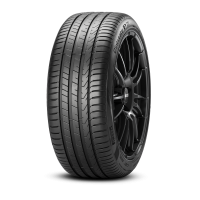
The Pirelli has good results on dry and wet roads, and a high resistance to aquaplaning. The tyre reacts quickly and accurately, but their behavior in an emergency situation may be too nervous. One of the disadvantages - high rolling resistance
All discipline results (6)
Total: 90.2
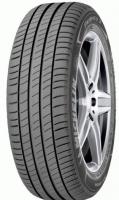
The Michelin provides good handling in all conditions and is difficult to get to lose grip in a sharp turn. Braking efficiency is also high, but not quite with the leaders. The only drawback - a relatively high rolling resistance
All discipline results (6)
Total: 88
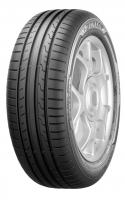
The Dunlop has excellent grip in all conditions, and in accordance with the name, a quick and precise steering response. Be that as it may, their behavior may be too nervous, and during sharp maneuvers the car has a tendency to oversteer. Acceptable noise levels and a very low rolling resistance
All discipline results (6)
Total: 88.9
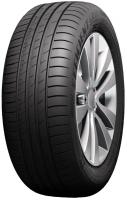
The Goodyear has the lowest rolling resistance of tires tested. Combine fuel efficiency with high traction on wet surfaces - a very difficult task, and Goodyear perfectly coped with it. Grip on the wet track was optimal and manageable. The Goodyears only weakness was aquaplaning, which caused it to lose a number of positions in the overall results
All discipline results (6)
Total: 89.9
The Hankook resist aquaplaning and have excellent grip on wet surfaces - albeit somewhat worse than the leaders of the test. At the limit the tyre does not behave as predictably as we would like, and the rear wheels can go into a skid. The same pattern is repeated on dry roads. The noise level is low, but the rolling resistance is too high
All discipline results (6)
Total: 85.8
The Vredestein has a very high braking performance on wet roads. Lateral grip is also good, but weaker than the longitudinal. The tyre can show a good lap time, but the rear grip sometimes falls away at the limit. On dry roads the tyres behave predictably and logically, as well as quiet. In general, it is well balanced tyre without serious drawbacks
All discipline results (6)
Total: 85.8
A balanced tyre. The wet grip is slightly lower than the best tyres, but the Barum has good accountability in all situations without any major handling surprises. On dry roads the tyres react too slowly, and while they're stable the grip isn't great. Disadvantage - it's a hard tyre that becomes immediately apparent on uneven surfaces
All discipline results (6)
Total: 85.8
The Landsail tyres become the main surprise of this test. On a wet surface, the tyre has a very short braking distances and good lateral grip. During emergency maneuvers the grip is high, but it can disappear abruptly, especially on wet surfaces. The tyres are also good in tests for noise and efficiency. Overall, Landsail become the Chinese tyre tested by Test World
All discipline results (6)
Total: 85.6
The Toyo has acceptable braking on wet roads, but wet handling is clearly a big problem with the tyre posting a very slow laptime. Fortunately, the tyres behave predictably enough, without unpleasant surprises. The situation is somewhat better on dry roads, than in the wet.
All discipline results (6)
Total: 84.4
The BFGoodrich has very balanced characteristics, but, unfortunately, they are still quite low in this test. The tyres easily start to slip on the wet surface and slow to respond during emergency maneuvers. Fortunately, the behavior is quite predictable. High noise and rolling resistance
All discipline results (6)
Total: 82.2
The Hercules could not deal with any test. Wet grip is very weak, and these tyres make driving especially difficult. In the dry the tyres make the back of the car snap sharply during high-speed maneuvers. The Hercules is also very noisy and hard, and they high rolling resistance. Hercules - is a Chinese-made tires at its worst
All discipline results (6)
Total: 69.7
The Continental TS850 P is a european winter tyre included for comparison purposes. While it wasn't last in wet braking (the Hercules was the worst summer tyre) it did stop 5.6 meters later than the best summer tyre (Apollo) from 50mph. While not the best tyre on test, it shows a high quality mid european winter tyre can be used year round, and you'll still have more grip than using a cheap chinese summer tyre
All discipline results (6)
Total: 79.7
The Michelin X Ice Xi3 is a full nordic winter tyre. While this tyre scores extremely well in extreme winter tests, it is no match for the summer tyres in the warmer conditions, stopping nearly 15 meters later than the best summer tyre, and 6.7 meters after the worst summer tyre. This shows northern Europe winter tyres should not be used year round, despite their noise and comfort advantages!
All discipline results (6)
Total: 65.7







So, it seems that the almighty Goodyear EfficientGrip Performance and the Dunlop Sport BluResponse are getting behind several tyres which are 2 or 3 years old. Last year, the results showed the other way around and everybody praised those 2 tyres. So, what gives? I can imagine that this happens for marketing reasons and brands buy reviewers in one way or another.
There's many factors to consider. The tyres doing better this year will have certainly been updated, even if their pattern name hasn't.
Also you can factor in tyre size, car type, car weight, testers score priorities etc which all have an effect on the overall score.
Excuse me, but some factors won't turn the results around. Regardless of the car, the stickiest tyre will have shorter braking distances. For instance:Focus: tyre no1: 35 meters/no2 : 36 meters/ ford cougar: tyre no1: 37 meters/no2: 38 meters. Rolling resistance will scale in the same manner as grip. I'm comparing same sizes here.
Show me evidence that brands change their products without changing their name or the way they look. Do you assume that just because of the results? If not, show me something. Cheers
When the distances recorded are sometimes separated by as little as 10cm, different vehicle types can make a different to the overall result.
Tyres do update constantly, it is not an assumption. Look into the IPC / ean codes of tyres, these show when a tyre updates without a name update. For example, the 225/40 R18 92Y XL Goodyear Eagle F1 Asymmetric 2 has the following codes:
524636
528262
529775
These codes update as the tyre has been updated for better label scores.
What really surprised me is that nordic winter tyre has lowest noise and rolling resistance. With such a tread pattern and soft compound I was expecting the opposite. Now the question is whether other nordic tyres would provide similar results or whether it is speciality of this Michelin.
That's specific to the X-Ice 3 I think.
I currently drive Continental Premium Contact 5 and the only thing I can say is much worse tyre then previous Bridgestone Turanza ER300. And you can drive them for ~15000km. Never buying again.
why do you think it is better than CPC5? probably the wear ,something else ,i dont think so...but everybody know if the tire have good grip of course wears better.
What is your opinion about Uniroyal rainsport 3?accordind to this test.
In your opinion how much is good that tyre?
You can read our thoughts on the Rainsport 3 here:
http://www.tyrereviews.co.u...